It’s a strange thing, memory. Especially childhood memory filtered through trauma. How does a mind, barely formed, process the incomprehensible? That quiet, persistent question hangs heavy in the air long after the tape stops rolling on Roberto Faenza's 1993 film Look to the Sky, perhaps better known internationally by its starkly evocative original title, Jona che visse nella balena (Jonah Who Lived in the Whale). This isn't your typical Friday night rental fare, the kind of tape box that screams action or laughs from the shelf. Finding this one, maybe tucked away in the drama section of a dimly lit video store back in the day, felt like uncovering something fragile, something profoundly serious.
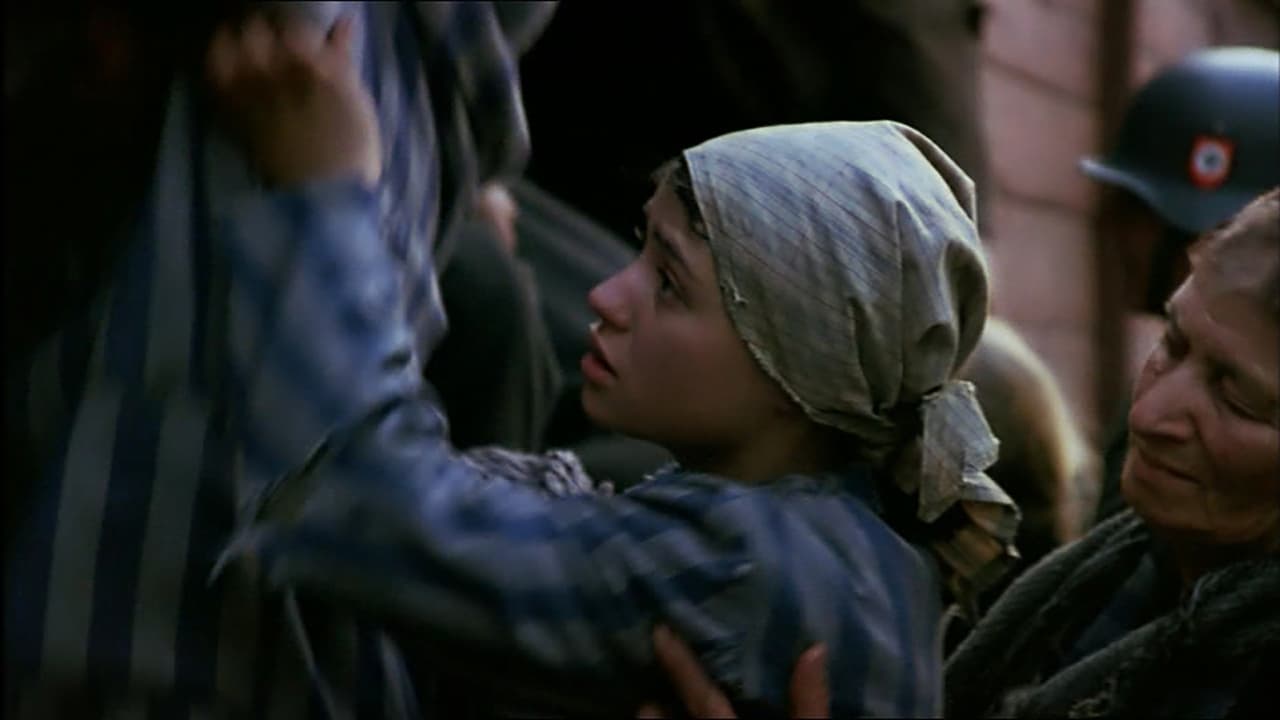
Through a Child's Eyes, Darkly
The film plunges us directly into the world of four-year-old Jonah, living a seemingly idyllic life in Amsterdam just before the Nazi occupation tightens its grip. Played with astonishing naturalism by newcomer Luke Petterson, Jonah's perspective is the film. We see only what he sees, understand only what his limited comprehension allows. His parents, portrayed with heart-wrenching vulnerability by Jennetta Arnette and the ever-intense Jean-Hugues Anglade (whom many might remember from Betty Blue (1986) or La Femme Nikita (1990)), try to shield him, but the encroaching darkness is inescapable. The yellow stars appear, freedoms evaporate, and soon, the family is deported to the Bergen-Belsen concentration camp.
What sets Look to the Sky apart is its unwavering commitment to this child's viewpoint. There are no grand historical pronouncements, no strategic overviews of the war. Instead, we experience the Holocaust through baffling, often terrifying fragments: the sudden disappearance of his mother, the confusing cruelty of guards, the strange rituals of survival, the inexplicable loss of his father. Jonah doesn't grasp the political context or the full scale of the horror; he navigates it as a series of bewildering, often painful events impacting his immediate world – hunger, cold, loneliness, fear. Faenza resists the urge to explain everything, trusting the audience to fill in the devastating blanks that Jonah cannot.
The Weight of Truth
This authenticity isn't accidental. The film is based on the autobiographical novel Kinderjaren (Childhood) by Jona Oberski, who survived Bergen-Belsen as a child. Knowing this lends the film an almost unbearable weight. It’s not just a story; it’s a testament. Faenza, who also co-wrote the screenplay, directs with remarkable restraint. The camera often stays low, mirroring Jonah’s height, making the adult world seem imposing and alien. There’s little reliance on graphic violence; the horror is psychological, conveyed through atmosphere, implication, and the shattering impact on Jonah’s innocence. It’s a choice that makes the film all the more powerful, avoiding exploitation while still being deeply affecting. The film clearly resonated in Europe, picking up David di Donatello Awards (Italy's equivalent of the Oscars) for Best Director, Best Score (for the legendary Ennio Morricone), and Best Producer.
Luke Petterson's Unforgettable Turn
At the heart of it all is Luke Petterson. Child performances can be tricky, sometimes feeling coached or unnatural, especially with such heavy material. But Petterson is simply remarkable. He embodies Jonah's confusion, resilience, and quiet heartbreak with a lack of artifice that feels utterly real. He doesn't 'act' traumatized in a showy way; he simply is a child trying to make sense of a world turned upside down. Watching him navigate the camp, forming tentative bonds with other children, clinging to fragmented memories of his parents – it's an incredibly moving and subtle portrayal that anchors the entire film. It’s the kind of performance that stays with you, a haunting reminder of the human cost beneath the historical facts.
A Quiet Discovery on the Shelf
Look to the Sky wasn't a blockbuster. It likely didn't have flashy posters or huge promotional campaigns when its VHS tape landed in rental stores. It was the kind of film you might stumble upon, perhaps drawn by the European names or the somber cover art. And that, in itself, speaks volumes about the video store era, doesn't it? It was a time when powerful, challenging films like this could exist alongside the popcorn entertainment, waiting for curious viewers. Renting this wasn't about escapism; it was about engaging with something significant, something that demanded quiet reflection afterwards. It’s a film that reminds us of cinema's power not just to entertain, but to bear witness and foster empathy.
What does it mean to survive the unimaginable, especially when you're too young to fully grasp what you're surviving? How do those fragmented memories shape the person you become? Look to the Sky doesn't offer easy answers, but it poses these questions with profound sensitivity and artistic integrity. It's a film that uses the intimacy of a child's perspective to explore the vastness of historical tragedy.
Rating: 9/10
This score reflects the film's exceptional power, anchored by an unforgettable child performance and Roberto Faenza's sensitive, restrained direction. Its commitment to portraying the Holocaust through Jonah's limited, fragmented understanding is both its greatest strength and its most harrowing aspect. The film’s grounding in Jona Oberski’s real-life experiences lends it profound authenticity. While its deliberate pacing and focus on subjective experience might challenge some viewers, its emotional impact is undeniable and deeply earned.
Look to the Sky is a vital piece of cinema, a quiet testament found on a plastic tape that speaks volumes about resilience and the indelible scars of history, seen through the most innocent of eyes. It’s a film that truly makes you look inward long after the screen goes dark.