### A Testament Forged in Fire: Remembering "Libertarias"
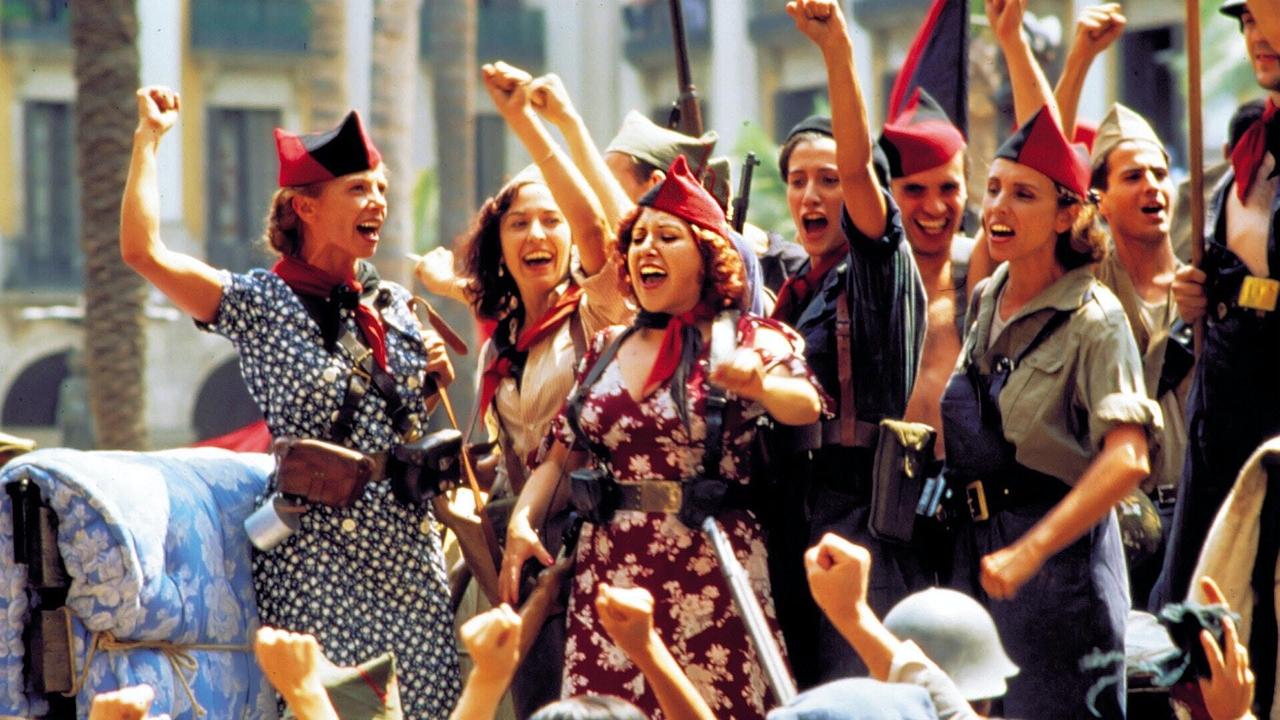
The opening moments linger, don't they? A young nun, innocent and sheltered, suddenly thrust from the quiet cloisters into the blazing chaos of 1936 Barcelona. It’s a jarring collision of worlds, and it sets the stage for Vicente Aranda's ambitious and often harrowing 1996 historical drama, Libertarias (released internationally, sometimes slightly trimmed, as Freedomfighters). This wasn't the kind of tape you'd grab for a casual Friday night viewing, tucked between the latest action flick and a familiar comedy. Finding Libertarias on VHS often meant venturing into the slightly more intimidating "World Cinema" section of the larger video stores, a commitment perhaps, but one that promised something deeper, something challenging. And Libertarias delivered precisely that.
Amidst the Anarchy
The film plunges us into the early, fervent days of the Spanish Civil War, specifically focusing on the anarchist Mujeres Libres (Free Women) movement. María (Ariadna Gil, who many might remember from Belle Époque), the aforementioned novice nun, finds her convent overrun by militia. Seeking refuge, she ironically falls in with a group of fiercely independent anarchist women heading to the front lines. This unlikely setup becomes the vessel through which Aranda explores the brutal realities of war, the complex tapestry of revolutionary ideals, and, most significantly, the often-overlooked role of women in the conflict.
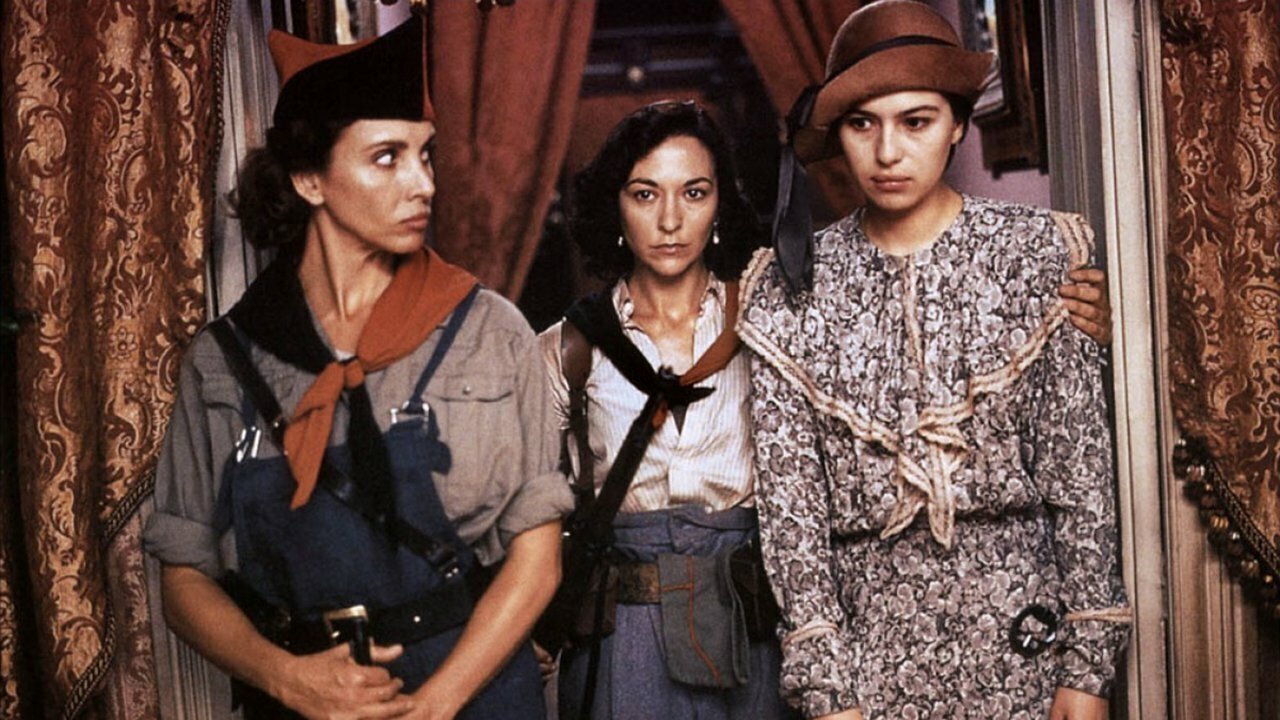
The narrative follows María's profound transformation as she navigates this alien landscape alongside seasoned fighters like the pragmatic Pilar (Ana Belén, a true icon of Spanish stage and screen) and the fiercely committed, sometimes volatile Floren (Victoria Abril, already internationally known for her collaborations with Almodóvar, like Tie Me Up! Tie Me Down!). The film doesn't shy away from the ideological clashes even within the anarchist ranks, nor the sheer horror and disillusionment that war inevitably breeds.
Portraits of Courage and Conflict
What truly elevates Libertarias beyond a standard historical epic are the performances. Ariadna Gil is exceptional as María, embodying the initial shock, the gradual shedding of old beliefs, and the painful forging of a new identity amidst unimaginable violence. Her journey is the audience's anchor in the storm. Ana Belén brings a commanding presence and weary strength to Pilar, the de facto leader whose revolutionary zeal is tempered by grim experience. And Victoria Abril, crackling with energy, portrays Floren's unwavering conviction, embodying the raw passion that fueled the movement, even as it sometimes bordered on recklessness. The chemistry and conflict between these women feel utterly authentic; their bond, forged in shared danger and belief, is the film's emotional core. You feel their camaraderie, their arguments, their devastating losses. It's a powerful ensemble that reminds us how performance can illuminate history's human cost.
Unflinching Vision, Ambitious Scale
Vicente Aranda, a veteran Spanish director known for tackling difficult subjects (Amantes (1991) being another notable work), directs with an unflinching, almost documentary-like realism. The battle scenes are chaotic, brutal, and stripped of any Hollywood glamour. This isn't heroic spectacle; it's muddy, bloody, and terrifying. The production itself was a significant undertaking for Spanish cinema at the time, reportedly costing around 800 million pesetas (roughly €4.8 million then – a hefty sum!). Filming took place across historically relevant regions like Aragon and Catalonia, adding a layer of authenticity to the visuals. The dedication shows – the period detail in the costumes, the shell-shocked landscapes, the desperate energy of the cities all contribute to a palpable sense of time and place. It’s a testament to the filmmakers' commitment that Libertarias garnered several Goya Award nominations in Spain, recognition of its craft and ambition.
Beyond the Barricades: Trivia and Truth
It's fascinating to consider the challenges Aranda faced, not just in recreating the war's physicality, but in portraying the complex, often internally conflicted, anarchist movement without resorting to simplistic heroism or villainy. The film doesn't offer easy answers about the revolution's trajectory or the compromises made in the heat of battle. One interesting production tidbit involves the sheer scale – coordinating large groups of extras for the street fighting and front-line scenes required meticulous planning, especially aiming for that gritty realism Aranda favoured. There were reportedly debates during production about how explicitly to depict the violence and the sometimes harsh internal discipline within the militias, aiming for historical honesty over sanitized drama. This commitment to a less romanticized view is part of what gives the film its lasting power.
Legacy of the Libertarias
Libertarias isn't a comfortable watch. It’s long, intense, and emotionally draining. It forces us to confront the savage realities faced by those who fought for their ideals, particularly these women whose stories are so rarely told. Does the intensity sometimes overwhelm the narrative nuance? Perhaps for some viewers. Is it a definitive historical account? Likely not – it’s a dramatization, focusing on specific experiences. But its value lies in its fierce commitment to its characters and its refusal to look away from the ugliness of conflict. It asks profound questions: What is the true price of freedom? How does idealism survive – or shatter – under fire? Doesn't the struggle for equality and dignity resonate across decades, even if the battlefield looks different today?
For those of us who encountered it back in the VHS days, perhaps initially drawn by the striking cover art or a recommendation from a discerning video store clerk, Libertarias left a mark. It was a potent reminder that powerful cinema existed beyond Hollywood's borders, tackling complex history with raw emotion and unforgettable performances.
Rating: 8/10
This score reflects the film's undeniable power, driven by outstanding performances from its lead actresses and Aranda’s unflinching directorial vision. It’s a significant piece of Spanish cinema that brings a vital, underrepresented perspective on the Civil War to life with visceral impact. While its length and intensity make it demanding, the emotional resonance and historical weight justify the commitment. It's a film that earns its difficult moments.
Final Thought: Libertarias stays with you, not just for its depiction of war, but for its fierce portrait of women claiming their agency in the face of chaos, leaving you to ponder the countless stories of courage lost to history's footnotes.