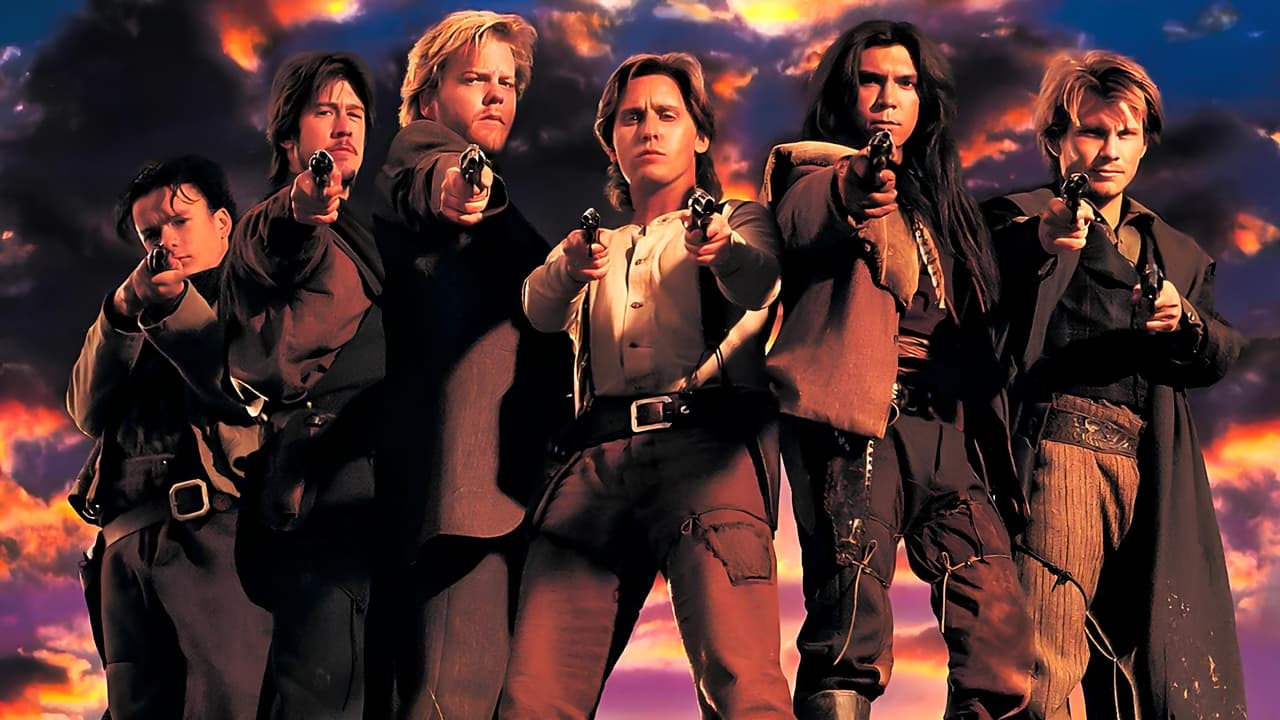
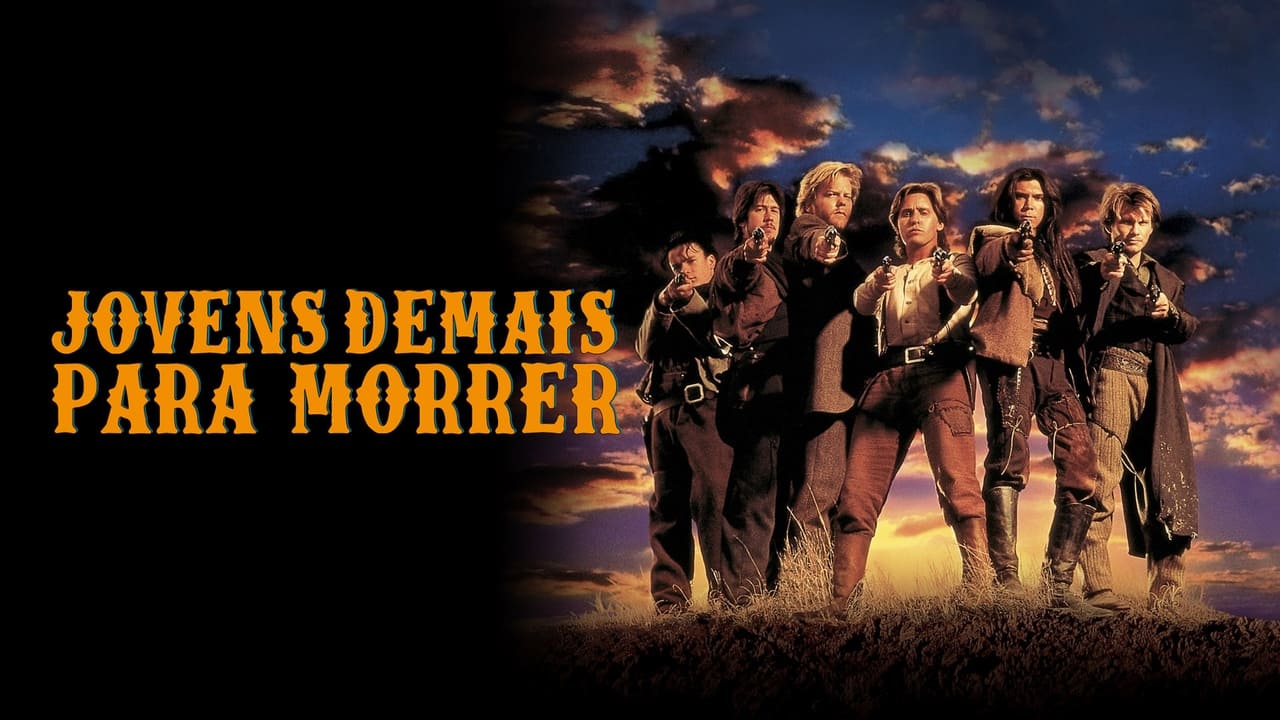
Alright, saddle up, grab your remote, and let's rewind to 1990. Remember that feeling? The first Young Guns had reignited a certain youthful cool for the Western genre just two years prior, mixing historical outlaws with Brat Pack swagger. Then came the sequel, heralded not just by trailers, but by the unmistakable power chords of Bon Jovi roaring from radios everywhere. You couldn't escape "Blaze of Glory" that summer, and frankly, why would you want to? It perfectly encapsulated the rock-and-roll energy that Young Guns II brought to the dusty trails, promising another ride with Billy the Kid and his remaining Regulators.
Picking Up the Pieces
Picking up roughly a year after the explosive Lincoln County War depicted in the first film, Young Guns II finds William H. Bonney, aka Billy the Kid (Emilio Estevez, reprising his energetic portrayal), very much alive and kicking, contrary to official reports. Screenwriter John Fusco, returning from the original, cleverly uses the framing device of an elderly man named Brushy Bill Roberts (Emilio Estevez again, under surprisingly effective old-age makeup) claiming to be the real Billy the Kid in 1950. This immediately sets the tone: we're dealing with legend as much as history, a tale spun larger than life, which feels just right for the VHS era's love affair with iconic anti-heroes.
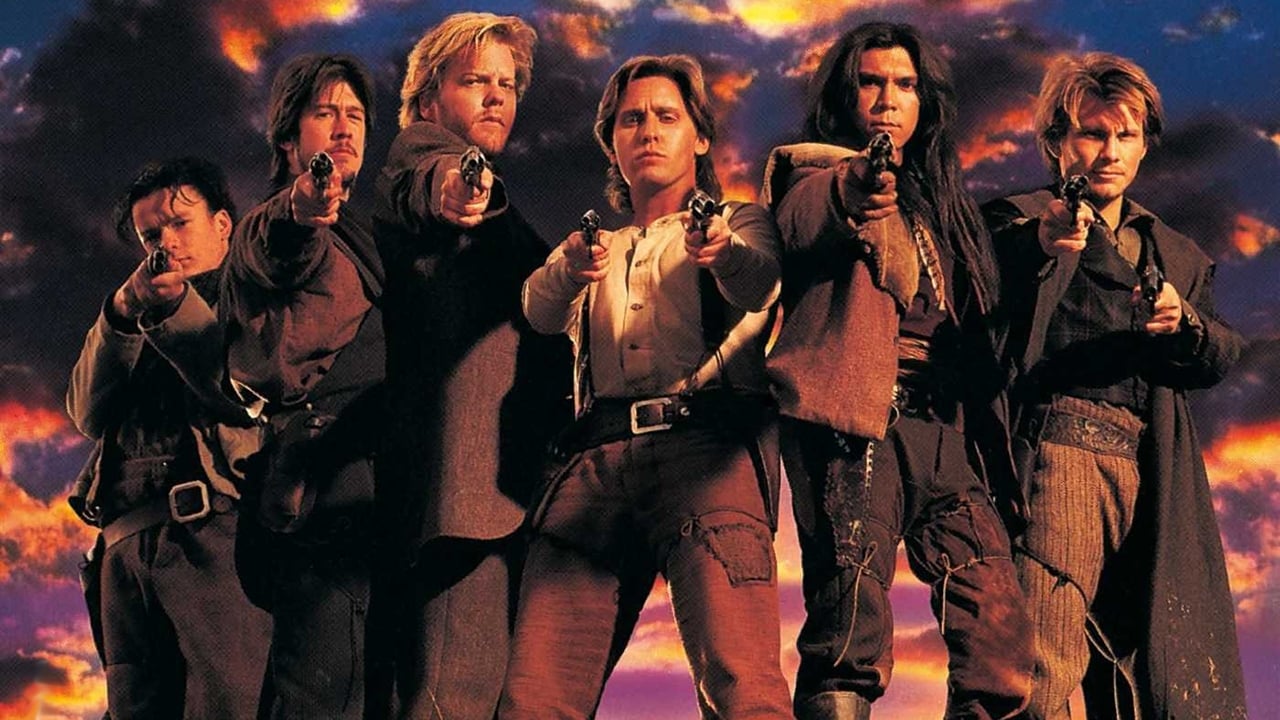
Directed by New Zealander Geoff Murphy, who knew a thing or two about crafting solid action from films like Utu (1983) and later Under Siege 2: Dark Territory (1995), the film reunites Billy with his loyal compadres Doc Scurlock (Kiefer Sutherland, bringing back that weary intellectual charm) and Jose Chavez y Chavez (Lou Diamond Phillips, embodying the stoic mysticism). Their chemistry remains a cornerstone, that easy camaraderie mixed with the tension of men constantly looking over their shoulders. They're offered amnesty by Governor Wallace (played briefly by the venerable Scott Wilson), but betrayal looms large, particularly in the form of Pat Garrett (William Petersen, perfectly cast as the determined former ally turned relentless lawman).
New Faces, Old Scores
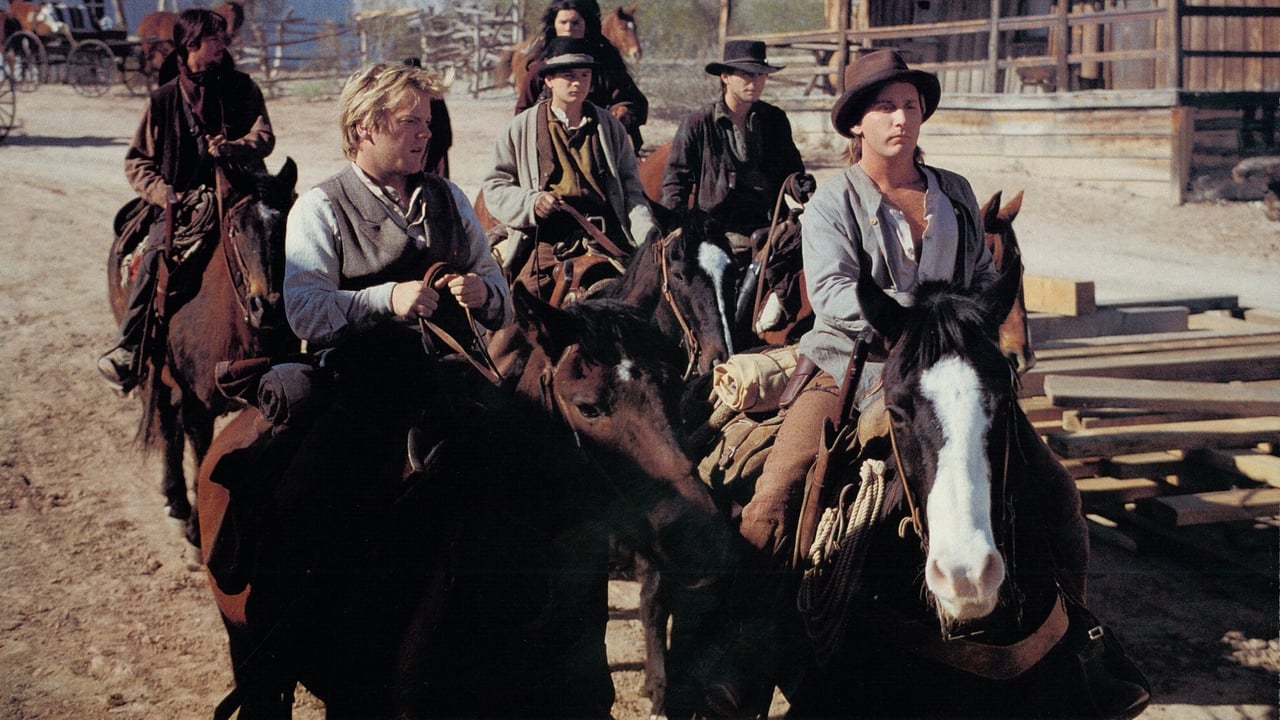
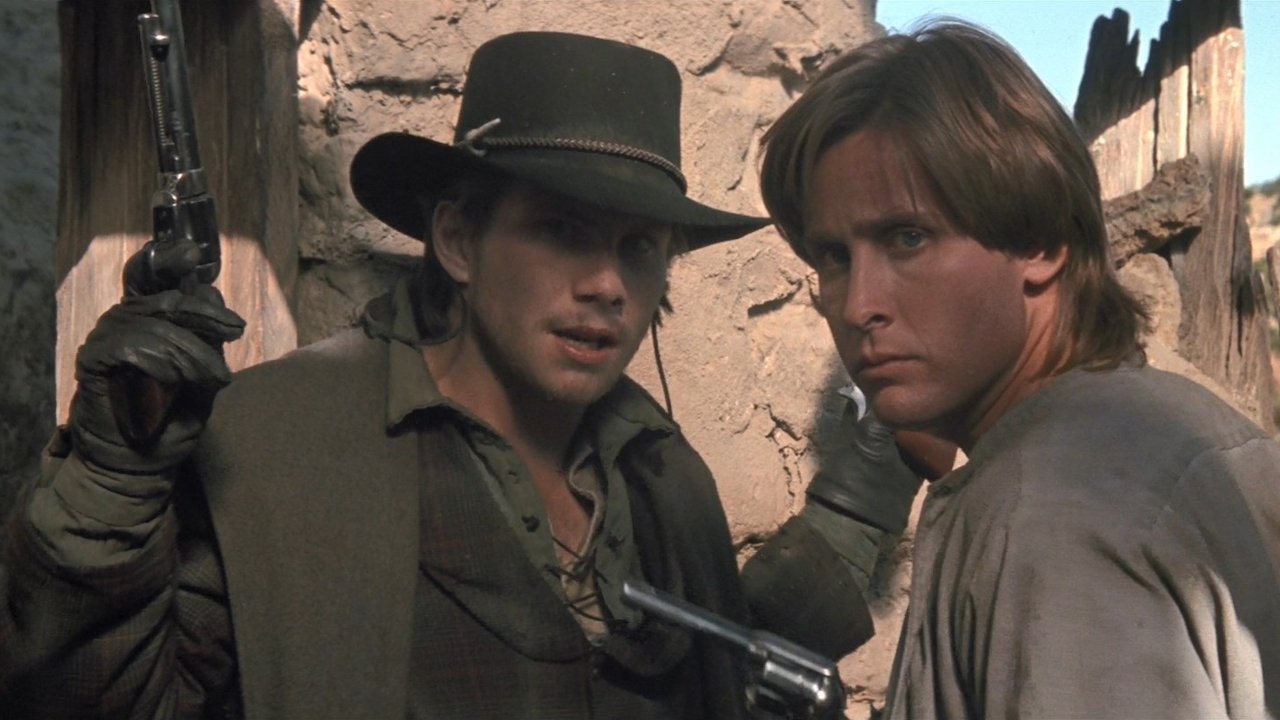
The sequel wisely introduces fresh blood to the gang. Christian Slater, then at the height of his Jack Nicholson-esque charisma, practically steals the show as "Arkansas" Dave Rudabaugh, a cocky, unpredictable addition whose loyalty is always in question. We also get Hendry William French (Alan Ruck, forever Cameron Frye to many of us, but proving his range here) adding another dynamic to the group. It’s a solid ensemble, playing off each other effectively amidst the chases and shootouts across the starkly beautiful landscapes of New Mexico and Arizona, captured with a dusty authenticity that grounds the more stylized elements.
One of the fascinating bits of trivia is Jon Bon Jovi's involvement. Initially approached to potentially use "Wanted Dead or Alive," he felt the song didn't quite fit. Instead, inspired by the script and particularly Estevez's character arc, he penned "Blaze of Glory." The song became a massive hit, bagging a Golden Globe and an Oscar nomination, and its success undoubtedly fueled the film's visibility. Its follow-up track, "Billy Get Your Guns," also peppered the movie, cementing that unique blend of Old West grit and late-80s/early-90s rock sensibility. This wasn't your grandfather's Western; it had a distinct MTV pulse beating beneath the leather and dust.
Style and Substance (Mostly Style)
Let's be honest, Young Guns II isn't aiming for the historical accuracy or revisionist depth of something like Unforgiven (which would arrive two years later). It’s about the myth, the romance, the image of the outlaw rebel. Estevez leans into Billy's manic energy and flashes of charm, making him a magnetic, if historically dubious, protagonist. Sutherland provides the melancholic heart, while Phillips remains the enigmatic soul of the group. Petersen's Garrett is less a villain and more a force of inevitability, a man doing a job he clearly finds distasteful but necessary.
Geoff Murphy's direction delivers competent, clear action sequences – horse chases, standoffs, and bullet-riddled showdowns feel tangible and exciting, benefiting from the era's reliance on practical stunts and effects. While perhaps not as fresh as its predecessor, the film cost a hefty $50 million (a significant sum for a Western then) and managed a decent, though not spectacular, $44 million at the domestic box office. Its real success likely came, as many films of the era did, from the booming home video market – finding its audience on countless Friday night rentals. I distinctly recall the worn edges of the VHS box at my local store, a testament to its popularity.
The Legend Lives On
Young Guns II occupies an interesting space. It arrived when the Western was experiencing a mini-resurgence but brought a younger, more contemporary feel. It wasn’t afraid to be stylish, maybe even a little bit cheesy, but it did so with sincerity and energy. The film doesn't shy away from the violence inherent in the story, but it frames it within the context of youthful rebellion and a desperate fight for freedom, however misguided. The ending, playing off the Brushy Bill framing device, leaves things ambiguous, preferring the power of myth over concrete historical fact. Who really was Billy the Kid? The film suggests the legend is perhaps more important, and certainly more entertaining.
VHS Heaven Rating: 7/10
This rating reflects the film's undeniable entertainment value, strong performances (especially from the core trio and Slater), iconic soundtrack, and its successful capture of a specific, stylized Western vibe that resonated strongly in the early 90s. It might take liberties with history and lack the depth of genre masterpieces, but as a piece of charismatic, action-packed nostalgia fueled by rock anthems and movie star cool, it absolutely delivers. It's a film that knew exactly what it wanted to be: a legendary send-off for a legendary outlaw, told with flair.
For those nights when you want a dose of dusty trails mixed with power ballads and familiar faces riding hard, Young Guns II is still ready to go out in a blaze of glory.