Okay, let's slide another tape into the VCR of our minds. Remember the feeling? That slight clunk, the whirring sound, the anticipation as the tracking adjusted on your CRT? Sometimes you struck gold, and sometimes... well, sometimes you got exactly what you expected, and that was okay too. In the mid-90s anime boom, finding a new Dragon Ball Z movie on the shelves felt like unearthing treasure, especially one promising the return of him. Yes, Broly. The Legendary Super Saiyan himself. Dragon Ball Z: Broly - Second Coming (1994) wasn't just a sequel; it felt like an event for fans hungry for more Saiyan-on-Saiyan carnage.
The Legend Returns... Sort Of
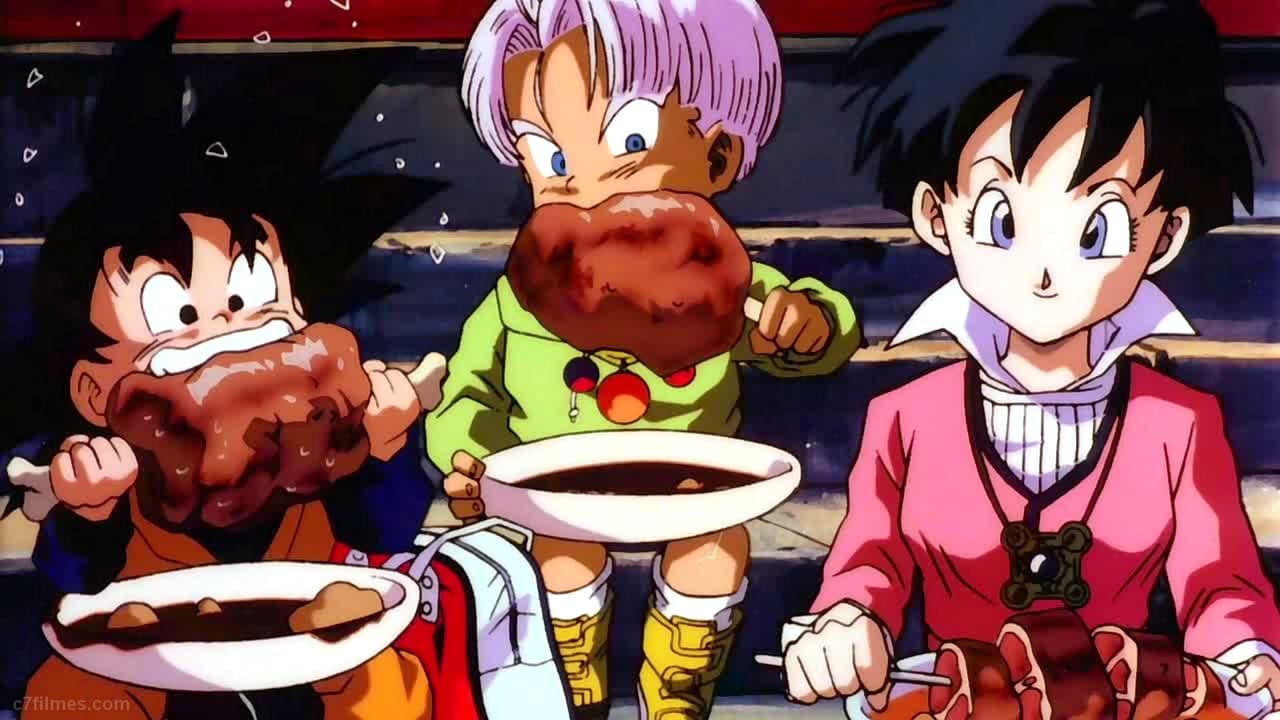
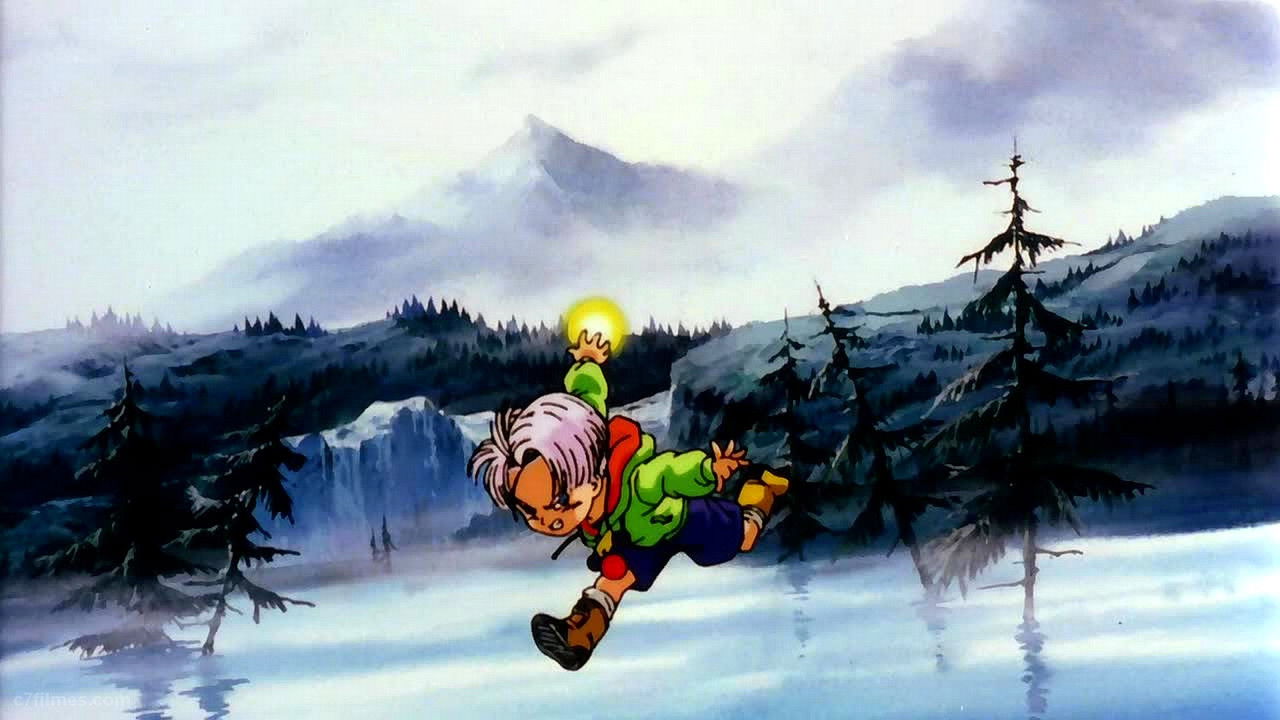
Let’s be honest, the plots of these DBZ movies were often thinner than Vegeta’s patience. Crafted by writer Takao Koyama, who penned most of the original 13 DBZ films under Akira Toriyama's watchful eye (though Toriyama's direct involvement was usually character design and naming), these were designed as theatrical power fantasies, existing slightly outside the main series timeline. Second Coming drops us onto a surprisingly peaceful Earth where Goten, Trunks, and Videl are on a quest for the Dragon Balls. It’s a lighter start, leaning into the goofy dynamic between the two young Saiyans and the increasingly exasperated Videl. This kid-centric adventure vibe is fun, a brief calm before the inevitable, planet-shattering storm. You almost forget what movie you're watching... until a PTSD-fueled cry of "Kakarot!" echoes across the landscape.
Broly, having somehow survived his first explosive encounter and crash-landed on Earth years prior (don't think too hard about it), is accidentally thawed out by Goten's crying. And he is not happy. What follows is pure, distilled DBZ movie action: a seemingly unstoppable force of nature versus whoever happens to be nearby. Initially, it’s up to the kids and Videl, and the film does a decent job showcasing their bravery, even if they're hopelessly outmatched. It was always a strange thrill seeing characters we knew weren't quite top-tier having to hold the line.
Maximum Power! (And Hand-Drawn Fury)
This is where director Shigeyasu Yamauchi shines. Yamauchi, who also helmed stone-cold classics like DBZ: Cooler's Revenge (1991) and the visually stunning DBZ: Fusion Reborn (1995), had a knack for atmosphere and kinetic energy. When Broly powers up, the screen feels like it's shaking. The animation, while standard Toei fare for the time, possesses that tangible, hand-drawn quality that defined 90s anime action. Every energy blast crackles, every punch lands with a visceral thud, often emphasized by those classic impact frames and speed lines.
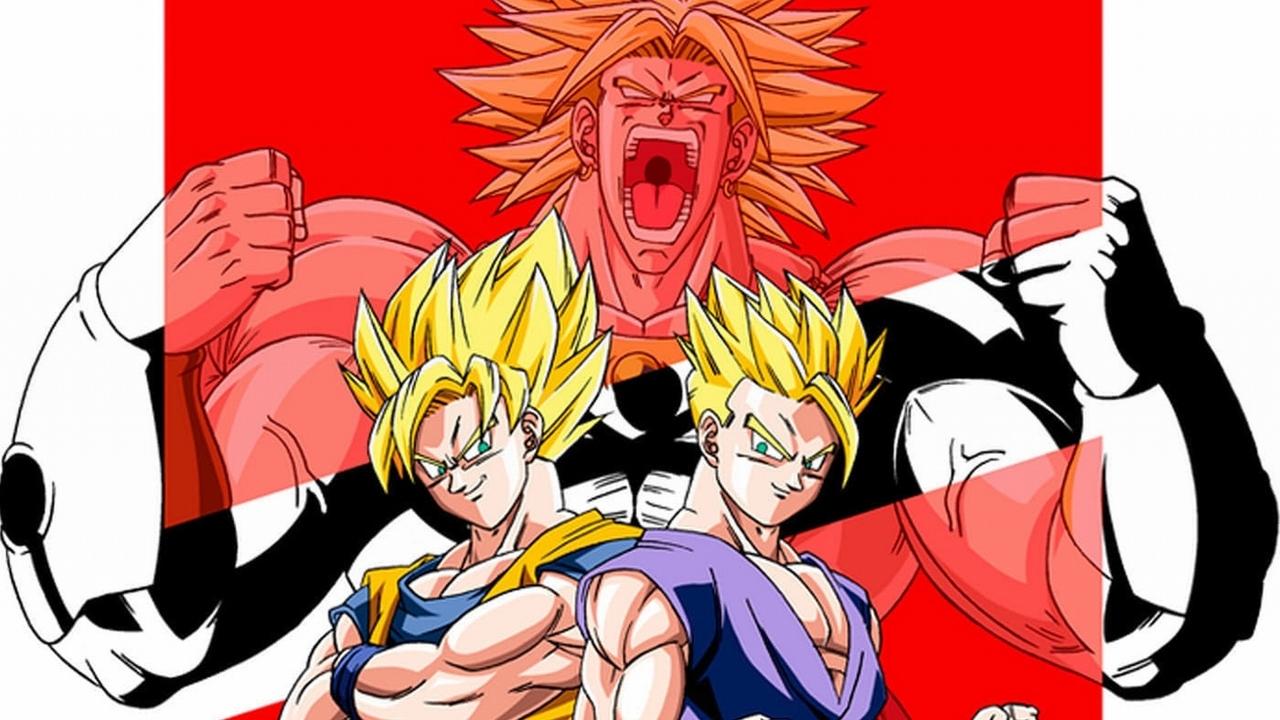
Remember how real those fights felt back then, even in animation? Broly isn't just strong; he's brutal. He tosses Goten and Trunks around like ragdolls. There's a weight to the action, a sense of desperation that CGI-heavy modern animation sometimes smooths over. You believed these characters were in actual peril because the impacts looked painful. It wasn't just flashy lights; it was raw, destructive power visualized through ink and paint. Seeing Super Saiyan Goten and Trunks go all-out, their combined might barely registering against Broly's rage, was peak DBZ escalation. It’s a testament to Masako Nozawa’s legendary voice work that she convincingly portrays Goten’s youthful determination and Gohan's eventual heroic return, alongside Goku’s brief appearance, all within the same film.
Gohan Steps Up (Eventually)
Just when things look bleakest, Gohan senses the danger and arrives. This is post-Cell Games Gohan, maybe a little rusty, but still capable of unleashing incredible power. The subsequent fight between Gohan and Broly forms the core of the film. It’s a desperate struggle against overwhelming odds, punctuated by Yamauchi's dynamic staging. Interestingly, this film was created during the Buu Saga's manga run, a time when Gohan's ultimate potential was a major plot point, making his central role here feel somewhat timely, even if the movie itself doesn't neatly fit the canon.
The setting – moving from lush forests to volcanic plains – adds to the escalating drama. Broly remains largely a one-note character ("KAKAROT!"), voiced with chilling menace by Bin Shimada, but his sheer destructive presence is undeniable. He was popular enough after his first appearance in Broly - The Legendary Super Saiyan (1993) that Toei practically had to bring him back; fans demanded it, and the box office reflected that enthusiasm in Japan. This film understood Broly's appeal: less complex villain, more force of nature.
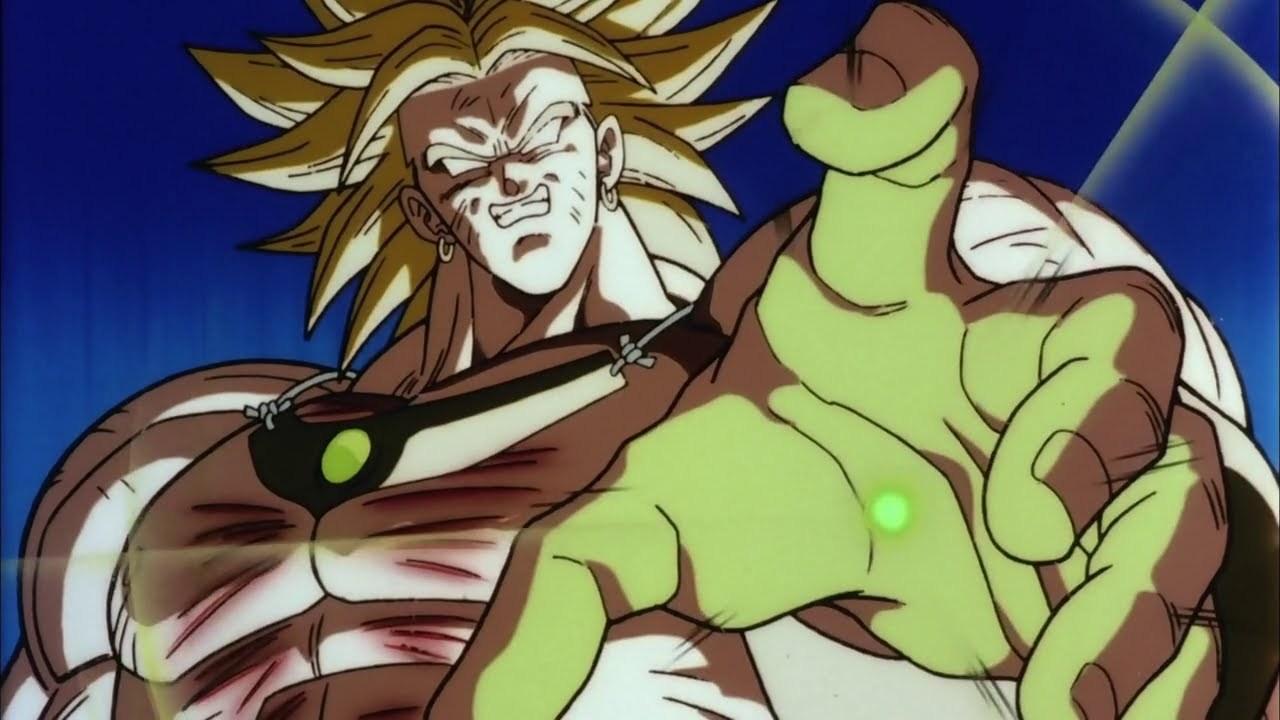
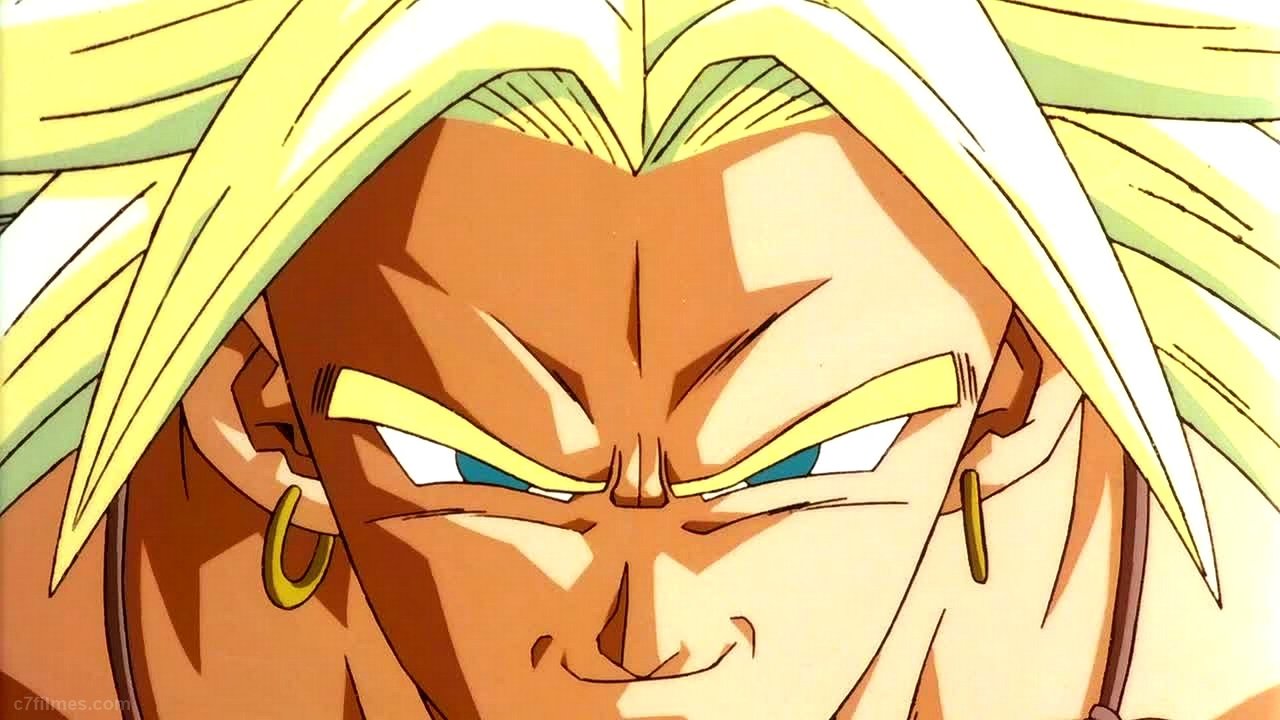
Retro Fun Fact: Despite Broly's massive popularity, Akira Toriyama himself had relatively little creative input on the character beyond initial design concepts provided by Toei Animation. His enduring legacy is largely thanks to the anime staff and the fans who embraced his overwhelming power.
The Family Kamehameha
Spoiler Alert (Kind Of)! The climax involves one of the most memorable, if slightly logic-bending, moments in DBZ movie history: the Family Kamehameha. With Gohan and Goten struggling, the Dragon Balls grant a wish (sort of… it’s implied?), bringing forth Goku's spirit to join his sons in one final, epic energy clash against Broly. Is it earned? Does it make sense? Not entirely. Is it awesome to watch? Absolutely. It’s pure fan service, tapping into the core themes of legacy and family that underpin Dragon Ball Z, delivered with maximum visual impact. It’s the kind of moment that had you rewinding the tape immediately.
This film, like many DBZ movies, suffers from familiar issues – wafer-thin plot, questionable power scaling (how did Broly get so much stronger frozen in ice?), and an over-reliance on powering up. But viewed through the lens of 90s action anime, it delivers exactly what it promises: high-stakes battles, fan-favourite characters pushed to their limits, and a villain whose presence alone guarantees spectacle. It captures that specific energy of its era – slightly goofy, incredibly sincere in its action, and relentlessly entertaining.
Rating: 7/10 - The score reflects a film that knows exactly what it is: a straightforward, action-packed spectacle showcasing a fan-favourite villain. It lacks the depth of the best DBZ arcs but delivers hugely on the hand-drawn Saiyan slugfest front, elevated by Yamauchi's direction and memorable moments like the Family Kamehameha. It’s pure nostalgic comfort food for the DBZ faithful.
Final Thought: Forget intricate plots; Broly - Second Coming was peak 'popcorn anime' for the VHS generation – load it up, turn your brain down, and just enjoy the beautiful, hand-drawn destruction. Maximumer!