It’s a strange thing, the weight of fifty years distilled into just over two hours. Watching Mark Rydell’s For the Boys (1991) again, decades after first sliding that hefty VHS tape into the VCR, that sense of sweeping ambition feels both admirable and, perhaps, a little overwhelming. It’s a film that reaches for epic status, chronicling not just the decades-spanning, often tumultuous partnership of USO performers Dixie Leonard and Eddie Sparks, but also the changing face of America at war, from the patriotic fervor of WWII to the disillusionment of Vietnam. Does it always succeed? Maybe not perfectly, but the journey it takes us on, fueled by two powerhouse lead performances, certainly leaves a mark.
Decades on Stage, Decades at War
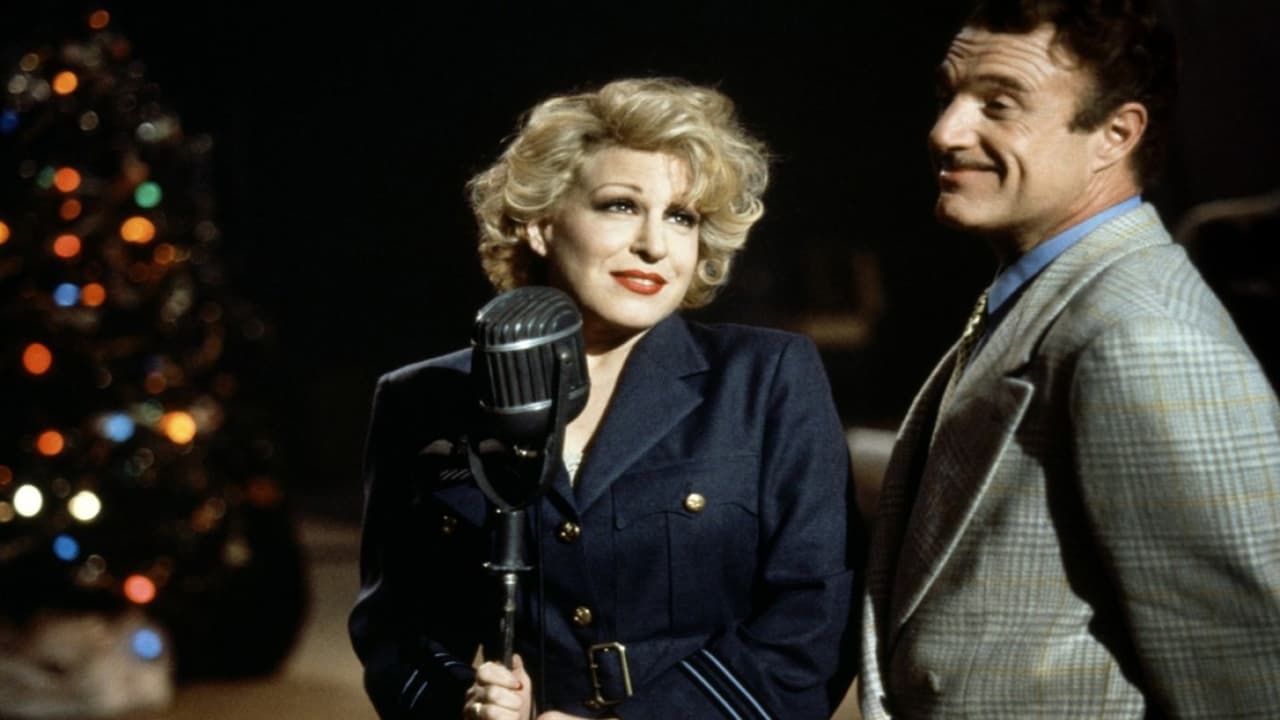
The premise itself is pure Hollywood gold, albeit tinged with the bittersweet realities of showbiz and conflict. We meet Dixie (Bette Midler) and Eddie (James Caan) as aging icons being honored for their lifetimes of entertaining the troops. The narrative then flashes back, tracing their initial meeting during World War II, their rise as a beloved double act, and the personal and professional highs and lows that accompany them through the Korean War and, most devastatingly, Vietnam. Their relationship is the film’s fiery core: a blend of sharp-tongued banter, undeniable chemistry, genuine affection, and deep-seated resentment. They need each other, they complete each other on stage, yet off stage, their egos and fundamentally different approaches to life often put them painfully at odds. It’s a dynamic that feels exhausting and compelling in equal measure.
The Divine Miss M Takes Center Stage
You can feel Bette Midler’s passion pulsing through this project; she not only stars but also served as a producer. Dixie Leonard feels tailor-made for her formidable talents – brassy, hilarious, vulnerable, and possessing a voice that could fill any hangar or bombed-out theatre. Midler throws herself into the role with characteristic gusto, navigating the comedy, the high-energy musical numbers (like the infectious "Stuff Like That There"), and the gut-wrenching dramatic moments with remarkable skill. Her performance earned her a well-deserved Academy Award nomination. It’s easy to see why; she is Dixie, embodying the character's journey from wide-eyed newcomer to seasoned, somewhat cynical veteran, carrying the weight of personal loss alongside professional triumphs. It was reported that Midler saw the film as a tribute to performers like Martha Raye, who devoted significant time to the USO circuit.
Caan's Complicated Counterpoint
Playing opposite Midler’s force of nature is James Caan as Eddie Sparks. Caan, known for tough-guy roles like Sonny Corleone in The Godfather (1972), brings a different kind of energy. Eddie is charming but self-absorbed, a consummate showman whose jokes often mask a deeper insecurity or ruthlessness. He can be infuriatingly dismissive of Dixie's talent and intelligence, yet Caan subtly reveals the cracks in Eddie’s façade – the loneliness, the fear, the grudging respect, and perhaps even love, he holds for his longtime partner. It’s a less flashy role than Midler’s, but Caan’s grounded performance provides the necessary anchor and friction. Their scenes together crackle, whether they're trading insults or sharing a rare moment of quiet understanding. The chemistry is undeniable, even when – especially when – it’s antagonistic. We also get a welcome appearance from George Segal, adding his reliable presence as Dixie's supportive writer friend.
Behind the Greasepaint and the Battles
Bringing five decades to life is no small feat. Director Mark Rydell, who previously helmed the character-focused drama On Golden Pond (1981), navigates the shifting tones and timelines with a steady hand, though the episodic nature occasionally makes the film feel more like a series of vignettes than a completely cohesive whole. The production itself was a significant undertaking, with a hefty budget reported around $44 million (that's nearly $100 million in today's money!). Sadly, it struggled to find its audience, grossing only about $23 million domestically (around $51 million today), making it a notable box office disappointment despite Midler's star power.
The ambitious scope required extensive makeup work to age the leads convincingly across the decades – a common challenge for films spanning long periods, handled here with reasonable success for the time. Filming locations reportedly included spots in California standing in for England, North Africa, Korea, and Vietnam, requiring considerable logistical effort to recreate distinct wartime environments. While the script, credited to Marshall Brickman (Annie Hall), Neal Jimenez (River's Edge), and Lindy Laub, aims for both broad entertainment and poignant drama, it sometimes struggles to seamlessly blend the two. Moments of wartime horror can feel jarringly juxtaposed with upbeat musical numbers, a tonal tightrope walk that doesn't always maintain its balance.
Songs in the Face of Sorrow
The musical numbers are, unsurprisingly, highlights. Midler belts out standards and new songs with powerhouse vocals, capturing the spirit of each era. Numbers like "P.S. I Love You" or the rousing "In My Life" land with emotional weight, serving as more than just performance pieces; they underscore the themes of love, loss, and perseverance against the grim backdrop of war. They remind us of the vital role entertainment played (and plays) in boosting morale during the darkest times, offering a fleeting escape, a moment of connection, a reminder of home. Doesn't that manufactured joy feel even more poignant when contrasted with the realities faced just beyond the stage?
An Ambitious Swing, A Complicated Legacy
For the Boys is undeniably ambitious. It tackles huge themes – the cost of war, the price of fame, the endurance of complex relationships, patriotism, disillusionment – across a grand canvas. Midler and Caan deliver unforgettable performances, etching a complex, often uncomfortable, but ultimately human partnership onto the screen. The film looks good, sounds great, and certainly feels like the kind of sweeping Hollywood epic they don’t make quite as often anymore.
Yet, its reach sometimes exceeds its grasp. The tonal shifts can be abrupt, and the sheer amount of ground covered means some dramatic moments feel condensed or rushed. Its initial mixed reception reflected this; critics praised the leads but often found the narrative uneven or overly sentimental. Watching it now, through the lens of nostalgia and with the passage of time, its flaws seem perhaps less glaring, overshadowed by the strength of its central performances and the sincerity of its effort. It’s a film that aimed high, and even if it didn’t hit every target perfectly, its ambition and heart are still palpable. I remember renting this one from the local Video Library chain, the weighty double-VHS clamshell promising something substantial, and it certainly delivered on scope.
Rating: 7/10
This score reflects the film's undeniable strengths – primarily the towering performances from Midler and Caan and its impressive, decade-spanning ambition. The musical numbers are strong, and the core relationship study is compelling. However, the rating is tempered by the sometimes jarring tonal shifts between broad comedy, musical spectacle, and heavy wartime drama, along with an episodic structure that doesn't always feel fully cohesive, preventing it from reaching true classic status.
For the Boys remains a fascinating, flawed, but ultimately moving piece of early 90s cinema – a big swing powered by Bette Midler's star wattage and a compelling, if difficult, screen romance. It lingers as a reminder of how intertwined entertainment and conflict can become, and the complex legacies forged under the spotlight, both on stage and on the battlefield.