Hearts of Darkness: A Filmmaker's Apocalypse
There's a certain voyeuristic thrill, perhaps even a touch of guilt, that accompanies watching Fax Bahr and George Hickenlooper's Hearts of Darkness: A Filmmaker's Apocalypse (1991). It feels less like a documentary and more like stumbling upon a hidden box of home movies, chronicling not a family vacation, but the descent into a very specific, artistically driven madness. We're peering behind the curtain of one of cinema's most mythologized productions, Apocalypse Now (1979), and the view is staggering, chaotic, and utterly mesmerizing. It’s the kind of behind-the-scenes look that VHS promised – raw, unfiltered, something you couldn’t get anywhere else.
The Secret Tapes of the Jungle
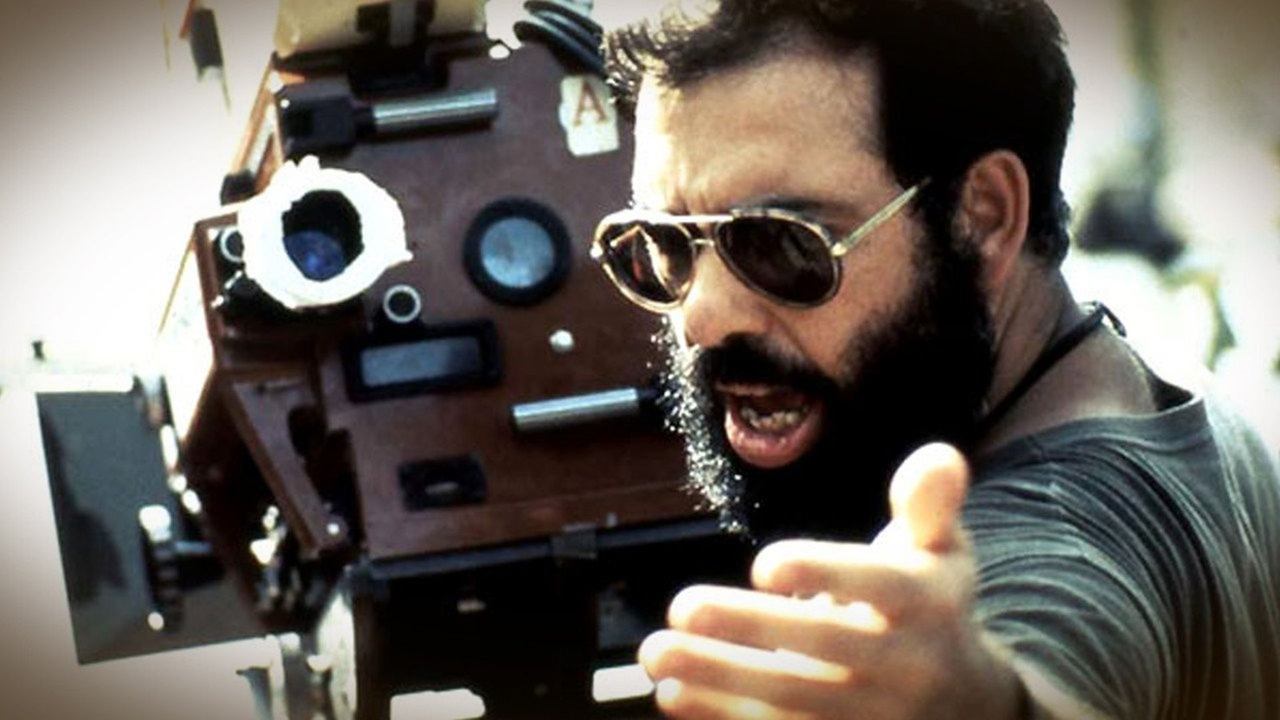
The backbone of this incredible film isn't slick interviews conducted years later, but the astonishingly candid audio recordings and 16mm footage captured by Eleanor Coppola, wife of director Francis Ford Coppola. Tasked initially with shooting some promotional material, Eleanor kept her camera rolling and her tape recorder running, documenting the unraveling sanity of a production besieged by forces both natural and man-made. Her quiet, observant presence yields moments of shocking vulnerability, particularly from her husband, caught in the teeth of a cinematic hurricane largely of his own making. Hearing Francis confess, "We were in the jungle, there were too many of us, we had access to too much money, too much equipment, and little by little we went insane," isn't just a soundbite; it's the film's thesis, delivered with the weariness of a man pushed to his absolute limit.
When Everything Goes Wrong
Hearts of Darkness meticulously catalogues the legendary disasters that plagued the Apocalypse Now shoot in the Philippines. It wasn't just one thing; it was everything. The original leading man, Harvey Keitel, was fired weeks into shooting, replaced by Martin Sheen (known then for films like Badlands (1973)), who subsequently suffered a near-fatal heart attack mid-production, forcing Coppola to use doubles and clever angles while Sheen recovered. A massive typhoon decimated expensive sets, halting filming for weeks. The budget ballooned from an already ambitious $12 million to a staggering $31.5 million (that's well over $130 million in today's money!), forcing Coppola to gamble his personal fortune, including his home and winery, to keep the cameras rolling. The shoot, initially planned for a few months, stretched beyond 238 grueling days. This wasn't just filmmaking; it was warfare against circumstance.
The Brando Factor
And then there was Marlon Brando. His arrival is one of the documentary's most fascinating sections. Secured for a hefty $3.5 million for three weeks' work, the legendary actor, fresh off his Oscar win for The Godfather (1972) also directed by Coppola, showed up significantly overweight (having apparently promised Coppola he'd lose weight) and admitting he hadn't even read Joseph Conrad's "Heart of Darkness," the source novella, let alone the script pages adapting Colonel Kurtz. The documentary captures Coppola's desperate attempts to coax a performance, wrestling with Brando's eccentricities, his improvisational demands, and the need to visually obscure his physique by dressing him in black and shooting him largely in shadow. Yet, amidst the chaos, you see glimpses of Brando's undeniable magnetism, the sparks of genius that made Kurtz such an indelible screen presence. It's a masterclass in managing genius and ego under extreme duress.
A Portrait of the Artist Under Siege
While the logistical nightmares are compelling, Hearts of Darkness achieves greatness through its portrait of Francis Ford Coppola. We see him not just as the visionary director of The Godfather saga, but as a man wrestling with doubt, fear, and monumental ego. Eleanor's recordings capture his private anxieties, his philosophical musings, and his moments of sheer panic. The pressure is palpable. He’s not merely making a movie; he’s attempting to capture the insanity of the Vietnam War itself, and the lines between the film's themes and the reality of its production blur terrifyingly. Seeing Coppola navigate the creative conflicts with actors like Dennis Hopper (whose photographer character was largely improvised), battle the elements, and stare into the financial abyss is both terrifying and strangely inspiring. How does artistry survive such an onslaught?
More Than Just a Making-Of
Bahr and Hickenlooper skillfully weave Eleanor's intimate footage with contemporary interviews (conducted in the late 80s/early 90s) with key players like Coppola, Sheen, Robert Duvall, John Milius (the screenwriter), and others. This blend provides context and reflection, allowing the participants distance to process the ordeal. The editing mirrors the escalating tension of Apocalypse Now, drawing parallels between Willard's journey upriver and Coppola's journey into the heart of his own ambitious project. This isn't just a collection of "making-of" anecdotes; it's a profound exploration of the creative process pushed to its breaking point, a cautionary tale wrapped in a riveting documentary. It's a key text for understanding not just Apocalypse Now, but the sheer force of will required to bring any truly ambitious film to life, especially in that pre-digital era. I remember renting this on VHS shortly after its release, having been obsessed with Apocalypse Now for years, and feeling like I'd discovered a secret history.
Rating: 10/10
Hearts of Darkness is more than just the greatest "making-of" documentary ever produced; it's a standalone masterpiece. It justifies its perfect score through its unprecedented access, its raw honesty, and its profound meditation on artistic ambition, sacrifice, and the razor's edge between visionary genius and utter folly. It lays bare the chaos, the ego, the terror, and the strange beauty of creating something monumental against impossible odds.
It leaves you wondering: how many other cinematic classics were born from such private apocalypses, their stories thankfully, or perhaps tragically, unrecorded?