It starts with a feeling, doesn't it? Not just a story, but a sense of being adrift, caught between worlds. That's the current that pulls you into Mississippi Masala (1991), a film that arrived on video store shelves feeling quietly revolutionary amidst the usual action and comedy tapes. It wasn’t about explosions or one-liners; it was about the intricate, often messy, ways cultures collide and connect, and the search for belonging in a place that might never fully feel like home. I remember renting this one, intrigued by the unusual title and the promise of something different, and finding exactly that – a film with a warmth and specificity that lingered long after the VCR clicked off.
An Unlikely Blend in the Deep South
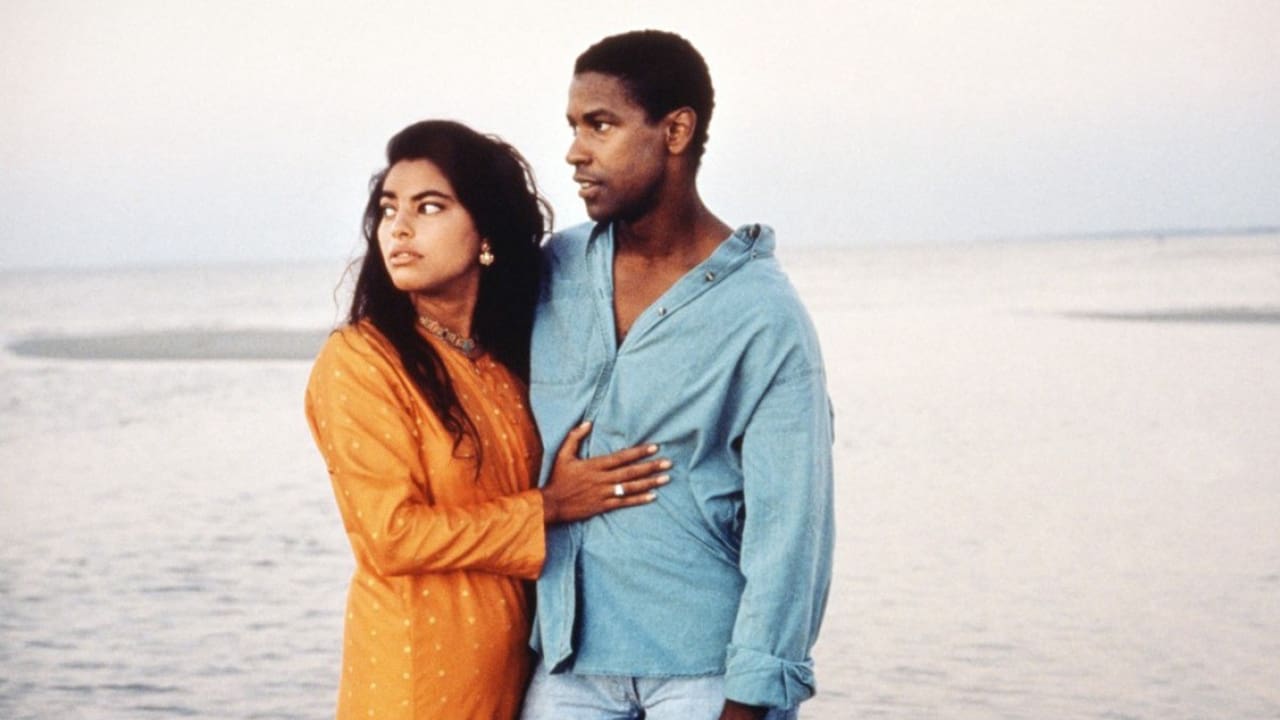
At its heart, Mississippi Masala is a love story, but it’s wrapped in layers of history, displacement, and nuanced social commentary. We follow Mina (Sarita Choudhury, in a luminous film debut), a young Indian woman whose family was expelled from Uganda under Idi Amin’s regime when she was a child. They’ve resettled in Greenwood, Mississippi, running a motel, but her father, Jay (Roshan Seth, embodying weariness and wounded pride), remains emotionally tethered to the Kampala home he lost, constantly petitioning to reclaim his property. Mina, having grown up mostly in America, feels a different kind of displacement – caught between her family's traditions and the Southern culture around her.
Into this simmering mix steps Demetrius (Denzel Washington), a self-employed carpet cleaner, rooted in the local Black community. Their initial meeting, a minor fender bender, sparks an undeniable attraction. What unfolds is a tender, believable romance that dares to cross cultural lines, forcing both families and communities to confront their own prejudices and assumptions. It’s a setup that feels remarkably fresh even today, tackling complexities that mainstream cinema often shied away from in the early 90s.
Performances That Breathe Life
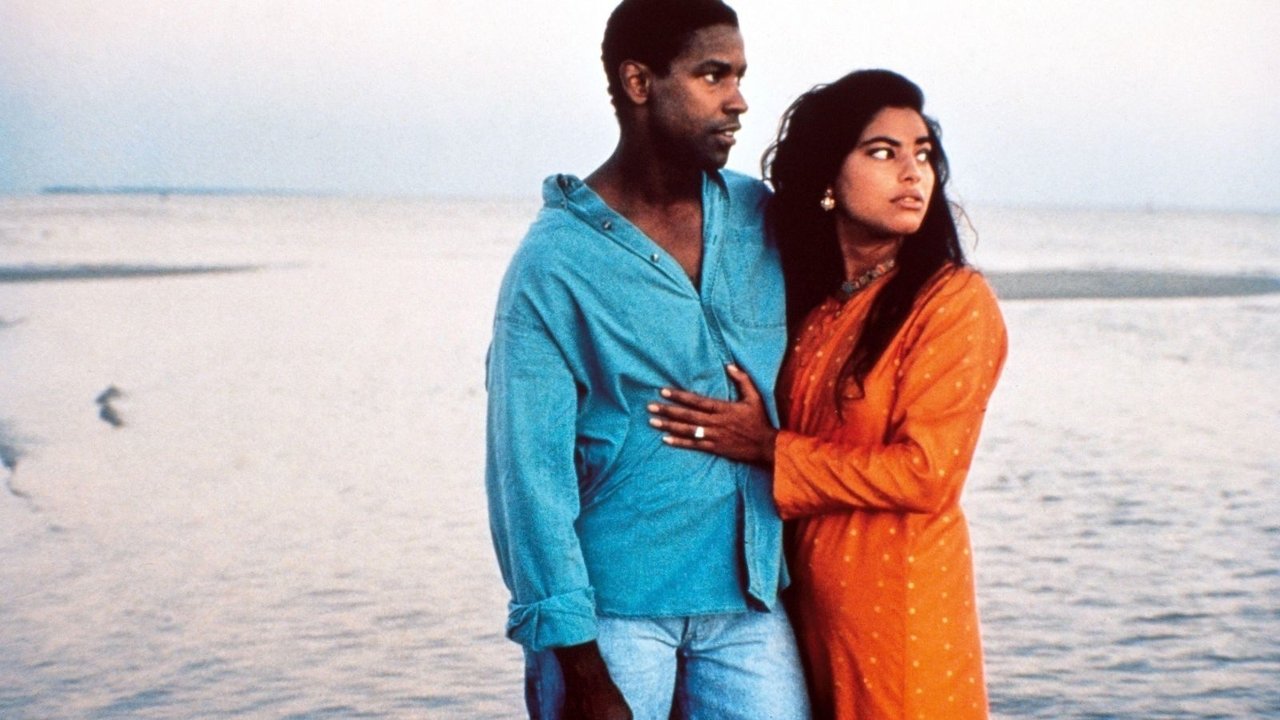
What elevates Mississippi Masala beyond a simple "issue" film are the performances, pulsing with authenticity. Sarita Choudhury is captivating as Mina. She navigates Mina's quiet rebellion, her yearning for connection, and her burgeoning independence with a natural grace that makes you instantly invested in her journey. You feel her frustration with her family's expectations and her exhilarating discovery of love.
And then there's Denzel Washington. Fresh off his Oscar win for Glory (1989) and steadily becoming a major star, taking on this role in a smaller, independent film speaks volumes. He imbues Demetrius with an easy charm, intelligence, and a deep sense of decency. There’s a relaxed confidence to him, but Washington also subtly reveals the awareness Demetrius has of the racial and social dynamics surrounding him. The chemistry between Washington and Choudhury is palpable – gentle, tentative at first, then blossoming into a convincing intimacy that makes their relationship the film's undeniable anchor. Their scenes together, particularly those stolen moments away from judging eyes, feel incredibly real.


Roshan Seth is equally crucial as Jay. His performance is a masterclass in conveying the weight of loss and the bitterness of exile. His obsession with returning to Uganda isn't just about property; it's about reclaiming a stolen identity. His resistance to Mina’s relationship with Demetrius isn't just simple prejudice; it stems from a complex fear of losing even more, of his daughter drifting further from the roots he clings to so desperately.
Nair's Vision, Woven with Care
Director Mira Nair, who had already gained international acclaim for Salaam Bombay! (1988), brings a distinct sensibility to the film, co-written with her frequent collaborator Sooni Taraporevala. Nair has a remarkable eye for cultural detail and the telling interaction. She doesn’t paint either the Indian or Black communities with a broad brush, instead exploring the internal dynamics, biases, and warmth within each. The film acknowledges prejudice exists not just between groups, but within them as well – a layer of honesty that feels brave.
The film itself was inspired by the real-life experiences of Asian Ugandans expelled by Amin, many of whom, surprisingly to some, ended up running motels in the American South. Nair and Taraporevala researched this phenomenon, lending the story a grounded authenticity. Shooting on location in both Mississippi and Kampala, Uganda, further enhances this sense of place. The humid languor of the Mississippi Delta, beautifully captured by cinematographer Edward Lachman (known for his work with Todd Haynes), contrasts sharply with the vibrant, bittersweet flashbacks to Uganda, creating a visual echo of the characters' divided loyalties. The evocative score by acclaimed violinist L. Subramaniam seamlessly blends Indian and Western musical traditions, mirroring the film's central theme.
More Than Just a Love Story
Mississippi Masala uses the central romance as a lens to explore broader questions. What constitutes "home"? Is it a place, a people, or a state of mind? How do families grapple with change and assimilation across generations? The film doesn’t offer easy answers, allowing the messiness and contradictions to exist. It acknowledges that breaking down barriers can be painful, and that love, while powerful, doesn't magically erase deep-seated prejudice or historical baggage.
It’s this thoughtful complexity, combined with the genuine warmth and humanity of its characters, that made Mississippi Masala stand out on the VHS shelf then, and makes it resonate now. It felt like a grown-up film dealing with real-world complexities, delivered with heart and artistry. It wasn't a box office behemoth (grossing around $7.3 million in the US against a modest budget), but it found its audience and earned significant critical praise, particularly on the festival circuit (winning awards at Venice), solidifying Nair's reputation and providing a star-making platform for Choudhury.

---
Rating: 9/10
This rating reflects the film's exceptional strengths: the deeply authentic performances, particularly from the three leads; Mira Nair's sensitive and nuanced direction; a screenplay that tackles complex themes of identity, displacement, and prejudice with grace and honesty; and a central romance that feels both captivating and grounded. It avoids easy answers and stereotypes, offering a rich, specific cultural portrait that still feels relevant. While perhaps some minor subplots feel slightly less developed, the core narrative and emotional impact are powerfully rendered. Mississippi Masala is a beautiful, poignant film that uses a specific cultural intersection to tell a universal story about love, belonging, and the complicated meaning of home. It remains a vital piece of early 90s independent cinema, a reminder that sometimes the most compelling stories are found in the spaces between worlds. What lingers most is that feeling of gentle yearning, the bittersweet spice of lives lived across continents and cultures.