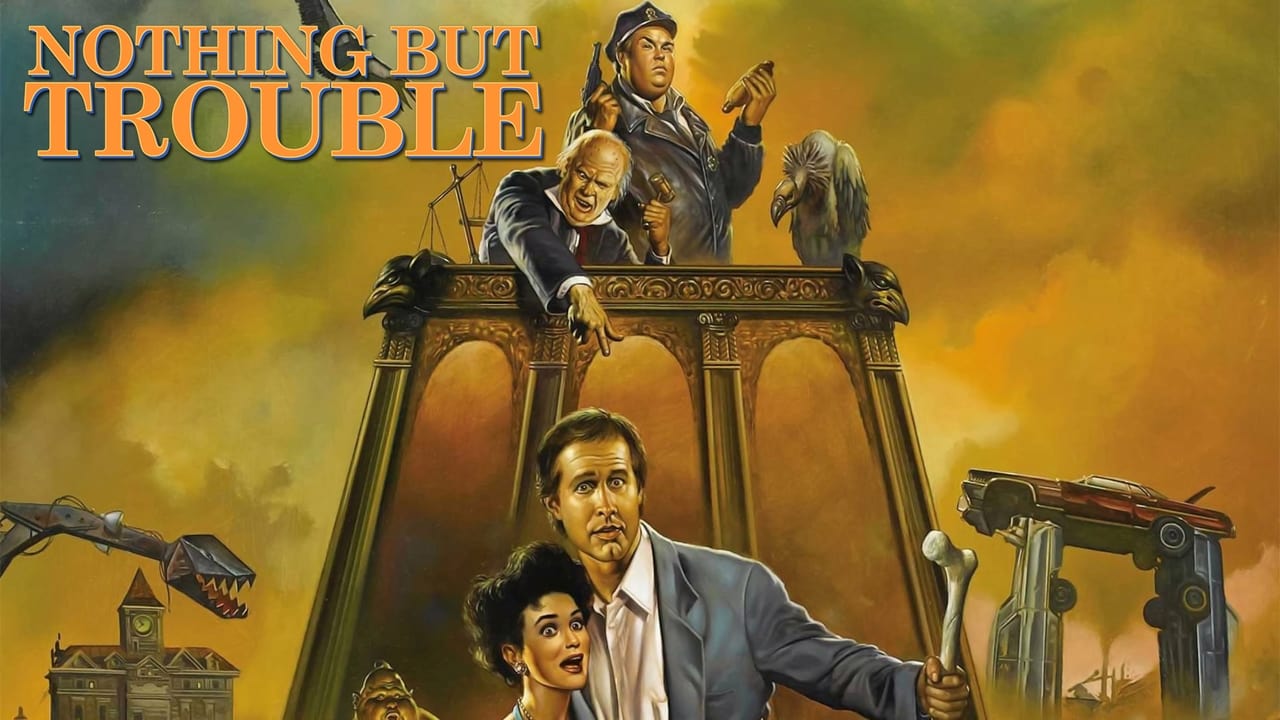
Okay, fellow tapeheads, gather 'round. Let's talk about a movie that likely stared back at you from the comedy shelf of your local Blockbuster, its bizarre cover art practically daring you to take a chance. I’m talking about 1991's Nothing but Trouble, a film so gloriously, unashamedly weird it feels less like a Hollywood production and more like a fever dream someone accidentally committed to celluloid. This wasn't just another early '90s comedy; this was a full-blown cinematic oddity, the kind of tape you rented on a whim late on a Friday night and then spent Saturday morning trying to explain to your bewildered friends.
### Welcome to Valkenvania
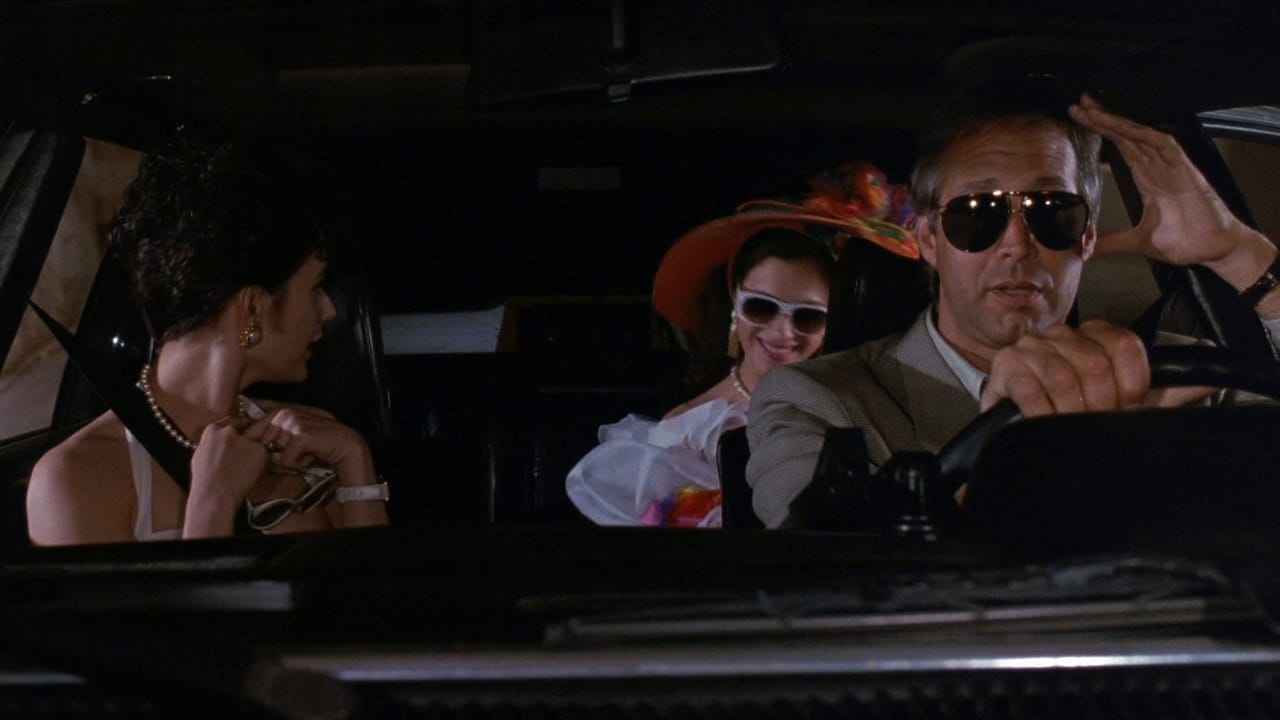
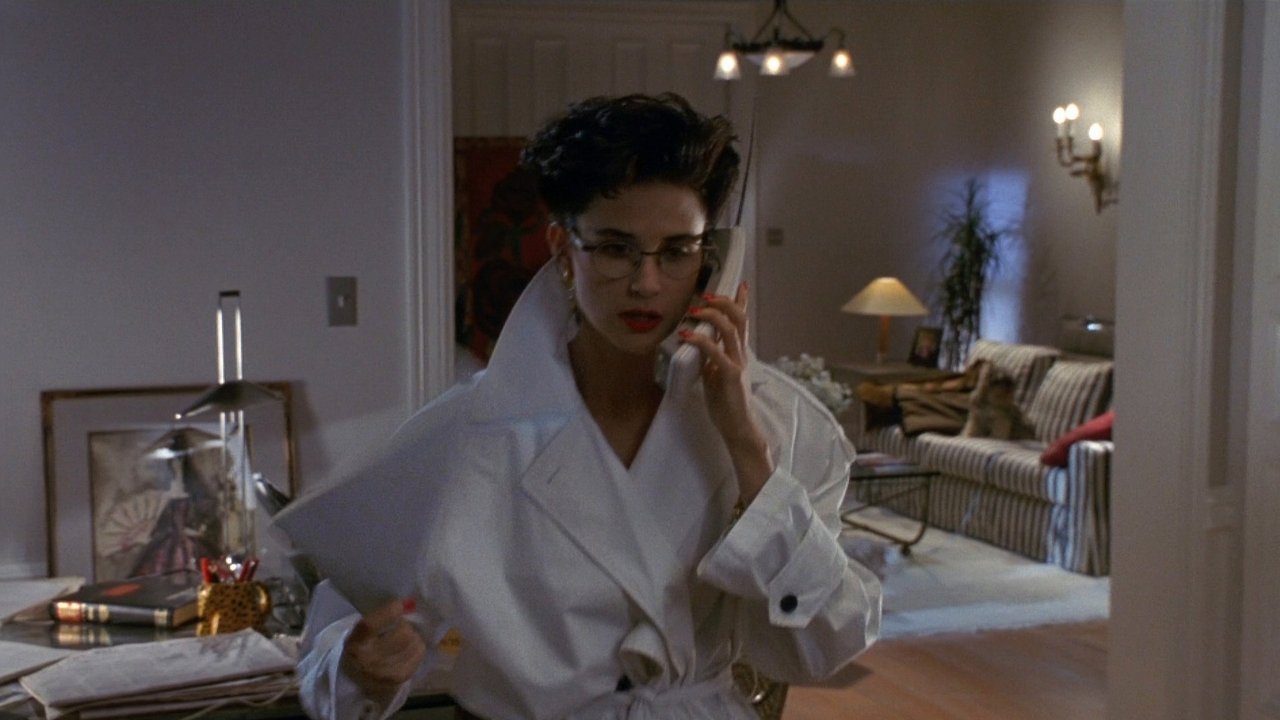
The premise starts simply enough: Financial publisher Chris Thorne (Chevy Chase, bringing his signature dry-wit smugness) is trying to impress lawyer Diane Lightson (Demi Moore, right between Ghost and A Few Good Men) with a drive to Atlantic City. Tagging along are Chris's obnoxious, high-rolling clients, the Fausto brothers (Taylor Negron and Bertila Damas). A minor traffic violation in the forgotten, dilapidated borough of Valkenvania, New Jersey, lands them in the clutches of the ancient, grotesque Justice of the Peace, Alvin Valkenheiser (Dan Aykroyd, buried under astonishing makeup). What follows is a descent into a surreal, dangerous, and often disgusting funhouse ruled by a bizarre family and fueled by a deep-seated hatred for bankers.
This wasn't just Dan Aykroyd starring; this was his passion project. He not only co-wrote the script (with his brother, Peter Aykroyd) but also directed it, marking his one and only time helming a feature film. Legend has it the idea stemmed from a real-life incident where Aykroyd got pulled over for speeding in a rural town and had an unsettling encounter with the local law – though hopefully one less involving a bone-stripping machine nicknamed "Mr. Bonestripper."
### A Junkyard Masterpiece of Mayhem
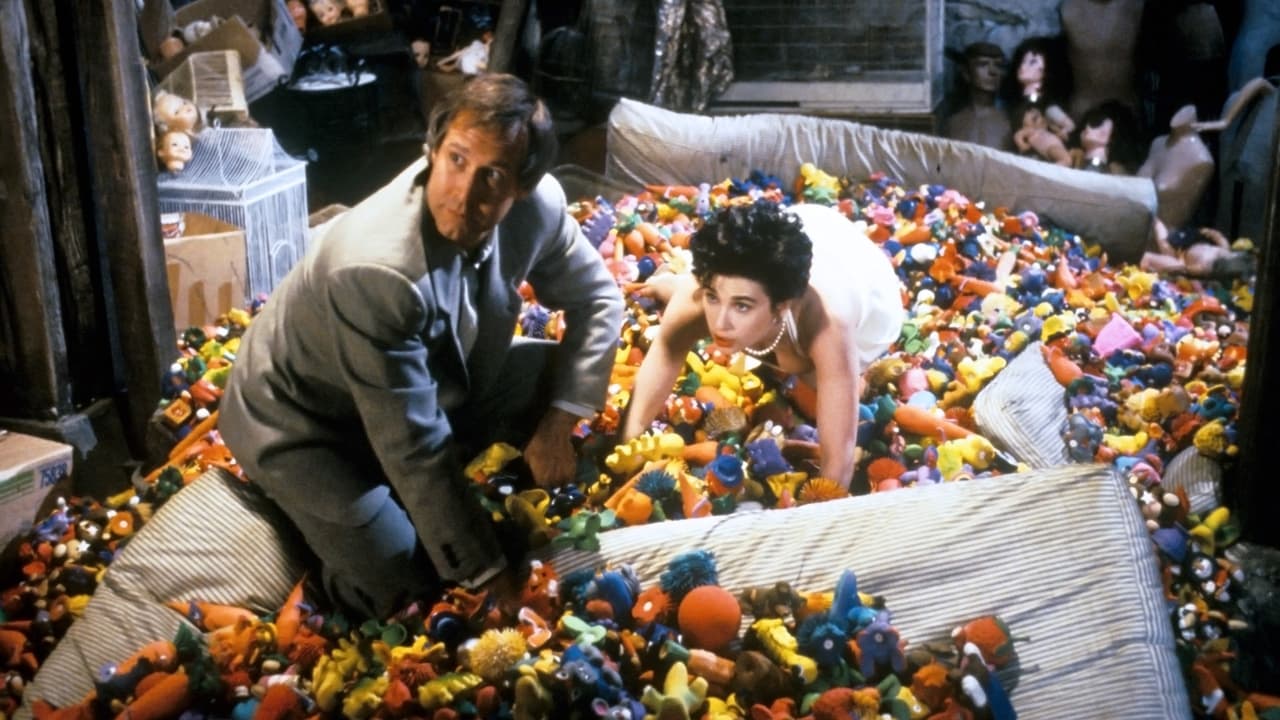
Forget sleek CGI landscapes; Nothing but Trouble revels in the tangible, the grimy, the gloriously practical. The entire decaying mansion and its surrounding junkyard hellscape, presided over by the 106-year-old Judge Valkenheiser, feels real. You can almost smell the rust and decay. The production design by William Sandell (who brought similar gritty detail to RoboCop and Total Recall) is arguably the film's strongest asset. It’s a character in itself – a sprawling, dangerous playground of Rube Goldberg contraptions, hidden passages, and bizarre décor.
And the makeup! Aykroyd's transformation into Judge Valkenheiser, with that iconic, phallic prosthetic nose and generally decrepit appearance, is a triumph of old-school effects. It's genuinely unsettling. He also pulls double duty, appearing as the giant, diaper-wearing man-child Bobo. Let's not forget the late, great John Candy, also playing two roles: the put-upon local cop Dennis, and, in drag under heavy prosthetics, the Judge's mute "granddaughter" Eldona. Seeing Candy, usually the lovable teddy bear of films like Uncle Buck (1989) or Planes, Trains & Automobiles (1987), lumbering around as the silent, hulking Eldona is part of the film's surreal charm – or perhaps its jarring tonal shifts, depending on your perspective.
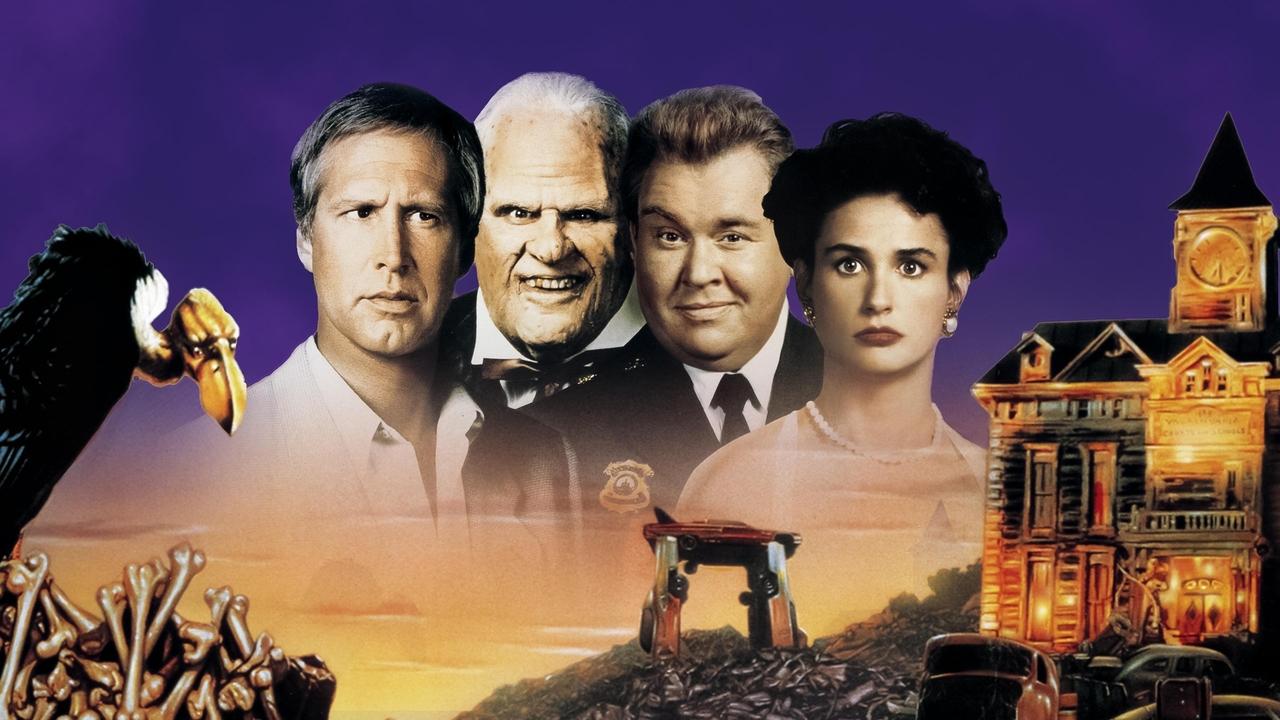
Remember how those elaborate, physical transformations felt back then? Before digital morphing became commonplace, seeing actors disappear under layers of latex like this had a unique kind of movie magic, however grotesque.
### What Were They Thinking? (In the Best Way)
Let's be honest, Nothing but Trouble was famously… troubled. Aykroyd reportedly clashed with the studio over the film's dark tone and bizarre humor. What started as potentially titled Valkenvania or maybe even GIT (according to some sources) ended up costing a hefty $40 million – a huge sum for a comedy back then (around $89 million in today's money!). Sadly, it bombed spectacularly at the box office, pulling in only about $8.5 million. Critics were merciless, savaging its bizarre plot and tonal inconsistencies.
Yet, isn't that part of its allure now? Watching it feels like witnessing a genuine auteurial vision, albeit a deeply strange one, that somehow escaped the studio gates. It's packed with moments that make you go "Did they really just do that?" The infamous dinner scene, featuring hot dogs of questionable origin, is squirm-inducing perfection. And who could forget the utterly baffling, yet somehow iconic, cameo by the hip-hop group Digital Underground, featuring a young Tupac Shakur performing "Same Song"? It comes out of nowhere, makes absolutely no sense in context, and yet, it’s undeniably memorable. Talk about a time capsule!
The action, when it happens, is more chaotic slapstick and desperate escape attempts than choreographed fights. Chase's character trying to navigate the lethal junk-filled landscape has a certain physical comedy to it, amplified by the sheer strangeness of the environment. The "Bonestripper" rollercoaster sequence, while brief, has a certain menacing, Heath Robinson-esque quality that relies entirely on physical sets and clever editing.
### So, Was It Worth the Rental Fee?
Nothing but Trouble is the cinematic equivalent of that weird dish your eccentric uncle brought to Thanksgiving – you weren't sure what was in it, it looked kind of alarming, but you couldn't stop picking at it. It's undeniably flawed: the pacing is erratic, the humor swings wildly between slapstick and genuinely dark, and it often feels like several different movies stitched together. Chevy Chase seems slightly adrift, his usual sarcastic persona bumping awkwardly against the film's grotesque horror elements. Demi Moore does her best but is mostly relegated to reacting to the madness.
But Aykroyd's commitment is absolute, both behind the camera and especially as the truly unforgettable Judge Valkenheiser. And John Candy brings a surprising pathos to his dual roles, even beneath the layers of makeup. The sheer audacity of the production design and the commitment to its bizarre vision make it fascinating.
VHS Heaven Rating: 5/10
Explanation: This isn't a conventionally "good" movie by any stretch. It's messy, tonally confused, and was a critical/commercial disaster. However, for sheer '90s weirdness, incredible practical makeup/set design, and its status as a legendary cult oddity born from a singular, bizarre vision, it earns points. It’s a movie you experience more than enjoy traditionally, a fascinating artifact of when a major studio let something this strange get made.
Final Take: This is pure, uncut, early-90s cinematic eccentricity pressed onto magnetic tape. Not for everyone, but if you have a taste for the bizarre and appreciate ambitious, magnificent failures, tracking down Nothing but Trouble is like unearthing a truly strange treasure from the back corner of the video store. Just maybe don't eat hot dogs while watching it.