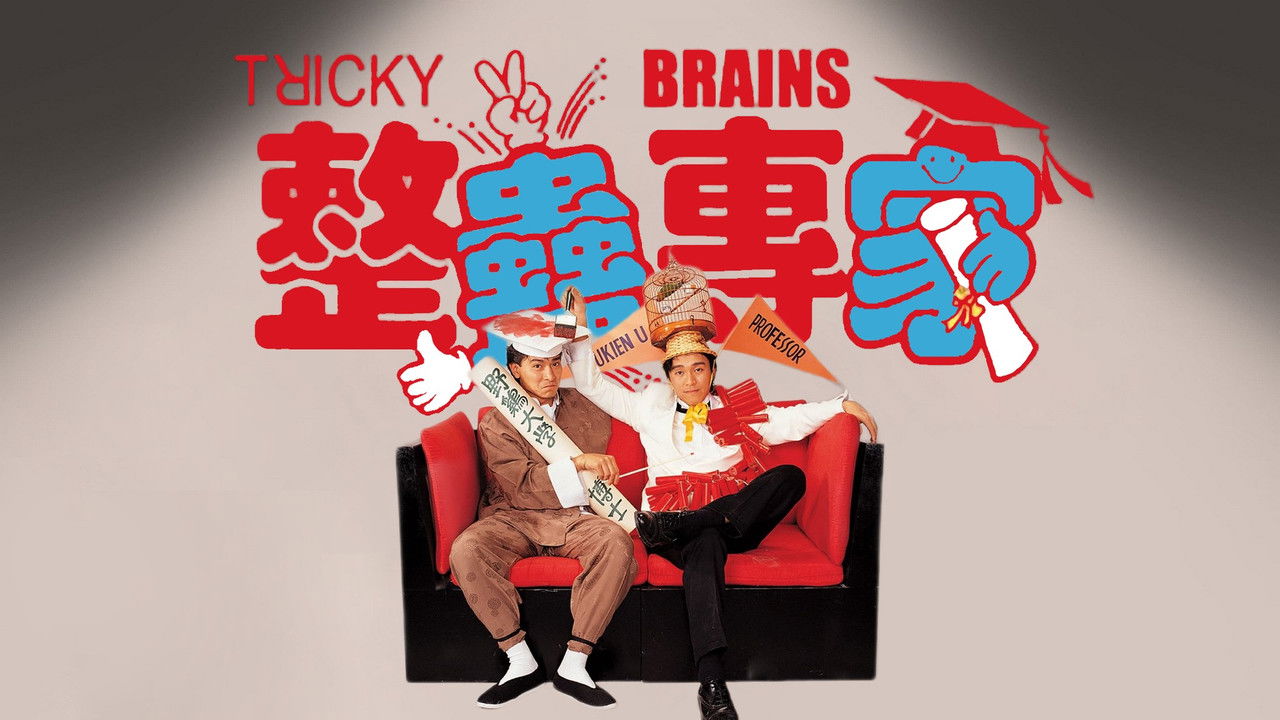
Alright, rewind your minds back to the glorious clutter of the video store shelves, maybe that slightly dodgy one downtown with the imported tapes behind the counter. Buried amongst the familiar action heroes and horror icons, you might have stumbled upon a brightly coloured box, possibly with slightly dodgy English subtitles promised, featuring grinning faces that hinted at pure, unadulterated chaos. If you were lucky, you picked up Wong Jing's 1991 manic masterpiece, Tricky Brains (also known sometimes as The Ultimate Trickster), and strapped yourself in for 90-odd minutes of inspired lunacy.
### Peak Prankster Energy
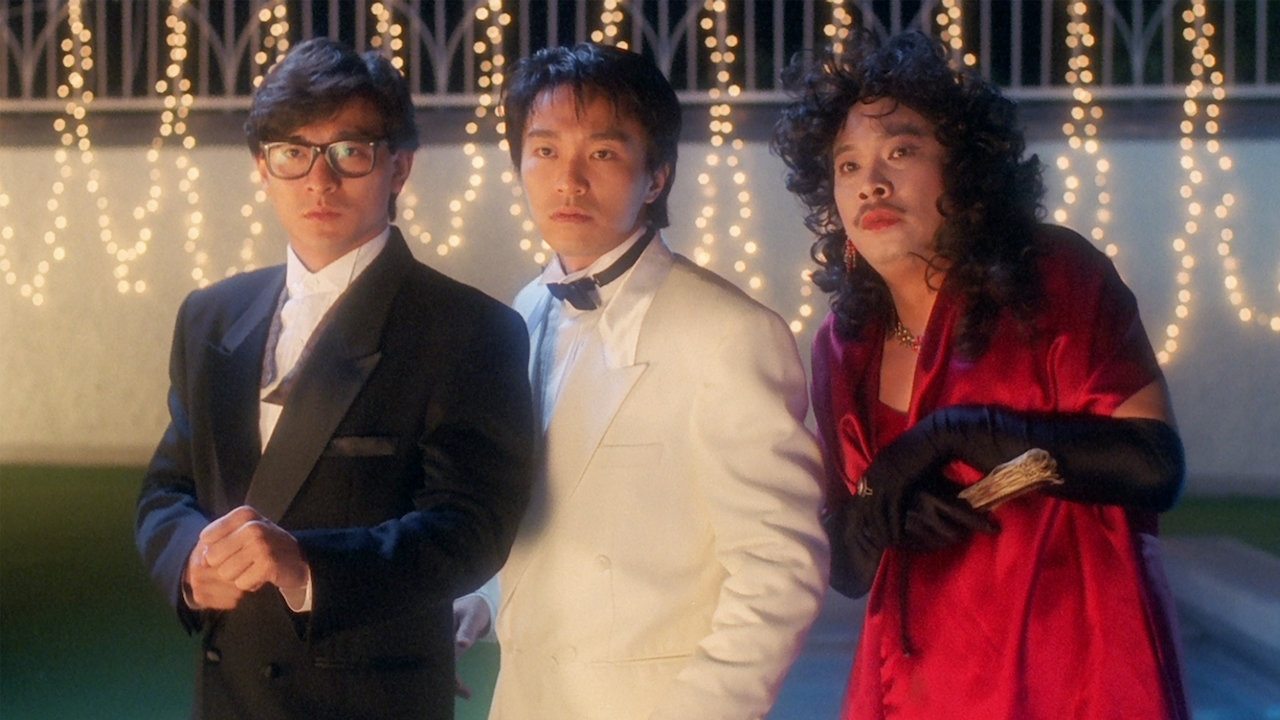
Forget subtle wit or drawing-room farce. Tricky Brains (original title: 整蠱專家) dives headfirst into the glorious absurdity of early 90s Hong Kong Mo Lei Tau ("makes no sense") comedy, powered by the supernova comedic talent of Stephen Chow at the absolute peak of his early powers. Chow plays Jing Koo, the self-proclaimed "Tricky Expert," a mercenary prankster hired to sabotage the life and career of the earnest, slightly hapless office worker Chi Man-kit, played with charming sincerity by Cantopop king and established movie star Andy Lau. The setup is simple: Man-kit is vying for a promotion and the affections of the lovely Lucy (Rosamund Kwan) while fending off a slimy rival. Enter Jing Koo, posing as Man-kit’s long-lost brother, ready to deploy an arsenal of gags that would make Wile E. Coyote blush.
This film hit screens right when Stephen Chow was becoming an unstoppable force in Hong Kong cinema, following massive hits like All for the Winner (1990) and Fight Back to School (1991). Tricky Brains absolutely cemented his status, raking in over HK$31 million – a hefty sum back then – proving audiences couldn't get enough of his unique, rapid-fire comedic style.

### The Art of the Gag
What makes Tricky Brains such a quintessential slice of VHS-era Hong Kong gold isn't just the premise, it's the relentless execution. Director Wong Jing, known for his incredibly prolific and commercially savvy output (think God of Gamblers released just two years prior), orchestrates the chaos with gleeful abandon. The film operates at hyperspeed, barely pausing for breath between elaborate practical jokes, physical slapstick, and surreal non-sequiturs. Forget today's smoothed-over CGI enhancements; the joy here lies in the tangible nature of the gags. We're talking exploding toilets, bizarre gadgets wielded with maniacal glee, entire rooms rigged like Rube Goldberg machines designed for maximum embarrassment, and actors committing fully to the physical absurdity. Remember how real those slapstick hits felt, even when they were clearly cartoonish? That's the raw energy Tricky Brains delivers in spades.
One particularly memorable sequence involves Chow's character deploying "invincible feces" – don't ask, just experience the sheer audacity! It's crude, yes, but delivered with such bizarre conviction it transcends mere toilet humour into something weirdly... artful? Wong Jing wasn't afraid to mix lowbrow gags with surprisingly complex setups and sharp parody, a signature of his style that made his films irresistible fun, even if critics sometimes turned up their noses.

### Chow, Lau, and the Perfect Foil
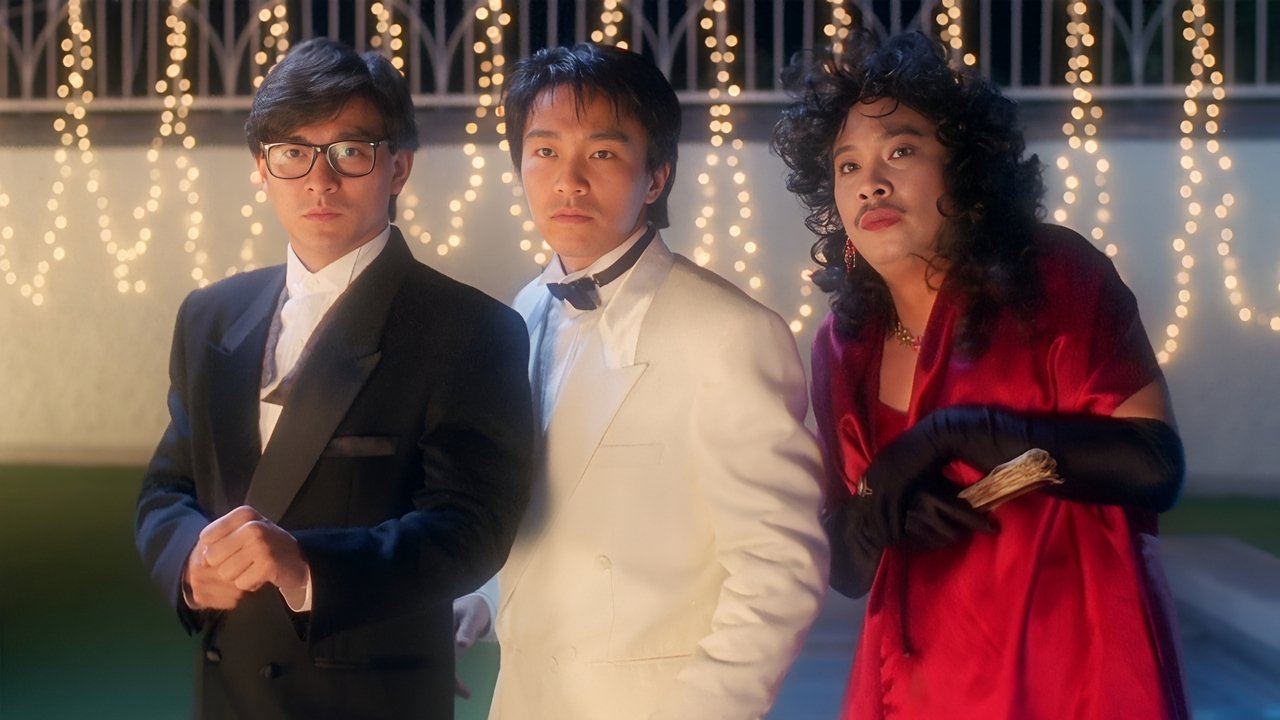
While Chow is undoubtedly the engine of the film, his hyperactive energy works so brilliantly because it bounces off Andy Lau's more grounded performance. Lau, already a huge star, plays the straight man perfectly, reacting to the escalating madness with believable frustration and eventual bewildered acceptance. Their chemistry is fantastic, a whirlwind of chaos meeting bewildered charm. And let's not forget the essential Ng Man-tat, Chow's frequent comedic partner-in-crime, who appears here as Man-kit's father, adding another layer of hilarious, often inappropriate, support. Rosamund Kwan provides the necessary romantic anchor, looking understandably perplexed by the madness unfolding around her character.
It’s fascinating to think that these Hong Kong productions were often shot incredibly quickly, sometimes with scripts being written practically on set. That pressure-cooker environment arguably fueled the spontaneous creativity and anything-goes spirit that makes films like Tricky Brains feel so alive and unpredictable, even three decades later. You can almost feel the frantic energy bleeding through the slightly fuzzy NTSC picture on your old CRT TV.
### Still Got Tricks Up Its Sleeve?
Tricky Brains is undeniably a product of its time. Some of the humour might feel dated, the pacing occasionally frantic to the point of exhausting, and the plot… well, the plot is mostly just a framework to hang gags on. But complaining about that is like complaining water is wet. You don't watch Tricky Brains for intricate plotting; you watch it for the sheer, unbridled joy of comedic invention and Stephen Chow's unique genius. It captures a specific, glorious moment in Hong Kong cinema history – loud, colourful, unapologetically silly, and utterly entertaining. I definitely remember renting this from a local spot, the slightly worn clamshell case promising untold weirdness, and it delivered exactly that – a sugar rush of cinematic absurdity perfect for a late-night watch.
Rating: 8/10
Justification: While niche and perhaps jarring for newcomers, Tricky Brains is a near-perfect execution of early 90s Hong Kong Mo Lei Tau comedy. It boasts stellar comedic performances, particularly from a peak Stephen Chow, relentlessly inventive practical gags, and an infectious energy that’s hard to resist. It's pure, concentrated fun from the VHS era, warts and all.
Final Thought: They just don't make 'em this wonderfully bonkers anymore; a reminder that sometimes the best special effect is pure, unadulterated comedic chaos captured on film.