It starts with the roar, doesn’t it? Not the roar of a stadium celebrating a goal, but something guttural, primal, almost desperate. It’s the sound that echoes through Ricky Tognazzi's 1991 film Ultrà, a noise that gets under your skin long before the simmering tensions inevitably boil over. This isn't your typical glossy sports movie; finding this on a dusty VHS shelf back in the day felt like uncovering something raw, confrontational, and dangerously real – a far cry from the Hollywood sheen we often expected. It plunges you headfirst into the volatile world of AS Roma's hardcore football supporters, the 'ultras', on a tense train journey towards an away match against their hated rivals, Juventus.
The Brotherhood of the Scarves
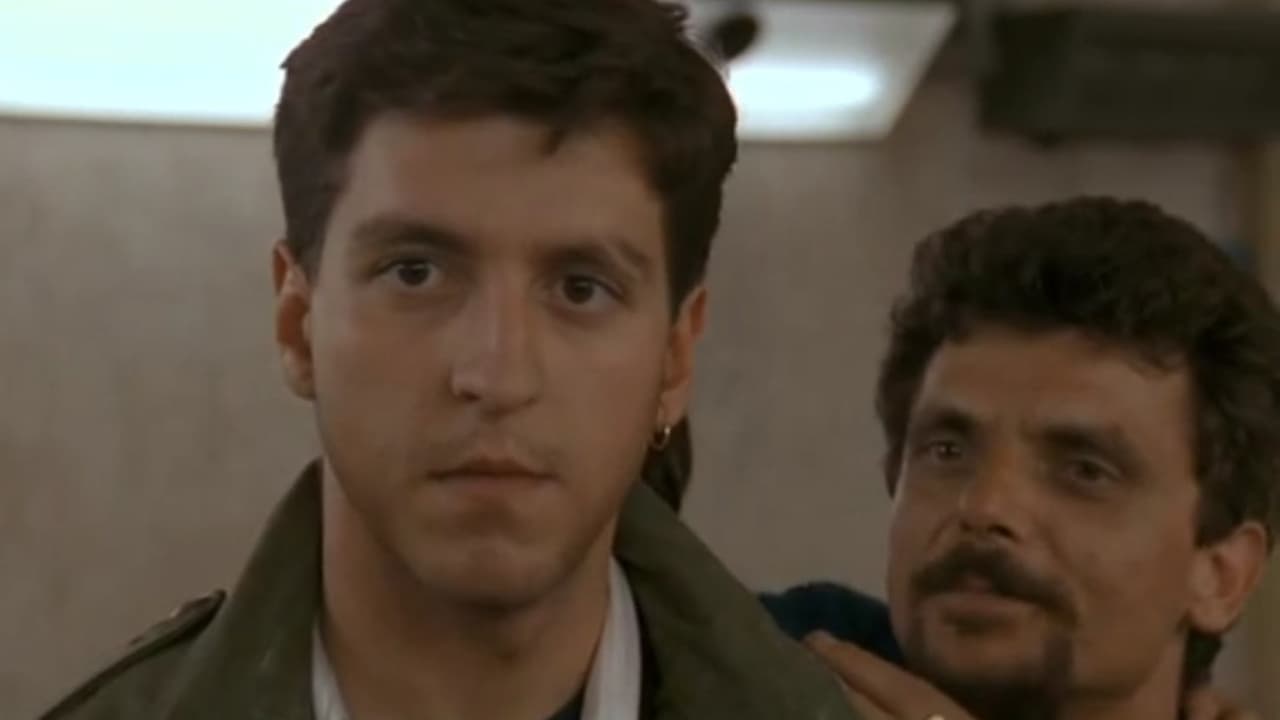
What immediately strikes you about Ultrà is its suffocating authenticity. Forget choreographed chants and tidy narratives. This feels like cinéma vérité dropped into a pressure cooker. The camera often jostles, handheld, amongst the tightly packed bodies on the train, capturing the nervous energy, the crude camaraderie, the simmering aggression. You can almost smell the stale cigarette smoke and cheap beer. Tognazzi, who picked up the Silver Bear for Best Director at the Berlin Film Festival for his efforts here (quite a feat for his second feature!), clearly did his homework. He reportedly spent considerable time observing real ultra groups, and it shows. There’s a lived-in feel to the rituals, the slang, the internal codes of conduct that feel disturbingly genuine. He even incorporated actual ultras as extras, lending crowd scenes an undeniable, if potentially volatile, authenticity during filming.
Principe's Reign
At the heart of this volatile ecosystem is Principe (Prince), played with commanding, coiled intensity by Claudio Amendola. Fresh out of prison, Principe steps back into his role as the charismatic leader of the pack. Amendola embodies the complex contradictions of such figures – the fierce loyalty demanded, the paternalistic air masking deep insecurities, the constant need to assert dominance. His performance is magnetic; you understand why these young men follow him, even as you see the destructive path he leads them down. There's a weight behind his eyes, a history etched into his face that speaks volumes more than the dialogue sometimes does. Watching him navigate the shifting loyalties and brewing conflicts, particularly with the younger, perhaps more naive Red (Ricky Memphis in an early, impactful role), is utterly compelling. The tension isn't just about the rival fans waiting in Turin; it's right there, simmering within the group itself, particularly concerning Principe's girlfriend and his best friend.
A Journey Into Darkness
Ultrà isn't an easy watch, and it certainly wasn't universally embraced upon its release in Italy. It faced censorship hurdles (banned for under-18s) and accusations of glorifying the violence it depicted. Does it? I’m not so sure. Tognazzi presents this world without judgment, but also without romanticism. The violence, when it erupts, is brutal, chaotic, and deeply unpleasant. There’s no heroic slow-motion, no satisfying catharsis. It feels ugly and futile, a consequence of unchecked tribalism and toxic masculinity spiraling out of control. The film forces us to confront uncomfortable questions: What draws young men to these groups? What does this fierce, often self-destructive, loyalty offer them? Is it purely about football, or something deeper, more existential? The legendary Ennio Morricone provides the score, and it’s far from his sweeping epics; it's often tense, jarring, and unsettling, perfectly mirroring the fractured psychology on screen.
Beyond the Pitch
Discovering a film like Ultrà on VHS, perhaps in a slightly battered box with foreign text, felt like accessing a different kind of cinema. It was a potent reminder that filmmaking could be provocative, messy, and unwilling to provide simple answers. It depicted a subculture largely unseen in mainstream English-language films at the time, exploring themes of belonging, alienation, and the allure of violence with unflinching honesty. Watching it today, the specific haircuts and fashions might date it, but the core anxieties feel disturbingly relevant. The psychology of the mob, the dangers of groupthink, the desperate search for identity in marginalized communities – these are threads that continue to run through society. Doesn't that sense of needing to belong, sometimes at any cost, still resonate?
This isn't a film you watch for feel-good escapism. It’s a challenging, sometimes harrowing, but ultimately powerful piece of filmmaking anchored by strong performances and a director's clear, uncompromising vision. It sticks with you, leaving a residue of unease and a host of unanswered questions about human nature and the darkness that can fester within the tightest bonds.
Rating: 8/10
Ultrà earns this score for its raw authenticity, Claudio Amendola's commanding lead performance, Ricky Tognazzi's assured and immersive direction, and its unflinching exploration of a difficult subject. It successfully transports the viewer into the heart of the ultra phenomenon, warts and all, making it a compelling, if uncomfortable, watch. The slightly repetitive nature of some train scenes prevents a higher score, but its power is undeniable.
It’s a stark, potent dispatch from the terraces, a film that reminds us that sometimes the most frightening conflicts aren't between rival teams, but within the human heart itself.