Catching the echo of a world transforming – that’s the feeling that washes over me whenever I think of Wim Wenders' Faraway, So Close! (1993). It arrived not just as a sequel to the ethereal masterpiece Wings of Desire (1987), but as a film grappling, in real-time, with the seismic shifts rocking Berlin and, by extension, the world, right after the Wall came tumbling down. Pulling this one off the shelf, the weight of the tape feels heavier somehow, imbued with the memory of a specific, turbulent historical moment captured on grainy magnetic tape. It wasn't just a movie; it felt like a dispatch from the edge of a new era.
### From Black and White Poetry to Colored Chaos
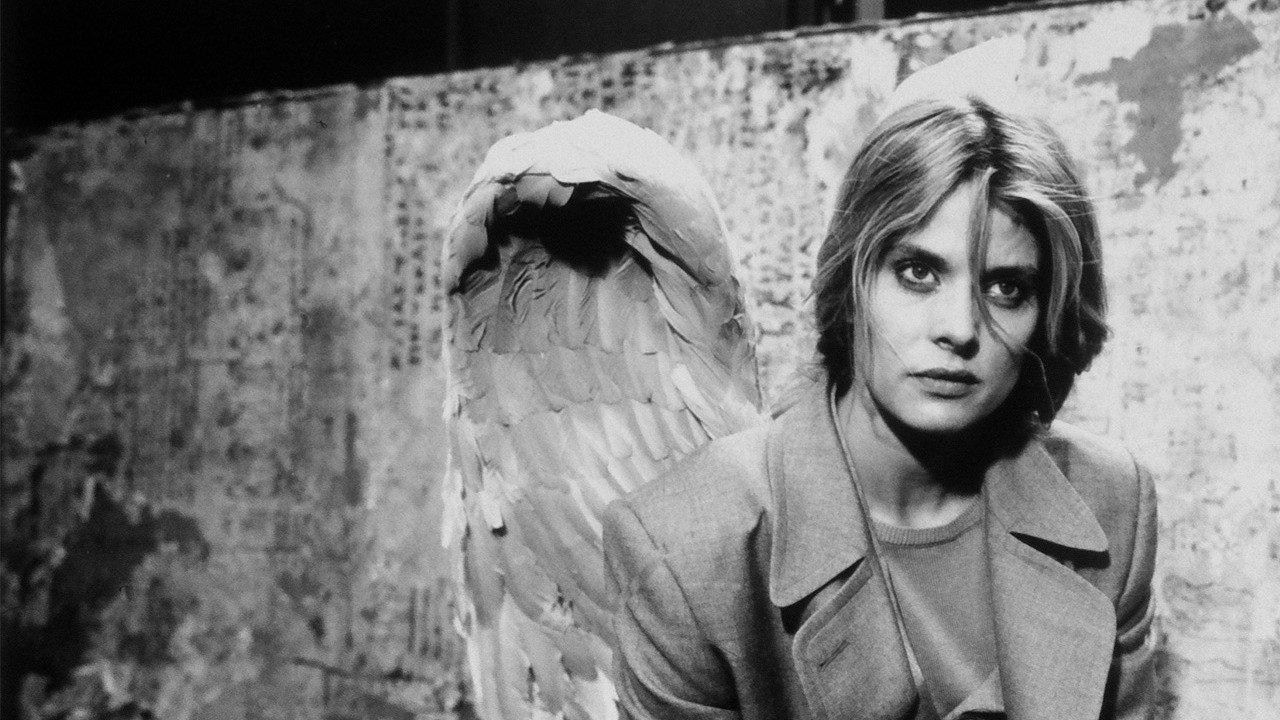
Where Wings of Desire existed in a realm of poetic black and white, observing humanity with melancholic grace, Faraway, So Close! plunges headfirst into the messy, vibrant, often dangerous technicolor of human existence. The transition is mirrored in the journey of Cassiel (Otto Sander), the angel who, unlike his counterpart Damiel in the first film, doesn't choose humanity out of love, but almost stumbles into it, driven by an impulsive act to save a life. This shift from observer to participant forms the core of the film, and Wenders, alongside co-writers Richard Reitinger and Ulrich Ziegler, doesn't shy away from the disorienting reality Cassiel faces. Berlin, no longer just a city of quiet introspection, is depicted as a landscape of frantic energy, burgeoning capitalism, and lingering shadows of its divided past. Seeing it again now evokes that specific early 90s feeling – a mixture of boundless optimism and deep uncertainty.
### Angels, Actors, and Unexpected Faces
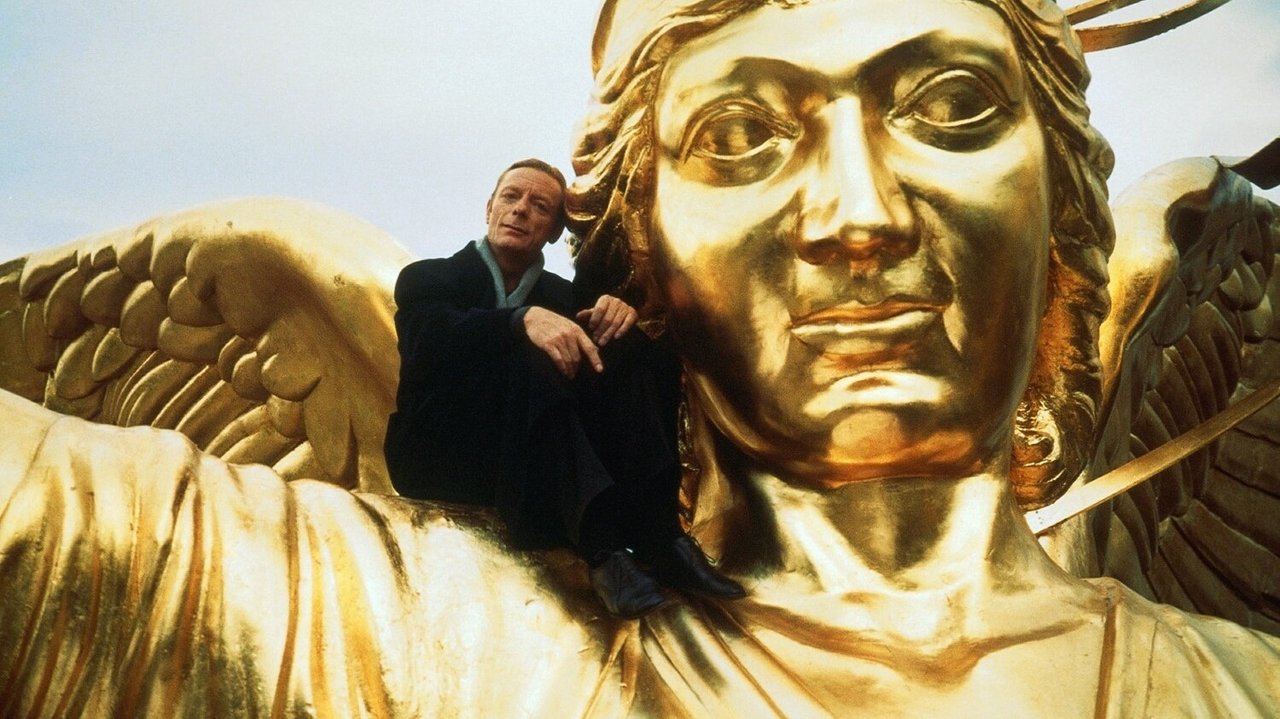
The performances are central to navigating this complex tapestry. Otto Sander is magnificent, reprising his role as Cassiel. His initial angelic stillness, carried over from the first film, gives way to a profound sense of disorientation and vulnerability as a human. There's a weariness in his eyes, a physical awkwardness as he learns to navigate gravity and consequence, that feels utterly convincing. He embodies the film's central question: what happens when empathy forces you out of the sky and onto the pavement?
And then there's Peter Falk, returning as... well, as Peter Falk. Or is he? His wonderfully meta-performance, blurring the lines between actor, former angel, and perhaps something else entirely, provides both continuity and delightful ambiguity. Falk, who reportedly contributed significantly to his own dialogue in both films, serves as a sort of wry, street-smart guide, offering cryptic advice that grounds the film's loftier concepts. His presence is a comforting anchor, even amidst the narrative's sometimes sprawling ambition. We also see Nastassja Kinski (a Wenders regular since Paris, Texas) appear as the angel Raphaela, a luminous counterpoint to Cassiel's earthbound struggles, and Horst Buchholz delivering a chilling turn as Tony Baker, a ruthless operator embodying the darker, opportunistic side of the newly unified city's potential.
It's fascinating how Wenders populates this world not just with fictional characters but with real figures who defined the era. Seeing Mikhail Gorbachev appear as himself, reflecting on peace and change, or Lou Reed performing with his characteristic cool intensity, doesn't feel like mere stunt casting. It roots the film firmly in that specific post-Cold War moment, lending its philosophical musings a startling immediacy. Filming amidst the actual reconstruction and lingering tensions of Berlin added another layer of authenticity – you can almost smell the dust and uncertainty in the air.
### A Time Capsule's Imperfect Beauty
Let's be honest, sliding this tape into the VCR again reminds you that Faraway, So Close! isn't Wings of Desire. It lacks the sheer poetic perfection of its predecessor. The plot, involving Cassiel getting entangled in Baker's shady dealings and a somewhat conventional thriller subplot, can feel uneven, occasionally jarring against the more contemplative angelic scenes. Some critics at the time felt it strayed too far into genre territory, diluting the original's magic. Yet, despite winning the prestigious Grand Prix du Jury at the 1993 Cannes Film Festival, it often lives in the shadow of the first film.
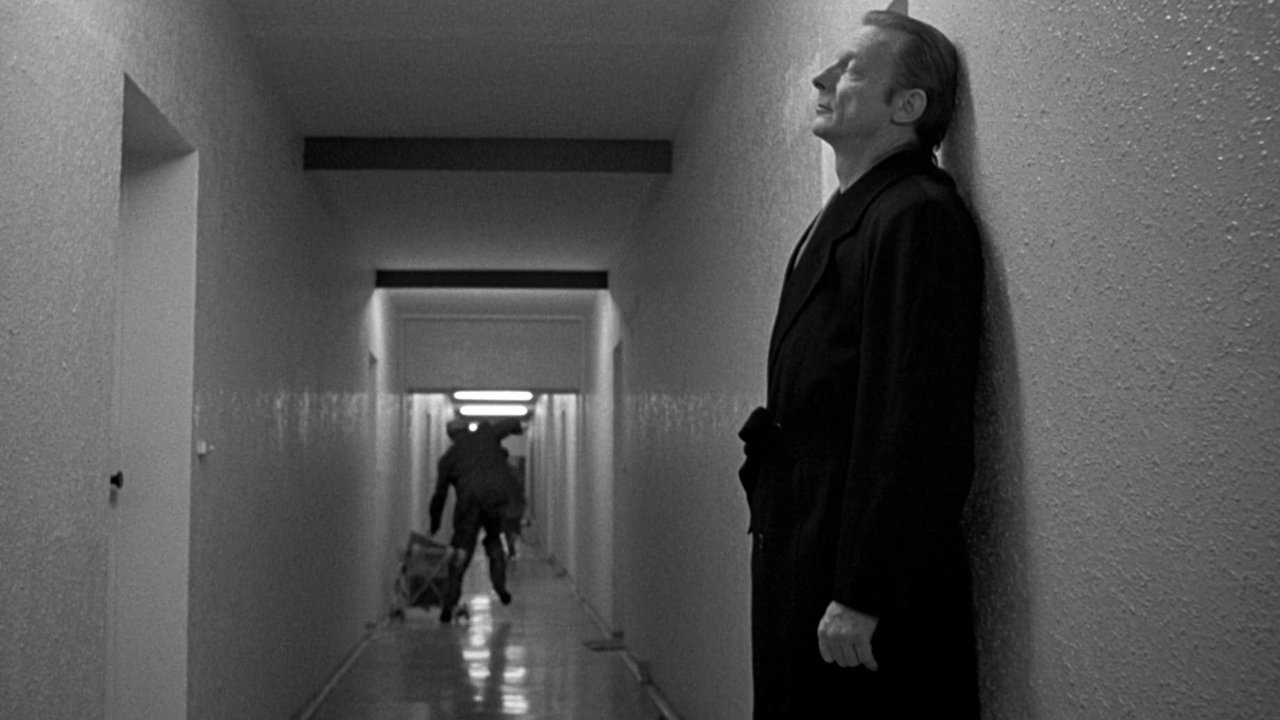
But dismissing it for not being Wings of Desire misses the point, I think. It's a different beast entirely – more sprawling, less focused, perhaps, but pulsing with the anxieties and hopes of its time. Its ambition is undeniable. Wenders attempts to wrestle with huge themes: the nature of good and evil, the burden of free will, the challenges of connection in a fragmented world, the very soul of a city reinventing itself. The visual language, shifting between monochrome memories and the often harsh colours of the present, remains striking. And those moments of pure Wenders magic – a quiet observation, a haunting image, Sander's expressive face conveying a world of inner turmoil – still resonate deeply. It captured something vital about that specific window in history, flaws and all. It feels less like a perfect poem and more like a sprawling, deeply felt novel of its time.
Rating: 7.5/10
Justification: While its narrative reach sometimes exceeds its grasp, leading to uneven pacing and a less cohesive feel than its predecessor, Faraway, So Close! remains a profoundly ambitious and often beautiful piece of filmmaking. Otto Sander's central performance is captivating, the film's visual language is distinct, and its bold engagement with a specific historical moment – warts and all – gives it lasting power as a unique time capsule. The integration of real figures and the palpable atmosphere of post-Wall Berlin elevate it beyond a simple sequel. It’s a flawed gem, certainly, but one whose melancholic beauty and searching questions linger long after the tape clicks off.
Final Thought: What does it truly mean to engage with the world, not just watch it? Faraway, So Close! leaves you pondering that question, carrying the weight of its era and the bittersweet reality of human connection.