Some tapes arrived with a whisper, a hushed warning passed between collectors in dimly lit convention halls or scrawled on photocopied zine pages. They spoke of a Spanish short film, something beyond the pale, something clinical, silent, and utterly depraved. That film was Nacho Cerdà's Aftermath (1994), and finding a copy felt less like discovery and more like unearthing something deliberately buried. It wasn’t entertainment; it was an endurance test pressed onto magnetic tape.
### The Silence of the Slab
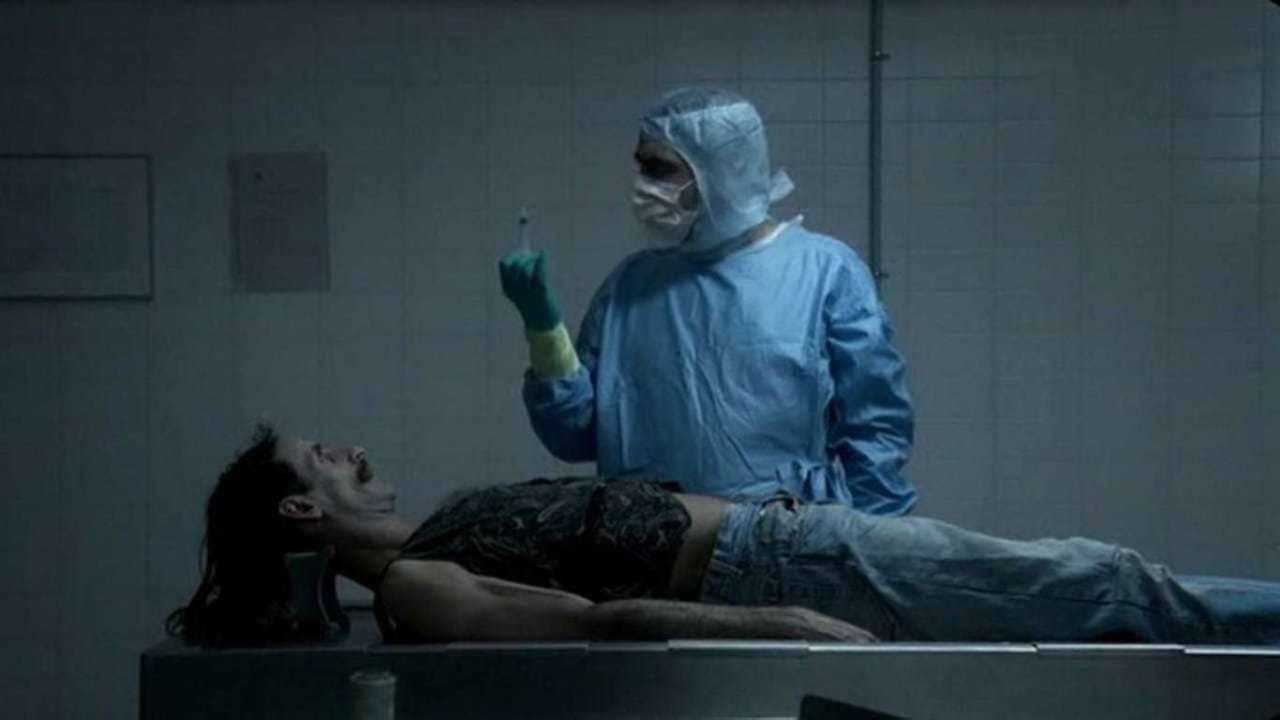
There are no opening screams, no frantic chases. Aftermath begins with the chillingly mundane sounds of a morgue. Water drips, instruments clink, fluorescent lights hum with sterile indifference. We are thrust into the world of the mortician, a place where death is routine, stripped of emotion, reduced to procedure. Cerdà, who also wrote the piece, deliberately lulls the viewer into a state of detached observation. The grainy, almost documentary-like quality of the 16mm film stock only enhances this disquieting realism, making you feel like an unwilling voyeur in a space you should never have entered. This isn't the gothic horror of Hammer or the supernatural dread of The Exorcist; this is the horror of cold, procedural violation.
### An Unflinching Descent
The film, famously the second part of Cerdà's "Trilogy of Death" (following The Awakening (1990) and preceding Genesis (1998)), pivots from clinical observation to active transgression. Its infamous centerpiece involves the mortician, played with terrifying blankness by Pep Tosar, desecrating the corpse of a young woman brought in after a car accident. There's no dialogue, only the squish and tear of flesh, the heavy breathing of the perpetrator. Cerdà’s camera refuses to look away, forcing us to confront the unthinkable. It's a sequence designed purely to shock and disturb, pushing the boundaries of what was considered acceptable on screen, even within the gore-soaked underground of the 90s horror scene. Does its unflinching gaze constitute profound commentary on objectification and the banality of evil, or is it simply nihilistic exploitation? The debate still lingers.
### The Weight of Realism
What truly cemented Aftermath's grim reputation were its practical effects. Rumors swirled for years about what was real and what wasn't. While Cerdà has confirmed that no human remains were used (thankfully), the visceral impact comes from his meticulous use of animal organs and expertly crafted prosthetics. The sheer texture of the film – the glistening viscera, the pale, lifeless skin – felt disturbingly authentic on grainy VHS viewed on a flickering CRT. There's a tactile quality to the horror that CGI rarely achieves. This commitment to practical, stomach-churning realism, achieved on a reported shoestring budget, is arguably the film's most potent and lasting legacy. It didn't just suggest horror; it shoved it under your nose until you could almost smell the formaldehyde. I remember the distinct thud the tape made when dropped – heavier somehow, weighted by its content.
### Legacy of Unease
Aftermath isn't a film you "enjoy" in any conventional sense. It's an ordeal. It circulated like samizdat literature in the tape trading underground, a notorious benchmark for extreme cinema fans seeking the next taboo to shatter. Its power lies in its starkness, its silence, and its absolute refusal to offer comfort or catharsis. It leaves you feeling cold, unclean, and deeply unsettled. It forces questions about the limits of cinematic representation and the line between art and obscenity. Unlike many gore films that elicit nervous laughter or cheers, Aftermath often provokes a stunned, uncomfortable silence. Did it genuinely push boundaries in a meaningful way, or just wallow in transgression? Its notoriety ensures its place in horror history, regardless.
---
Rating: 7/10
Justification: Aftermath is technically masterful in achieving its specific, repugnant goal. The direction is assured, the practical effects are horrifically convincing, and the atmosphere is thick with dread. It earns a high score for its sheer, unforgettable impact and its historical significance within extreme cinema. However, its utter lack of narrative beyond transgression and its deliberately nauseating subject matter make it impossible to recommend broadly, hence docking points from a purely technical perspective. It succeeds horrifyingly well at what it sets out to do.
Final Thought: This is pure, uncut cinematic dread, a relic from the edges of the VHS underground that still has the power to make your blood run cold and your stomach churn. It's less a movie, more a scar it leaves on your viewing history. Approach with extreme caution.