### Faded Dreams on the Boulevard of Broken Stars
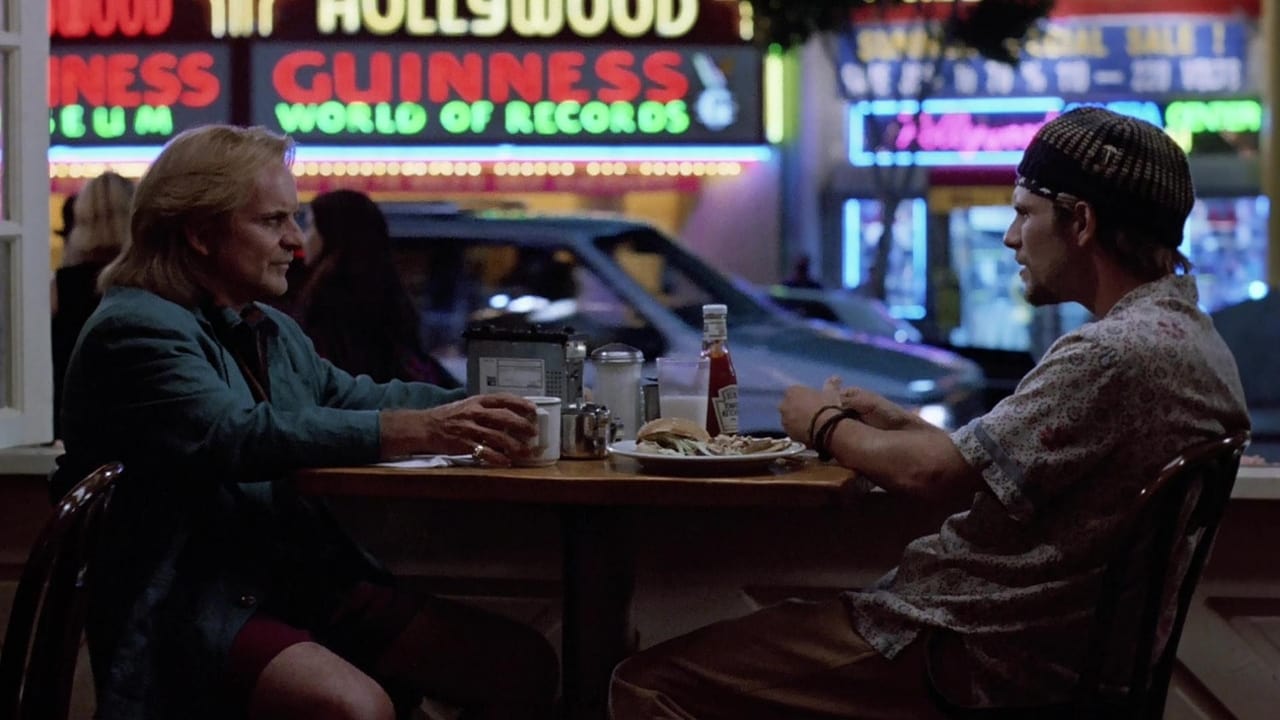
There’s a certain kind of quiet desperation that haunts the edges of Hollywood, far from the flashbulbs and premieres. It lingers in the sun-bleached stucco of forgotten apartment buildings and the weary eyes of those still chasing a dream long after the spotlight has moved on. It’s this specific, melancholic atmosphere that Barry Levinson taps into with Jimmy Hollywood (1994), a film that feels less like a conventional narrative and more like a character study adrift in the strange currents of Tinseltown. It’s a film I remember pulling off the video store shelf, intrigued by the pairing of Joe Pesci and Christian Slater, expecting perhaps a sharp comedy or a gritty thriller, and finding something… else. Something quieter, odder, and ultimately, more poignant than its initial reception suggested.
### The Actor Who Became the Action
At the heart of it all is Jimmy Alto (Joe Pesci), a perpetually aspiring actor whose career highlight seems to be a misspelled name on a bit-part credit. He haunts the fringes of the industry, armed with headshots and a reservoir of hope that’s running dangerously low. Pesci, fresh off his explosive, Oscar-winning turn in GoodFellas (1990), dials down the volcanic intensity here. His Jimmy isn't a tough guy; he's brittle, fueled by a yearning that feels achingly real. He practices acceptance speeches in his cramped apartment, clings to his supportive girlfriend Lorraine (Victoria Abril, bringing a warmth and grounding presence), and pals around with William (Christian Slater), a gentle soul with a shaky grasp on reality who becomes his loyal, slightly bewildered sidekick. Slater, then at the height of his rebellious heartthrob fame from films like Heathers (1988) and Pump Up the Volume (1990), plays beautifully against type here. William is all naive devotion, a follower looking for a leader, and his dynamic with the increasingly driven Jimmy forms the film's emotional core.
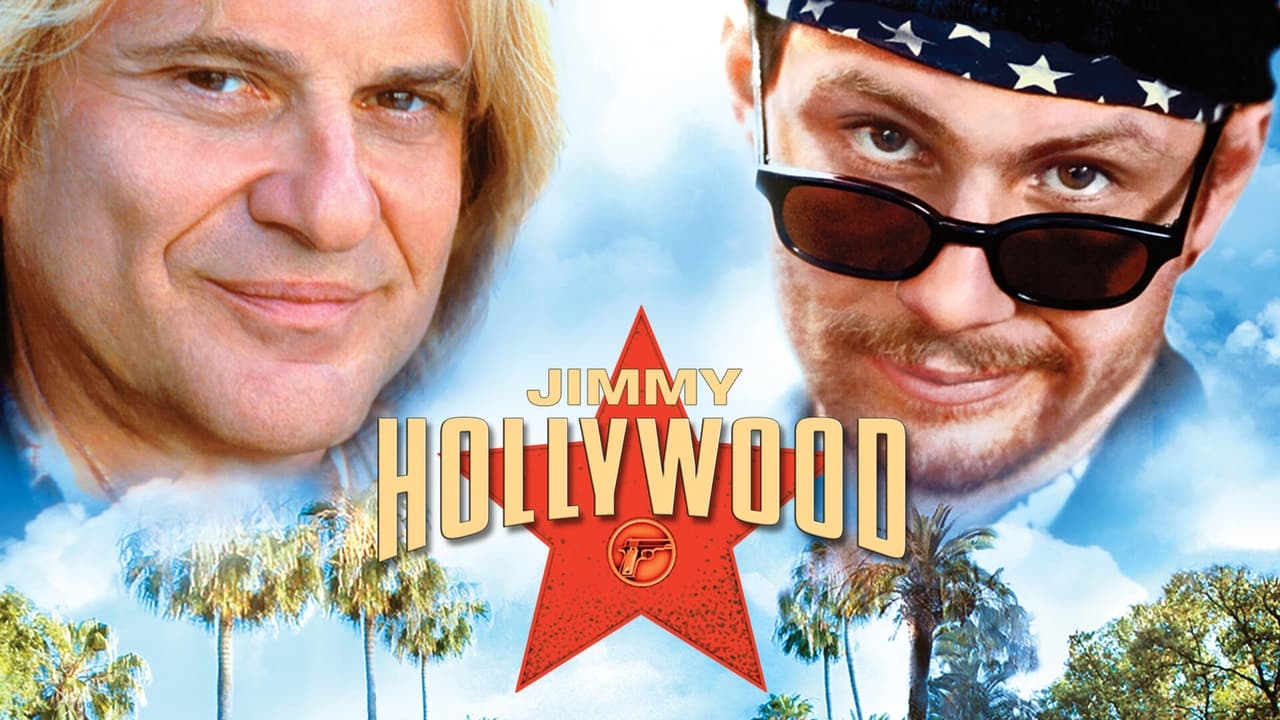
The narrative takes a sharp turn when Jimmy, frustrated by crime and his own invisibility, decides to take action. Witnessing a car radio theft, he and William track down the thief, film the confrontation, and anonymously send the tape to the news, signing it "S.O.S." – Save Our Streets (or perhaps, Stealing Our Stuff?). Suddenly, Jimmy finds the fame he craved, albeit anonymously. He becomes the director, star, and promoter of his own real-life vigilante drama, blurring the lines between his acting aspirations and his increasingly dangerous crusade. Doesn't this strange path to recognition say something profound, and perhaps unsettling, about the nature of celebrity itself?
### Levinson's Lens and a Box Office Reality
Barry Levinson, known for navigating diverse cinematic landscapes from the poignant drama of Rain Man (1988) to the energetic historical comedy of Good Morning, Vietnam (1987), brings a measured, almost observational style to Jimmy Hollywood. He wrote the script himself, suggesting a personal investment in the themes of disillusionment and the warped pursuit of the American Dream. The film captures the specific texture of early 90s Los Angeles – not the glitzy version, but the everyday grit of Hollywood Boulevard, filmed extensively on location. You can almost feel the heat radiating off the pavement, see the grime in the corners.
However, this thoughtful, character-driven piece struggled to find its footing. Made on a substantial budget of $30 million (that's well over $60 million in today's money – a serious investment for a character piece!), the film was a significant box office disappointment, barely cracking $3.8 million domestically. Perhaps audiences, expecting the Pesci of GoodFellas or the charismatic Slater of his earlier hits, weren't prepared for this more melancholic, tonally complex film. It wasn’t easily marketable – part satire, part drama, part quirky character study. Was it simply the wrong film at the wrong time, overshadowed by louder, more easily digestible fare? Its quiet arrival and swift departure from theaters made it prime fodder for the "New Releases" wall at Blockbuster, a curio waiting to be discovered by renters looking for something off the beaten path. I distinctly remember it sitting there, week after week, its intriguing cover hinting at a story perhaps too niche for the mainstream.
### Finding the Performance in Reality
The film's strength lies in its exploration of Jimmy's psyche. His vigilantism isn't born purely of civic duty; it's intrinsically linked to his desperate need to be seen, to direct his own narrative. The S.O.S. tapes become his ultimate performance, the city his unwilling stage. Pesci navigates this complex territory with nuance. You see the flicker of excitement when S.O.S. makes the news, the actor finally finding his audience, even if they don't know his name. Yet, there’s also a growing sense of unease as the lines blur, as the "performance" threatens to consume him entirely. It asks a fundamental question: when does the act become the reality?
While the film sometimes struggles with tonal consistency – shifting between gentle character comedy, darker satirical edges, and moments of genuine threat – its central performances hold it together. Pesci proves his range extends far beyond gangsters, offering a portrait of vulnerability and misplaced ambition. Slater provides the necessary heart, his character's simple loyalty highlighting Jimmy's increasingly complex motivations.
***
Jimmy Hollywood is undeniably a flawed gem, a film perhaps too quiet and introspective for its own good back in 1994. It meanders at times, and its blend of tones doesn't always mesh perfectly. Yet, watching it again on a worn VHS tape, there's an undeniable poignancy to its story of faded dreams and the bizarre lengths one man goes to achieve a warped sense of recognition. It’s a snapshot of a specific kind of Hollywood hope and despair, anchored by compelling performances from Pesci and Slater playing against expectations. It didn't set the box office alight, but like many fascinating curiosities found on the video store shelves, it offers a thoughtful, sometimes melancholic reflection on fame, identity, and the performance of everyday life.
Rating: 6/10
Final Thought: A fascinatingly flawed character piece that bombed on release but deserves reappraisal – a quiet testament to the fact that sometimes, the most compelling dramas unfold just off-screen, under the harsh California sun. It reminds us that not every Hollywood story has a blockbuster ending.