Okay, settle in, fellow tape travelers. Let’s rewind to a film that perhaps didn't boast the explosive pyrotechnics or brooding anti-heroes dominating the video store shelves in 1995, but offered something altogether different, and frankly, quite magical in its own quirky way. I'm talking about Cold Comfort Farm, a film that arrived like its protagonist, Flora Poste: polished, sensible, and ready to gently, firmly, hilariously impose order on glorious chaos. Finding this gem felt like uncovering a witty secret amongst the louder blockbusters.
### A Breath of Fresh (If Slightly Mildewed) Air
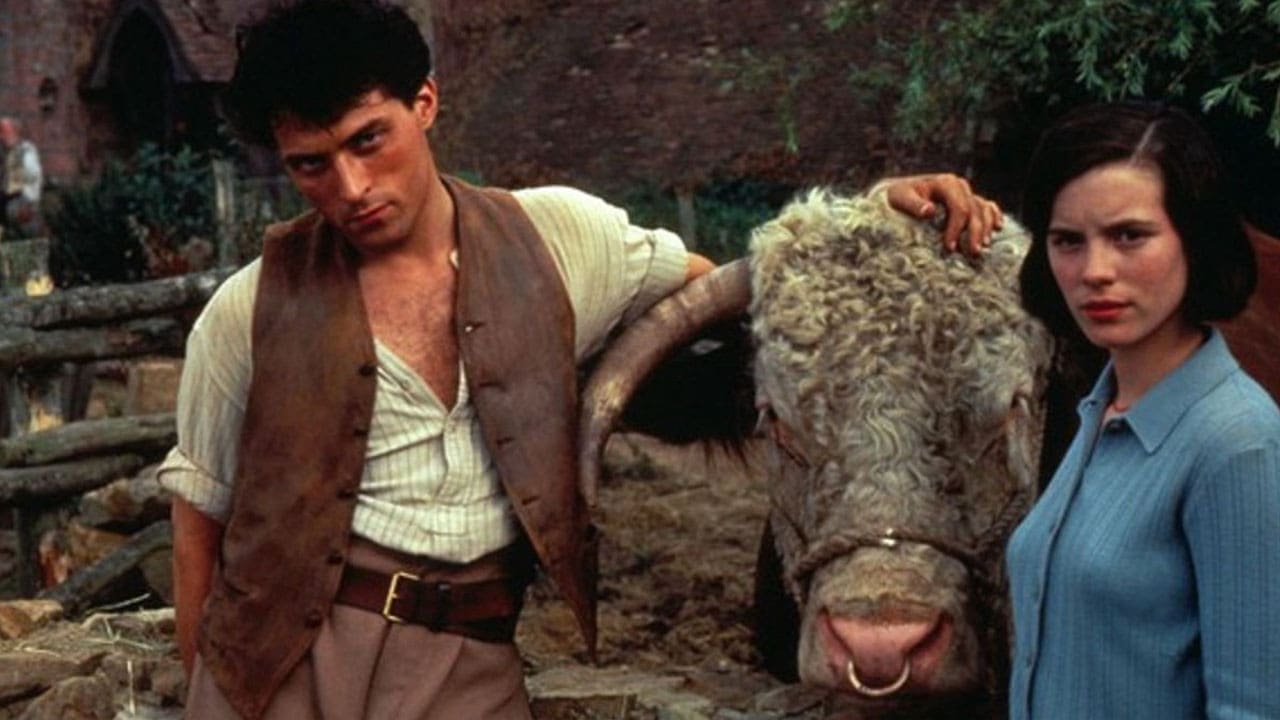
Remember those dour, earthy rural dramas that seemed to populate literature and occasionally spill onto screens? Stella Gibbons certainly did when she penned her delightful 1932 satirical novel, and director John Schlesinger, a filmmaker more readily associated with gritty realism like Midnight Cowboy (1969) or tense thrillers like Marathon Man (1976), proved an inspired choice to bring its sparkling wit to life. The film plunges us into the aptly named Cold Comfort Farm, a place seemingly untouched by the 20th century, festering under a cloud of unspoken doom, simmering resentments, and the overpowering smell of… well, cows and existential angst. It’s here that the recently orphaned, devastatingly pragmatic Flora Poste (Kate Beckinsale) descends upon her unfortunate relatives, the Starkadders, armed only with common sense and a determination to tidy up their messy lives before finishing her novel.
### Flora Arrives, Sanity Ensues
What makes Cold Comfort Farm such a consistent delight is the sheer precision of its satire, embodied perfectly by Kate Beckinsale in a performance that truly announced her luminous screen presence. Flora isn't malicious; she’s simply… efficient. She observes the Starkadders' gothic melodrama – the simmering passions, the cryptic pronouncements, the sheer, unadulterated rural weirdness – not with judgment, but as problems to be solved. Beckinsale plays her with a radiant certainty, a calm intelligence that cuts through the gloom like a beam of sunshine. It's a wonderfully centered performance that anchors the film's eccentricities. Watching her navigate the emotional minefield of the farm, applying logic to deep-seated, nonsensical traditions, is the film's central, joyful engine. One wonders if this role, requiring such poise amidst absurdity, helped hone the screen command she'd later display in vastly different genres.
### A Gallery of Glorious Grotesques
Surrounding Flora is a cast that seems to relish sinking their teeth into these larger-than-life caricatures. Ian McKellen, stepping away from the Shakespearean stage, delivers a masterclass in controlled comedic fury as Amos Starkadder, the fire-and-brimstone preacher of the Church of the Quivering Brethren. His sermons are volcanic explosions of hilariously misapplied biblical fervor. Then there's the matriarch Judith (Eileen Atkins), consumed by a perpetual, simmering despair; the smoldering, animalistic Seth (Rufus Sewell), whose raw sensuality is both parodied and strangely potent; and, of course, the ancient Ada Doom (Sheila Burrell), locked away in her room, forever lamenting the "something nasty in the woodshed" she saw as a child. Each performance is pitched perfectly, finding the humanity within the exaggeration. Even smaller roles, like Joanna Lumley's effortlessly chic Mrs. Smiling, add perfect notes of contrasting urbanity.
### From Small Screen Gem to Sleeper Hit
It’s one of those delightful "Retro Fun Facts" that Cold Comfort Farm wasn't initially destined for the big screen. Produced by the BBC, its quality and charm were so undeniable that it earned a theatrical release, particularly finding appreciative audiences in the United States. This television origin perhaps explains its slightly contained feel, focusing more on character and dialogue than sweeping vistas, but Schlesinger's experienced hand ensures it never feels small or constrained. He captures both the oppressive initial atmosphere and the gradual, Flora-induced blossoming of the farm with a subtle visual flair. The adaptation itself, penned by novelist and academic Malcolm Bradbury, deftly translates Gibbons' literary parody – specifically targeting the "loam and lovechild" school of rural writing popularised by authors like Mary Webb – into cinematic language, preserving the wit without feeling overly bookish. Apparently, Beckinsale almost didn't get the part, with some considering her 'too beautiful' for Flora, a notion that seems absurd now given how perfectly her poise fits the character's unflappable nature.
### More Than Just Mirth
Beneath the gentle mockery and eccentric characters, Cold Comfort Farm does whisper some enduring questions. What happens when unwavering rationality meets deeply ingrained irrationality? Is there value in tradition, even when it seems utterly bonkers? Flora's mission is one of imposed modernity, of common sense washing over superstition. Yet, the film never feels cruel. It laughs with the Starkadders as much as at them, finding a peculiar warmth in their strangeness even as it celebrates Flora's sensible interventions. It’s a reminder, perhaps, that sometimes the most effective agent of change isn't force, but a calm, clear perspective (and maybe a well-timed introduction to contraception or aviation). Doesn't Flora's quiet determination to improve things, armed simply with logic and good intentions, resonate even today?
Rating: 8/10
This score reflects the film's masterful comedic timing, exceptional ensemble cast, witty script, and the sheer, unique charm it exudes. It's a near-perfect adaptation of a beloved satirical novel, elevated by Schlesinger's assured direction and Beckinsale's star-making turn. While its television roots occasionally show, they hardly detract from the immense pleasure it delivers. Cold Comfort Farm remains a wonderfully clever, funny, and surprisingly heartwarming film – a comforting cup of tea (or perhaps something stronger, depending on which Starkadder you ask) in the often-raucous world of 90s cinema. It’s the kind of discovery that makes browsing those old video store aisles such a fond memory – a reminder that brilliance often came in unexpected, delightfully eccentric packages.