It arrives like a rumour, a whisper carried on the dry Sicilian wind – a man with a movie camera, promising a path to Rome, to stardom, under the dazzling lights of Cinecittà. This is the central, potent illusion peddled by Joe Morelli in Giuseppe Tornatore's 1995 drama, The Star Maker (L'uomo delle stelle), a film that drifts into memory much like the flickering images Morelli captures on expired film stock. It’s a different kind of cinematic nostalgia than a blockbuster epic, quieter, perhaps more melancholic, but it taps into that same fundamental yearning the silver screen has always represented: escape.
The Peddler of Dreams
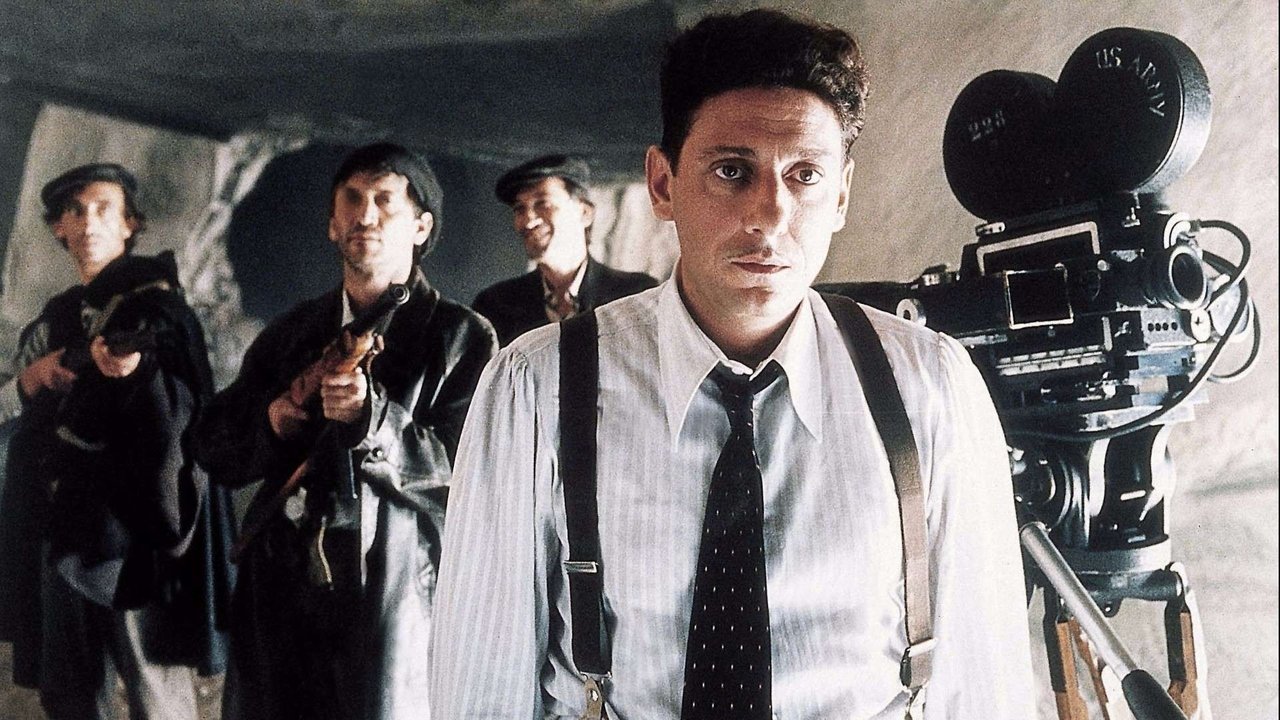
We find ourselves in Sicily, 1953. The dust of war hasn't quite settled, and poverty clings stubbornly to the landscape and its people. Into this world rolls Joe Morelli (Sergio Castellitto), a sharp-suited charlatan from the mainland. His truck holds a rudimentary film setup, his pitch a tantalizing blend of half-truths and outright lies. For a small fee, he offers screen tests, claiming to be a talent scout for major Roman studios. He coaxes confessions, frustrations, hopes, and performances out of villagers starved for opportunity, recording their faces, their dreams, their very souls onto fleeting celluloid. It’s a captivating, almost predatory premise. Doesn't it speak volumes about the desperate human need to be seen, to believe in something beyond the immediate hardship?
Sergio Castellitto is simply magnetic as Morelli. He embodies the character's slick surface – the practiced charm, the easy confidence – but allows cracks to show. Is he purely cynical, or does some part of him get caught up in the fantasies he sells? Castellitto keeps us guessing. His Morelli isn't a cartoon villain; he’s a man exploiting desperation, yes, but perhaps also dimly aware of the fragile hopes he toys with. It’s a performance built on nuance, the slight shifts in his eyes or the weary set of his shoulders revealing more than his fast-talking dialogue ever could. He feels authentic, a product of a time when survival often necessitated moral compromise.
Echoes of Paradiso, Shades of Grey
Coming seven years after his beloved international smash Cinema Paradiso (1988), Giuseppe Tornatore returns to his Sicilian roots, but paints a far bleaker picture. While Paradiso celebrated the communal magic of movie-going, The Star Maker examines the manipulative underbelly of the dream factory, or at least, its deceptive reflection in Morelli's cheap camera lens. The connection feels intentional; Tornatore seems compelled to explore both the light and shadow cast by cinema's allure.
Filmed largely on location in stunning, sun-baked Sicilian towns like Ragusa Ibla and Matera (whose ancient Sassi districts lend an incredible, almost biblical weight to the setting), the film possesses a palpable sense of place. The landscape isn't just backdrop; it's a character, its beauty contrasting sharply with the poverty of its inhabitants. This authenticity grounds the story, making the arrival of Morelli's Hollywood-adjacent promises feel even more jarringly hopeful, and ultimately, more cruel. The film garnered significant international acclaim, including a nomination for the Academy Award for Best Foreign Language Film, a testament to its craft and resonance beyond Italy's borders.
A Fleeting Connection, A Lasting Question
The heart of the film, arguably, lies in Morelli's relationship with Beata (Tiziana Lodato), a young, naive convent girl who becomes captivated by him and his promises. Lodato brings a touching vulnerability to the role, representing the innocent belief Morelli exploits but also, perhaps, briefly awakens something genuine within him. Their connection is fraught, complicated, and ultimately transient, mirroring the fleeting nature of the dreams Morelli sells. It forces us to ask: Can genuine connection blossom even from deceit? Or is it just another illusion?
(Minor Spoilers Ahead!) The film doesn't shy away from the consequences of Morelli's actions. His house of cards inevitably collapses, leading to a more somber, reflective final act. The faces he captured, initially imbued with hope, become haunting testaments to exploited dreams. It’s here the film's critique sharpens, reminding us that the hunger for fame and escape can leave deep scars.
Final Reel
The Star Maker isn't the warm hug of Cinema Paradiso. It's a more complex, bittersweet, and ultimately sadder film. It uses the powerful iconography of cinema – the camera, the screen test, the promise of stardom – to explore themes of illusion, exploitation, and the enduring, sometimes dangerous, power of hope in the face of despair. Sergio Castellitto delivers a career-defining performance, embodying the seductive danger of the false prophet. While perhaps not as instantly accessible as Tornatore's earlier masterpiece, its textured atmosphere, thoughtful exploration of its themes, and powerful central performance make it a rewarding watch, especially for those who appreciate cinema that lingers and provokes. It captures a specific moment, a specific feeling – the fragile hope of a nation rebuilding, mirrored in the faces captured by a con man's lens.
Rating: 8/10 - This score reflects the film's superb central performance, its evocative atmosphere, and Tornatore's confident direction in exploring challenging themes. It avoids a higher score perhaps because its narrative trajectory feels somewhat inevitable, and it lives slightly in the shadow of the director's more universally adored work, but its craft and emotional depth are undeniable.
It leaves you pondering the faces Morelli filmed – ghosts of hope captured on expired stock. What became of them, long after the 'star maker' moved on?