The air hangs thick with the metallic tang of rust and something else… something sickly sweet, like decay trying to mask itself. That’s the feeling that clings to you long after the static hiss fills the screen when the tape runs out on Adrenalin: Fear the Rush. Forget glossy Hollywood futures; this 1996 B-movie plunges you headfirst into a grimy, rain-slicked vision of tomorrow that feels disturbingly close, a world choking on its own refuse and simmering with barely contained panic. It’s the kind of film that felt right at home nestled between worn copies of Hardware (1990) and Split Second (1992) on the dusty shelves of the local video store’s sci-fi/horror section.

A Future Drenched in Grime
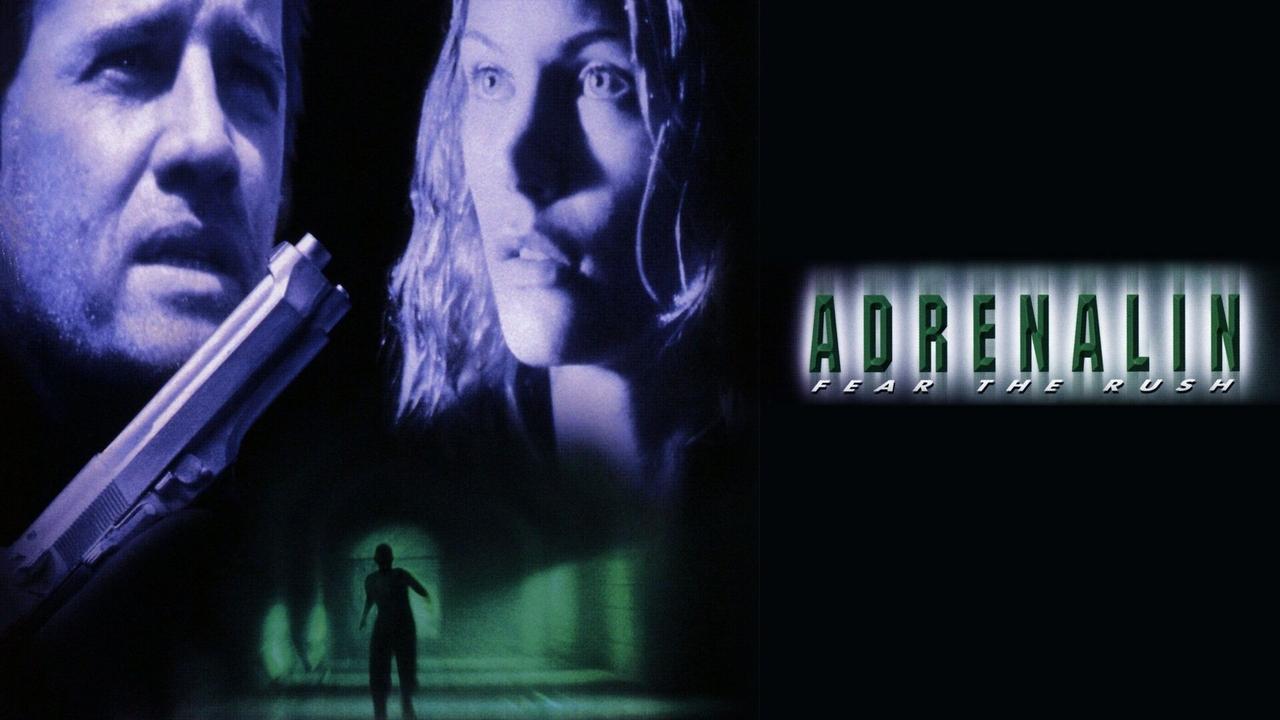
The setup is pure pulp nightmare fuel: It's 2007 (a future imagined from the mid-90s, naturally), and a lethal pandemic has forced Eastern European refugees into a quarantined sector beneath Boston. When a mutated carrier escapes this containment zone, Officer Delon (Christopher Lambert, bringing his signature gravelly intensity) and his team, eventually joined by scientist Dr. Points (Natasha Henstridge, fresh off her breakout in Species the year prior), are tasked with hunting the creature down before it reaches the surface and unleashes hell. What follows is less a sophisticated thriller and more a relentless, claustrophobic chase through dripping tunnels, abandoned subways, and decaying industrial ruins.
Director Albert Pyun, a name synonymous with ambitious, often visually striking low-budget genre fare like Cyborg (1989) and Nemesis (1992), absolutely drenches the film in atmosphere. You can almost smell the damp concrete and feel the chill seeping into your bones. Much of this potent sense of place comes courtesy of the film's shooting locations in Slovakia. The crumbling, authentic Eastern European industrial landscapes provide a production value far exceeding what its presumably modest budget (common for Pyun’s work, though exact figures are elusive, the film barely scraped $130k at the US box office, signalling its destiny lay in the home video market) could have otherwise afforded. It creates a believable, oppressive world that feels genuinely inescapable, a far cry from sterile CGI environments.
Creature Feature Claustrophobia
The monster itself, played with twitchy menace by Norbert Weisser (you might remember him from Carpenter's The Thing), is a product of its time – a practical effects creation relying on makeup, prosthetics, and performance. Does it look dated now? Sure. But there's a tactile quality, a disturbing physicality to its jerky movements and biological horror design that still carries a certain unsettling weight, especially when glimpsed in the flickering shadows Pyun favors. The film understands the power of suggestion; often, the threat of the creature, the sounds echoing down corridors, the fleeting glimpses, are more effective than a brightly lit reveal. It taps into that primal fear of the unseen hunter in the dark, a feeling amplified by the labyrinthine setting.
Lambert and Henstridge Under Pressure

Christopher Lambert, post-Highlander fame, essentially plays the weary archetype he often excelled at – the stoic, haunted man pushed to the edge. He grounds the film with a necessary weight, even when the dialogue gets clunky. It’s interesting to see Natasha Henstridge here, so soon after Species. While that film played on seductive alien horror, Adrenalin throws her into a much grittier, less glamorous scenario. Her character acts as the audience's scientific anchor, explaining the stakes, but mostly she’s caught up in the frantic survival run alongside Lambert. Their chemistry isn't electric, but it serves the desperate tone of the narrative. They feel like two exhausted people just trying to make it through the night.
The Pyun Factor: Ambition vs. Execution
Like many Albert Pyun joints, Adrenalin feels like it’s reaching for something just beyond its grasp. You can sense a desire to explore themes of societal breakdown, quarantine, and fear of the 'other', but the relentless chase narrative often steamrolls over deeper exploration. The editing can feel choppy, the pacing uneven, and some of the supporting characters fade into the background. Yet, there’s an undeniable energy here, a commitment to its bleak vision that’s hard to dismiss entirely. It’s a film that wears its limitations on its sleeve but still manages to deliver moments of genuine tension and atmospheric dread. Reportedly, Pyun often battled studio interference and budget cuts, forcing creative compromises; one wonders what a slightly more polished version might have looked like, though perhaps some of the raw, unrefined quality is part of its grubby charm.
VHS Heaven Rating: 5/10
Let’s be clear: Adrenalin: Fear the Rush is no unsung masterpiece. It’s repetitive, rough around the edges, and occasionally nonsensical. But for fans of 90s direct-to-video sci-fi/horror grit, there’s a certain appeal. The oppressive atmosphere generated by its real-world locations is genuinely effective, Christopher Lambert delivers his reliable brand of weary cool, and the practical creature effects have that specific nostalgic creep factor. It perfectly encapsulates that era of ambitious B-movies that aimed high, even if they didn't quite stick the landing. The 5/10 reflects its significant flaws in pacing and polish, but acknowledges its success in creating a genuinely dank and claustrophobic world, fueled by Pyun’s distinctive visual style and a commitment to practical grit.
It’s the kind of movie you’d rent on a whim, drawn in by the cover art and the promise of action and scares, and find yourself surprisingly gripped by its relentless, down-and-dirty chase through a future nobody wants. It may not be high art, but Adrenalin is a potent shot of mid-90s subterranean dread that still leaves a grimy residue.