It’s strange what sticks with you from those dusty shelves at the back of the video store, isn't it? Beyond the big Hollywood blockbusters, tucked away perhaps in 'World Cinema' or 'Cult,' you'd occasionally find something that felt... different. A tape like Aleksei Balabanov's 1997 film Brother (or Brat, if you snagged an import copy) was exactly that kind of discovery. No slick marketing, no familiar stars for most Western audiences, just a stark cover hinting at something raw and unvarnished. Watching it felt less like passive viewing and more like being plugged directly into the fractured, volatile energy of mid-90s Russia.

Arrival in the Concrete Jungle
The film drops us into the life of Danila Bagrov, played with startling quiet charisma by the late Sergei Bodrov Jr. Fresh out of the army (though the specifics of his service remain deliberately vague), Danila drifts into St. Petersburg at his mother's urging, seeking out his older brother, Viktor. The city itself feels like a character – a vast, decaying landscape of peeling paint, cavernous apartment blocks, and rain-slicked streets, captured by Balabanov with a gritty, almost documentary-like immediacy. This isn't a tourist's view; it's the city as experienced by those navigating its less glamorous corners, a place brimming with both opportunity and danger. You feel the chill in the air, the sense of a society finding its feet, often stumbling, after seismic shifts.
The Unlikely Hitman
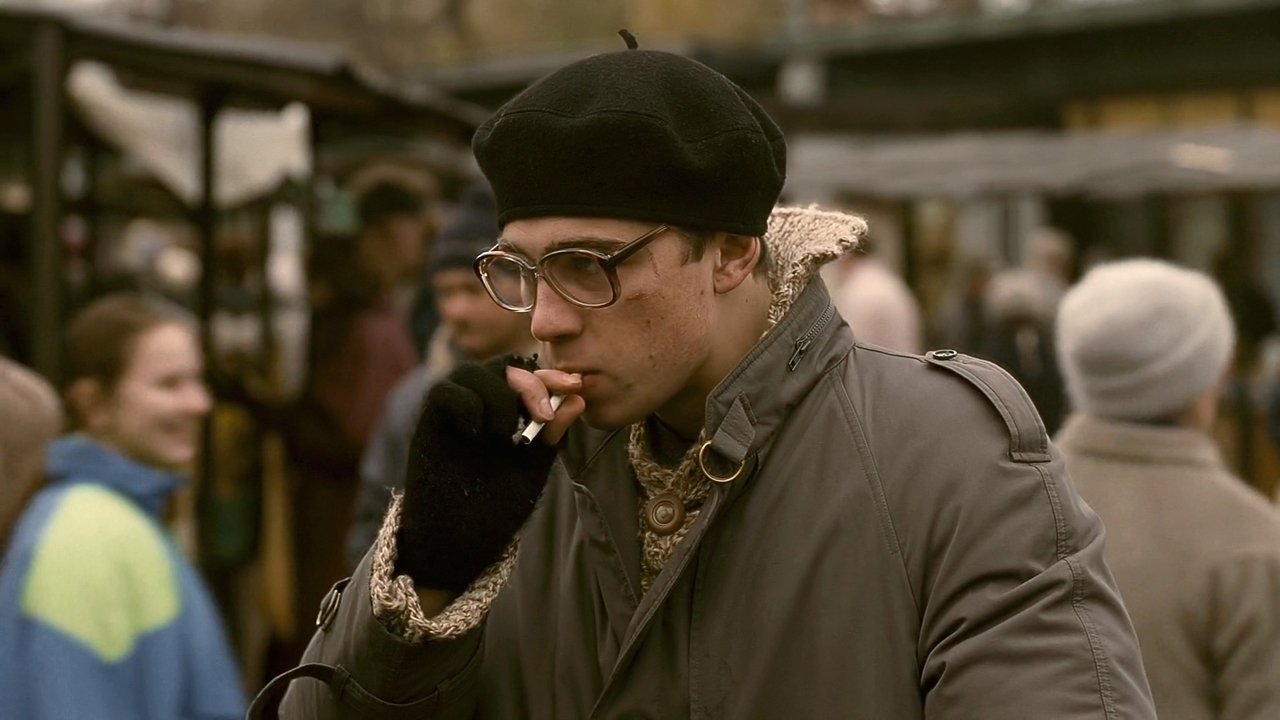
What makes Brother so magnetic is Danila himself. Bodrov Jr., who tragically died in an avalanche in 2002, wasn't a classically trained actor when he took this role – apparently, his father, director Sergei Bodrov Sr., suggested him to Balabanov almost casually. Yet, his performance is utterly captivating. Danila is polite, almost boyish, often seen listening to his beloved Russian rock music (particularly Nautilus Pompilius, whose moody tracks form the film's iconic soundtrack) on a portable cassette player. He possesses a simple, almost naive worldview, yet beneath the surface lies a capacity for sudden, shocking violence, deployed with chilling efficiency. He asks few questions when his shady older brother Viktor (Viktor Sukhorukov, radiating nervous energy and desperation) pulls him into the criminal underworld, tasking him with contract killings. Is it loyalty? A lack of direction? Or something learned during his time in the service? The film never explicitly states, leaving us to ponder the forces shaping this young man.
Guerilla Filmmaking, Raw Power
You can feel the constraints of the production pulsing through the film, but Balabanov turns them into strengths. Reportedly shot for a minuscule budget – estimates hover around a mere $10,000-$20,000 – Brother possesses an authenticity that money often smooths away. (Imagine trying to make anything for roughly $20k-$40k in today's money!) The handheld camerawork feels urgent, placing us right alongside Danila as he navigates tram rides with German vagrants (played by Svetlana Pismichenko, offering a touch of fragile humanity) or confronts Chechen gangsters in bustling marketplaces. There's little gloss here; the violence is brutal and matter-of-fact, devoid of Hollywood theatrics. Balabanov, who also directed the bleak and controversial Cargo 200 (2007), wasn't interested in moralizing; he was capturing a specific mood, a national psyche grappling with newfound freedoms and old prejudices.
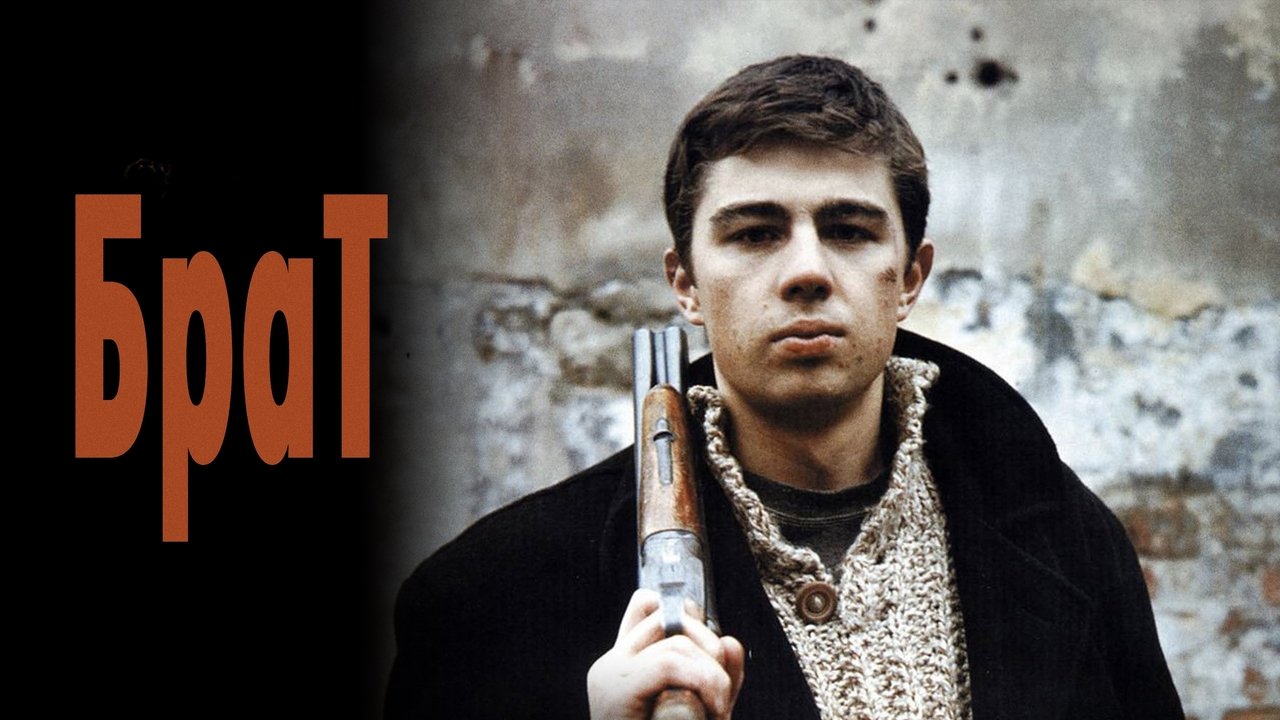

The film's production itself sounds like something out of Danila's world. Stories abound of filming quickly, often guerrilla-style, on the streets of St. Petersburg, utilizing real locations that lend an undeniable texture. Even Danila's famously unfashionable, chunky knit sweater became an unlikely icon of the era in Russia – a symbol of unassuming strength, perhaps. It's a testament to the film's power that these limitations didn't hinder it but instead forged its distinctive identity.
A Troubled Reflection
Brother wasn't just a movie; it was a phenomenon in Russia. Arriving at a time when audiences were weary of Western imports and searching for homegrown narratives, Danila Bagrov struck a chord. He was seen by many as a new kind of Russian hero – quiet, self-reliant, capable of navigating the chaos and dispensing rough justice. Yet, this aspect is also where the film remains most uncomfortable and debated. Danila expresses casual racism and xenophobia, particularly towards people from the Caucasus, reflecting ugly sentiments prevalent at the time (and, sadly, still present). Does the film endorse these views, or merely reflect them as part of Danila's flawed character and the societal landscape? It’s a question that hangs heavy long after the credits roll, forcing a confrontation with the complexities of national identity and the dark side of seeking simple answers in confusing times. What does it mean when an audience embraces a hero who embodies such contradictions?
The film’s massive success led to a sequel, Brother 2 (2000), which took Danila to America and boasted a significantly larger budget and scope, becoming an even bigger box office smash in Russia, though arguably losing some of the original's raw intimacy.
Final Thoughts: The Echo of a Generation
Brother is a raw nerve exposed. It’s technically rough around the edges, deeply unsettling in its casual violence, and carries baggage that demands critical engagement. Yet, its power is undeniable. Sergei Bodrov Jr.'s performance is magnetic, Balabanov's direction is assuredly gritty, and the film captures a specific moment in Russian history with an honesty that feels both immediate and enduring. It’s a stark reminder that compelling cinema doesn't always need polish, just a potent vision and a character who resonates, for better or worse. Finding this on VHS felt like unearthing something potent and slightly forbidden.
Rating: 8/10
This score reflects the film's raw power, Bodrov Jr.'s iconic performance, and its undeniable cultural impact in Russia, capturing a specific time and place with unflinching honesty. While its technical limitations are apparent and its thematic elements remain deeply controversial, its raw energy and the haunting ambiguity of its central character make it a compelling, if challenging, piece of 90s cinema that transcends its low-budget origins.
It leaves you thinking about the lines we draw – between right and wrong, good and evil, brother and stranger – and how easily they blur when survival feels like the only rule.