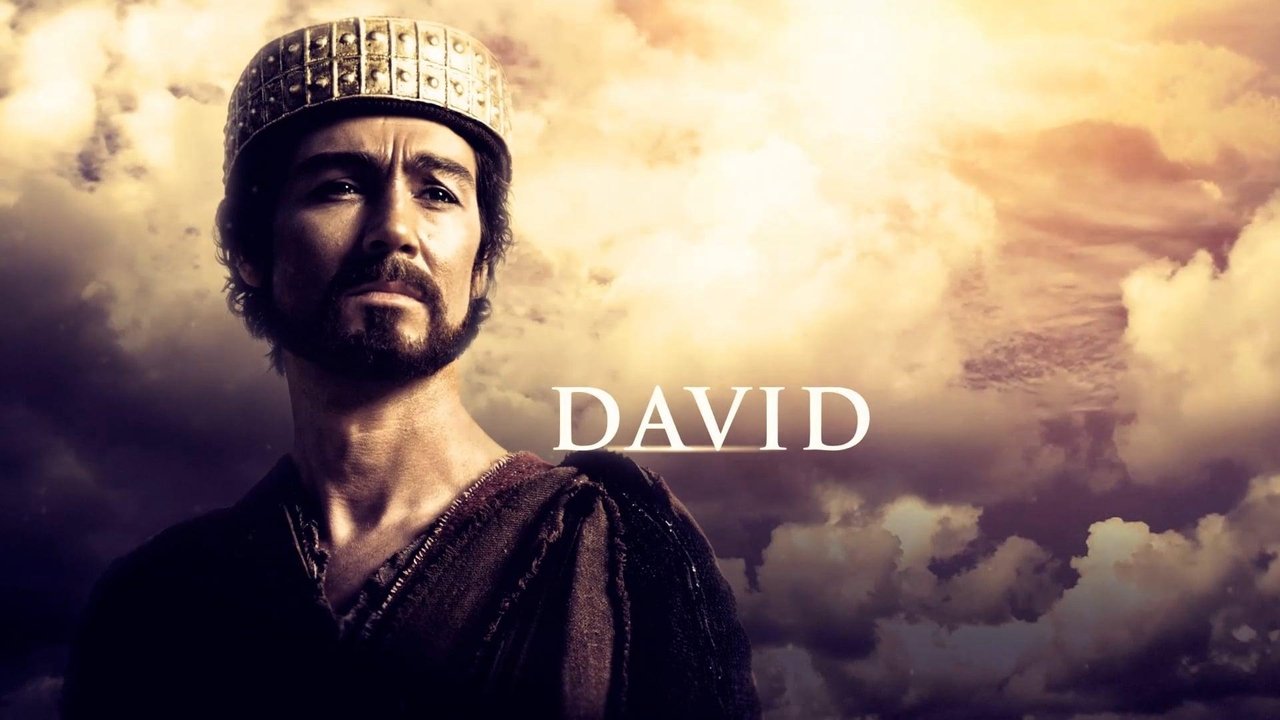
Okay, settle in, grab your favorite beverage, and let's journey back to a time when major networks poured serious ambition (and cash) into bringing epic stories right into our living rooms. Remember those TNT "Bible Collection" movies? They felt like events, often sprawling across two nights, demanding commitment but promising spectacle. Few figures loom larger in that tradition than King David, and tackling his story – the shepherd boy, the giant-slayer, the poet, the king, but also the adulterer and schemer – was no small feat. The 1997 miniseries David aimed high, and watching it again stirs memories not just of the broadcast, but of the sheer complexity woven into this ancient narrative.
### More Than Just Slingshots and Psalms
What strikes you revisiting David isn't just the scale, but the willingness to grapple with the protagonist's deep flaws. This wasn't purely the sanitized, heroic version. Helmed by television veteran Robert Markowitz (who gave us the excellent The Tuskegee Airmen), and penned by an interesting pairing – Larry Gross (known for gritty action like 48 Hrs.) and Allan Scott (whose credits range from the suspenseful Don't Look Now to the recent The Queen's Gambit) – the script attempts to present David as a man of profound faith and crippling weakness, often simultaneously. It charts his meteoric rise, his triumphs fueled by divine favor, but crucially, it doesn't shy away from the disastrous consequences of his later arrogance and sin. That famous "Spoiler Alert!" regarding Bathsheba and Uriah? It's central here, depicted with a gravity that respects the tragic weight of David's choices.
### A Cast Fit for a King (and a Prophet)
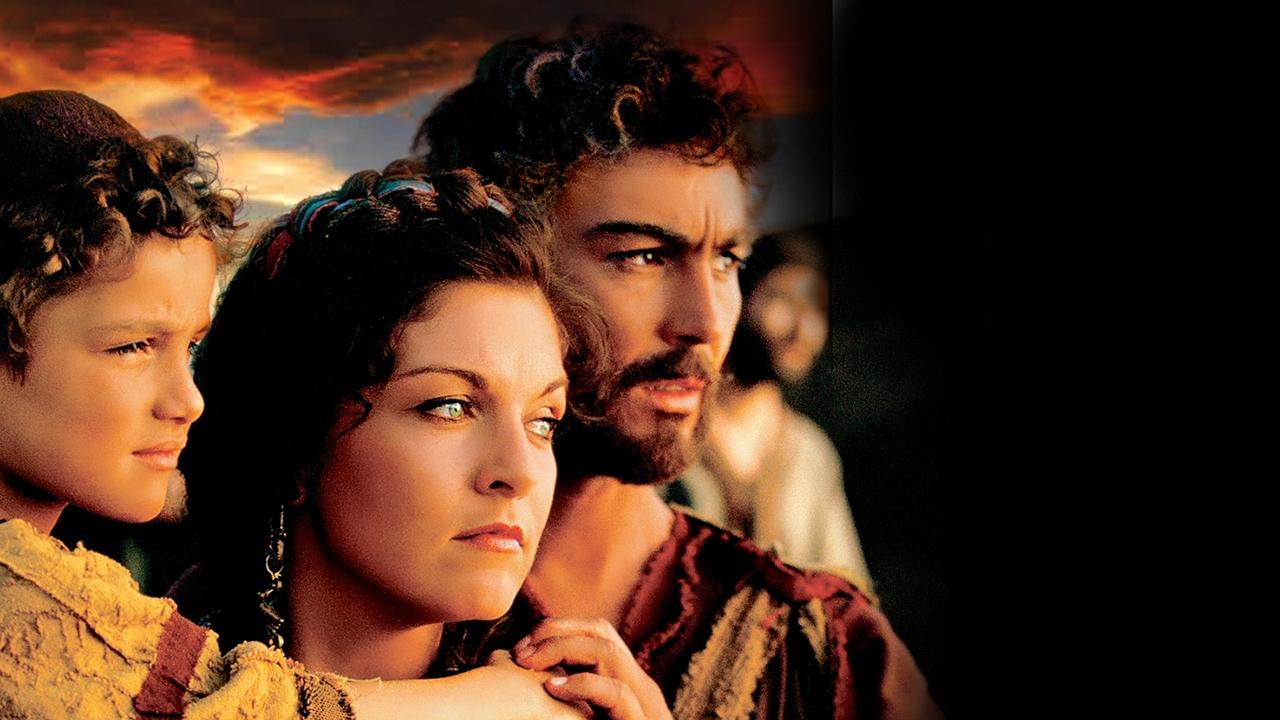
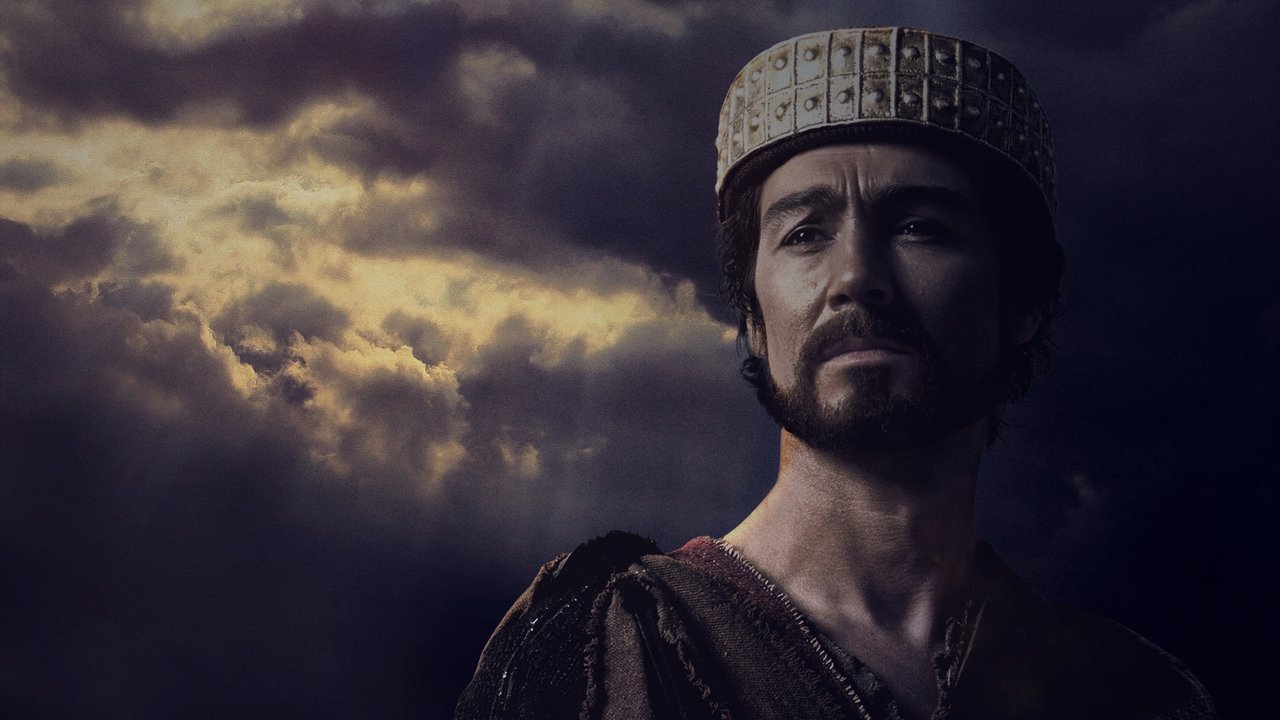
The casting is where David truly shines, elevating it beyond standard TV movie fare. Nathaniel Parker, then perhaps best known to UK audiences, steps into the formidable sandals of David. It's a demanding role, requiring him to portray the youthful charisma, the warrior's intensity, the kingly authority, and finally, the weary, repentant older man. Parker navigates these transitions admirably, conveying both David's magnetic charm and the haunted burden of his transgressions. You believe him as both the giant-slayer and the man brought low by his desires.
But he's surrounded by absolute titans. Jonathan Pryce delivers a powerhouse performance as King Saul. His Saul isn't just a jealous monarch; he's a figure of immense tragedy, tormented by paranoia, insecurity, and the palpable sense of God's favor slipping away. Pryce embodies this internal decay with harrowing intensity – his scenes crackle with psychological tension. And then there's Leonard Nimoy as the Prophet Samuel. Casting Mr. Spock as a stern Old Testament prophet might seem unusual on paper, but Nimoy brings an incredible gravitas and weary authority to the role. His Samuel is the moral compass, his pronouncements carrying the weight of divine judgment. Nimoy reportedly embraced the role's complexity, a far cry from the logic-driven Vulcan, and his presence lends the early sections of the story significant dramatic heft. We also see fine work from Sheryl Lee (Twin Peaks) as Bathsheba, portraying her initial allure and later vulnerability, and Ben Daniels (The Crown) as the loyal Jonathan.
### Epic Visions on the Small Screen
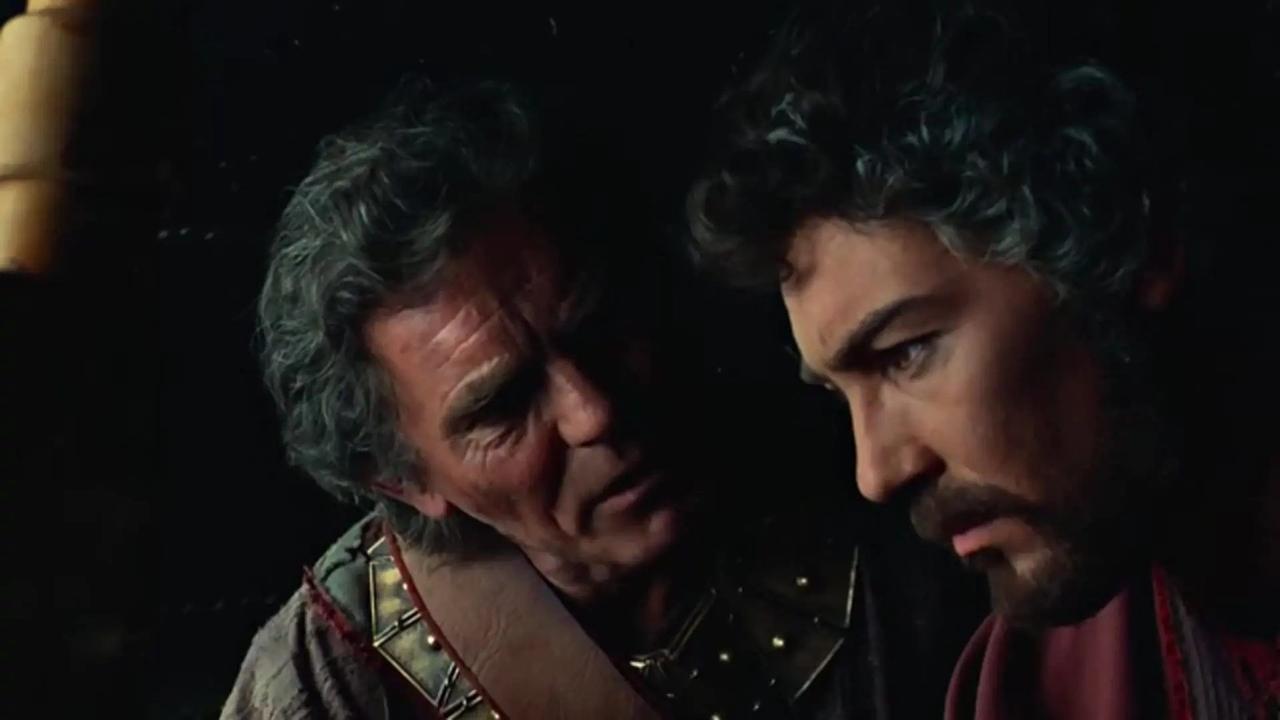
Filmed largely in Morocco, David certainly looks the part. The production, part of Ted Turner's ambitious $100 million+ investment in the Bible Collection series, clearly benefited from a substantial budget for its time. Director Markowitz and cinematographer Gerry Fisher (who actually won an Emmy for his work here) make excellent use of the landscapes, striving for a cinematic feel. The dusty plains, bustling marketplaces, and palace interiors feel authentic. While some of the battle sequences might show their TV movie seams compared to modern blockbuster standards, there's a tangible quality to the production design, costumes, and staging. They aimed for scope, and largely achieved it within the medium's constraints. The score by Carlo Siliotto also effectively underscores the drama and emotion.
### Retro Fun Facts & Production Notes
- Ambitious Undertaking: The TNT Bible Collection was a massive project aiming for faithful yet dramatic adaptations. David was one of the centerpieces, following successes like Abraham (starring Richard Harris) and Joseph (starring Ben Kingsley).
- Critical Acclaim: Beyond Fisher's Emmy win for cinematography, David snagged nominations for Outstanding Miniseries, Casting, Art Direction, and Sound Mixing, signaling its quality was recognized at the time.
- The Nimoy Factor: Leonard Nimoy’s casting brought significant attention. He spoke about being drawn to Samuel's moral certainty and the character's pivotal role in Israel's history. It remains one of his most interesting post-Star Trek roles.
- Adapting the Complexities: Handling David's census sin, the rebellion of his son Absalom, and the Bathsheba affair required careful scripting to remain palatable for broadcast TV while still conveying the moral weight. The writers navigated this tightrope effectively.
- Two-Tape Territory: For many of us, experiencing David meant renting that chunky two-VHS tape set from Blockbuster or Hollywood Video. Watching Part 1, then having to wait (or immediately pop in the second tape) felt like part of the ritual for these miniseries epics.
### Lingering Questions of Faith and Frailty
What stays with you after watching David again is its thoughtful portrayal of a deeply human figure wrestling with divine purpose and personal failings. It explores themes of leadership, temptation, repentance, and the enduring consequences of our actions. Does God choose perfect vessels? Or does He work through flawed individuals capable of both great good and terrible error? The film doesn't offer easy answers, instead presenting David's life as a complex tapestry of faith, ambition, love, betrayal, and ultimately, a search for grace. It avoids hagiography, presenting a man whose immense strengths were matched by equally profound weaknesses, making his story resonate far beyond its ancient setting.
Rating: 7.5/10
Justification: David stands as a high point in 90s television miniseries, particularly within the biblical epic genre. Its strength lies in the compelling performances, especially from Pryce and Nimoy, and Parker's solid turn in the complex lead role. The production values are impressive for the era and medium, and the script tackles difficult material with intelligence and sensitivity. While occasionally hampered by the pacing inherent in multi-part TV narratives and some inevitable constraints compared to theatrical features, its ambition and thoughtful execution make it a rewarding watch.
Final Thought: More than just a Sunday School lesson, David reminds us that even stories etched in stone are about flesh-and-blood people grappling with timeless questions of power, faith, and the shadows within us all – a resonant echo from the shelves of VHS Heaven.