It’s easy to picture the pitch meeting: Sean Connery, grizzled and iconoclastic, deep in the Amazon rainforest, holding the key to curing cancer but refusing to share it. Add a fiery, take-no-prisoners biochemist dispatched from the concrete jungle to wrestle the secret from him. It sounds like the recipe for a classic 90s adventure, doesn't it? Medicine Man (1992) arrived on video store shelves with that very promise, directed by John McTiernan – a name synonymous with high-octane thrills like Predator and Die Hard – and penned in part by Tom Schulman, who gave us the inspirational Dead Poets Society. Yet, watching it again now, decades removed from its initial release, reveals a film perhaps more intriguing for its earnest intentions and curious tonal blend than its outright success as a seamless piece of entertainment.
Beneath the Emerald Canopy
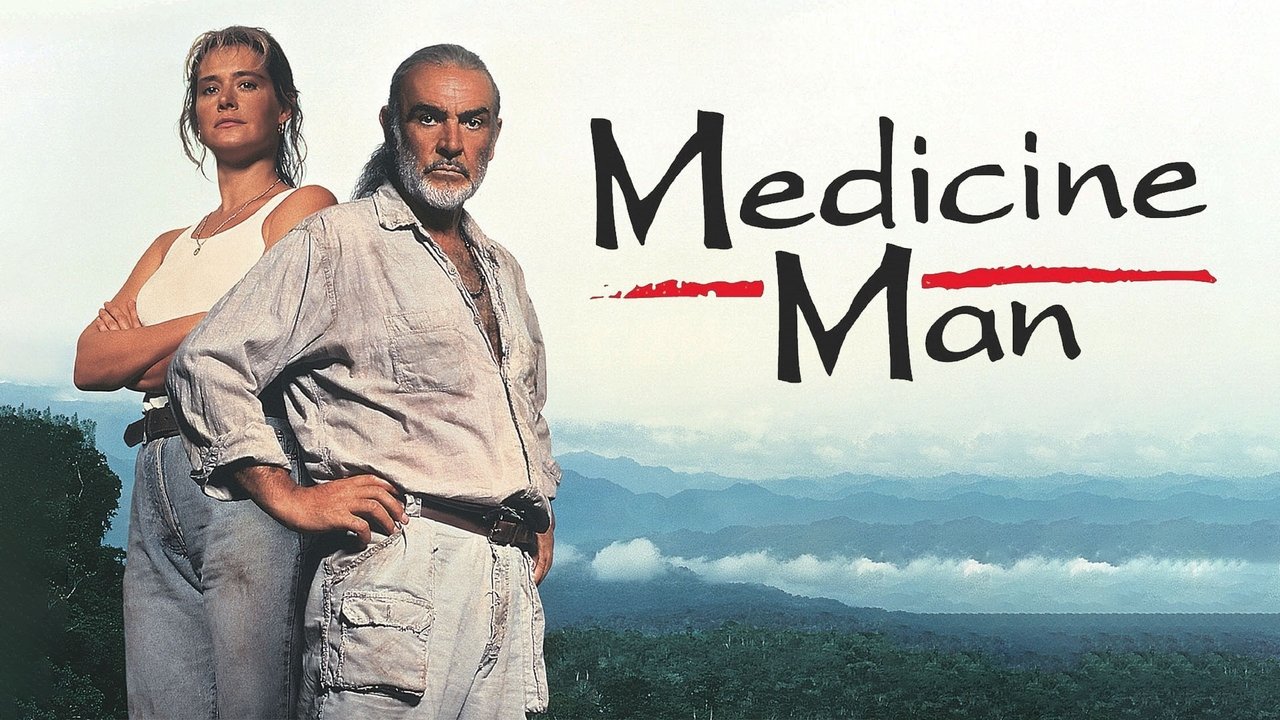
What immediately strikes you is the film’s commitment to its setting. McTiernan, trading urban chaos for ecological grandeur, captures the overwhelming scale and vibrant, often dangerous, beauty of the rainforest (filmed primarily in Mexico's Catemaco region). There's a tangible quality to the humidity, the dense foliage, the very air the characters breathe. This wasn't a green-screen jungle; the production famously battled intense heat, relentless insects, and logistical nightmares to achieve this authenticity. You feel the isolation and the immense power of nature that surrounds Dr. Robert Campbell (Sean Connery) and, later, the arriving Dr. Rae Crane (Lorraine Bracco). The cinematography often emphasizes this, dwarfing the human figures against the vast wilderness, visually reinforcing the film's environmental undercurrents. Jerry Goldsmith's score, too, contributes significantly, managing to evoke both wonder and a subtle sense of urgency.
A Clash of Personalities and Purpose
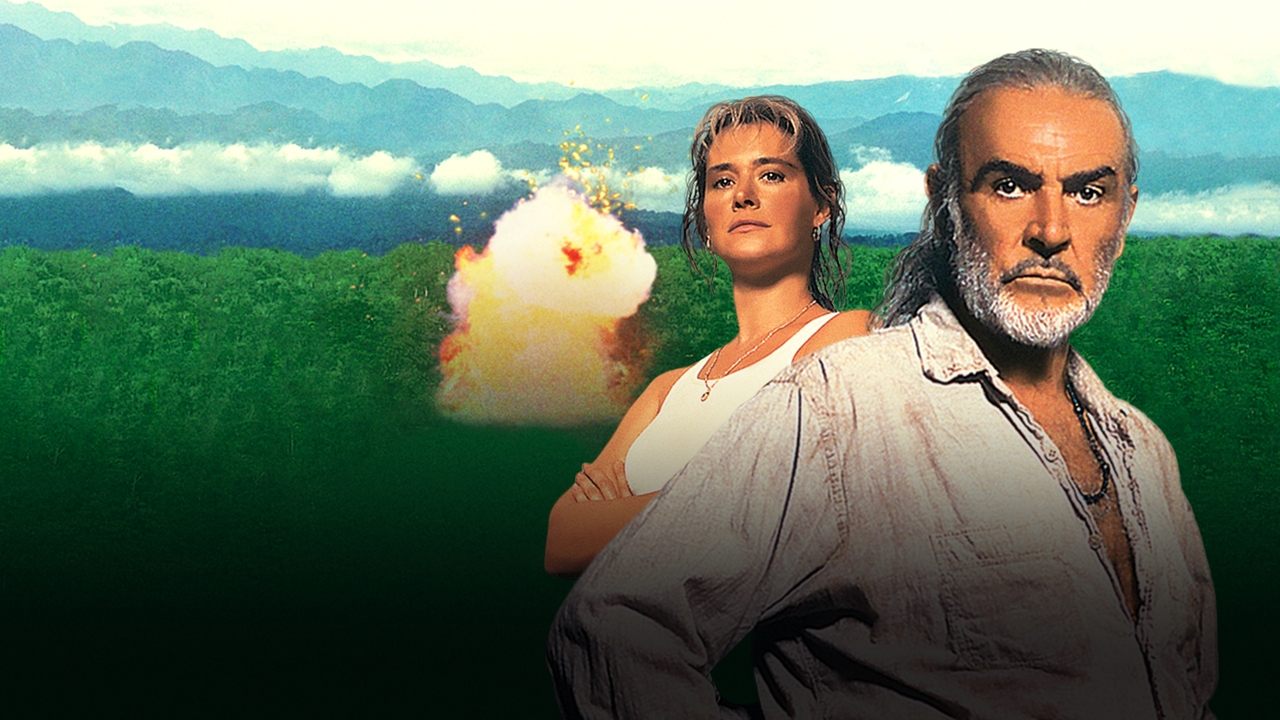
At its heart, Medicine Man is driven by the dynamic between its two leads. Connery, sporting a rather memorable ponytail and a world-weary demeanor, plays Dr. Campbell not as a swashbuckling hero, but as an eccentric, obsessive scientist who's gone native, fiercely protective of both his research and the indigenous community he lives amongst. It's a performance layered with frustration and a deep-seated idealism, even if his methods are abrasive. Connery reportedly commanded a hefty $10 million plus a percentage of the profits for the role, a testament to his star power at the time.
Opposite him, Lorraine Bracco, fresh off her powerhouse performance in Goodfellas, brings a necessary spark and skepticism as Dr. Crane. She's the audience's way in – initially appalled by the conditions and Campbell's secrecy, then gradually drawn into the significance of his work and the plight of the forest. Bracco imbues Rae with intelligence and resilience, refusing to be merely swept away by Campbell's charisma or the exotic locale. Their relationship, shifting from antagonism to grudging respect and eventual romance, forms the film's central pillar. Does the chemistry always sizzle? Perhaps not consistently, sometimes feeling more like a narrative requirement than an organic development, but both actors commit fully to their roles.
Retro Fun Facts: Science and Sweat
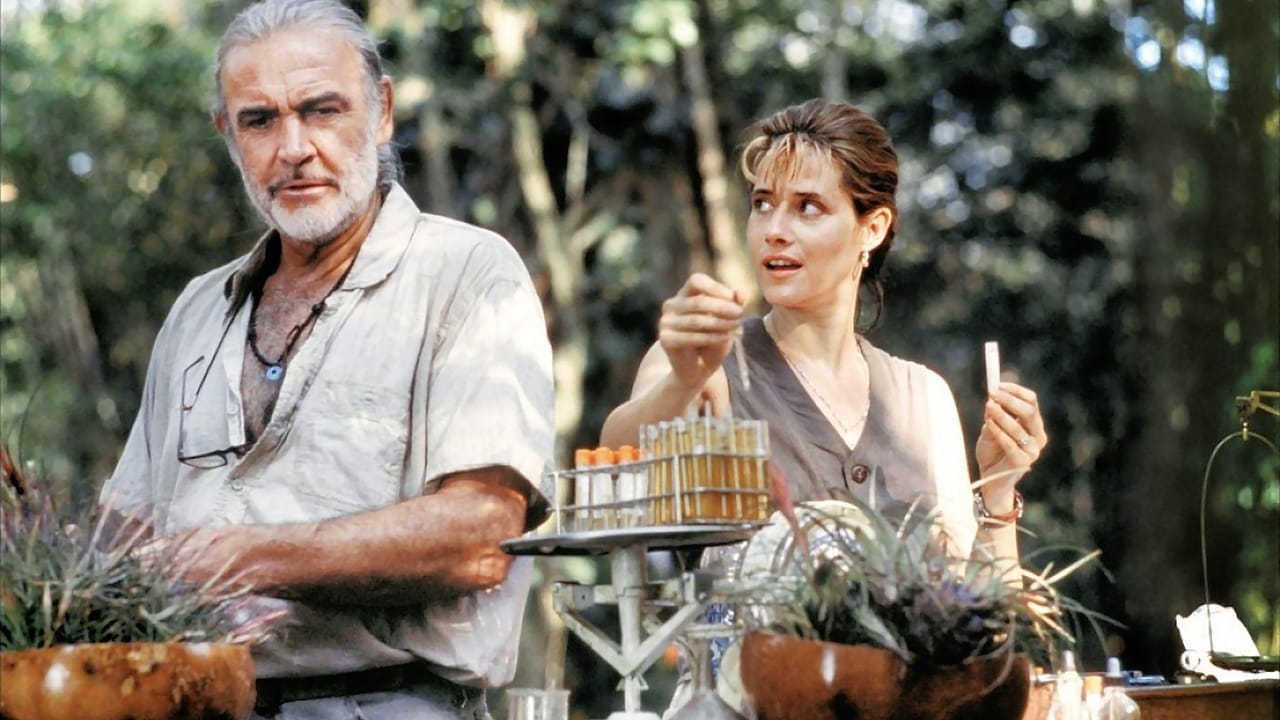
The journey to bring Medicine Man to the screen wasn't simple. Tom Schulman's original script idea stemmed from a real article about ethnobotanists searching for cures in rainforests. Getting Connery involved was key, and his presence likely helped secure the estimated $40 million budget – a substantial sum for the era, particularly for a film banking heavily on location shooting rather than extensive special effects. While the film performed respectably at the box office (grossing around $110 million worldwide), it didn't quite reach the blockbuster heights of McTiernan's previous work. Interestingly, the specific 'cure' derived from a species of bromeliad related to ants was conceived for the film, though the underlying premise of undiscovered medicinal compounds in rainforest flora remains scientifically valid. The film's tagline, "He turned his back on civilization. She came to bring him back. But in a world stranger than they ever imagined, discovering the secret was easy... getting it out would be impossible," perfectly captured that 90s adventure movie spirit.
A Message in a Bottle (or Test Tube)
Beyond the adventure and romance, Medicine Man wears its environmental heart on its sleeve. The threat of deforestation looms large, not just as a backdrop but as an active antagonist jeopardizing Campbell's research and the very existence of the indigenous tribe, led by the dignified José Wilker as Jahausa. The film explicitly argues for the preservation of these vital ecosystems, both for their intrinsic value and their potential to hold cures for human ailments. Looking back, this message feels both prescient and perhaps a touch heavy-handed in its delivery, characteristic of some early 90s "message movies." It grapples with complex issues – scientific ethics, cultural preservation, corporate interests vs. ecological necessity – but sometimes struggles to integrate them smoothly into the adventure narrative. Does the urgency of finding the cure occasionally overshadow the deeper ethical questions the film raises? It's a tension that runs throughout.
Final Reflections
Medicine Man isn't a perfect film. The pacing occasionally drags, the romantic subplot can feel slightly forced, and the blend of serious themes with adventure tropes isn't always seamless. I remember renting this on VHS, perhaps drawn by Connery and the exotic setting, and finding something a bit different than expected – less outright action, more character study and ecological plea. Yet, there's an undeniable charm and sincerity to it. Connery and Bracco are compelling, the location cinematography is genuinely impressive, and the core idea – the search for knowledge and healing hidden within the endangered natural world – remains potent. It’s a film that tried to be something more than just a jungle romp, even if it didn't quite achieve all its ambitions.
Rating: 6.5/10
The rating reflects a film with strong performances, impressive location work, and admirable thematic goals, slightly hampered by an uneven tone and a romance that doesn't fully ignite. It's a solid, thoughtful piece of 90s cinema that aimed high, even if it didn't quite stick the landing perfectly.
What lingers most after watching Medicine Man today isn't just Connery's ponytail, but the uncomfortable relevance of its central conflict – the ongoing tension between progress, profit, and preservation in the fragile ecosystems of our world.