Alright, fellow tape-heads, gather 'round. Let's talk about a film that probably landed in your VCR back in the late 90s and left you staring at the flickering static afterwards, wondering, "What in the blessed name of Blockbuster did I just witness?" I'm talking about Steven Soderbergh's 1997 brain-scrambler, Schizopolis. This wasn't your typical Friday night rental, nestled between the latest action flick and that rom-com everyone was talking about. No, finding Schizopolis felt like uncovering a bootleg transmission from another dimension, disguised in a standard clamshell case.
Coming years after his Palme d'Or-winning debut sex, lies, and videotape (1989) and before he redefined heist cool with Out of Sight (1998), Schizopolis represents Soderbergh hitting a personal reset button. Frustrated with the studio system after a few less-than-stellar experiences, he bankrolled this oddity himself for a mere $250,000 – pocket change even then – shooting quickly in Baton Rouge, Louisiana. It feels less like a movie and more like a manifesto scribbled on cocktail napkins, a defiant burst of pure, unadulterated cinematic strangeness.
### What Is Plot, Anyway?
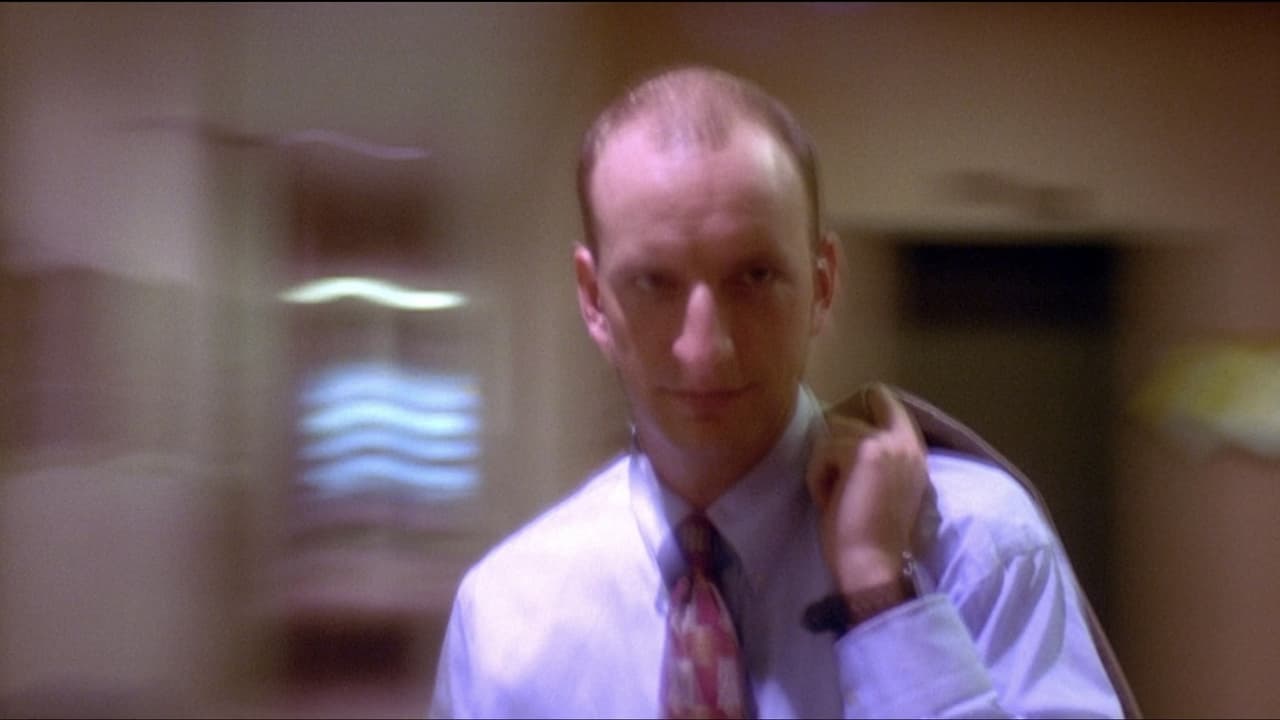
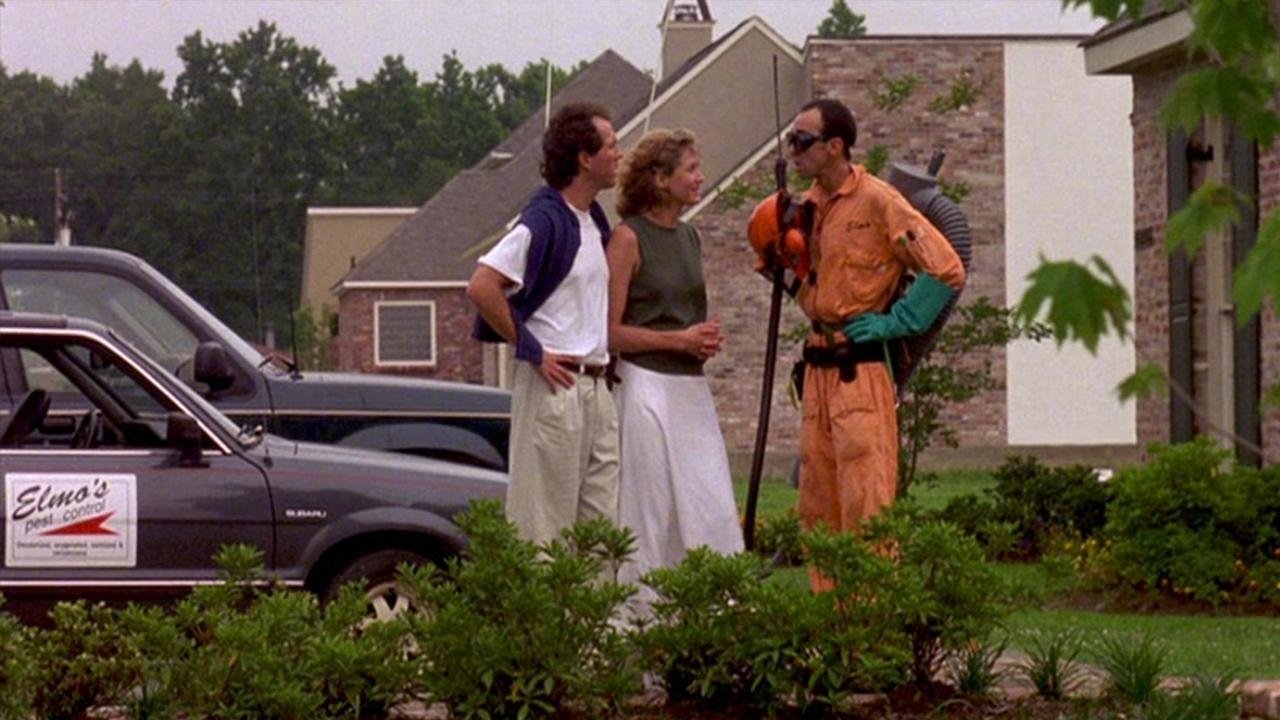
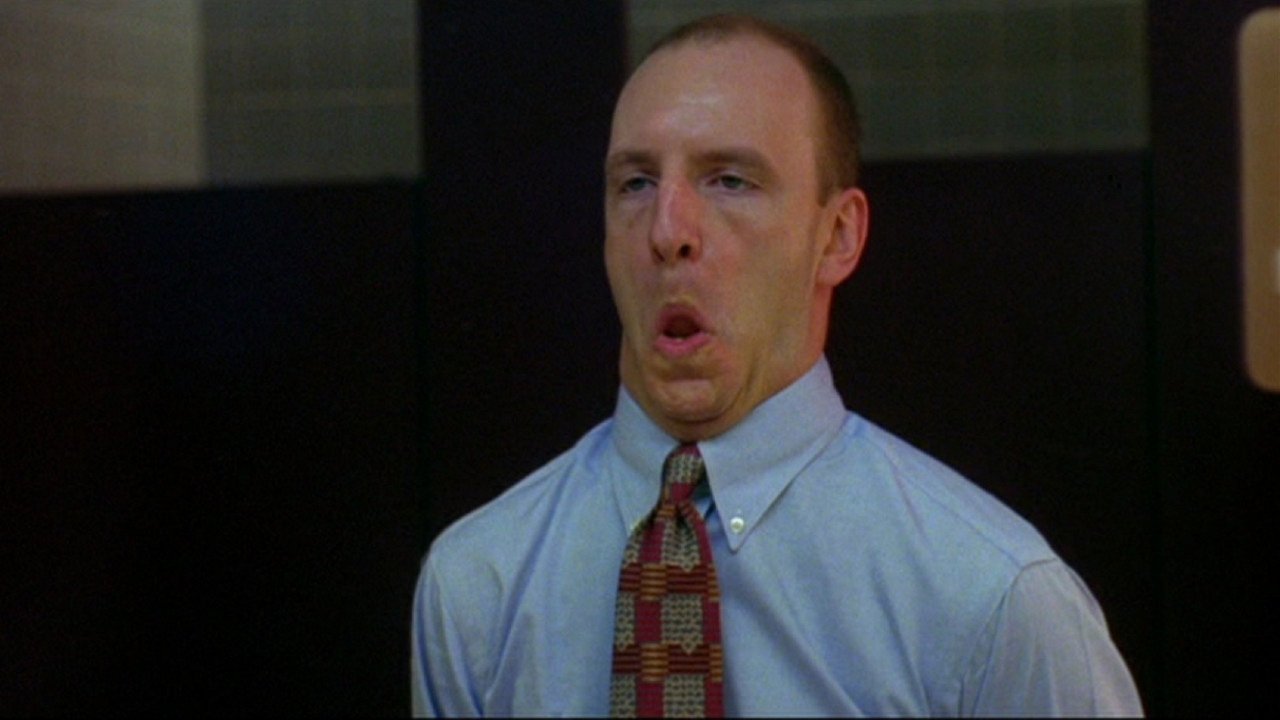
Trying to summarize Schizopolis is like trying to nail Jell-O to a wall. Steven Soderbergh himself stars as Fletcher Munson, a disaffected corporate drone working for a vaguely cult-like self-help organization called Eventualism, founded by the perpetually smiling T. Azimuth Schwitters (Mike Malone). Munson's home life is equally detached, his relationship with his wife (played by Soderbergh's then-wife, the excellent Betsy Brantley) reduced to coded, nonsensical exchanges. Then there's Munson's dentist doppelgänger, Dr. Jeffrey Korchek (also Soderbergh, naturally), who begins an affair with Mrs. Munson. Oh, and let's not forget Elmo Oxygen (David Jensen), a perpetually shirtless exterminator who communicates primarily through grunts and symbolic gestures while seducing housewives.
If that sounds confusing, buckle up. The film fractures narrative, repeats scenes with slight variations, employs deliberately obtuse dialogue (sometimes in made-up languages!), and throws any semblance of linear storytelling out the window. It opens with Soderbergh himself addressing the audience, warning them that if they don't understand something, it's probably their fault. It’s less a coherent story and more a series of interconnected (or disconnected) vignettes exploring themes of communication breakdown, corporate doublespeak, identity crisis, and the sheer absurdity of modern life. Watching it on VHS, perhaps with slightly fuzzy tracking, only amplified the disorientation – was that glitch the tape, or the movie itself melting my brain?
### An Exercise in Audacity
What makes Schizopolis fascinating, especially viewed through a retro lens, isn't just its weirdness, but its deliberate weirdness. Soderbergh isn't just throwing spaghetti at the wall; he's meticulously arranging each strand into a bizarre mosaic. The repetitive dialogue ("Generic greeting!" "Generic response.") skewers the emptiness of social pleasantries. The parallel plots mirror and refract each other, suggesting everyone is living slightly different versions of the same disconnected life.
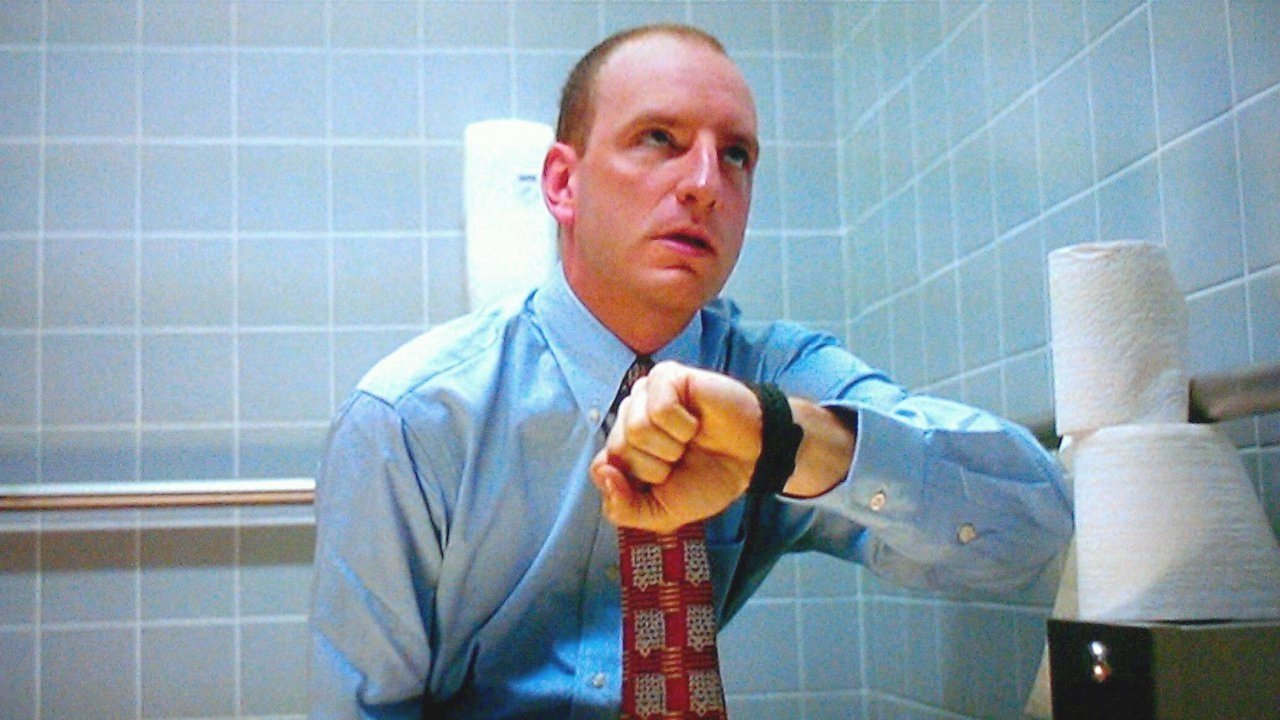
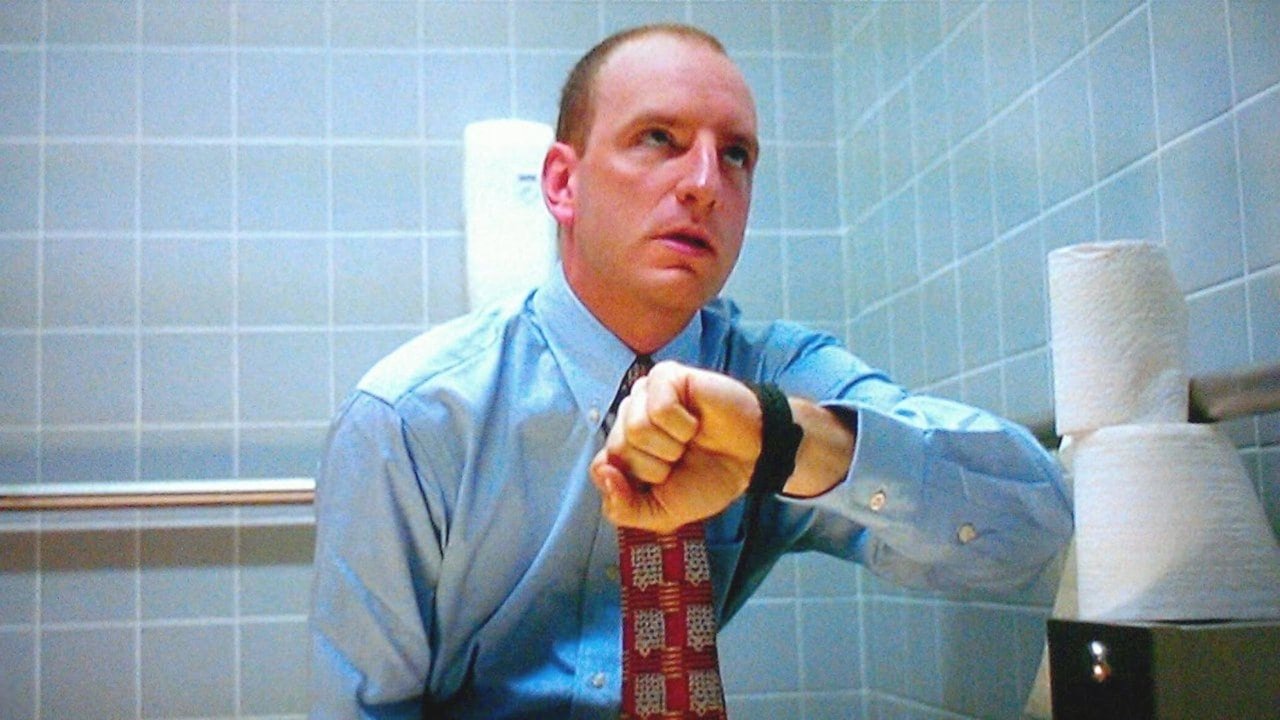
Soderbergh playing both Munson and Korchek wasn't just a budget-saving measure; it underscores the film's ideas about fractured identity and interchangeable roles. Betsy Brantley pulls double duty too, playing both the neglected Mrs. Munson and the object of Korchek's desire, Attractive Woman #2. It’s all part of the film’s mischievous game. Remember how Soderbergh even initially submitted the film to Cannes under the pseudonym "Anonymous" with only Brantley's name credited for directing? That rebellious spirit permeates every frame.
The film resolutely refuses to hold your hand. Scenes end abruptly. Characters behave inexplicably. The humor is bone-dry, often emerging from the sheer repetitive strangeness or the deadpan delivery of utterly nonsensical lines. It’s the kind of movie that probably had most audiences back in '97 ejecting the tape halfway through, convinced the rental store gave them a damaged copy filmed during an earthquake.
### Not For Everyone, But For Someone
Let's be clear: Schizopolis is not an easy watch. It’s challenging, often baffling, and occasionally patience-testing. It famously bombed upon its limited release, baffling critics and audiences alike. Soderbergh himself acknowledged its utter lack of commercial prospects, essentially making it for himself and anyone else willing to tune into its peculiar frequency. Its later inclusion in the Criterion Collection gave it a second life, finding the cult audience it was perhaps always destined for.
Yet, there's an undeniable charm to its experimental nature. It feels handmade, personal, a middle finger to conformity wrapped in a puzzle box. Watching it today evokes that feeling of discovering something truly other on the video store shelves, something that defied easy categorization and promised an experience, even if that experience was pure bewilderment. It’s a reminder of a time when a filmmaker with clout could still sneak something this aggressively unconventional past the gatekeepers, even if he had to pay for it himself.
---
VHS Heaven Rating: 7/10
Justification: Schizopolis earns a 7 not for being a conventionally "good" movie in the narrative sense, but for its sheer, unadulterated audacity and experimental spirit. It’s a fascinating artifact from a major director cutting loose, exploring themes of communication and identity in a truly unique, if often impenetrable, way. Points are awarded for its fearless originality, dry wit, and its status as a genuine cult curiosity that feels perfectly suited to the weird corners of the VHS era. It loses points for being deliberately alienating and requiring significant viewer patience – it's definitely not a crowd-pleaser.
Final Takeaway: A cinematic enigma wrapped in a riddle, served cold. Schizopolis is the movie equivalent of that unlabeled mixtape you found – you might not understand all of it, but you can't deny the strange, compelling energy pulsing through its magnetic tape. Approach with caution, and an open mind.