"All bonds are broken. All constants are destroyed." This isn't just dialogue; it's the splintered soul of Derek Jarman's Jubilee, a film that feels less like a narrative and more like a transmission beamed directly from the raw nerve endings of late 70s disillusionment. Forget comforting nostalgia trips; this is a jagged piece of cinematic shrapnel, a Molotov cocktail lobbed at the screen from a decaying, graffiti-scarred London that feels both utterly specific to its time and chillingly prescient. Watching it, even now on a format far removed from the grainy intimacy of VHS, feels like peering into a furious, beautiful void.
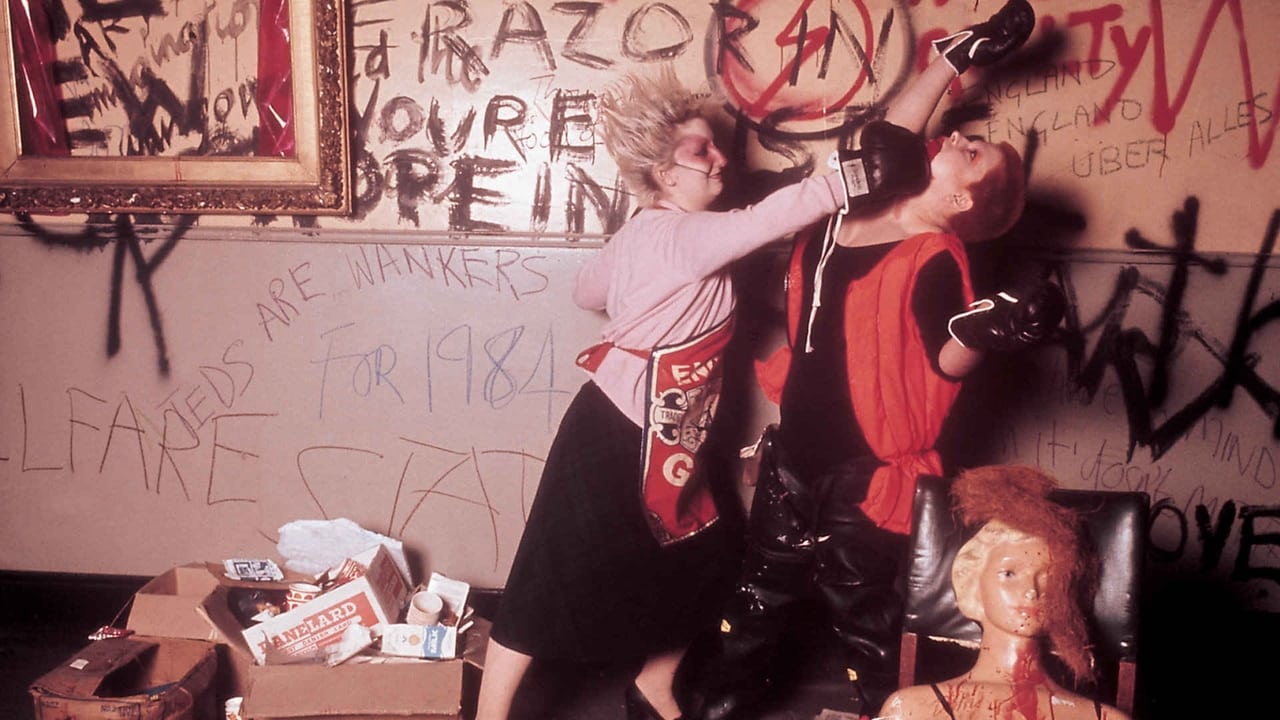
God Save the Queen (She's Seen Better Days)
The premise itself is pure, defiant strangeness: Queen Elizabeth I (Jenny Runacre, in a dual role), guided by the ethereal John Dee (Richard O'Brien, pre-Rocky Horror Show fame but radiating that same otherworldly presence), travels forward 400 years. Her destination? A derelict London, 1977, the year of her namesake's Silver Jubilee, now overrun by nihilistic punk gangs who roam the rubble-strewn streets, committing acts of random violence and spewing vitriol against a broken system. Elizabeth I becomes a spectral tourist in her own kingdom's collapse, observing the chaos embodied by figures like the charismatic gang leader Bod (also Runacre), the flame-haired Amyl Nitrate (Jordan, the iconic punk model in a role that burns itself onto your retina), the pyromaniac Mad (Toyah Willcox), and the casually murderous Crabs (Nell Campbell / Little Nell).
This isn't your typical dystopian future with sleek, oppressive technology. Jarman, ever the artist provocateur, crafts a dystopia out of contemporary decay. The filming locations weren't elaborate sets; they were often genuinely derelict parts of London, adding a layer of grim authenticity. The future wasn't chrome; it was concrete, spray paint, and shattered glass. The atmosphere Jarman conjures is thick with neglect and simmering rage, punctuated by Brian Eno's hauntingly ambient score which drifts like fog through the urban wasteland, a stark contrast to the bursts of punk energy.
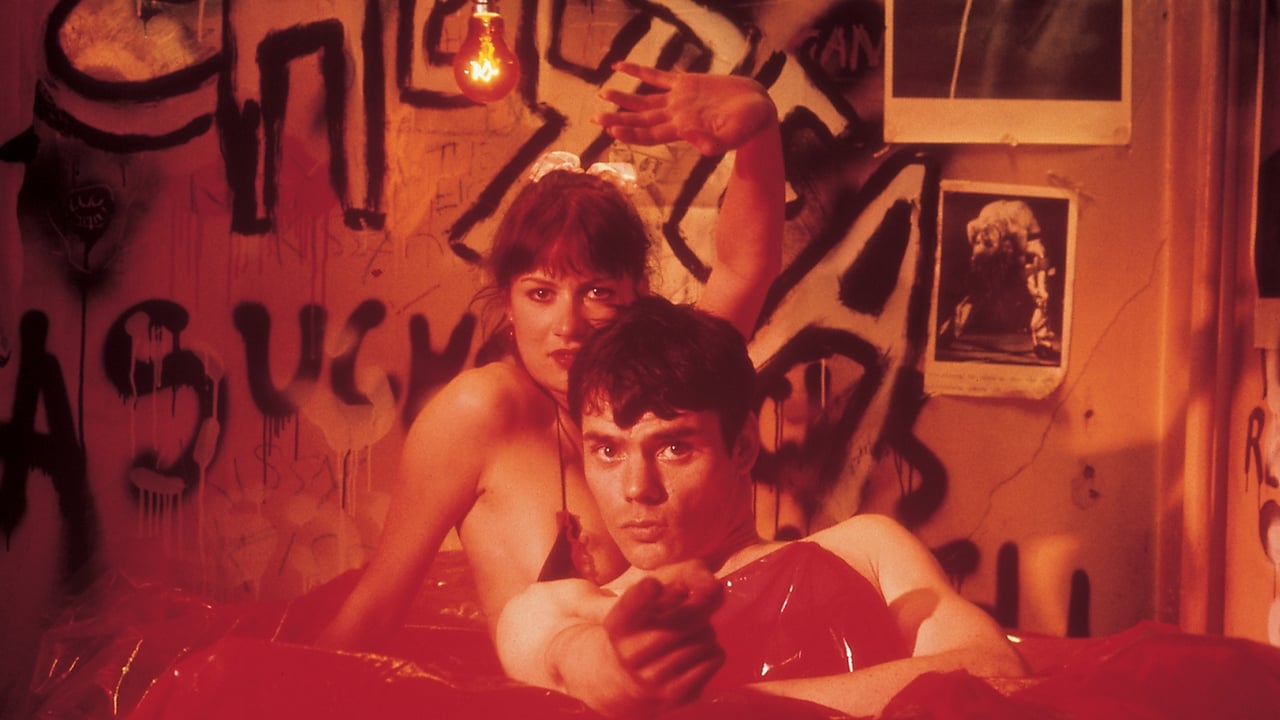
Anarchy in the UK (On Film, Anyway)
Jubilee is inextricably linked with the punk movement it depicts, and its creation was as chaotic and confrontational as the film itself. Jarman cast figures directly from the scene – Toyah Willcox, Jordan, Adam Ant (playing Kid, looking impossibly young and earnest before his chart-topping days), Gene October of Chelsea. This lends the film a raw, almost documentary-like energy in moments, capturing the look and attitude with undeniable authenticity. However, its relationship with punk was fraught. Vivienne Westwood famously printed T-shirts condemning the film, feeling it misrepresented and exploited the movement's energy for nihilistic spectacle. Did Jarman capture the spirit, or twist it into something darker? Watching it feels like eavesdropping on that very argument, frozen in celluloid.
The narrative, such as it is, meanders. It's episodic, fragmented, often feeling like a series of provocative vignettes rather than a tightly plotted story. Characters drift in and out, delivering manifestos or committing acts of violence with little connective tissue. Some might call it undisciplined; others, like myself, find that this disjointedness perfectly mirrors the chaotic, anti-establishment energy it seeks to portray. It refuses traditional structure just as punk refused musical convention. It's less a story about punk anarchy and more an experience of it – abrasive, challenging, and utterly uncompromising. Jarman wasn't aiming for mass appeal; he was capturing a specific, volatile moment with a painter's eye for unsettling imagery and a punk's disdain for politeness.
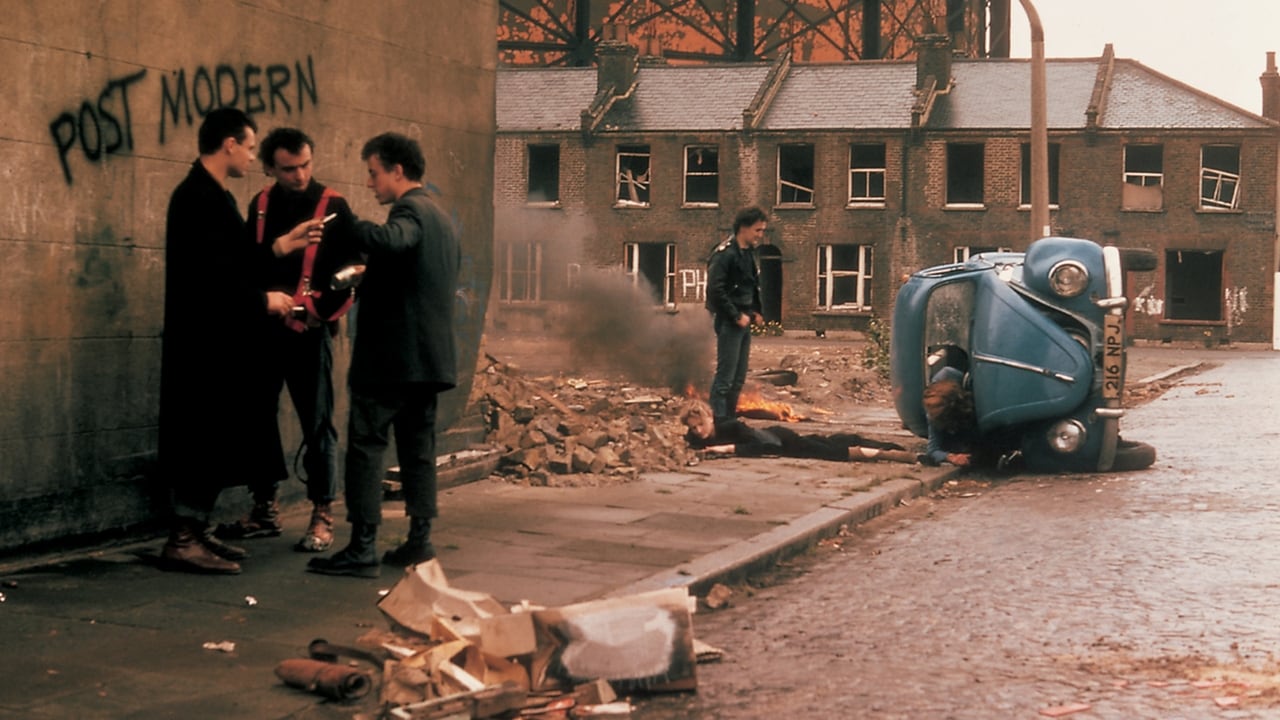
A Splinter in the Mind
What makes Jubilee linger, long after the tape hiss (real or imagined) fades? It’s the sheer audacity of its vision. The casual brutality, the bleak pronouncements ("There's no future," a line that would become synonymous with the Sex Pistols, echoes throughout), the striking, often disturbing tableaus Jarman creates – they burrow under your skin. The low-budget aesthetic, born of necessity (Jarman often funded his early work partially himself), becomes a strength, enhancing the feeling of grit and immediacy. This wasn't polished Hollywood rebellion; it felt like something dangerous, something genuinely found rather than manufactured.
It’s a film that sparks debate even now. Is it a vital document of punk nihilism? An art-house exploitation flick? A prescient vision of societal breakdown? Perhaps it’s all of these things. It doesn't offer easy answers or comfortable resolutions. It simply presents its world – harsh, fragmented, furious – and dares you to look away. Finding a copy of this on VHS back in the day felt like uncovering forbidden knowledge, something raw and untamed that hadn't been sanitized for mainstream consumption.
Rating: 7/10
Justification: Jubilee is far from perfect in conventional terms. Its narrative is fractured, its pacing uneven, and its bleakness can be overwhelming. However, as a piece of confrontational art cinema, a time capsule of punk attitude, and a showcase for Derek Jarman's unique, uncompromising vision, it's undeniably powerful. The casting of real punk figures adds historical weight, and its gritty, low-budget aesthetic perfectly matches its subject matter. It earns a 7 for its sheer audacity, its lasting impact as a cult artifact, and its ability to evoke a specific, volatile era with raw, unsettling energy, even if it’s a viewing experience that demands much from its audience.
Final Thought: Jubilee isn't a film you casually enjoy; it’s one you confront. It remains a potent, jagged artifact of a specific cultural moment, a Molotov cocktail thrown from the past that still smoulders with anger and disillusionment.