How does a film boasting the star wattage of Charlie Sheen, fresh off a string of 90s action vehicles, Linda Hamilton, forever etched in our minds as Sarah Connor, and the reliably intense Donald Sutherland, helmed by George P. Cosmatos – the director who gave us the explosive energy of Rambo: First Blood Part II (1985) and the undeniable cool of Tombstone (1993) – simply evaporate from the cinematic consciousness? That's the question that hangs heavy over 1997's Shadow Conspiracy, a political thriller that landed on video store shelves with a thud rather than the bang its pedigree suggested. Pulling this tape from its sleeve back in the day, the names alone promised a slick, tense ride through the corridors of power. The reality, however, is a far more complicated, and ultimately underwhelming, affair.
A Familiar Whisper of Conspiracy
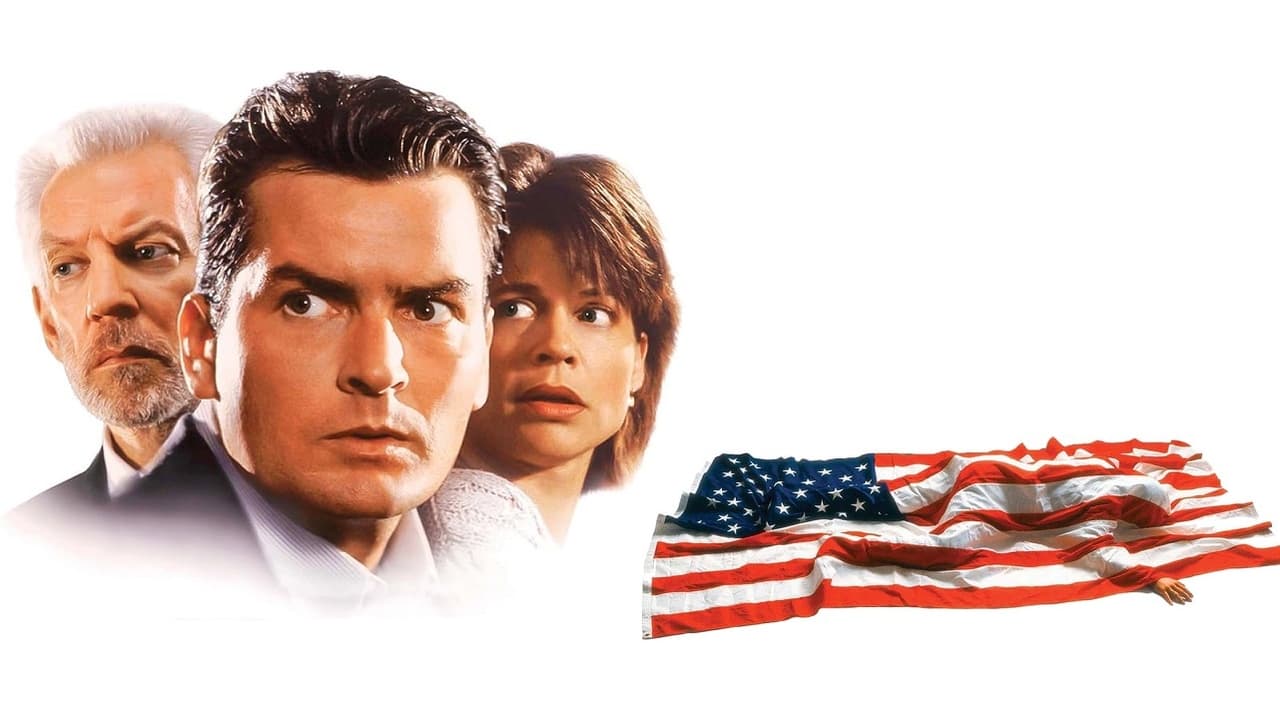
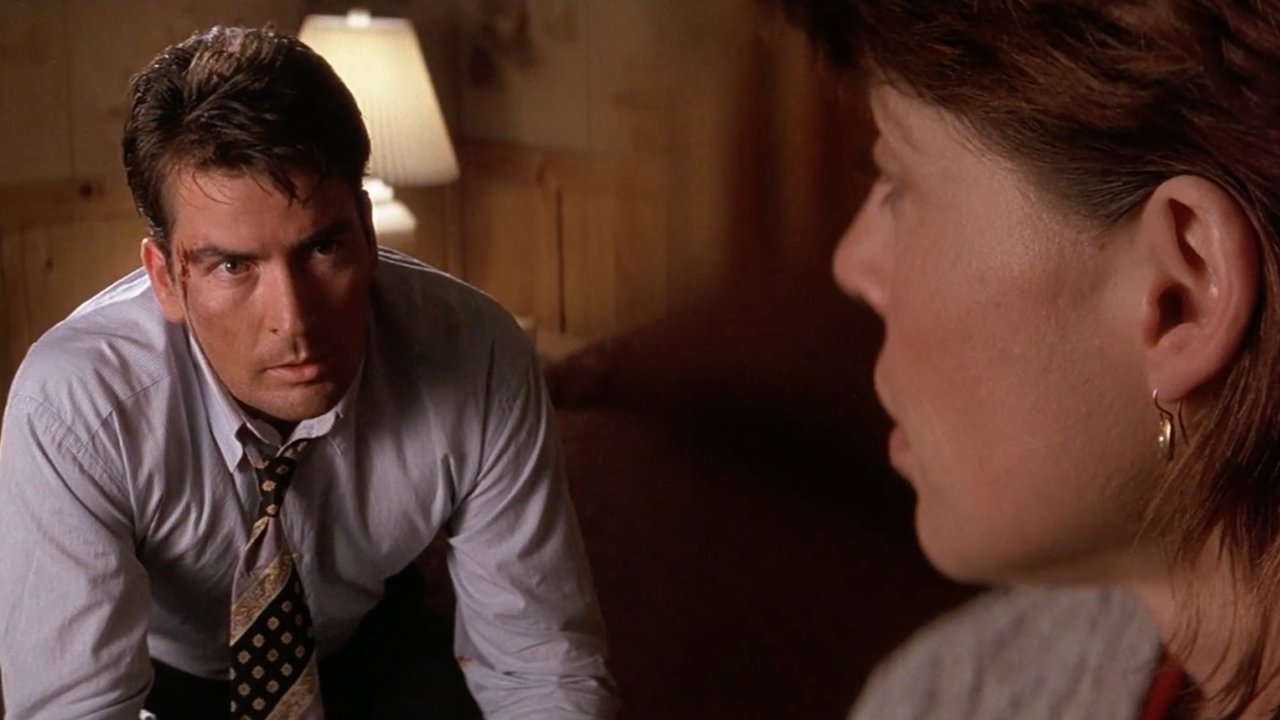
The premise itself feels like comfortable territory for the era. Sheen plays Bobby Bishop, a sharp, somewhat beleaguered Special Assistant to the President of the United States. His life takes a sharp left turn when an old professor contacts him with earth-shattering information about a plot originating from within the White House itself, spearheaded by the ambitious Chief of Staff, Jacob Conrad (played with icy resolve by Donald Sutherland). Before Bishop can grasp the full picture, his informant is assassinated, and he finds himself framed and on the run, pursued by a relentless, almost omnipresent hitman (Stephen Lang, effectively menacing). His only potential ally is Amanda Givens (Linda Hamilton), an investigative journalist initially skeptical but soon drawn into the deepening vortex of danger.
It's a setup ripe for paranoia and pulse-pounding chases through the landmarks of Washington D.C., a formula that certainly worked wonders for other thrillers of the decade. And indeed, Cosmatos, ever the competent craftsman of action, delivers a few sequences with professional polish. There's a rooftop pursuit and a desperate scramble through crowded streets that feel technically proficient, harking back to the gritty thrillers of the 70s, albeit filtered through a glossier 90s lens.
When Pedigree Doesn't Guarantee Power
The problem isn't necessarily in the execution of individual moments, but in the connective tissue. The script, penned by Adi Hasak (who would later find success creating the TV series Shades of Blue) and Ric Gibbs, often feels like a collection of thriller tropes searching for a truly compelling narrative core. The conspiracy itself unfolds with a certain predictability, lacking the intricate twists or genuine shocks needed to elevate it beyond standard fare. You can almost see the plot points being ticked off a checklist, leaving little room for genuine surprise or emotional investment.
The performances, too, feel somewhat constrained by the material. Charlie Sheen, capable of charisma and intensity, plays Bishop with a kind of harried earnestness, but the character never quite transcends the archetype of the "man-in-over-his-head." He’s running, reacting, but rarely does the script give him moments to truly grapple with the implications beyond immediate survival. Linda Hamilton, a powerhouse presence, is sadly underutilized as Givens. Her character serves largely as an exposition delivery system and occasional damsel-in-distress, a far cry from the agency and strength she embodied in the Terminator films. It’s Donald Sutherland, unsurprisingly, who fares best. Even with limited screen time, his Conrad exudes a chilling blend of ambition and menace, making you wish the central conflict had been more focused on the psychological battle between him and Bishop.
Behind the Shadows: A Director's Farewell
Perhaps the most poignant piece of trivia surrounding Shadow Conspiracy is that it was the final film directed by George P. Cosmatos, who passed away in 2005. Knowing this casts a slightly different light on the film. While it doesn't reach the heights of Tombstone, you can still see flashes of his stylistic confidence in the action beats. However, the political intrigue elements feel less assured, lacking the taut pacing and suspenseful atmosphere that define the best of the genre. It makes one wonder about the production itself. Despite the A-list cast and experienced director, the film was a notorious box office disaster, reportedly costing around $45 million but recouping barely $2.3 million domestically. Was there trouble behind the scenes? Did the script undergo significant rewrites that diluted its potential? We might never know the full story, but the end result feels like a film compromised somewhere along the line.
Filmed primarily on location in D.C. and Richmond, Virginia, it certainly looks the part of a glossy studio thriller. The corridors of power feel suitably imposing, the chases kinetic. Yet, the overall feeling is one of surface sheen rather than deep-seated tension. It hits the required notes but rarely finds a truly resonant melody.
Verdict: A Faint Echo on the VHS Shelf
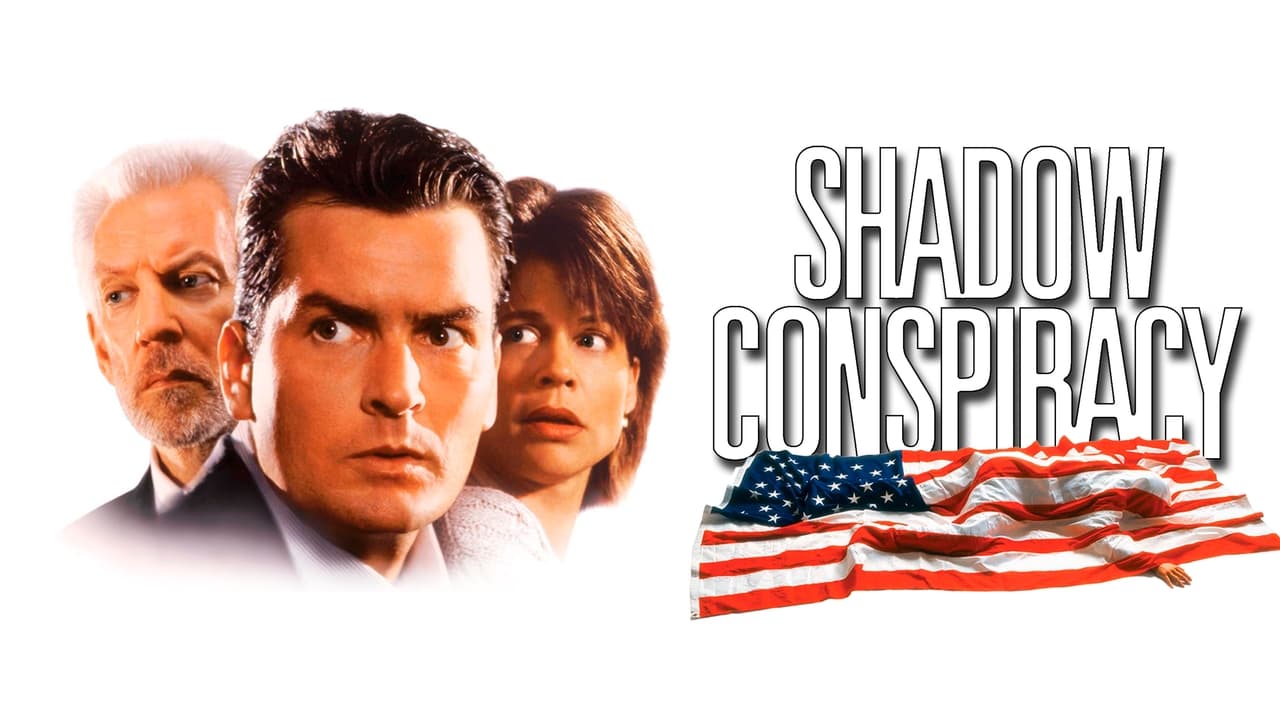
Watching Shadow Conspiracy today is an exercise in recalling a specific type of 90s studio output: the mid-budget thriller banking on star power and a familiar formula. It’s not aggressively terrible; it’s professionally made, features recognizable faces, and provides a couple of decent action moments. I remember seeing the box art frequently at Blockbuster, that stark black-and-white design with the shadowed Capitol dome promising intrigue. But the film itself is ultimately too generic, too predictable, and too reliant on tropes to leave a lasting impression. It lacks the smarts of a Pelican Brief or the visceral punch of Cosmatos' own earlier work.
Rating: 4/10
It’s a curiosity, perhaps worth revisiting for fans of the cast or director, or for those who miss the specific flavor of mid-90s thrillers that once populated video store shelves. But ultimately, Shadow Conspiracy remains just that – a shadow, a faint outline of the more gripping and memorable film it could have been. It serves as a reminder that sometimes, even with all the right ingredients listed on the box, the final product just doesn't quite deliver the promised taste. What lingers isn't the plot, but the question of its unrealized potential.