The silence of forgotten space isn't empty; it's pregnant with the weight of what came before. Sometimes, disturbing those echoes unleashes something best left buried. So it is with Babylon 5: The River of Souls, a 1998 television movie that plunges back into the intricate universe crafted by J. Michael Straczynski. It arrived during that slightly uncertain period after the main series concluded its primary arc and found a new home on TNT, carrying the heavy burden of expectation. But instead of grand space opera battles, River of Souls delves into a more chilling, existential corner of the B5 galaxy, reminding us that some cosmic horrors are quieter, more profound, and infinitely more personal.

### Unearthing Eternal Nightmares
The film wastes little time establishing its unsettling premise. We meet Robert Carlson, an archaeologist played with weary conviction by the venerable Martin Sheen. On a desolate world, he unearths artifacts of staggering implication: spheres containing the preserved consciousnesses, the very souls, of an extinct race numbering in the billions. It's a discovery that transcends mere history; it’s galactic necromancy on an unthinkable scale. Sheen imbues Carlson with the obsessive drive of a man who perhaps didn’t fully consider the consequences of his discovery, only the glory. There's an immediate sense of unease – the quiet hum of those spheres, the sheer impossible number of lives held captive within. This wasn't just another alien relic; it felt fundamentally wrong. It was a classic Straczynski setup: a seemingly straightforward sci-fi concept twisted to explore deep philosophical and ethical questions.
### Lochley in the Hot Seat

Back on the titular station, Captain Elizabeth Lochley (Tracy Scoggins) finds herself grappling with this existential bombshell. Scoggins, who had the unenviable task of stepping into the command role after Sheridan's departure, portrays Lochley with a grounded, no-nonsense competence that anchors the film. Faced with billions of trapped souls and the imminent arrival of their "collector," her pragmatic approach clashes brilliantly with the sheer cosmic weirdness unfolding. We see familiar faces like Security Chief Zack Allan (Jeff Conaway, bringing his usual salt-of-the-earth perspective), reminding us we're still firmly in the B5 universe we knew, even as the threat feels different, more insidious than the Shadows or Vorlons.
### The Collector Calls
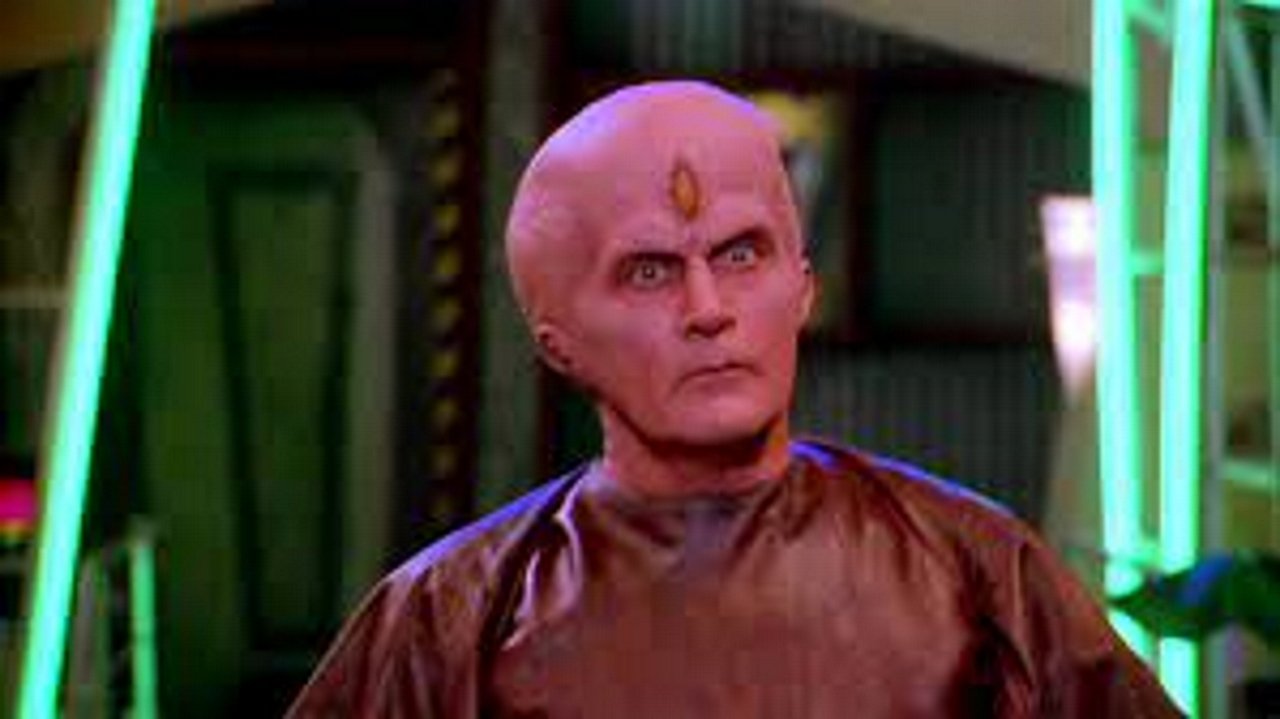
The true chill arrives with the Soul Hunter. Voiced with chillingly detached menace by Ian McShane (a fantastic piece of vocal casting), the Soul Hunter isn't a conqueror or a destroyer in the traditional sense. They are archivists, "rescuing" souls from the oblivion of death to preserve them eternally. It’s a terrifyingly paternalistic form of immortality, stripping away agency for the sake of preservation. Their design, vaguely insectoid and unsettlingly impassive, perfectly complements their disturbing philosophy. This film significantly expanded on the Soul Hunters, who had appeared briefly in the main series, turning them from a mysterious footnote into a genuinely unnerving presence. Reportedly, Straczynski relished the chance to flesh out these enigmatic figures, using the TV movie format to explore concepts that didn't quite fit the main series' narrative pressures.
### Atmosphere on a TV Budget
Directed by Janet Greek, a veteran of the main Babylon 5 series, River of Souls manages to conjure a palpable sense of dread despite the inherent limitations of a late-90s TV movie budget. The familiar corridors of Babylon 5 itself provide a grounding contrast to the alienness of the Soul Hunter technology and the eerie glow of the soul spheres. While some of the CGI might look dated to modern eyes, the practical aspects – the Soul Hunter's physical presence, the design of the artifacts – retain an unsettling quality. The score effectively underscores the tension, shifting from the usual B5 grandeur to something more ominous and suspenseful. It captures that specific feeling of late-night sci-fi viewing back in the day – where atmosphere and ideas often trumped dazzling, budget-busting effects. It’s a testament to Straczynski’s writing and Greek’s direction that the core horror of the concept shines through.
### The Weight of Billions
Beyond the immediate threat, River of Souls probes uncomfortable questions. Is eternal, passive existence preferable to annihilation? What right does one species have to dictate the afterlife of another? The film doesn't offer easy answers. The sheer scale – billions of souls trapped for millennia – is staggering, evoking a cosmic loneliness and horror that lingers long after the credits roll. It's this thematic depth, a hallmark of Babylon 5, that elevates River of Souls beyond a simple "monster of the week" story. It taps into primal fears about death, legacy, and the potential meaninglessness of existence. One persistent fan rumour suggested Straczynski had the core Soul Hunter idea tucked away for years, waiting for the right opportunity – these TNT movies provided that space, free from the demands of the overarching Shadow War plotline.
### Final Transmission
Babylon 5: The River of Souls might not be the most action-packed entry in the B5 saga, but it's arguably one of the most unsettling. It leverages the established universe to tell a focused story steeped in existential dread and moral ambiguity. Martin Sheen adds significant gravitas, and Tracy Scoggins proves a capable lead, navigating a crisis that feels both alien and deeply human. While constrained by its TV movie origins, the strength of the central concept and Straczynski's thoughtful script make it a compelling watch, especially for fans who appreciate the series' darker, more philosophical explorations. It feels like a story whispered in the station's darker corners, a chilling reminder of the vast, strange, and often terrifying universe B5 inhabits.
Rating: 7/10
Justification: The film earns a solid 7 for its strong central concept, compelling thematic depth, and effective use of atmosphere within its budget limitations. Martin Sheen's performance adds weight, and it successfully expands on intriguing B5 lore (the Soul Hunters). It captures the specific feel of late-90s TV sci-fi well. Points are deducted primarily for the sometimes-dated effects and a pace that might feel slow to those expecting more traditional action. It's a worthy, if slightly niche, entry in the Babylon 5 canon that still evokes a specific kind of thoughtful sci-fi chill. It stands as a testament to the enduring power of strong ideas over flashy spectacle, a quality that defined much of Babylon 5's unique appeal back in the glow of our CRT screens.