It arrives like a transmission from another planet, doesn't it? Not just the 1970s glam rock world it depicts, but the film itself, Velvet Goldmine (1998), hitting video store shelves in the late nineties like a glitter bomb in a sea of flannel and grunge hangovers. It felt like contraband, something dazzling and slightly dangerous slipped onto the "New Releases" wall, promising a different kind of rebellion than the one we’d just lived through. Watching it again now, decades later, the shimmer hasn't faded; if anything, its audacious ambition feels even more striking.
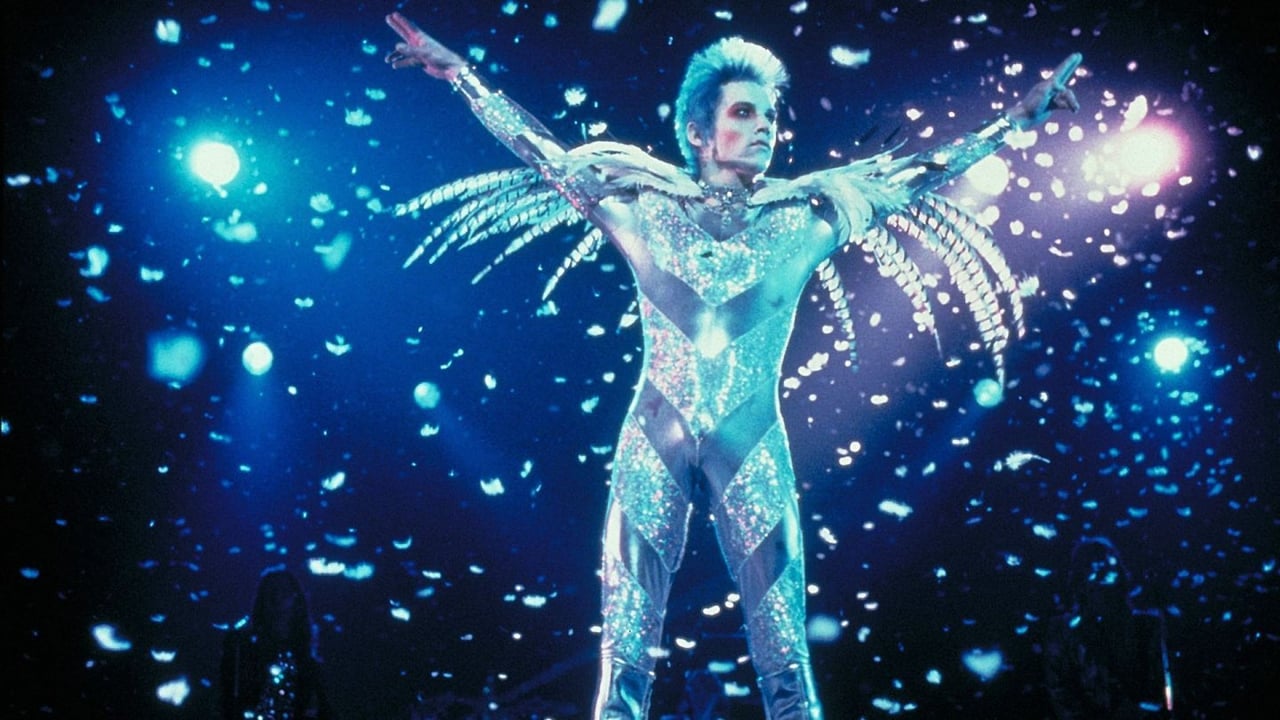
This wasn't just a movie; it was an immersion. Director Todd Haynes, already known for his unique explorations of identity and iconography with films like Superstar: The Karen Carpenter Story (1987) and Poison (1991), crafted something here that defied easy categorization. It's part musical, part mystery, part Citizen Kane-esque investigation into the manufactured rise and spectacular fall of a rock god, and all intoxicating spectacle.
A Mystery Wrapped in Mascara
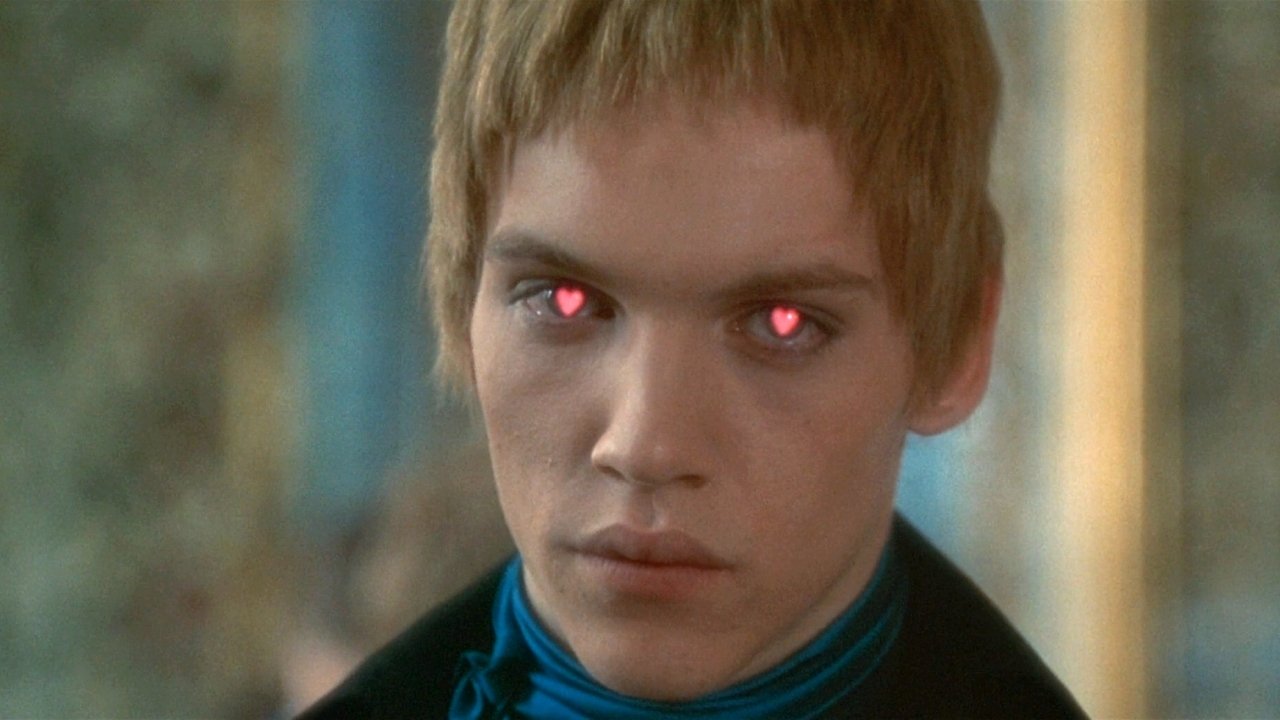
The premise anchors us, somewhat loosely, in 1984. Journalist Arthur Stuart (Christian Bale, bringing a quiet, watchful intensity that grounds the film's whirl) is assigned to investigate the disappearance of Brian Slade (Jonathan Rhys Meyers), a glam rock superstar who faked his own assassination on stage a decade earlier and vanished. Arthur's investigation unfolds through flashbacks, interviews with those who knew Slade – his American ex-wife Mandy (Toni Collette, pitch-perfect as the savvy survivor), his former manager Cecil (Michael Feast) – structuring the film much like Orson Welles’ masterpiece interrogated the life of Charles Foster Kane. Each memory offers a different facet of Slade, a piece of a puzzle that may not have a single, definitive solution.
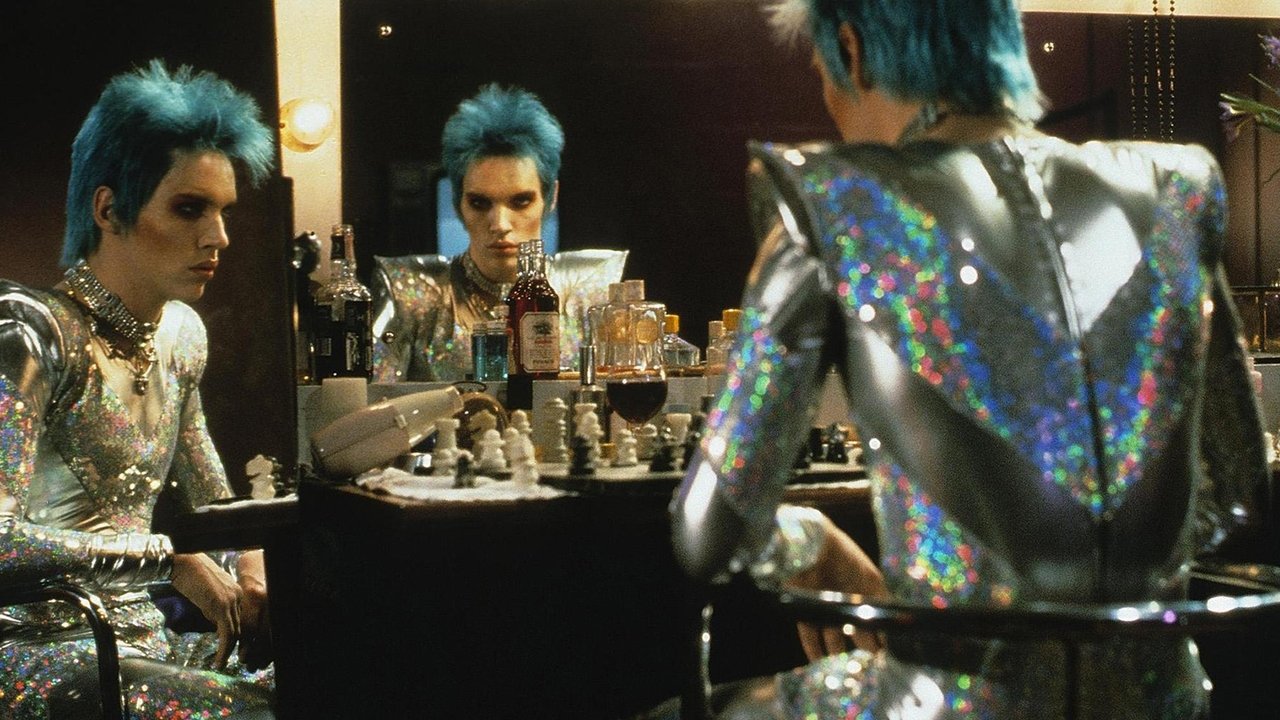
What Arthur uncovers, and what we witness, is the intoxicating, transformative power of the glam rock era. Haynes doesn't just tell a story; he conjures an atmosphere thick with possibility, sexual fluidity, and the thrill of self-invention. It's a world where identity is performance, makeup is armor, and music is the electric current connecting everything.
All That Glitters: Performance and Persona
The performances are key to selling this alternate reality. Jonathan Rhys Meyers embodies Brian Slade not just as a musician, but as an event. He has an ethereal, almost alien quality, perfectly capturing the manufactured mystique and underlying fragility of a Bowie-esque figure who becomes consumed by his own creation. There's a scene where Slade first encounters Curt Wild – it’s electric, a meeting of celestial bodies destined to collide.
And speaking of Curt Wild, Ewan McGregor, fresh off the global phenomenon of Trainspotting (1996), throws himself into the role with absolute abandon. His Curt Wild is a raw nerve, channeling the primal energy of Iggy Pop with a dash of Lou Reed's transgressive cool. McGregor’s performance is fearless, physically committed (yes, that stage performance is unforgettable), and utterly magnetic. He represents the dangerous, authentic edge that Slade tries to co-opt but perhaps never truly possesses. Can we ever forget the sheer energy he brought, a stark contrast to the more calculated performance of Slade?
The Unmistakable Stamp of Haynes
Todd Haynes directs with a style that mirrors the subject matter – fractured, kaleidoscopic, visually dense. The film jumps timelines, shifts perspectives, and even breaks into fantasy sequences, mirroring the fragmented nature of memory and the unreliable narratives surrounding fame. It's a bold approach that demands engagement, refusing to spoon-feed the audience. Some critics at the time found it messy or impenetrable, and indeed, its initial box office performance was modest (reportedly grossing just over $4 million worldwide against a $9 million budget). Yet, like so many films that found their true audience on home video, its cult status grew precisely because of its uncompromising vision.
One crucial piece of context, of course, is the David Bowie connection. Haynes initially conceived the project with Bowie's music in mind, but when Bowie declined to grant the rights, Haynes pivoted. He created fictional analogues – Slade evoking Bowie, Wild suggesting Iggy Pop and Lou Reed – and built a narrative exploring the ideas and archetypes of glam rock rather than a straight biopic. This constraint arguably freed Haynes, allowing him to craft a more mythical, interpretive story about the era's spirit. The film features brilliant original songs (by members of Pulp, Suede, Shudder to Think, Radiohead, and others under fictional band names like Maxwell Demon and Venus In Furs) that perfectly mimic the sound and feel of the era, creating a convincing sonic landscape.
Echoes in the Fabric
The film’s look is inseparable from its impact. Sandy Powell's Oscar-nominated costume design isn't just clothing; it's character, narrative, and pure spectacle. The fabrics, the silhouettes, the sheer theatricality – it’s a masterclass in capturing an era defined by visual excess. I remember renting this on VHS, the cover art itself a promise of something extravagant, and the film delivered on that promise tenfold. It felt like discovering a hidden history, a secret world beamed directly onto my CRT television. Doesn't that specific texture of the era – the music, the fashion, the rebellion against drabness – feel particularly potent looking back from our current moment?
Velvet Goldmine isn't just about the 70s; released in 1998, it felt like a commentary on the cycles of fame and fandom, the way personas are built and dismantled, themes that resonate just as strongly today. It asks profound questions about authenticity: Was Brian Slade real, or just a collection of influences and ambitions? Does it matter, if the illusion created something powerful for people like Arthur Stuart, who found liberation in the reflection of that glitter?
Rating and Final Reflection

Velvet Goldmine is a dense, dazzling, sometimes overwhelming film that demands repeat viewings. Its non-linear structure and symbolic weight won't appeal to everyone, and its narrative can feel elusive. However, for its sheer artistic ambition, its unforgettable performances (especially from Rhys Meyers and McGregor), its stunning visual and sonic tapestry capturing the essence of glam rock, and its thoughtful exploration of identity and fame, it remains a singular achievement. It’s a film that truly benefited from the pause and rewind possibilities of VHS, allowing you to soak in the details.
Rating: 8.5/10
This rating reflects the film's undeniable artistry, powerhouse performances, and lasting cult appeal, acknowledging that its deliberate narrative complexity might challenge some viewers. It’s a film that doesn't just depict an era; it embodies its spirit – messy, beautiful, and utterly transcendent. What lingers most is the intoxicating idea that perhaps the most authentic self is the one you dare to invent.