Alright, fellow tapeheads, let's rewind to the twilight of the 90s, a time when the internet was still dial-up noisy and finding truly provocative cinema often meant a trip to the ‘Independent’ section of the video store. And boy, did 1999 drop a bombshell that sent ripples through Blockbuster aisles and church groups alike: Kevin Smith’s audacious theological comedy, Dogma. Forget your standard action fare; this film’s explosions were mostly theological, but the impact? Absolutely nuclear. Getting your hands on this tape felt like possessing forbidden knowledge, something you’d watch late at night, maybe with the tracking slightly off, wondering how on earth it ever got made.
Angels, Apostles, and Arguments
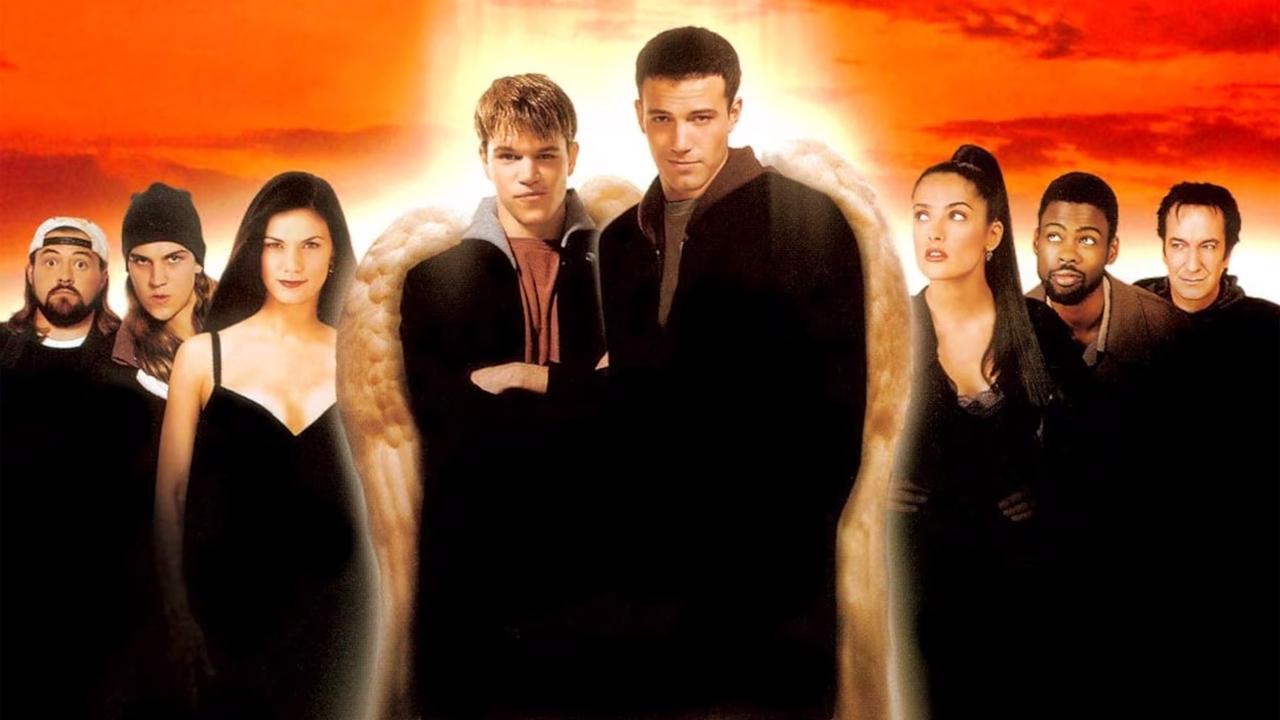
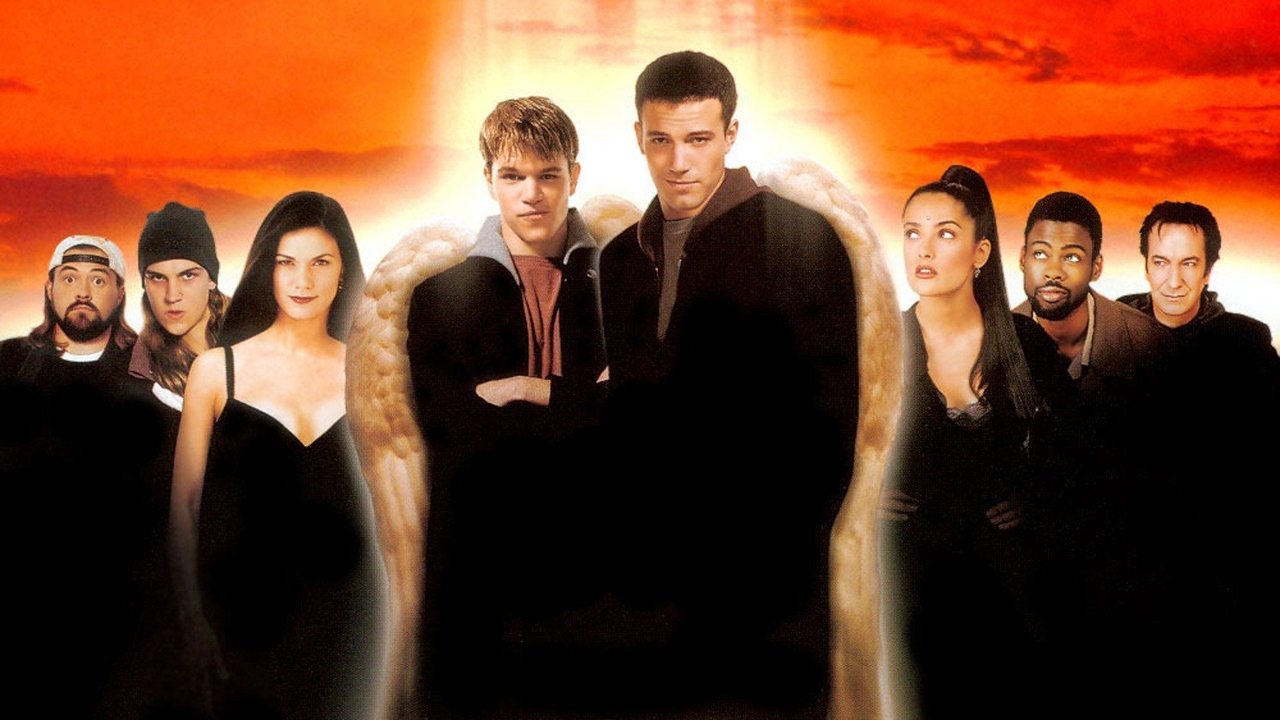
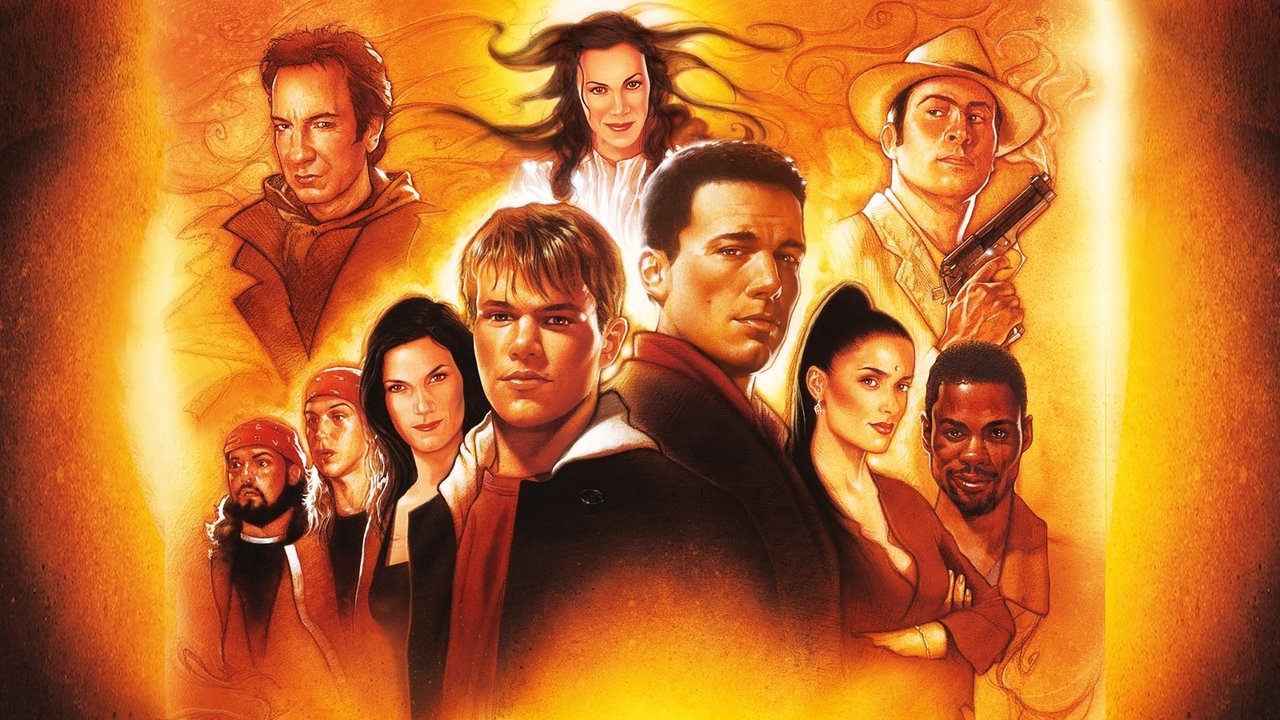
Dogma throws you headfirst into a premise so wild it still feels audacious today: two fallen angels, Loki (Ben Affleck) and Bartleby (Matt Damon), banished to Wisconsin for eternity, discover a potential loophole back into Heaven via a New Jersey church's plenary indulgence centenary. The catch? Proving God infallible by exploiting a loophole would undo all existence. Enter Bethany Sloane (Linda Fiorentino), a disillusioned abortion clinic worker who happens to be the last scion of Christ, tasked by the acerbic Metatron (Alan Rickman, voice of God... literally) to stop them. Along for the ride are the 13th Apostle, Rufus (Chris Rock), the Muse Serendipity (Salma Hayek), and, naturally, those prophets of profanity, Jay (Jason Mewes) and Silent Bob (Kevin Smith himself).
This wasn't your typical indie flick, nor your standard studio comedy. Kevin Smith, already beloved by the flannel-and-sneakers crowd for Clerks (1994) and the surprisingly heartfelt Chasing Amy (1997), swung for the celestial fences here. He’d actually written the script years earlier, pre-Clerks, a deeply personal project reflecting his own Catholic upbringing and subsequent questioning. It's pure, uncut Smith: rapid-fire dialogue packed with pop culture riffs, theological debates that sound like they’re happening over beers, and moments of surprising sincerity nestled amongst dick jokes.
A Cast Descended from Heaven (and Hollywood)
The casting here is something else, a perfect storm of late-90s talent. Affleck and Damon, riding high off their Good Will Hunting (1997) success, are magnetic as the disgruntled angels – Affleck’s Loki gleefully smiting sinners, Damon’s Bartleby simmering with a terrifying righteousness. Their chemistry is palpable, shifting seamlessly from buddy-comedy banter to genuine menace. Linda Fiorentino, known for her femme fatale turn in The Last Seduction (1994), grounds the film as the cynical Bethany, though stories of on-set friction between her and Smith became legendary – a little behind-the-scenes drama to spice up the Dogma.
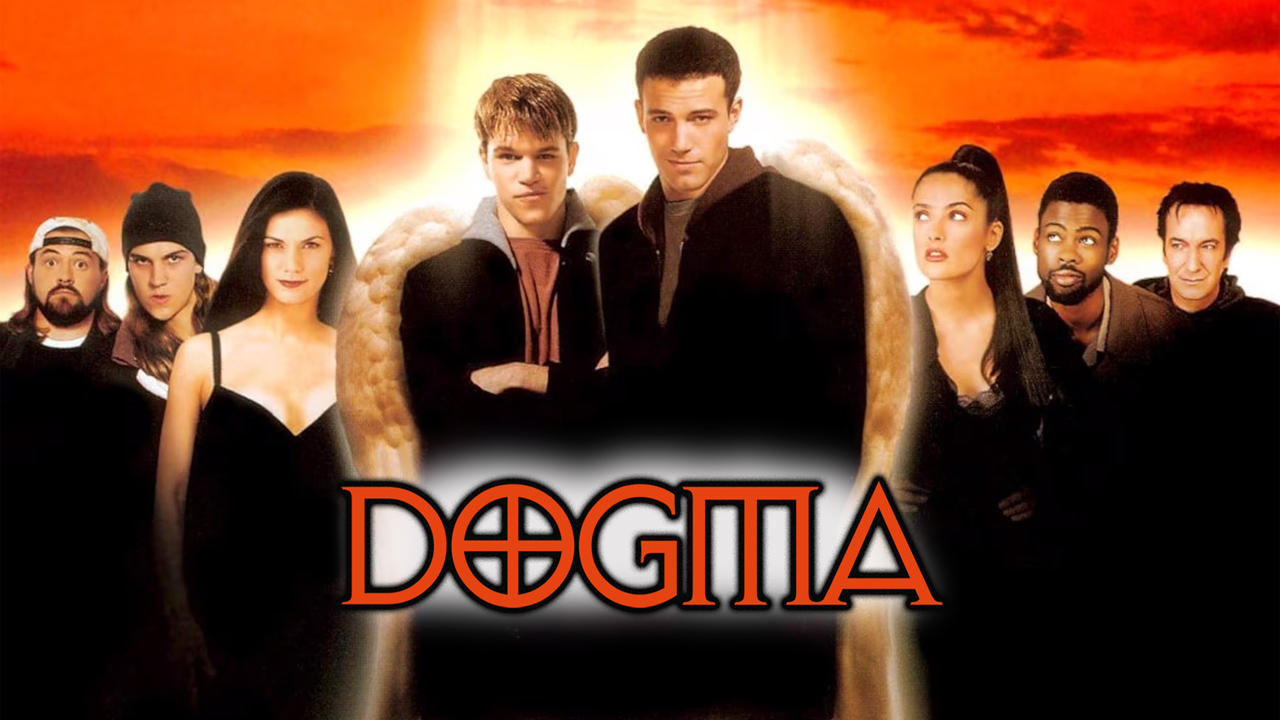
But oh, the supporting cast! Alan Rickman steals every single scene as Metatron, delivering divine exposition with world-weary sarcasm dripping from every syllable. Apparently, Rickman was Smith’s absolute first choice, and thank heavens he said yes. Chris Rock brings his stand-up energy to Rufus, landing laugh lines about apostleship and race with razor sharpness. And who else but the legendary George Carlin could play Cardinal Glick, the man behind the ill-fated “Catholicism Wow!” campaign? It felt like stunt casting sent from, well, you know. We even get Jason Lee, another Smith regular, chewing scenery as the bitter demon Azrael.
More Philosophical Firepower than Gunfire
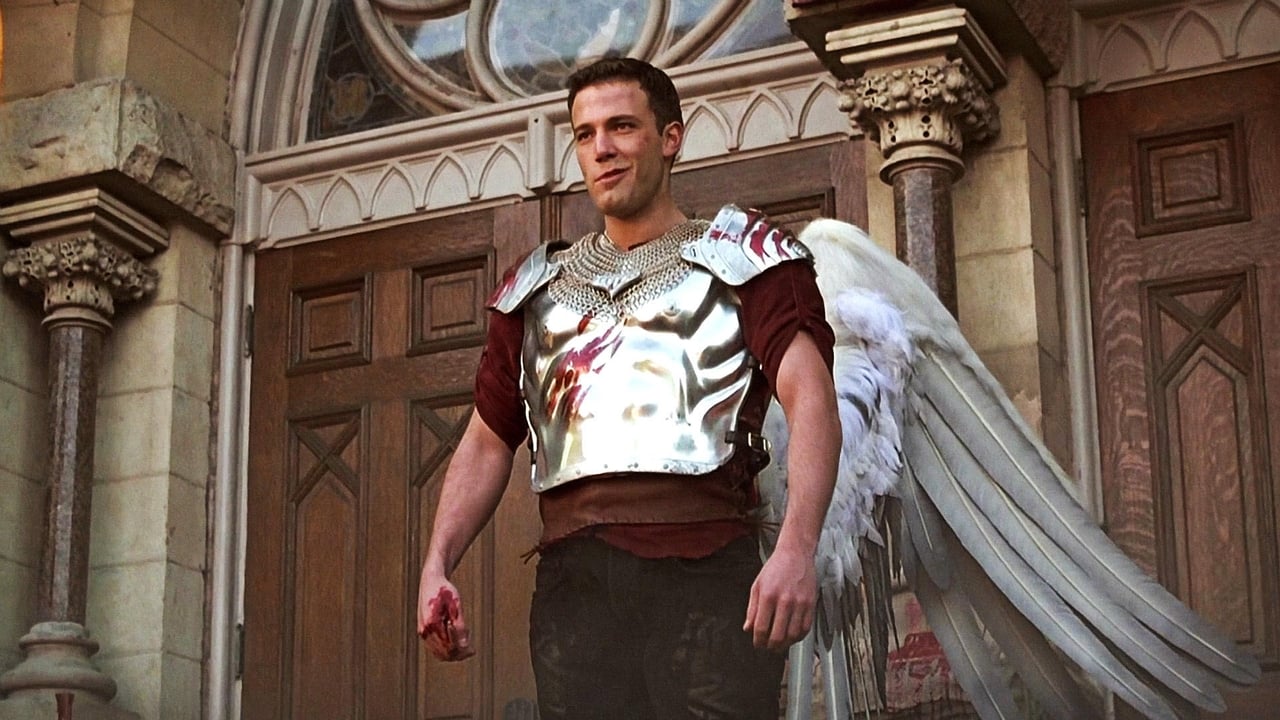
Okay, Dogma isn’t exactly Die Hard on holy ground. The ‘action’ here is largely driven by its controversial ideas and the frantic race against time. But when things do get physical, especially in the chaotic climax at the New Jersey church (actually filmed, like much of the movie, around Pittsburgh, Pennsylvania!), it has that distinct late-90s practical grit. Remember the Golgothan, the literal crap-demon summoned from Hell? That wasn’t some smooth CGI blob; it was a performer in a genuinely disgusting-looking (and reportedly smelling) practical suit, lumbering and menacing in a way CGI often still struggles to capture. The angel wings might have had some digital help, but there was a weight and presence to the physical elements that felt tangible through the TV screen.
The film was made for a relatively modest $10 million (around $17M today), and you can sometimes see the budgetary seams, but Smith uses it effectively, focusing on character and dialogue over flashy effects. The mayhem feels messy and real, not overly polished – like a brawl breaking out after a particularly heated late-night theological debate.
The Controversy That Shook the Heavens (and Disney)
You can't talk about Dogma without mentioning the firestorm it ignited. Catholic groups, particularly the Catholic League, mounted massive protests, decrying the film as blasphemous sight unseen. Death threats were even sent to Smith. The controversy spooked the original distributor, Disney (through its then-subsidiary Miramax), who ultimately sold the film off to Lions Gate for release. It’s a fascinating retro fun fact that the Mouse House once held the rights to a film featuring Alanis Morissette (who was cast after Emma Thompson passed due to pregnancy) as God and a shit demon. This whole ordeal made seeing Dogma feel almost like an act of rebellion back then. Was it offensive? For some, absolutely. But for others, it was a surprisingly faith-affirming satire that argued for belief, just not necessarily blind adherence to dogma (pun intended).
Its blend of the sacred and the profane – sincere discussions about faith followed by Jay and Silent Bob’s antics – is precisely what makes it unique. It takes guts to tackle religion with both reverence and ridicule, and Smith, love him or hate him, didn't flinch. The film ultimately grossed around $30 million domestically (about $51M today), a decent return considering the hurdles, and quickly cemented its cult classic status. Ironically, due to complex rights issues tangled up with the disgraced Weinsteins, Dogma is notoriously hard to find legally on streaming or physical media today, making it a true lost relic of the late VHS/early DVD era for a whole new generation.
***
Rating: 8/10
Dogma earns this score for its sheer audacity, brilliant ensemble cast (especially Rickman), and its uniquely Kevin Smith blend of razor-sharp satire, heartfelt theological wrestling, and unapologetic vulgarity. It’s messy, uneven, and certainly not for everyone, but its willingness to provoke thought while delivering genuine laughs is undeniable. The late-90s independent spirit shines through its very celluloid (or magnetic tape, as it were).
Final Thought: Dogma is a time capsule – a movie that couldn’t be made today, born from a specific moment when independent voices could still lob theological Molotov cocktails into the mainstream, complete with practical shit demons and all. It remains a fascinating, funny, and frustratingly relevant piece of cult cinema.