Alright, let's dim the lights, maybe pour a drink, and settle in for a look back at a film that landed on video store shelves in 1999 with a pedigree that promised so much, yet left many of us scratching our heads. I'm talking about Sidney Lumet's remake of John Cassavetes' gritty indie classic, Gloria, this time starring the incandescent Sharon Stone. The very idea felt… ambitious? Audacious? Maybe even a little dangerous? Taking on a film so defined by the raw, lightning-in-a-bottle performance of Gena Rowlands felt like trying to repaint a storm.
Ghosts of Cassavetes Past
You simply can't talk about the 1999 Gloria without acknowledging its formidable predecessor. The 1980 original is pure Cassavetes: nervy, unpredictable, emotionally volatile, anchored by a career-defining turn from Rowlands. It wasn't just a movie; it felt like exposed wires, dangerous and captivating. So, when news hit that Sidney Lumet, the legendary director behind New York masterpieces like Serpico (1973) and Dog Day Afternoon (1975), was tackling a remake with Sharon Stone, then arguably at the peak of her global stardom following Basic Instinct (1992) and her Oscar-nominated role in Casino (1995), expectations were… complex. Could this mainstream powerhouse pairing capture any of that raw, independent spirit?
Stone Cold Professional

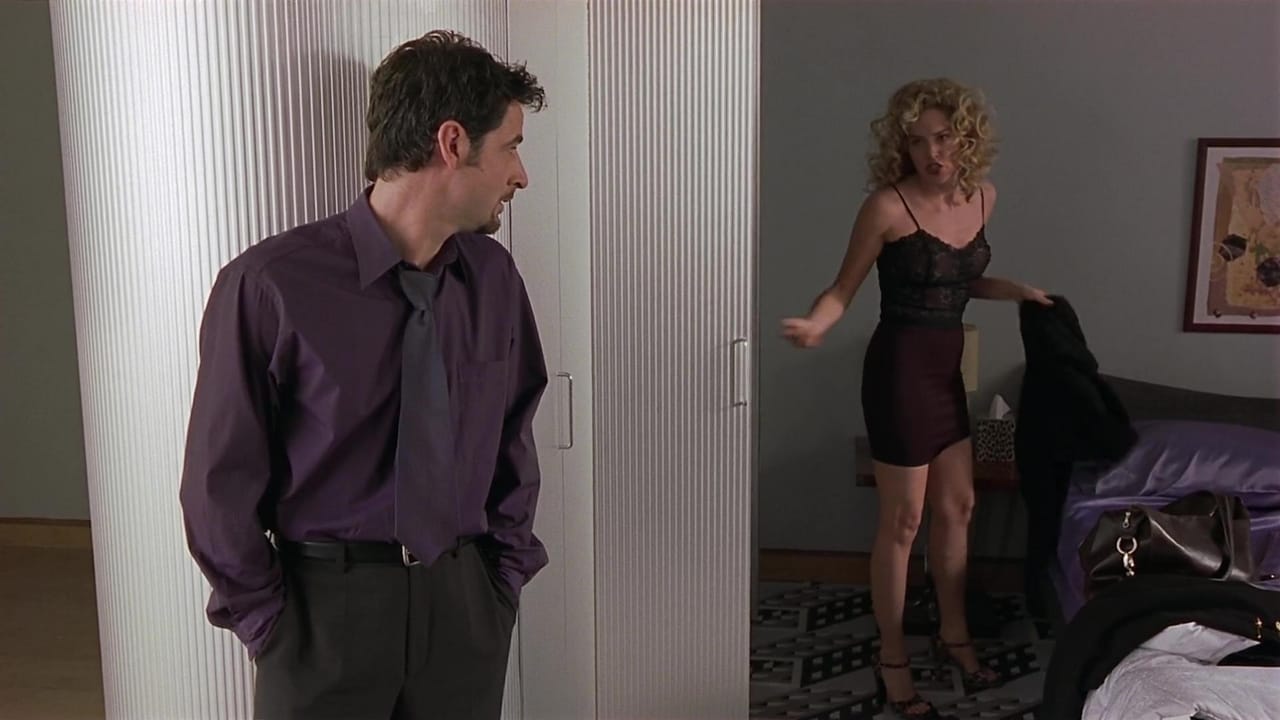
Let's give credit where it's due: Sharon Stone throws herself into the role of Gloria, the tough-as-nails mob moll suddenly saddled with a young boy (played by Jean-Luke Figueroa) whose family has been wiped out by her former associates. Stone, looking sharp and impossibly glamorous even when on the run, certainly brings her undeniable star power. There's a brittle intensity to her performance, a sense of controlled panic beneath the designer exterior. You see flashes of the character – the hardened survivor instinct, the flicker of reluctant maternal feeling. She reportedly pursued the project herself, clearly seeing an opportunity to step outside the femme fatale box. The effort is visible, sometimes painfully so. Where Rowlands felt like a force of nature, Stone feels more like a highly skilled professional navigating treacherous terrain. It’s not bad acting, per se, but it often feels like acting rather than embodying.
Lumet's New York, But Not Quite
And what of Sidney Lumet? A director whose very name evokes the gritty realism of New York City streets. He brings his typical professionalism and efficiency to the production. The film looks polished, moves at a decent clip, and utilizes its NYC locations effectively. Yet, something feels… off. Lumet's signature intensity, that feeling of being right there in the pressure cooker with the characters, feels muted. It's been reported Lumet took the directing job due to a pay-or-play contract after another project fell through, and frankly, the film sometimes carries the air of a highly competent assignment rather than a passion project. This wasn't the visceral, character-driven Lumet of the 70s; it felt more like a late-career director fulfilling an obligation, albeit with considerable craft still evident. The screenplay, adapted by Steve Antin from Cassavetes' original, sands off many of the rough edges, streamlining the narrative but losing much of the unpredictable energy in the process.


The Elephant in the Room: Why Remake This?
Watching it again now, decades removed from its release, the central question lingers: why? The original Gloria was so intrinsically tied to Cassavetes' unique vision and Rowlands' singular performance that any attempt to replicate it feels fundamentally misguided. The 1999 version often feels like a standard Hollywood thriller template awkwardly overlaid onto a story that demands messiness and raw emotion. The central relationship between Gloria and the boy, Nicky, lacks the spiky, desperate connection that anchored the original. Figueroa tries his best, but the chemistry with Stone never quite ignites the way it needed to. Jeremy Northam appears as Gloria’s menacing ex-boyfriend, Kevin, but the villains feel more like generic movie thugs than the palpable neighbourhood threat of the original.
Retro Fun Facts: A Recipe for Disappointment?
The backstage story adds another layer to the film's curious existence. Produced for around $30 million (roughly $55 million today), the film was a significant box office failure, grossing only about $4 million domestically (a mere $7.4 million in today's money). This critical and commercial drubbing was stark. It wasn't just disliked; it was nominated for several Razzie Awards, including Worst Actress for Stone and, almost unbelievably, Worst Director for the legendary Sidney Lumet. It’s a jarring footnote in Lumet’s otherwise stellar filmography. While Stone brought the glamour and Lumet brought the pedigree, the alchemy just wasn't there. It became less a tribute and more a cautionary tale about remaking auteur-driven classics. One can only imagine what John Cassavetes, who passed in 1989, might have thought.
Final Reflections
Is the 1999 Gloria a complete disaster? Not entirely. Stone commits fully, and there are moments where Lumet's experienced hand steadies the ship. If you'd never seen the original, you might find it a passably diverting, if somewhat generic, late-90s thriller – the kind of thing you’d grab off the “New Releases” shelf at Blockbuster on a Friday night without much thought. I distinctly remember renting this one, drawn in by the star power and Lumet’s name, and feeling that strange sense of disconnect – appreciating the effort but missing the soul.
Compared to its source material, however, it pales significantly. It lacks the danger, the grit, the heart. It’s a polished, professional product that fundamentally misunderstands the messy, beautiful chaos of its inspiration.
Rating: 4/10
The rating reflects the professional sheen and Stone’s dedicated performance, weighed against the fundamental lack of chemistry, the muted direction compared to Lumet's best, and the unavoidable, unfavorable comparison to the vastly superior original. It’s a fascinating misfire, a curious artifact from an era where star power and a respected name weren't always enough to capture lightning in a bottle twice. It remains a testament, perhaps unintentionally, to the singular power of Cassavetes' and Rowlands' original vision. What lingers most isn't the plot or the action, but the ghost of the film it tried, and failed, to be.