Okay, settle in, fellow tapeheads. Remember those late-night channel surfing sessions, or that dusty corner of the video store labeled "World Cinema" or perhaps, more enigmatically, "Cult"? Sometimes you stumbled onto something... different. Something that didn't quite fit the Hollywood mold, brimming with strange ideas and a distinct flavour. Cédric Klapisch's 1999 offering, Peut-être (Maybe), feels exactly like one of those finds – a quirky, ambitious, and distinctly French spin on the time-travel narrative, landing somewhere between whimsical comedy and sand-swept sci-fi speculation.
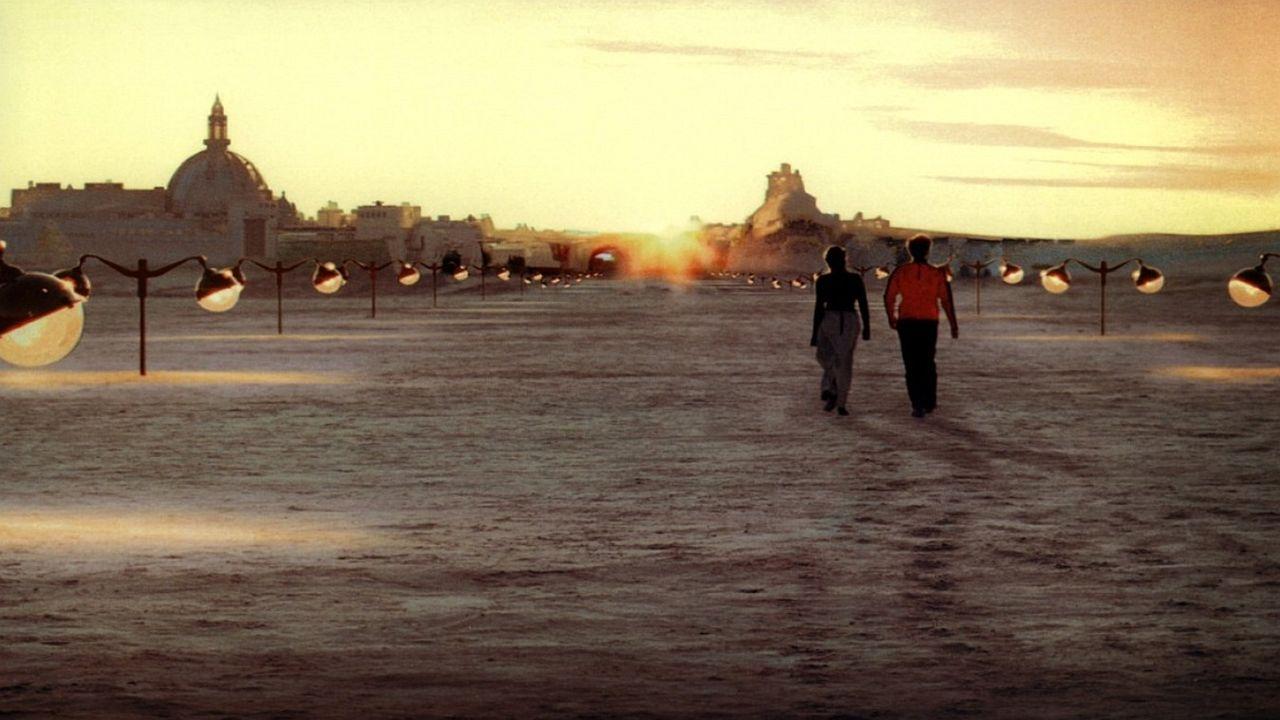
It wasn't exactly a blockbuster that dominated the rental shelves next to The Matrix (released the same year!), but finding a copy felt like uncovering a minor secret. The film throws us headfirst into a chaotic New Year's Eve party in Paris, millennium anxieties buzzing in the air. Our guide is Arthur (Romain Duris, already showcasing the restless energy that would define his career), a young man feeling immense pressure from his girlfriend Lucie (Géraldine Pailhas) to start a family. He's hesitant, uncertain, plagued by the weight of the future. Then, in a moment of party-fueled oddity, he crawls through a passage... and emerges into Paris, circa 2070.
A Future Buried in Sand
Forget sleek chrome and flying cars. Klapisch, who'd previously charmed audiences with more grounded fare like Chacun cherche son chat (1996), envisions a future Paris swallowed by desert dunes, iconic landmarks poking through like forgotten relics. It's a striking, beautifully realised visual conceit. The production design deserves real credit here; achieving this pre-ubiquitous CGI required significant effort, reportedly involving massive studio sets and tons of sand trucked in. There's a tangible, almost dreamlike quality to these sand-choked vistas, a far cry from the sterile futures often seen in American sci-fi. It feels lived-in, albeit precariously, by a society clinging to existence in colourful, ramshackle dwellings. The visual effects, while perhaps showing their 1999 vintage slightly now, were ambitious for a European production of the time and contribute significantly to the film's unique atmosphere.
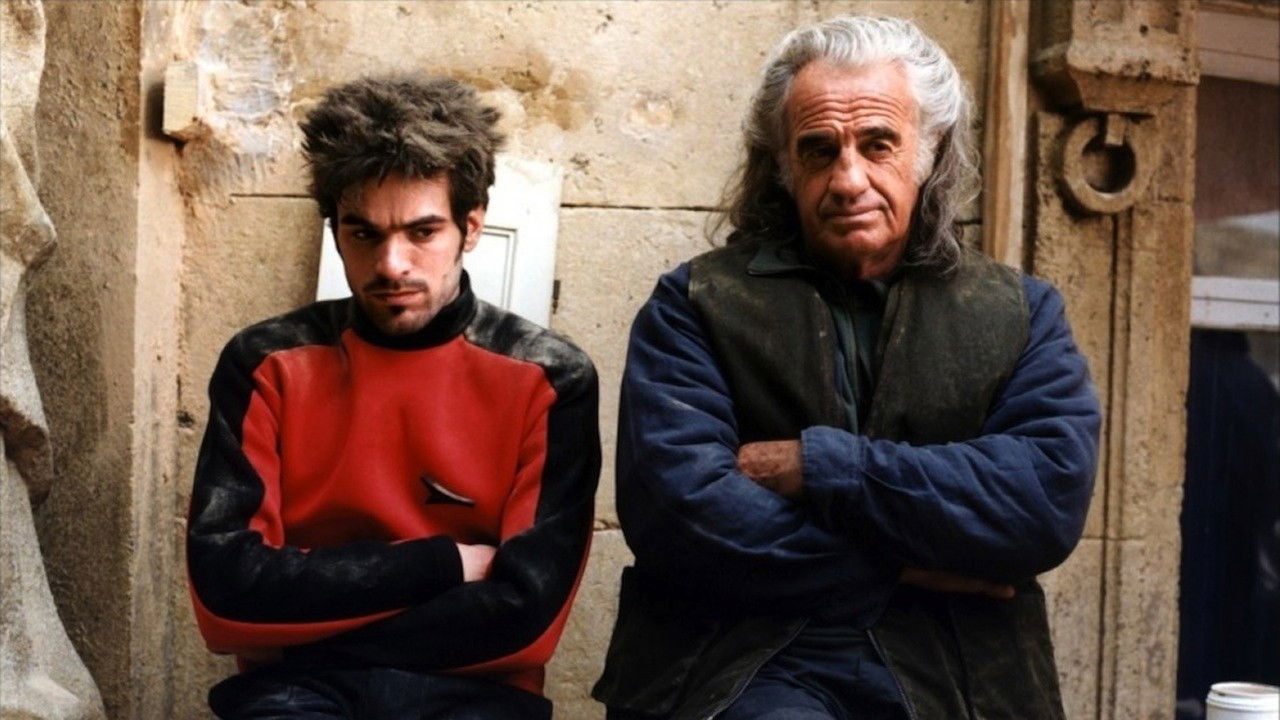
Meeting Your Grandson, The Legend
In this bizarre future, Arthur encounters Ako, a seventy-something raconteur played with magnificent, mischievous gusto by the legendary Jean-Paul Belmondo. And here's the twist: Ako is Arthur's grandson, desperate for Arthur to go back and impregnate Lucie tonight so that their entire lineage doesn't vanish in a puff of temporal logic. It’s a wonderfully absurd premise, and seeing Belmondo, the icon of French New Wave cool and later action-comedy heroism (Breathless, Le Professionnel), hamming it up as a slightly dotty, sand-dwelling descendant is a joy. It was one of Belmondo's later significant roles, and he seems to relish the chance to play this eccentric character, bridging classic French cinema with Klapisch's modern sensibility. His chemistry with the younger Duris, who plays Arthur's bewilderment and mounting panic perfectly, is the film's comedic engine.
Whimsy, Philosophy, and Gallic Charm
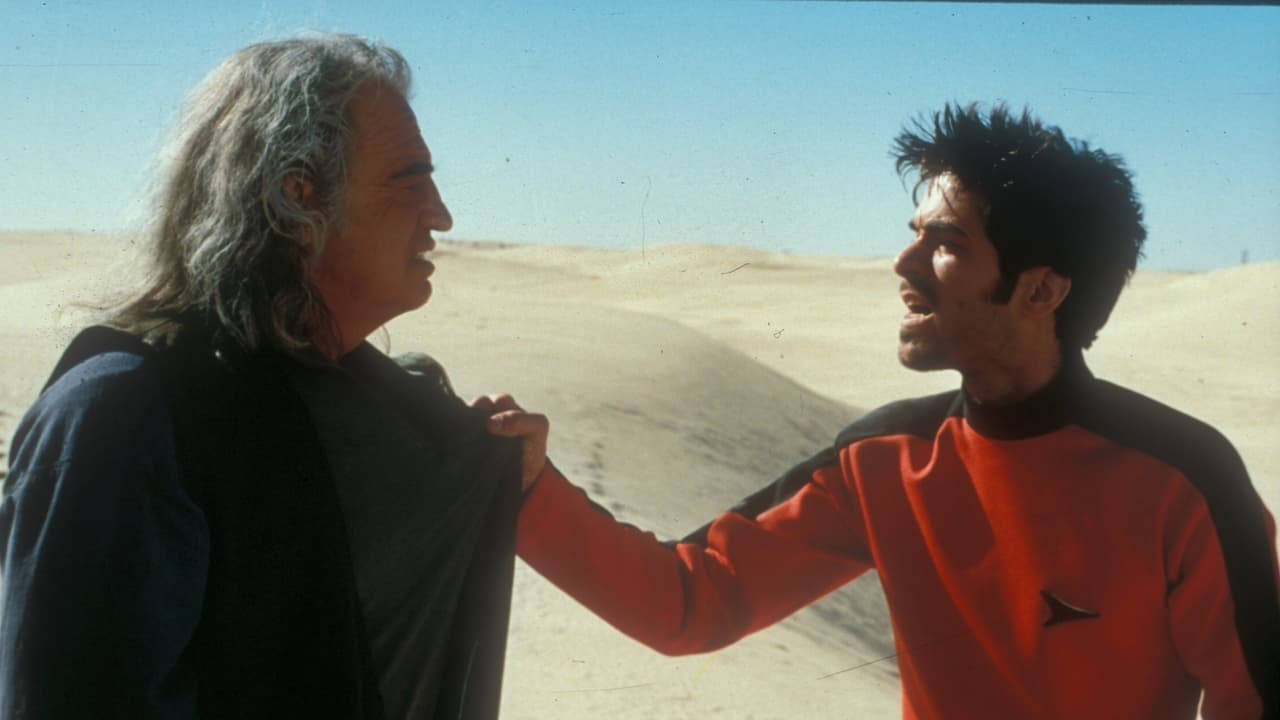
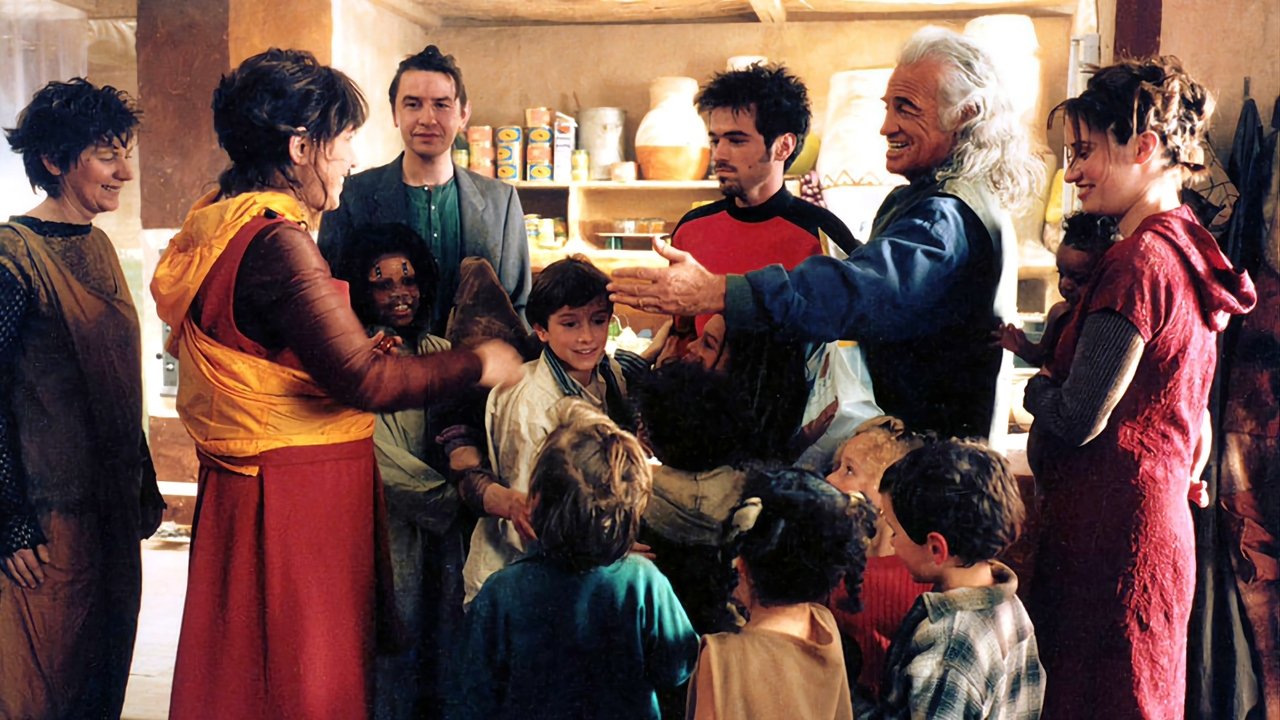
Peut-être isn't a tightly plotted sci-fi thriller. Its approach to time travel is loose, serving the comedic and thematic setup more than strict scientific rules. The narrative sometimes meanders, spending perhaps a bit too long in the future before resolving Arthur's present-day dilemma. But what it lacks in propulsive plotting, it makes up for in charm and ideas. Klapisch and his co-writers (Santiago Amigorena, Alexis Galmot) aren't just aiming for laughs; they're poking at anxieties about commitment, legacy, and the terrifying uncertainty of bringing new life into the world. What kind of future are we building? Does personal choice ripple outwards in ways we can't comprehend? The film doesn't offer easy answers, preferring a shrug and a wry smile – that quintessential Gallic approach.
The contrast between the vibrant, sweaty energy of the New Year's Eve party and the quiet, sun-baked melancholy of the future is handled deftly. Klapisch uses this juxtaposition to explore the weight of consequence. The party scenes feel authentically chaotic, capturing that specific blend of hedonism and introspection that marks the turning of a year (or, in this case, a millennium). This grounding makes the leap into the fantastical future all the more effective.
A Curious Time Capsule
Watching Peut-être today feels like unearthing a time capsule within a time capsule. It captures the specific mood of the late 90s, staring down the barrel of the year 2000, and filters it through a distinctly European lens. It’s a reminder that sci-fi doesn't always have to be about laser guns and alien invasions; it can also be about personal anxieties writ large against a backdrop of ecological change and shifting time. It’s a film that perhaps didn’t set the box office alight (its reception was somewhat mixed, finding more appreciation domestically than abroad), but its visual creativity and the sheer delight of Belmondo’s performance make it a worthwhile discovery for fans of quirky genre blends. It’s the kind of movie that might have bewildered you slightly upon first viewing on a fuzzy VHS copy, but whose images and strange charm linger.
Rating: 7/10
Peut-être earns a solid 7 for its sheer audacity, memorable visual design, and the wonderful pairing of a young Duris with a legendary Belmondo. It's not perfect – the pacing occasionally lags, and the plot logic is best not scrutinised too closely – but its unique atmosphere, blend of humour and melancholy, and striking vision of a sand-swept future make it a fascinating and enjoyable piece of late-90s French filmmaking.
It leaves you pondering not just the future of humanity, but the smaller, personal choices that shape our own timelines, perhaps with a glass of wine and a philosophical shrug. What a wonderfully strange trip.