Sometimes a film arrives not with a thunderclap, but with the quiet resonance of a struck bell, its echoes lingering long after the screen fades to black. Zhang Yimou's The Road Home (1999), arriving at the very twilight of the VHS era, felt like such a discovery. Tucked perhaps between the action blockbusters and lurid horror covers on the rental shelves, its simple cover art might have seemed unassuming. Yet, cracking open that plastic case revealed a cinematic poem, a work of startling beauty and profound emotional depth that stays with you, much like the memory of a cherished scent or a half-forgotten melody.
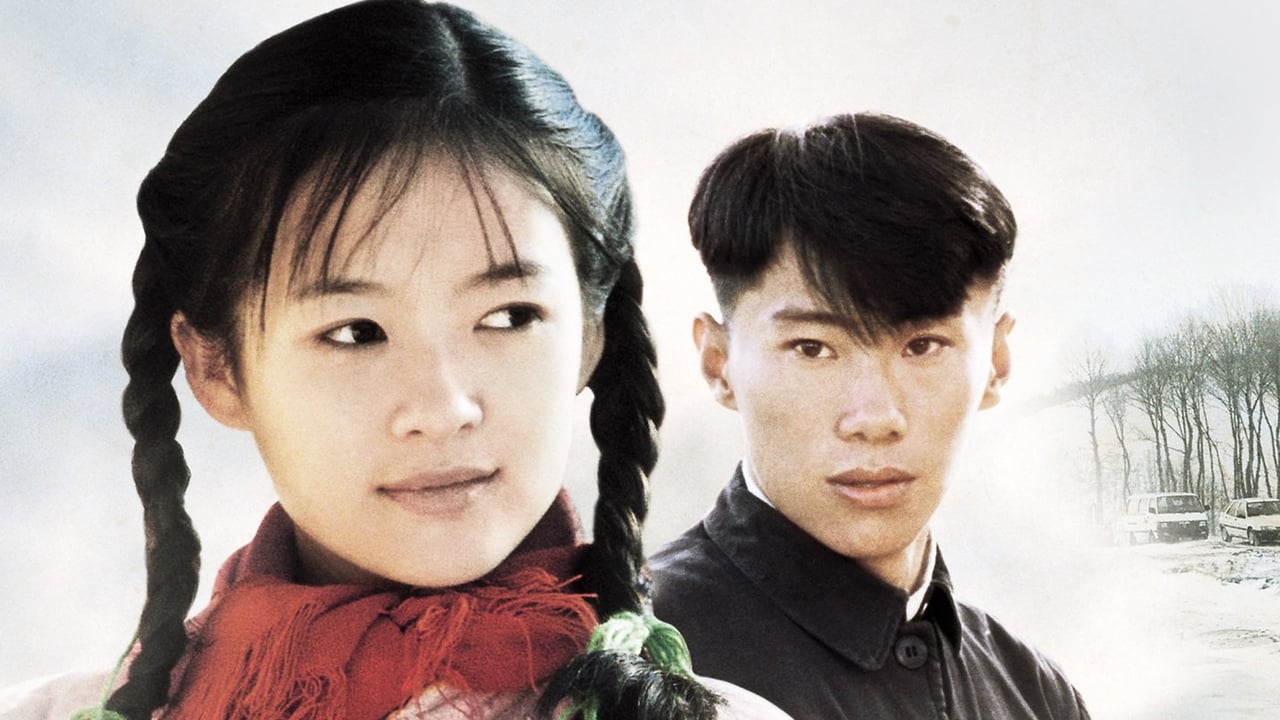
It's a film that operates on a beautifully simple premise, yet explores the vast territory of love, loss, and the passage of time. We begin in stark, present-day black and white, following Luo Yusheng (Sun Honglei) as he returns from the city to his rural childhood village in North China upon hearing of his father's death. His mother, Zhao Di (Zhao Di - the character shares the actress's given name, played in her youth by Zhang Ziyi), insists on upholding tradition: the coffin must be carried by hand along the long road back to the village, the very road her husband, the village teacher, walked countless times. It’s a path heavy with significance, a physical manifestation of their shared history.
A Memory Painted in Light and Color
This somber present gives way to the heart of the film: extended flashbacks rendered in breathtaking, almost impossibly vibrant color. Here, Zhang Yimou, already renowned for the visual opulence of films like Raise the Red Lantern (1991), employs color not just aesthetically, but thematically. The past isn't just remembered; it glows. It’s the world as seen through the eyes of young Di, alight with the incandescent arrival of the new village teacher, Luo Changyu (Zheng Hao). The contrast isn't merely technical; it's emotional. The black and white speaks of grief, stillness, and the weight of the present, while the color bursts with the untamed energy of burgeoning love, youthful hope, and a connection that feels elemental.
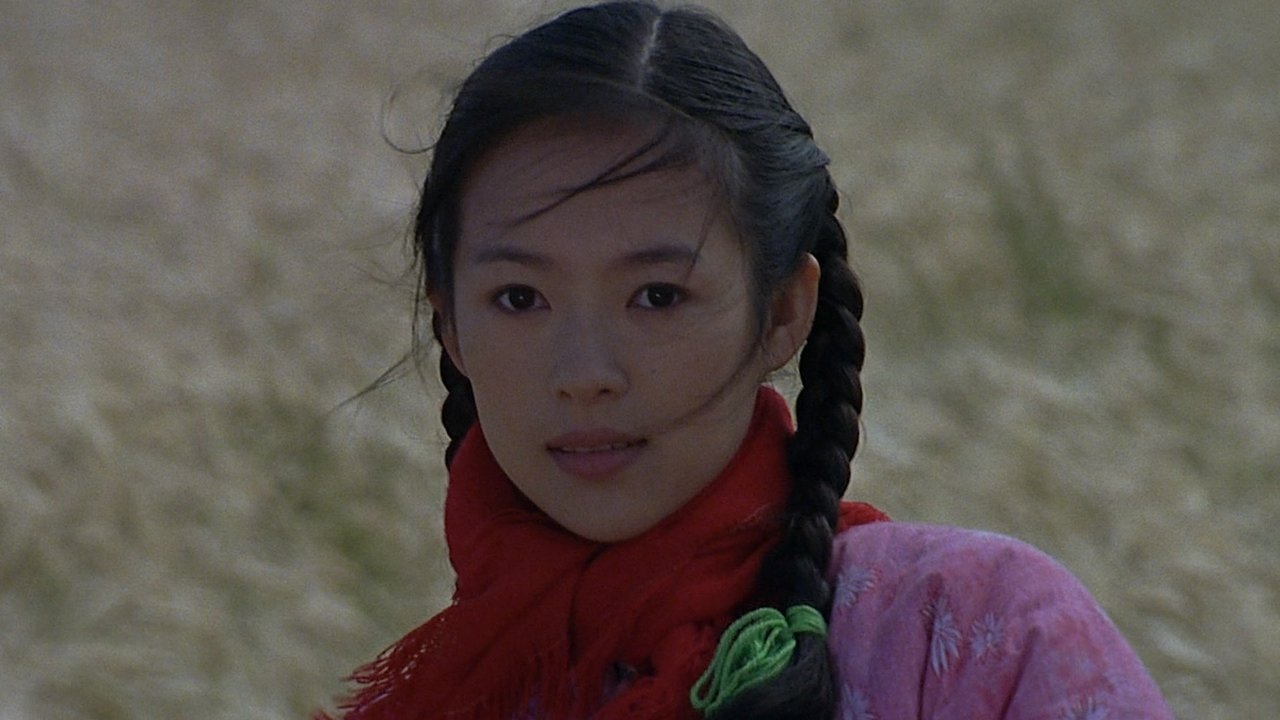
This is where we witness the emergence of a true star. Zhang Ziyi, in what is essentially her feature film debut (she was just 19 or 20 during filming), is nothing short of luminous as the young Zhao Di. It's a performance built on physicality and expressive glances, often more potent than any dialogue. Her character is illiterate and initially shy, yet her determination to catch the teacher's eye – waiting by the road, preparing the best meal, her famous red jacket a splash of defiance against the landscape – speaks volumes. There’s an authenticity, a radiant innocence mixed with quiet strength, that’s captivating. Yimou reportedly discovered Zhang after casting her in a shampoo commercial, seeing a spark that translated powerfully to the big screen. It’s easy to see why; her face registers every flicker of hope, disappointment, and burgeoning affection with remarkable clarity.
The Eloquence of Simplicity
What makes The Road Home so potent is its deliberate pacing and its trust in visual storytelling. Yimou strips the narrative down to its essentials. There are no complex subplots, no dramatic betrayals, just the pure, unwavering trajectory of a love story unfolding against the backdrop of rural life and subtle societal shifts (the teacher is briefly taken away during the Anti-Rightist Movement, a hint of the larger world intruding). The camera often lingers on faces, on landscapes, on the simple act of walking that road. It requires a certain patience from the viewer, a willingness to sink into its rhythms, but the reward is immense emotional resonance.
The film was shot on location in the Hebei province, lending it an unshakeable sense of place. You feel the bite of the wind, see the dust kicked up on the path, sense the tight-knit community observing the central courtship. This authenticity grounds the almost fable-like quality of the love story. It's a reminder that epic emotions often unfold in the quietest corners of the world. It’s also worth noting that this marked a slight departure for Yimou at the time, moving away from the grand historical critiques of some earlier works towards something more intimate and personal, though still visually masterful. The film’s quality wasn't lost on critics; it secured the Silver Bear Grand Jury Prize at the Berlin International Film Festival in 2000, signaling its arrival as a significant piece of world cinema.
Why It Endures on the Shelf of Memory
Watching The Road Home today, perhaps on a format far removed from the worn-out VHS tape I first saw it on, its power hasn’t diminished. If anything, its themes feel more poignant. In our hyper-connected, often fragmented world, the film's depiction of steadfast devotion, the reverence for tradition (even when challenged by practicality, as the son initially suggests a car instead of carrying the coffin), and the quiet dignity of lifelong love feels like a balm. It asks us to consider what truly connects us, what memories define us, and how we honor those who walked the road before us.
It doesn't offer easy answers, but it presents its story with such grace and visual poetry that the questions themselves feel enriching. It’s a film about the journeys we take, both literal and emotional, and the indelible marks left by those we love.
Rating: 9/10
This near-perfect score is earned through its breathtaking cinematography (especially the masterful use of color), Zhang Ziyi's unforgettable breakout performance, Zhang Yimou's sensitive and assured direction, and the film's profound emotional honesty. It tells a simple story with extraordinary grace and visual beauty, achieving a timeless quality. It might lack the immediate gratification of a blockbuster, but its slow-burn emotional impact is arguably more lasting.
The Road Home remains a testament to the power of quiet cinema, a reminder that sometimes the most enduring stories are whispered, not shouted, leaving behind a lingering warmth and a deep appreciation for the paths that shape our lives.