The air hangs thick and still around certain houses, doesn't it? Places saturated with secrets, where the very walls seem to hold their breath, waiting. Warlock III: The End of Innocence taps into that primal fear of inherited darkness, the dread that something malevolent lingers just beyond the veil, attached not just to bricks and mortar, but perhaps to bloodline itself. This 1999 direct-to-video offering, the final echo of the original Warlock (1989), might have bypassed theaters, landing straight onto rental shelves, but it carried its own distinct chill, a late-night B-movie brew perfect for the flickering glow of a CRT.

Inherited Nightmares
We're introduced to Kris Miller, played by the instantly recognizable Ashley Laurence, forever etched in our minds from the Cenobite-haunted corridors of the Hellraiser series. Here, she's a college student suddenly bequeathed a centuries-old house by a family she never knew. The setup is classic gothic horror filtered through a late-90s lens: the isolated, creaking manor, the cryptic warnings from locals, the unsettling discoveries within its shadowed rooms. It feels familiar, yes, but Laurence brings a grounded vulnerability that makes Kris’s dawning horror relatable. You feel her unease as the house reveals its grim purpose – not just a home, but a prison designed to contain a powerful, malevolent entity. The fact that she was returning to a major horror role after her iconic run as Kirsty Cotton undoubtedly drew many of us genre fans to grab this tape off the shelf back in the day.
A New Face for Evil
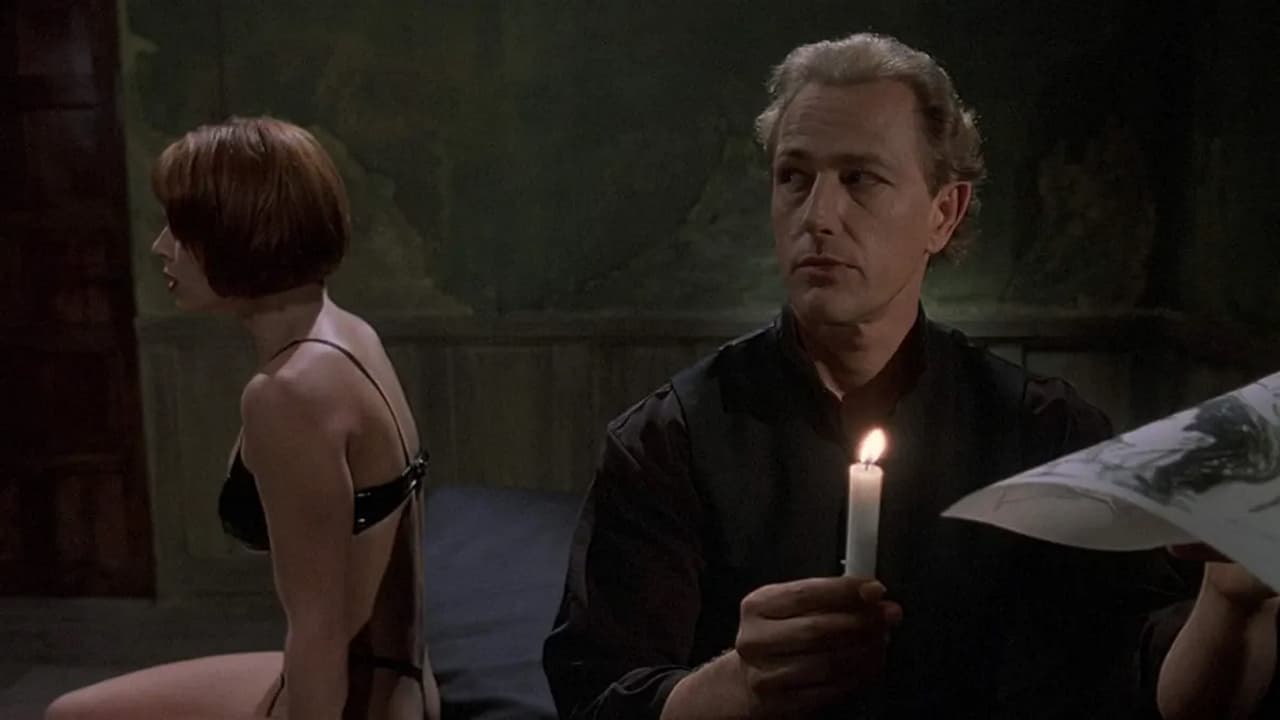
Of course, a Warlock film needs its Warlock. With Julian Sands stepping aside after the first two installments, the mantle (and the brooding intensity) falls to Bruce Payne. And what a choice. Payne, already known for his deliciously refined villainy in films like Passenger 57 (1992), doesn't just mimic Sands; he crafts his own brand of sophisticated menace. His Warlock – Phillip Covington – is less feral magic-user and more insidious manipulator, a creature of shadow who uses temptation and psychological games as much as overt sorcery. Payne leans into the character's theatricality, delivering lines with a silky, deliberate cadence that drips with ancient evil. It's a performance that elevates the material, providing a genuinely imposing antagonist even when the film's modest $2 million budget occasionally shows its seams. Some might find it borders on camp, but doesn't that perfectly capture the vibe of so many late-era VHS horror flicks?
Atmosphere on a Shoestring
Directed and co-written by Eric Freiser (who previously directed the gritty indie Road Ends in 1997), Warlock III tries hard to conjure a sense of dread. It doesn't always succeed, sometimes hampered by predictable plot beats typical of the DTV market and effects that, while earnest, lack the visceral punch of its predecessors. Yet, there are moments where it clicks. The claustrophobic interiors of the house, the use of shadow and suggestion, and a surprisingly eerie score work together to create pockets of genuine unease. It feels like Freiser and co-writer Bruce David Eisen (who penned episodes for beloved genre shows like Xena: Warrior Princess and Highlander: The Series) understood the assignment: deliver supernatural chills within tight constraints. They lean into the psychological aspects, focusing on Kris's isolation and dawning realization of her connection to the evil trapped within the house, often more effectively than the sporadic bursts of magic.
Direct-to-Video Charm and Challenge
Watching Warlock III today is an exercise in appreciating the specific flavor of late-90s direct-to-video horror. There's an undeniable charm to its ambition, even when it stumbles. You see the effort in Ashley Laurence’s committed performance, the relish in Bruce Payne's portrayal, and the attempts to build atmosphere despite limitations. Supporting actors like Paul Francis (as Kris's skeptical boyfriend Michael) fill their roles adequately, hitting the expected notes for this kind of narrative. It lacks the raw, weird energy of Warlock: The Armageddon (1993) and the tighter, more focused quest of the original, settling instead for a more contained, haunted-house framework. It’s fascinating that this was filmed primarily around Los Angeles, managing to evoke a sense of timeless, decaying isolation despite its urban proximity – a common trick for budget-conscious productions of the era. Did this final chapter truly feel like an "end of innocence"? Perhaps more for the franchise itself, marking its transition fully into the video store domain.
Final Verdict
Warlock III: The End of Innocence is undeniably the lesser of the trilogy, a product of its time and budget. It struggles with pacing and relies on familiar tropes. However, it's far from unwatchable, anchored by Ashley Laurence's empathetic lead performance and Bruce Payne's enjoyably sinister turn as the titular villain. There's a certain gothic moodiness it manages to sustain, making it a worthwhile curiosity for fans of the series or late-90s horror obscurities. It might not have the iconic status of its predecessors, but slipping this tape into the VCR late one night likely provided exactly the kind of spooky, low-stakes thrill many renters were seeking.
Rating: 5/10
Justification: The score reflects a film hampered by its DTV limitations (script predictability, visual effects) but significantly boosted by strong lead performances, particularly Bruce Payne's memorable Warlock. Ashley Laurence provides a solid anchor, and the film occasionally musters genuine atmosphere. It's a middle-of-the-road effort that offers modest chills and serves as an interesting, if slightly underwhelming, capstone to the VHS-era Warlock saga.
Final Thought: While it never quite recaptures the dark magic of the original, Warlock III remains a fascinating artifact of the direct-to-video boom – a testament to how even familiar horror formulas could still find an audience eager for one last supernatural scare before the credits rolled.