Okay, settle in, grab a drink – maybe something stronger than usual – because today we're venturing beyond the usual blockbuster aisle of the late 90s video store memory palace. We're talking about a film that doesn't just flicker on the screen; it burns itself onto your mind's eye. I'm talking about Claire Denis's Beau Travail (1999), a film that feels less like a narrative and more like a fever dream sketched under the relentless Djibouti sun. If you stumbled upon this one back in the day, nestled perhaps between more mainstream fare, you likely knew immediately you were watching something... different. Something potent.

### Sun, Sand, and Simmering Tension
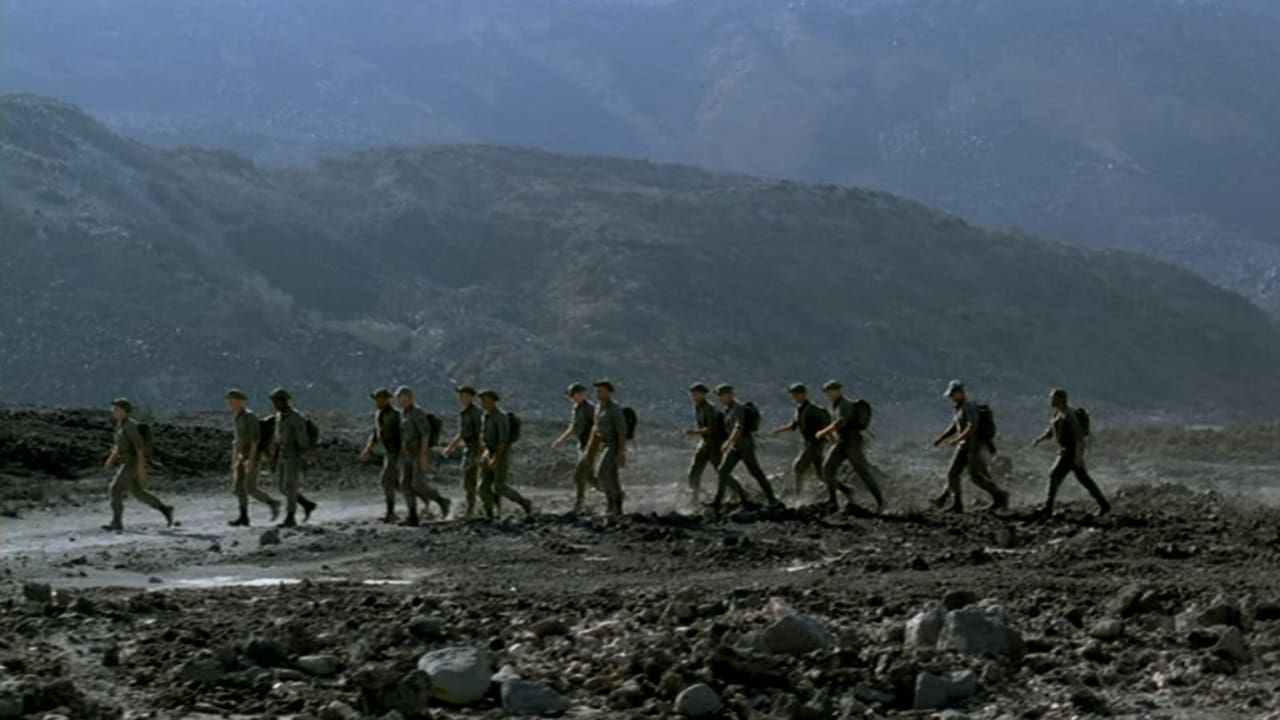
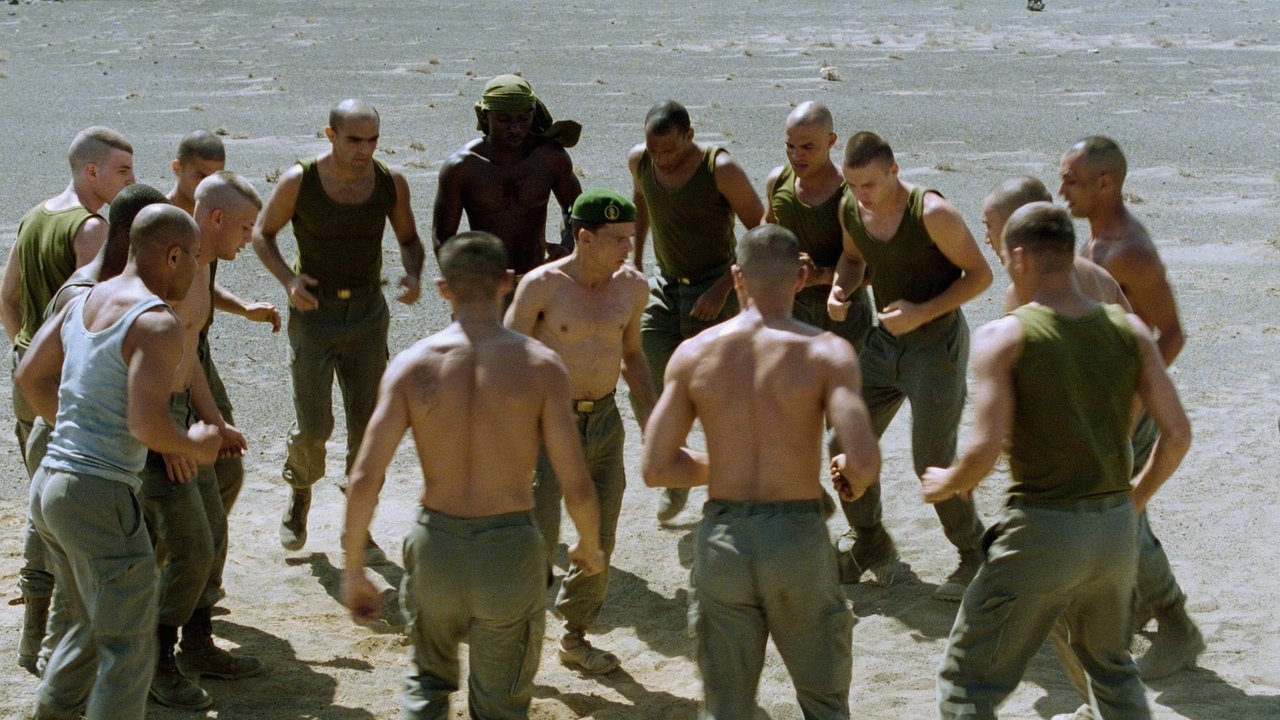
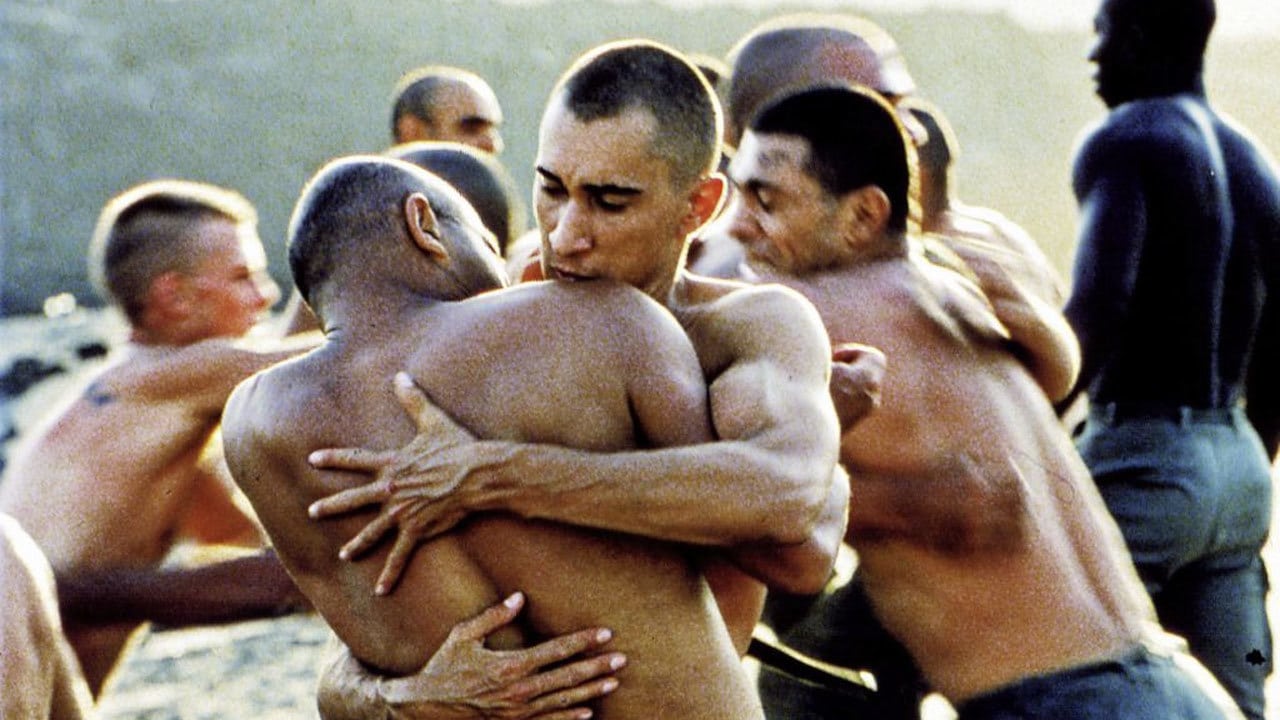
From the opening moments, Beau Travail establishes an atmosphere thick with unspoken emotion and ritualized existence. We're dropped into the world of a French Foreign Legion outpost, where the landscape itself – stark, beautiful, unforgiving – becomes a character. Director Claire Denis, working with her frequent collaborator, the brilliant cinematographer Agnès Godard, captures the physicality of the soldiers' lives with an almost tactile intimacy. Their training exercises become less about combat readiness and more like stark, beautiful choreography. Think less Full Metal Jacket, more balletic maneuvers under a harsh, judging sky. The rhythmic ironing of uniforms, the precise drills, the communal swimming – it all builds a sense of contained energy, a pressure cooker of masculinity waiting for release, or rupture.
The film's structure, loosely inspired by Herman Melville's novella Billy Budd, Sailor, is elliptical, relying on visual storytelling and mood over explicit exposition. We experience this isolated world primarily through the fragmented memories of Sergeant Galoup (Denis Lavant), now disgraced and writing his memoirs back in Marseille. His recollections orbit around his obsessive fixation on Gilles Sentain (Grégoire Colin), a handsome, well-liked new recruit whose natural charisma and perceived goodness become an unbearable affront to Galoup's tightly controlled world. Presiding over them is Commandant Bruno Forestier, played by Michel Subor – a name that echoes with cinematic history for those who remember his role in Jean-Luc Godard's Le Petit Soldat (1963), adding another layer of resonance about soldiers and French identity.
### The Unspoken Language of the Body
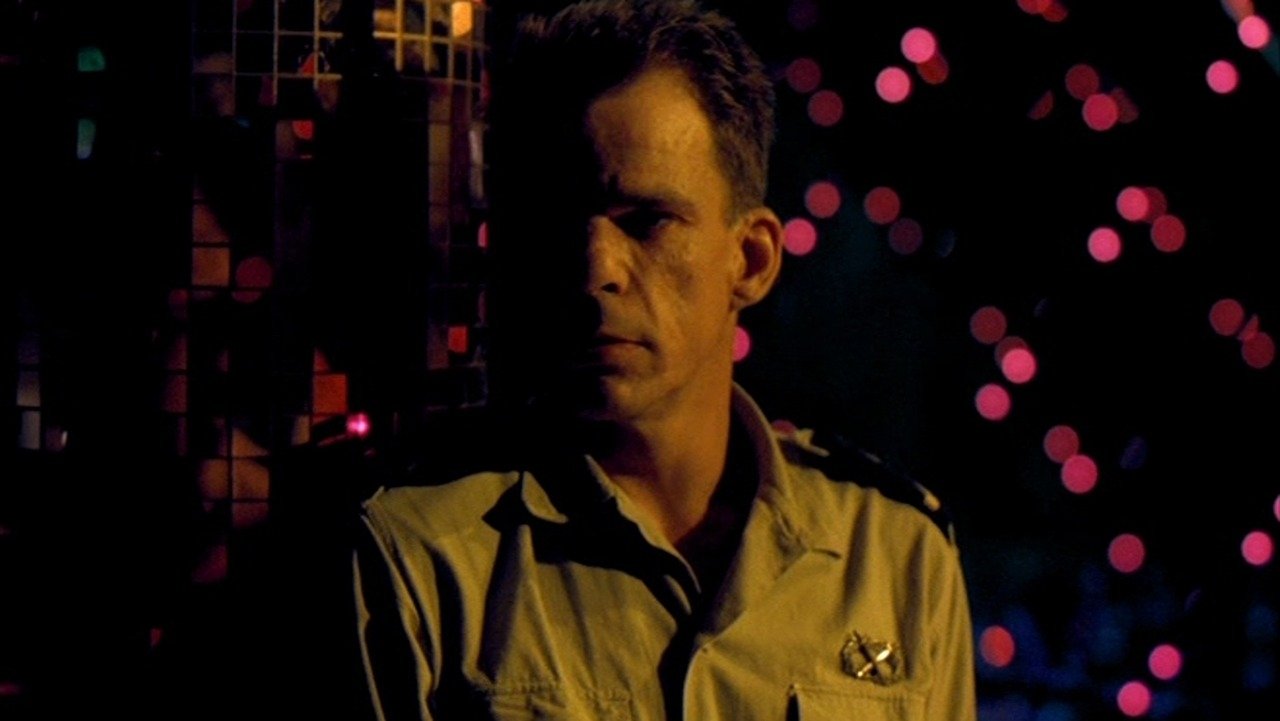
What truly elevates Beau Travail is the way it communicates through physicality. Denis Lavant, an actor known for his incredibly expressive, almost acrobatic performances (especially with director Leos Carax), is mesmerizing as Galoup. His tightly coiled posture, the darting intensity in his eyes, the sudden bursts of controlled violence – it’s a masterclass in conveying internal turmoil without resorting to lengthy monologues. You feel his envy, his repressed desires, his self-loathing radiating off the screen. It’s a performance built on nuance and barely contained energy. Reportedly, Denis encouraged improvisation and physical expression, drawing on Lavant’s background in mime and dance to create Galoup’s unforgettable presence.
Opposite him, Grégoire Colin embodies Sentain with an almost effortless grace that perfectly contrasts Galoup's rigidity. He’s the object of both admiration and resentment, the disruption in the carefully maintained order. Michel Subor, as Forestier, exudes a weary authority, a man who has seen too much and perhaps understands Galoup’s destructive path better than Galoup himself does. Interestingly, many of the other legionnaires were played by non-professional actors, former soldiers themselves, adding a layer of authenticity to the group dynamics and drills captured on screen.
### Echoes Under the African Sun
Claire Denis, who spent part of her childhood in colonial Africa, imbues the film with subtle but potent post-colonial undertones. The Legionnaires, predominantly white Europeans, move through the Djiboutian landscape almost as apparitions, their rituals starkly contrasted against the lives of the local people glimpsed on the periphery. The film doesn't offer easy answers or judgments but lets these contrasts linger, questioning the legacy and purpose of such institutions in a changed world. It asks us to consider the codes of masculinity, the nature of belonging, and the destructive power of jealousy when contained within such a hermetically sealed environment.
The score, featuring excerpts from Benjamin Britten's opera Billy Budd, further deepens the sense of impending tragedy and operatic emotion simmering beneath the surface. It complements Godard’s sun-bleached, painterly visuals perfectly. Filming in Djibouti presented its own challenges, working with the real Foreign Legion (who apparently initially expected a more conventional action film!) and navigating the extreme heat and logistical hurdles, but the authenticity gained is undeniable. It cost roughly €2.5 million to make, a modest sum for such a visually stunning and impactful piece of cinema.
### Legacy in the Haze
Beau Travail wasn't a box office smash, naturally, but its critical reception was stellar, and its reputation has only grown. It’s a film that consistently ranks among the best of the 90s and, indeed, of all time for many critics and cinephiles. It cemented Claire Denis as a major force in world cinema and offered a template for a kind of sensual, elliptical filmmaking that privileges mood and physicality over plot mechanics.
Spoiler Alert for the final scene (though it's widely discussed): And then there’s that ending. Galoup, alone in a nightclub, unleashing years of repressed energy in an explosive, unforgettable dance sequence set to Corona’s inescapable 90s Eurodance hit "Rhythm of the Night." Is it liberation? Despair? A final, convulsive assertion of self before oblivion? It’s ambiguous, electrifying, and utterly perfect – a moment that leaves you breathless and pondering long after the screen goes dark. It’s one of those endings you might have rewound the VHS tape for, just to try and comprehend its power.
Rating: 9.5/10
Justification: Beau Travail is a near-perfect synthesis of form and content. Denis's direction is masterful, Godard's cinematography is breathtaking, and Lavant's central performance is iconic. Its thematic depth, atmospheric power, and bold visual language make it an unforgettable piece of cinema. It might lack the immediate accessibility of some 90s classics, keeping it just shy of a perfect 10 for a broader audience perhaps, but its artistic achievement is undeniable and its impact profound.
Final Thought: This isn't just a movie you watch; it's one you absorb through your pores. It’s a haunting meditation on masculinity, repression, and the ghosts of colonialism, told with a unique visual poetry that lingers like the desert heat. A true gem from the tail end of the VHS era, reminding us of the power of cinema to explore the unspoken corners of the human heart.