How reliable is memory under fire? What shapes the story we tell ourselves – and others – about moments of intense pressure, fear, and sacrifice? These questions linger long after the whirring VCR has fallen silent following a viewing of Edward Zwick’s 1996 military drama, Courage Under Fire. It’s a film that arrived on rental shelves nestled amongst the louder action blockbusters of the mid-90s, yet offered something far more unsettling and introspective: a haunting look at the fractured nature of truth in the aftermath of combat.

The Weight of Command, The Stain of Guilt
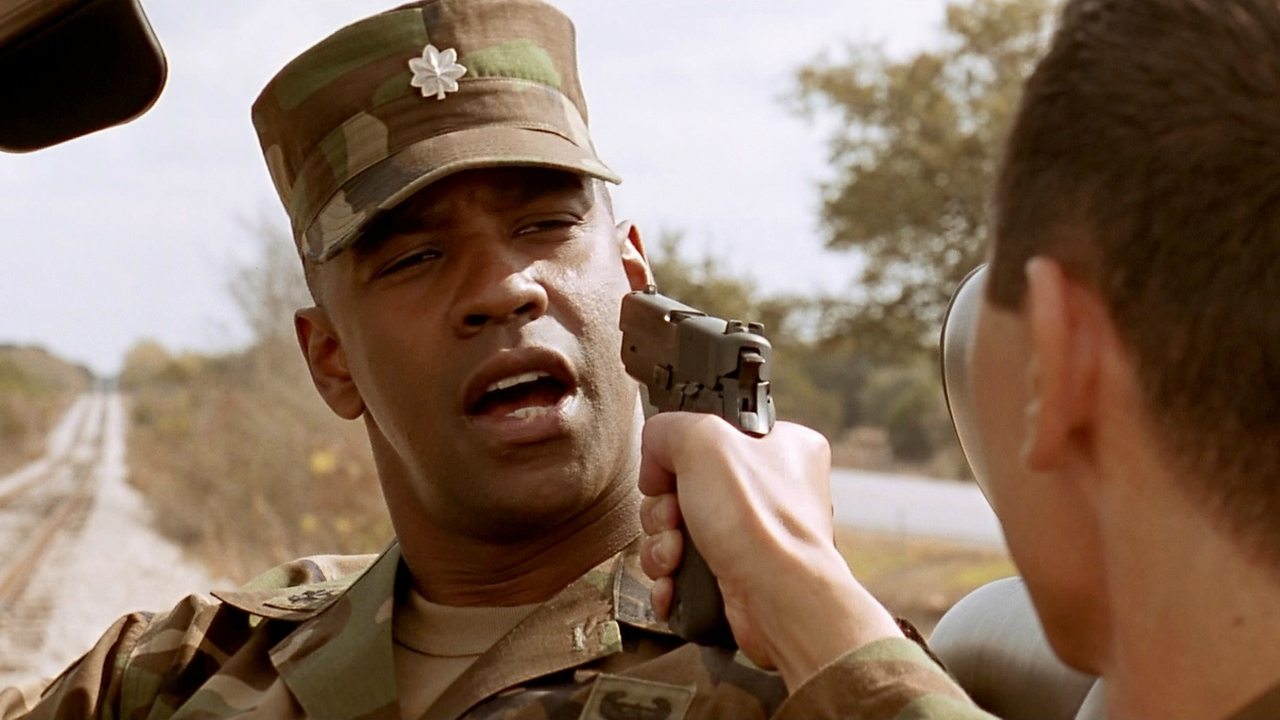
At the heart of the narrative is Lieutenant Colonel Nat Serling, portrayed with a simmering, tightly coiled intensity by Denzel Washington. We meet Serling grappling with his own demons – a fatal friendly-fire incident during the Gulf War that he’s trying to bury, even as it corrodes him from within. Washington, already a powerhouse after films like Glory (1989) (also directed by Zwick) and Malcolm X (1992), embodies Serling’s burden beautifully. It’s not just the dialogue; it's in the stiffness of his posture, the flicker of pain in his eyes, the weary professionalism that barely masks a profound sense of guilt. Assigned to a seemingly routine investigation – reviewing Captain Karen Walden's posthumous Medal of Honor candidacy – Serling finds his own unresolved trauma mirrored in the conflicting accounts surrounding her death. His need to find the objective truth about Walden becomes inseparable from his need to confront his own failings.
Rashomon in the Desert
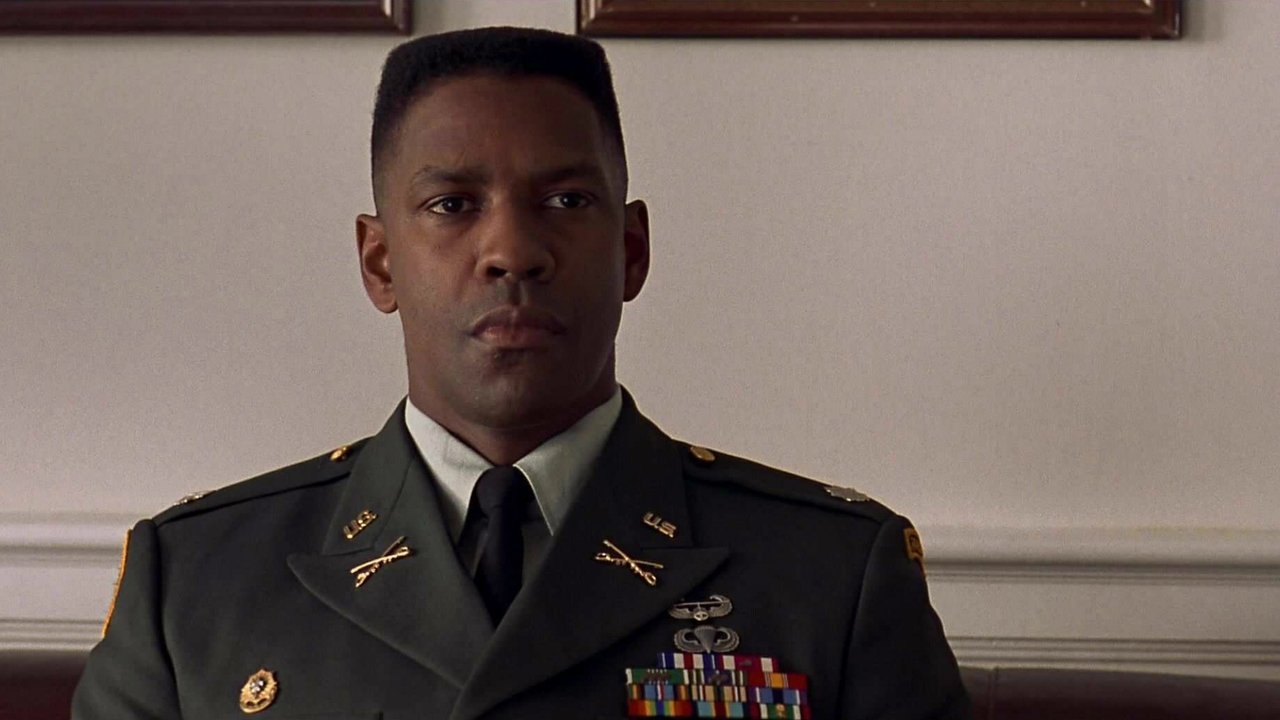
What elevates Courage Under Fire beyond a standard military procedural is its clever use of a Rashomon-like structure. Screenwriter Patrick Sheane Duncan (who also penned the beloved Mr. Holland's Opus the year prior) presents the fateful events surrounding Captain Walden’s downed Medevac helicopter through multiple, contradictory flashbacks, each filtered through the perspective of a different survivor interviewed by Serling. One soldier paints Walden as a decisive, textbook hero. Another (Lou Diamond Phillips, radiating volatile uncertainty as Staff Sergeant Monfriez) hints at panic and poor judgment. Yet another, the sickly Specialist Ilario, offers a version shaded by trauma and perhaps hidden motives. This narrative fragmentation brilliantly captures the sheer chaos and subjectivity of a firefight – the infamous "fog of war" extending into the fog of memory itself. It forces us, alongside Serling, to constantly re-evaluate what we think we know. Whose story do you believe? And why?
Breaking the Mold: Walden and Ryan
Central to the mystery, and the film's impact, is Captain Karen Walden, played by Meg Ryan. Seeing Ryan, then America’s sweetheart largely known for romantic comedies like When Harry Met Sally... (1989) and Sleepless in Seattle (1993), step into the dusty boots of a combat pilot was a significant departure. And she pulls it off. Through the conflicting flashbacks, Ryan portrays multiple Waldens: calm under pressure, overwhelmed by fear, fiercely protective, perhaps tragically flawed. It’s a performance that doesn't offer easy answers but instead reflects the multifaceted reality of leadership in extremis. The film’s focus on a female officer nominated for the Medal of Honor for combat actions felt noteworthy in 1996, subtly exploring the added pressures and scrutiny faced by women in traditionally male domains, even if it doesn't make it the central thesis.

Behind the Battle Lines
Digging into the production adds another layer of appreciation. The film was one of the earliest major Hollywood productions to grapple directly with the first Gulf War, lending it a contemporary edge back in the day. The Department of Defense provided significant cooperation, allowing the use of actual M1A1 Abrams tanks and Black Hawk helicopters, which undeniably adds to the film's visual authenticity – those scenes filmed near El Paso, Texas, and Barstow, California felt convincingly like the Kuwaiti theater. However, the most talked-about behind-the-scenes story remains Matt Damon's harrowing commitment to the role of Specialist Ilario. To portray the physical and emotional toll of the soldier's ordeal, Damon shed a reported 40 pounds on a self-prescribed diet and fitness regimen. The transformation is visually shocking and lends a visceral authenticity to his character’s suffering. While it took a toll on his health (requiring medical supervision after filming), this dedication famously caught the eye of Francis Ford Coppola, helping land him the lead in The Rainmaker (1997) and setting him on the path to stardom. It’s a stark reminder of the lengths actors sometimes go to inhabit a role truthfully. Budgeted at around $46 million, Courage Under Fire performed respectably, earning about $100 million worldwide, proving audiences were receptive to a more thoughtful kind of war story.
The Lingering Questions
Courage Under Fire doesn't offer neat resolutions. It suggests that the "truth" of a traumatic event might be less a single, objective fact and more a composite of subjective experiences, shaded by fear, loyalty, self-preservation, and the unreliability of memory itself. Serling’s investigation ultimately becomes a journey toward accepting ambiguity, both in Walden’s case and his own. What does it truly mean to be courageous? Is heroism defined by a single act, or the sum of one's choices, flaws and all? The film leaves these potent questions hanging in the air, prompting reflection rather than providing easy answers. Doesn't this ambiguity feel more honest, somehow, than a clear-cut tale of battlefield glory?
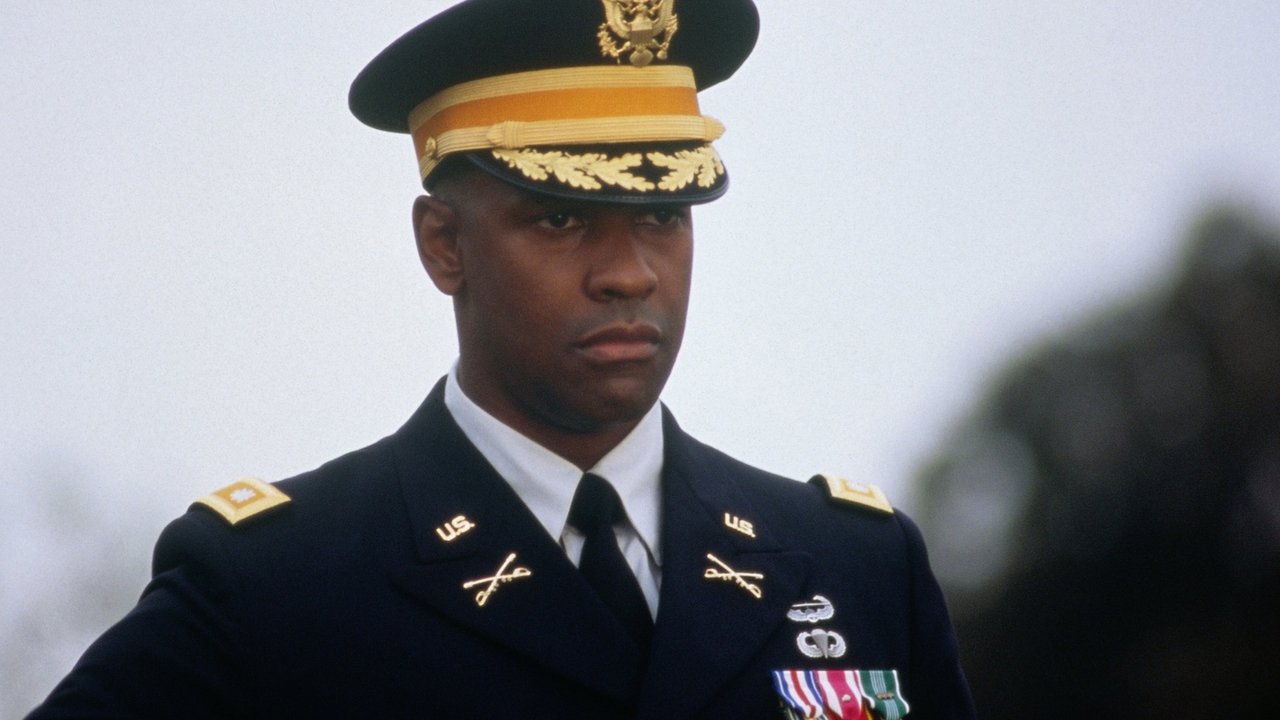
Rating: 8/10
This score reflects the film's powerful performances, particularly from Washington, Ryan, and Phillips, its intelligent script, Zwick's assured direction, and its effective use of the Rashomon structure to explore complex themes of truth, guilt, and heroism under pressure. It successfully transcends the typical war movie clichés, offering a more challenging and thought-provoking experience. While perhaps some of the supporting character arcs feel slightly less developed compared to the central mysteries, the core narrative remains compelling throughout. Courage Under Fire was a standout drama of the mid-90s, the kind of serious, adult-oriented film that felt right at home on a Friday night rental shelf, promising substance alongside its star power.
It’s a film that reminds us that sometimes the heaviest burdens carried by soldiers aren't their rucksacks, but the stories they tell – and the ones they keep hidden.