It starts not with soaring music or grand promises, but with the grim, grey reality of arrival. Zack Mayo, astride his motorcycle, carrying the weight of a troubled past and a cynical attitude, pulls up to the gates of the Naval Aviation Officer Candidate School. It’s a stark image, one that immediately signals that An Officer and a Gentleman (1982) isn't just aiming for fairy-tale romance. There’s a grit here, a sense of desperate striving against formidable odds, that lodges itself under your skin long before the famous white uniform makes its appearance. Watching it again now, decades after pulling that distinctive VHS box off the rental shelf, that initial rawness feels even more pronounced.
Forged in Foley's Fire
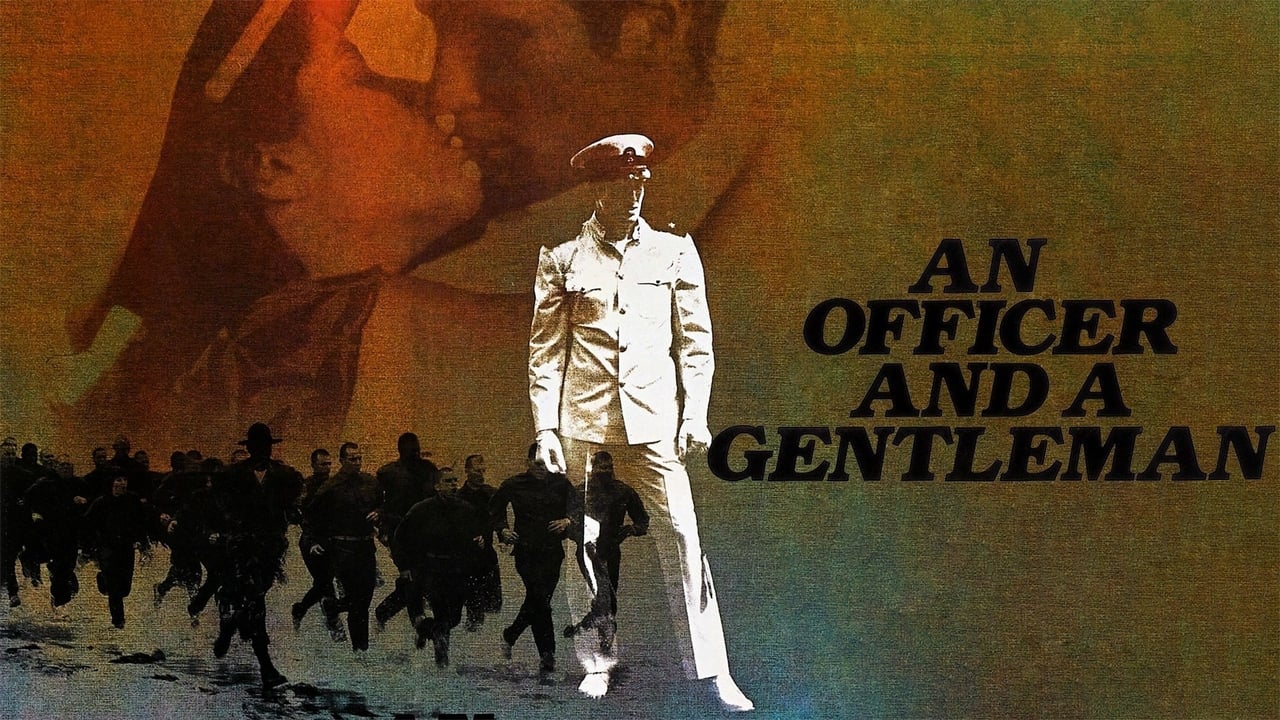
You simply cannot talk about this film without first acknowledging the seismic impact of Louis Gossett Jr. as Gunnery Sergeant Emil Foley. It’s a performance that transcended the screen, earning him a thoroughly deserved Academy Award for Best Supporting Actor – the first African American man to win in that category. Foley isn't just a drill instructor; he's the crucible. His relentless pressure, his psychological stripping-down of the candidates, particularly Richard Gere's Mayo, is terrifyingly authentic. What makes it so powerful isn't just the shouting, but the calculated intensity, the way he zeroes in on weakness, forcing self-confrontation. Interestingly, much of Foley’s memorable, profane dialogue and intimidating methods were heavily influenced by R. Lee Ermey, a real-life drill instructor hired as a technical advisor, who famously went on to embody a similar archetype in Full Metal Jacket (1987). Gossett Jr. reportedly kept himself separate from the other actors during filming, immersing himself in the role and fostering a genuine sense of intimidation that bleeds onto the screen. Does Foley push Mayo too far? Perhaps. But isn't that precisely the point – to break him down to build something stronger, something worthy of the title?
Sparks in the Rain: Gere and Winger
Opposite the harsh military structure is the tentative, complicated romance between Zack Mayo and Paula Pokrifki, played with a captivating blend of vulnerability and defiance by Debra Winger. Their chemistry isn't the easy, immediate click of many cinematic romances; it’s friction, misunderstanding, and a slow, reluctant surrender to genuine feeling. Richard Gere, then solidifying his leading man status after American Gigolo (1980), portrays Mayo’s guarded nature perfectly – the defensive shell built up over years of neglect and disappointment. But it’s Debra Winger who truly grounds the emotional core. Her Paula isn't just waiting for a rescue; she has her own desires, her own weariness with the "Puget Sound Deb" label, her own quiet strength. There's a lived-in quality to her performance, a sense that she understands the precariousness of her situation all too well. Stories of on-set tension between Gere and Winger are well-known, and while unfortunate, one has to wonder if that underlying friction didn't somehow translate into the palpable, often combative, energy that makes their scenes together so compelling. It feels real, messy, and earned.
More Than Just Uniforms
While the romance and the iconic ending often dominate discussions, An Officer and a Gentleman, penned by Douglas Day Stewart (drawing partly on his own naval experiences), delves into deeper waters. It’s a potent exploration of class dynamics – the stark contrast between the transient officer candidates and the local women working factory jobs, hoping for a ticket out. Paula’s quiet despair and Lynette (Lisa Blount, in a heartbreaking performance) desperate, ultimately tragic ambition highlight the limited options and ingrained societal pressures. The film is also fundamentally about redemption and the search for belonging. Mayo arrives as a self-serving loner, convinced the world owes him nothing and expecting nothing in return. His transformation isn't instantaneous or easy; it's forged through Foley's relentless drilling, the camaraderie (and tragedy) involving his friend Sid Worley (David Keith), and the unexpected vulnerability he finds with Paula. Director Taylor Hackford, who would later give us films like Ray (2004), masterfully balances this gritty realism with moments of soaring emotion, letting the bleak, rain-soaked Washington setting underscore the characters' internal struggles.

Retro Fun Facts & The Final Scene
It’s fascinating to remember this film wasn’t a guaranteed hit. Made for around $6 million, its blend of adult themes, harsh language, and romantic drama felt risky. Yet, it resonated deeply, pulling in roughly $130 million at the box office (a staggering sum then, equivalent to nearly $400 million today). And then there's the music. "Up Where We Belong," performed by Joe Cocker and Jennifer Warnes, wasn't initially favored by studio executives, but Hackford fought for it. Good thing he did – the song became a global phenomenon, won an Oscar, and cemented itself as one of the defining power ballads of the 80s.
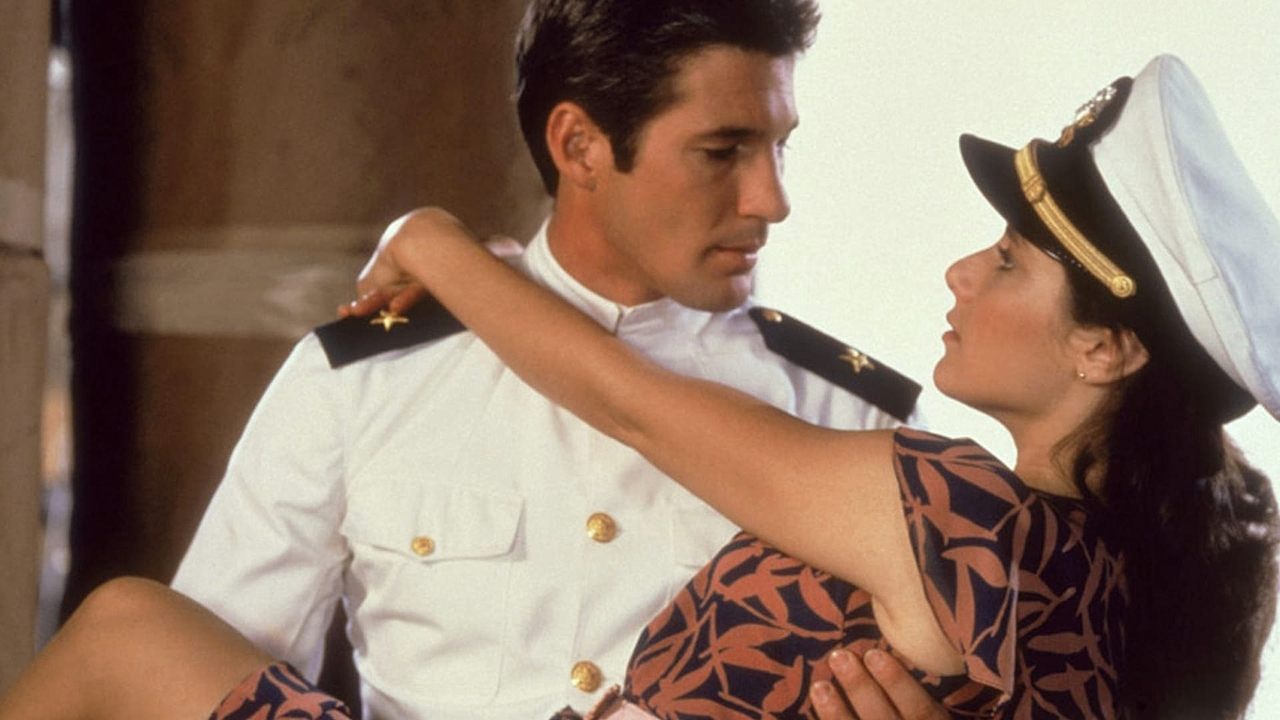
And yes, that ending. Mayo, now an Ensign, marching into Paula's factory in his dress whites, sweeping her off her feet, carrying her out as her co-workers applaud. Cheesy? Perhaps a little by today's cynical standards. But in 1982, viewed on a flickering CRT screen after two hours invested in these characters' struggles, it felt like a cathartic, hard-won victory. It wasn't just about the guy getting the girl; it was about Mayo finally becoming capable of giving and receiving love, of choosing connection over isolation. It's an image burned into the pop culture memory of the era.
Rating and Final Reflection
An Officer and a Gentleman holds up remarkably well, primarily due to the powerhouse performances and its willingness to embrace complexity within a familiar framework. It's tougher, sadder, and more resonant than just its iconic finale might suggest. The grit balances the gloss, and the emotional core feels authentic.
Rating: 8/10 - This score reflects the film's powerful acting, particularly Gossett Jr.'s unforgettable turn and Winger's raw vulnerability, its compelling blend of harsh realism and romantic sweep, and its enduring place as a defining drama of the early 80s. It earns its emotional highs through genuine character struggle, even if the ending tips into pure cinematic wish-fulfillment.
What lingers most, perhaps, isn't just the white uniform or the soaring song, but the memory of flawed people striving, sometimes failing, but ultimately reaching for something more – a theme that felt resonant back on that worn VHS tape, and still connects today. It’s a reminder that sometimes, the toughest battles are the ones fought within.