It often begins not with a clear image, but with a sound – the mournful cry of Uilleann pipes echoing across mist-covered highlands, a sound that instantly transports you. For anyone who encountered Braveheart back in the mid-90s, likely on that hefty double-VHS set that commanded a weekend’s viewing, that sound became synonymous with epic storytelling, raw emotion, and a scale that felt almost too big for the television screen. It wasn't just a movie; it felt like an event, a historical epic dropped into an era often dominated by slicker, faster-paced action.
Forging a Legend
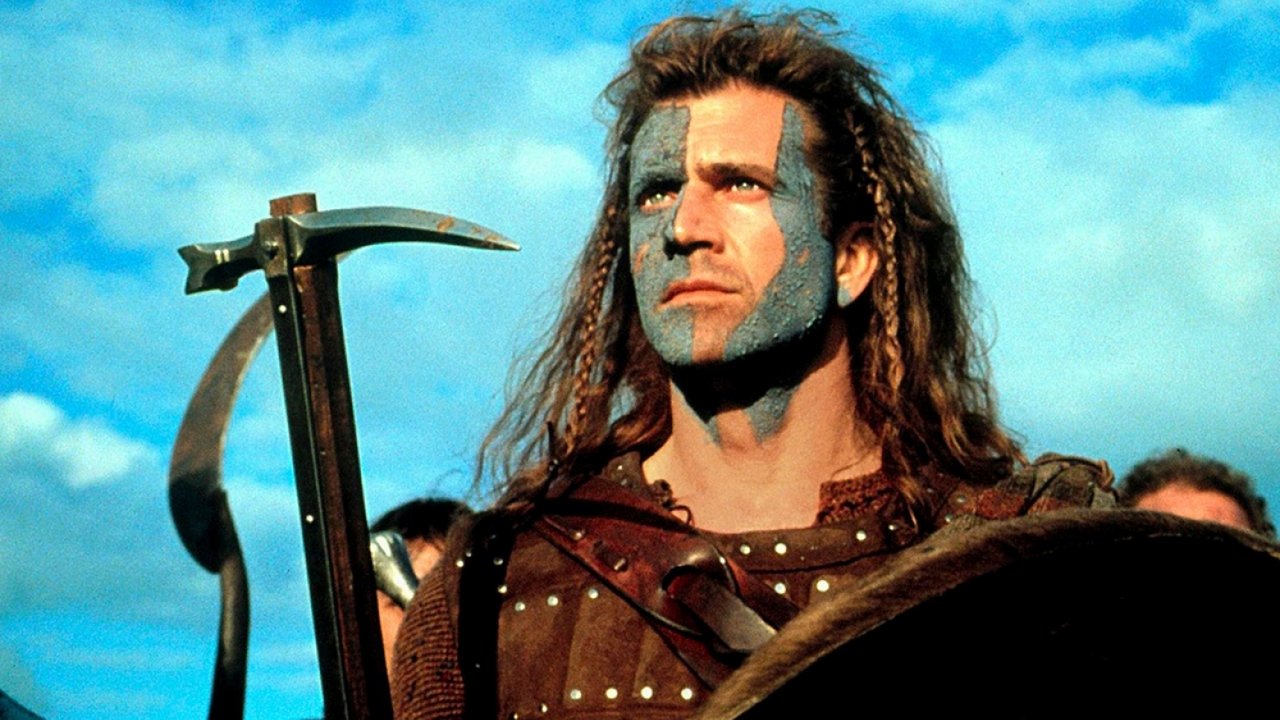
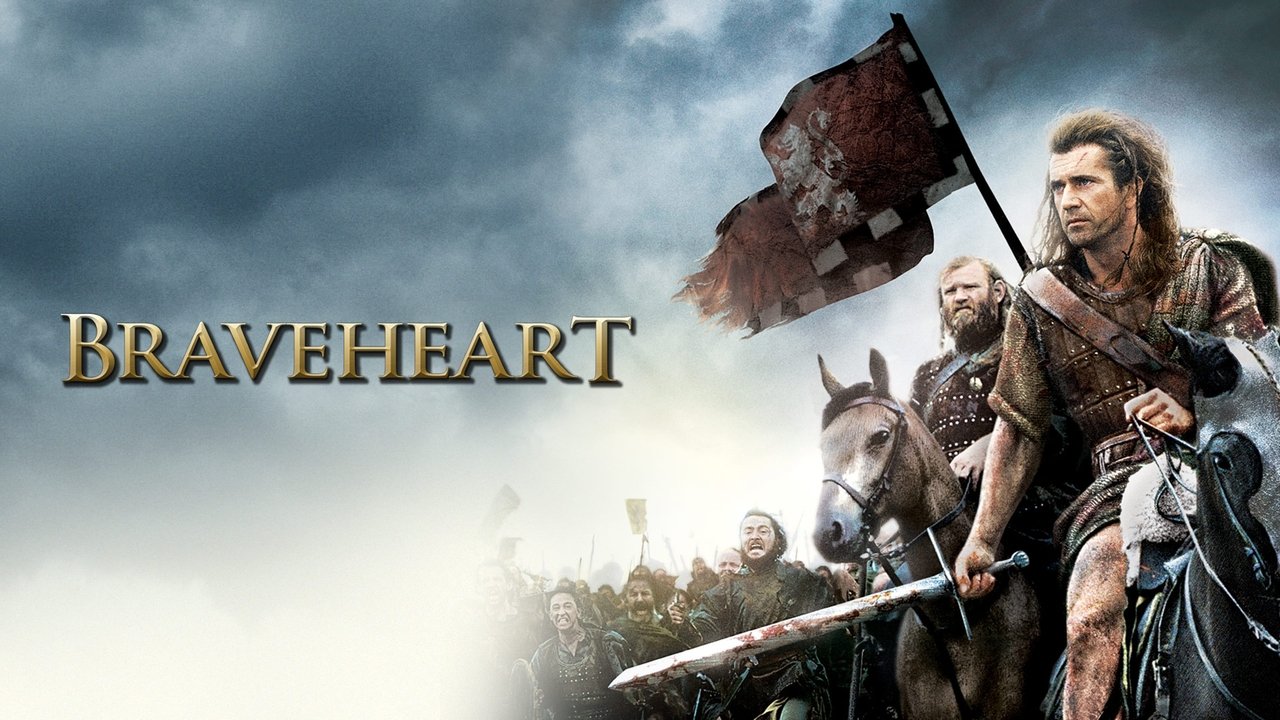
At its heart, Braveheart tells the story of William Wallace, a 13th-century Scottish commoner who rises to lead his people against the tyranny of England's King Edward I, known as "Longshanks." It’s a classic underdog tale writ large, fueled by personal tragedy and escalating into a nationwide struggle for freedom. Director and star Mel Gibson, already a global action icon thanks to Mad Max (1979) and the Lethal Weapon series, stepped behind the camera for only the second time (after 1993's The Man Without a Face) and delivered something far more ambitious than anyone might have expected. His direction here isn't subtle; it’s visceral, immersive, favouring sweeping shots of stunning landscapes (primarily Ireland standing in for Scotland, a common cost-saving and logistical choice for large productions then) juxtaposed with brutal, mud-and-blood-soaked battle sequences.
The Weight of the Crown and the Fury of the Commoner
Gibson’s portrayal of Wallace is central, of course. He brings a fierce charisma to the role, capturing both the righteous anger and the surprising tenderness of the man. It’s a performance fuelled by conviction, even if historical purists rightly point out numerous inaccuracies – the blue woad face paint, for instance, being more associated with ancient Celts centuries earlier. But Randall Wallace’s script, reportedly inspired by a trip to Scotland and seeing statues of Wallace and Robert the Bruce, was never aiming for dry historical fact. It sought the spirit of the legend, the emotional truth behind the fight for self-determination. And in that, Gibson’s Wallace resonates powerfully – a symbol more than a man.
Opposite him, Patrick McGoohan delivers a performance of chilling brilliance as King Edward "Longshanks." Known to many from the iconic 60s series The Prisoner, McGoohan embodies calculating cruelty and aristocratic disdain. His Longshanks is intelligent, ruthless, and utterly convinced of his divine right to rule. Every scene he’s in crackles with menace, providing the perfect counterpoint to Wallace’s impassioned rebellion. And Sophie Marceau, as Princess Isabelle, navigates a complex role, caught between loyalty to her arranged marriage and her growing sympathy, and perhaps more, for Wallace. She brings a quiet strength and intelligence that prevents the character from becoming a mere damsel.
Crafting the Chaos: Behind the Mud and Steel
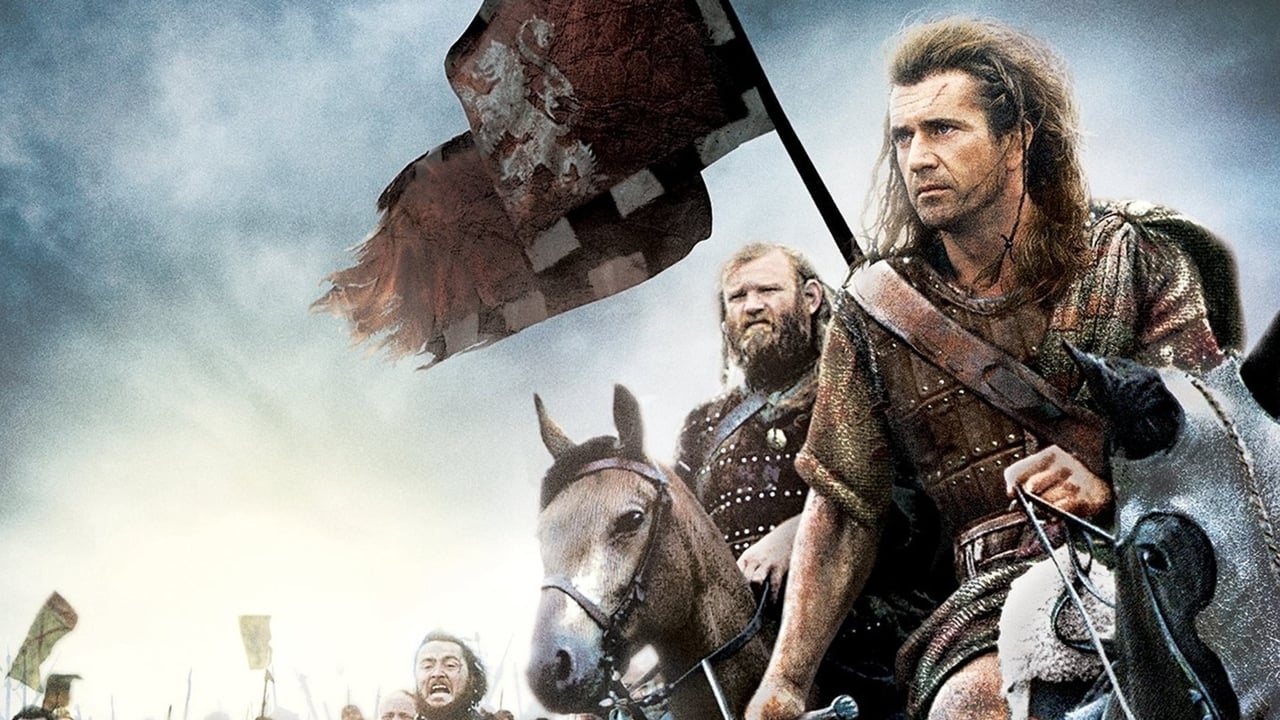
The film’s battle scenes remain staggering achievements of practical filmmaking. Stirling Bridge (famously depicted without the bridge) and Falkirk are brutal, chaotic, and utterly convincing. Gibson employed thousands of extras, many drawn from the Irish Army Reserve (the FCA), lending an incredible sense of scale that CGI struggles to replicate authentically even today. You feel the weight of the armour, the impact of the weaponry, the sheer exhaustion and terror of medieval combat. There were stories of elaborate choreography, specially designed (and sometimes dangerous) prosthetic weapons, and the logistical nightmare of coordinating such vast numbers of people and animals. It’s a testament to the filmmaking prowess of the era – ambitious, messy, and tangibly real. It's worth noting that the original cut was significantly longer, hinting at even more character depth and historical context that ended up on the cutting room floor to achieve its still-epic 3-hour runtime. Made for an estimated $65-72 million, its global haul of over $210 million, alongside its eventual haul of five Academy Awards including Best Picture and Best Director, cemented its place as a cinematic triumph.
More Than Just History
Yes, the historical liberties are significant. The timeline is compressed, relationships are invented (Wallace's affair with Isabelle is pure fiction), and motivations simplified for dramatic effect. Does acknowledging this diminish the film's power? For some, perhaps. But Braveheart operates more effectively as historical fiction, a mythic retelling tapping into universal themes: the yearning for freedom, the cost of betrayal, the power of sacrifice, and the enduring strength of the human spirit against overwhelming odds. Its influence was undeniable, arguably reigniting mainstream interest in the historical epic genre, paving the way for films like Gladiator (2000) just five years later.
Watching it again now, perhaps on a format far removed from that cherished VHS tape, what lingers? It's the raw emotion, the swell of James Horner's unforgettable, Oscar-nominated score, the fierce commitment of the performances, and that primal, stirring cry of "Freedom!" It captured something potent in the mid-90s, a desire for grand narratives and clear-cut heroism, even if viewed through a lens darkened by brutality and loss. It reminds us of a time when blockbusters could feel both massive in scope and deeply personal in their impact.
Rating: 8.5/10
Braveheart is undeniably flawed as a history lesson, but as a piece of sweeping, emotionally charged cinema, it remains a powerhouse. Gibson's ambitious direction, the committed performances (especially McGoohan's chilling Longshanks), the incredible practical scale of the battles, and Horner's iconic score combine to create an experience that, despite its historical fudging, feels profoundly resonant. It earned its place on the top shelf of the video store and in the annals of 90s epic filmmaking.