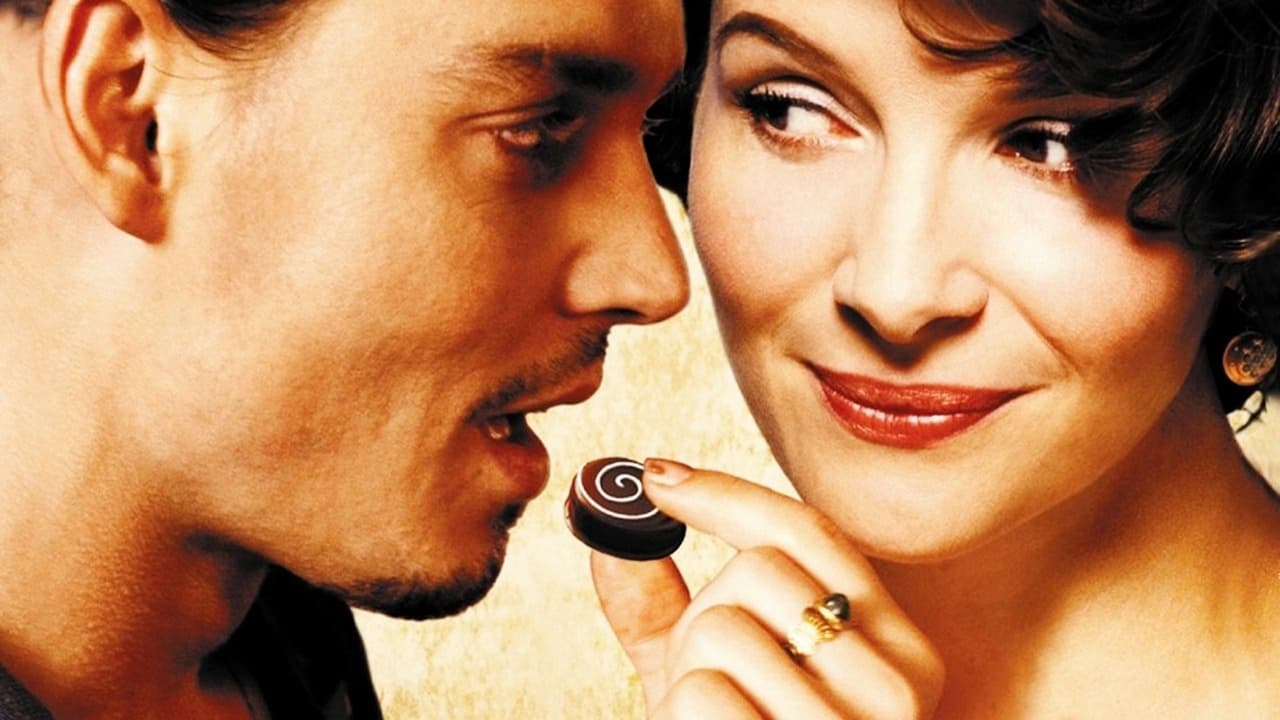
It arrives like a whisper on the wind, doesn't it? That feeling a film like Chocolat leaves behind. Not the sugary rush one might expect from the title, but something warmer, more lingering – like the scent of spiced cocoa clinging to the air long after the cup is empty. Released in 2000, right on the cusp of the DVD revolution, Chocolat nonetheless feels like a perfect resident of "VHS Heaven." It has that tangible quality, that comforting presence many of us sought on rental store shelves – a story promising escape, yes, but also a gentle nudge towards examining the heart. I remember finding the VHS box art, with Juliette Binoche's knowing glance, almost promising a secret, a delight hidden within the ordinary.
### The North Wind Blows Through Lansquenet
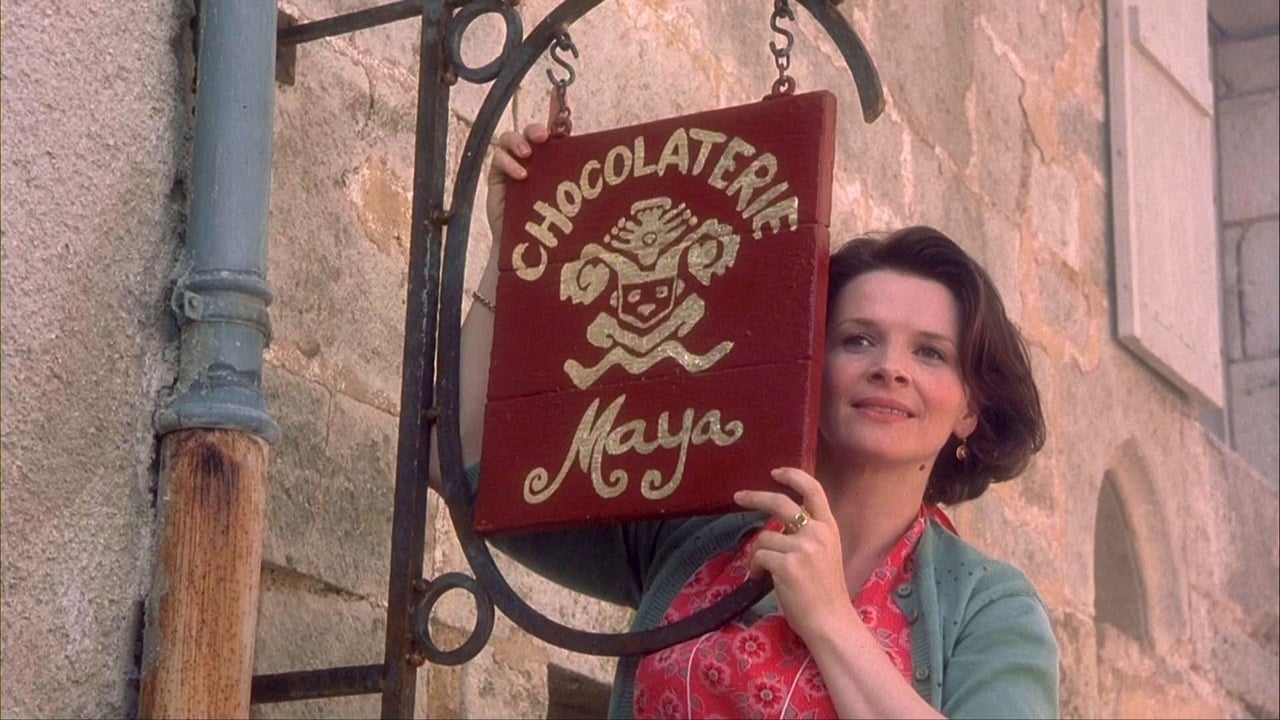
The setup is almost fairytale-like: Vianne Rocher (Juliette Binoche), guided by the restless North Wind, arrives with her daughter Anouk in the rigidly traditional, devoutly repressed French village of Lansquenet-sous-Tannes. Her timing couldn't be more provocative – opening a chocolaterie, a temple to sensual indulgence, right at the beginning of Lent. It's a premise ripe for conflict, pitting Vianne's quiet, almost mystical understanding of human desire against the iron will of the village's pious, self-appointed guardian, the Comte de Reynaud (Alfred Molina).
Director Lasse Hallström, who previously navigated delicate human emotions in films like My Life as a Dog (1985) and What's Eating Gilbert Grape (1993), brings a specific sensibility here. He understands the power of small gestures and unspoken feelings. The film doesn't shout its themes; it whispers them through lingering shots of melting chocolate, stolen glances, and the gradual blossoming of colour in a town initially painted in muted tones. Hallström allows the atmosphere to build, steeping us in the village's claustrophobia before Vianne introduces the liberating scent of possibility. Filming largely took place in the picturesque village of Flavigny-sur-Ozerain in Burgundy, lending an undeniable authenticity to the setting – you can almost feel the cobblestones underfoot.
### More Than Just Sweetness
What elevates Chocolat beyond a simple fable is its understanding of the characters' inner lives. Juliette Binoche is luminous as Vianne. She embodies a quiet strength, a warmth that isn't cloying but rather deeply perceptive. There's a fascinating detail that Binoche actually learned the craft of chocolate making for the role, and you can almost believe it in the way she handles the ingredients, the reverence she brings to her creations. It's less about confectionery and more about alchemy – transforming bitterness into something that can soothe and connect. Vianne isn't just selling chocolate; she's intuitively prescribing remedies for loneliness, fear, and unspoken desires.
Opposite her, Alfred Molina delivers a performance of remarkable complexity as the Comte. He could easily have been a caricature of religious hypocrisy, but Molina imbues him with a palpable sense of deeply buried pain and a desperate need for control born of his own rigid self-denial. His struggle isn't just against Vianne; it's against his own humanity, making his eventual (Spoiler Alert!) moment of surrender deeply affecting rather than merely triumphant for the 'other side'. It’s a nuanced portrayal of how piety can curdle into oppression when divorced from compassion.
And then there's Judi Dench as Armande, the fiercely independent, diabetic landowner who refuses to be infantilized by her estranged daughter (played by Carrie-Anne Moss, a world away from Trinity in The Matrix). Dench brings her signature blend of flinty wit and underlying vulnerability. Her scenes with Binoche crackle with mutual respect and a shared understanding of life lived on one's own terms. Her character arc is arguably the film's most poignant, a reminder that embracing joy, even fleetingly, is a victory in itself. Adding to the mix is Lena Olin as the abused wife Josephine, whose transformation is subtly powerful, and a brief but memorable appearance by Johnny Depp as Roux, the river-gypsy who offers Vianne a glimpse of kinship and romance.
### The Taste of Tolerance
Beneath the delectable surface, Chocolat poses thoughtful questions about tolerance, conformity, and the courage it takes to embrace pleasure in a world often suspicious of it. How does a community define itself? By its rigid rules or by its capacity for acceptance? Vianne’s shop becomes a focal point, a place where secrets are shared, connections are forged, and the stifling conformity of the village begins to crack. The film gently suggests that true piety isn't found in stern judgment, but in understanding and embracing the messy, complex beauty of human nature – desires and all.
The film wasn't without its detractors; some found it overly simplistic or perhaps a touch too quaint in its depiction of French village life. And yes, it leans into a certain magical realism that might not resonate with everyone. Yet, its enduring appeal lies in its fundamental warmth and optimism. It earned five Academy Award nominations, including Best Picture, Best Actress for Binoche, and Best Supporting Actress for Dench, signalling its connection with audiences and critics alike, even if it didn't take home any statues. It tapped into something universal – the yearning for connection, for acceptance, and perhaps, for that perfect piece of chocolate that understands exactly what you need. It went on to become a significant commercial success, grossing over $150 million worldwide against a $25 million budget, proving audiences were hungry for its particular blend of charm and substance.

Rating: 8/10
This score reflects the film's exceptional performances, particularly from Binoche, Molina, and Dench, its beautifully realized atmosphere, and its gentle yet resonant exploration of tolerance and joy. While perhaps a touch idealized, its warmth and craftsmanship are undeniable. Lasse Hallström directs with a confident, empathetic hand, and Rachel Portman's score perfectly complements the mood. It doesn’t strive for gritty realism, but as a modern fable served with warmth and skill, it succeeds beautifully.
Chocolat remains a comforting watch, a reminder that sometimes, the sweetest revolutions begin with the smallest acts of kindness and defiance. What lingers most is not just the memory of decadent treats, but the quiet power of embracing life in all its complex flavors.