Okay, settle in and adjust the tracking on this one. We're taking a slight detour from the usual neon glow of the 80s and flannel comfort of the 90s, but trust me, this tape belongs in the "VHS Heaven" vault. We're looking at Fail Safe, the year 2000 version – a stark, black-and-white throwback that landed on shelves (and live TV screens) like a transmission from another dimension, deliberately echoing a dread many thought we'd left behind. It wasn't just a movie; it was an event, a ghost of television's past resurrected for the dawn of a new millennium.
### A Cold Echo in a New Century
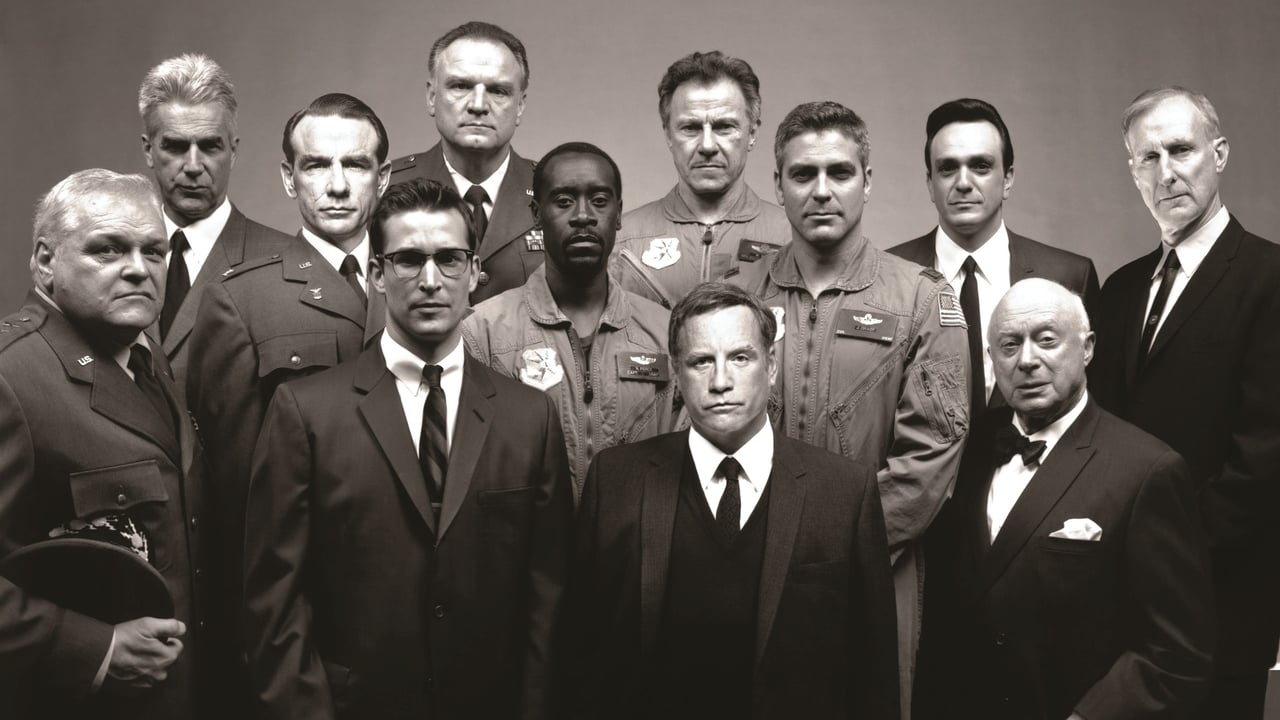
Remember the sheer audacity of it? In an era rapidly embracing digital flash and CGI spectacle, here comes George Clooney, not just starring but executive producing, championing a live, black-and-white broadcast of a chilling 1964 Cold War story. Based on the novel by Eugene Burdick and Harvey Wheeler (and the subsequent Sidney Lumet film), the premise remains terrifyingly simple: a technical glitch sends American bombers hurtling towards Moscow, armed with nuclear weapons, past the point of recall – the fail-safe point. What unfolds is a desperate, real-time scramble in claustrophobic rooms – the Pentagon war room, the President's bunker, the cockpit of a doomed plane – as leaders grapple with an unthinkable, self-inflicted apocalypse.
The decision to broadcast live wasn't just a gimmick; it was central to the film's power. Directed by the versatile Stephen Frears (known for everything from Dangerous Liaisons (1988) to High Fidelity (2000)), the production was a high-wire act reminiscent of television's "Golden Age," like Playhouse 90 sprung back to life. They actually performed the entire film live twice in one night – once for the East Coast and again for the West Coast feed. Imagine the pressure: actors hitting precise marks for multiple cameras, delivering intense monologues without a safety net, the knowledge that any slip-up would be broadcast instantly to millions. Reportedly, actor George Clooney helped finance the insurance policy needed for such a risky live venture out of his own pocket when the network balked. It was a passion project fueled by a belief in the story's enduring power.
### Pressure Cooker Performances
And that pressure forged some remarkable performances. Clooney, as the unnamed President, carries the crushing weight of the world with a palpable stillness. He channels the impossible burden of command, the agony of decisions where every option is catastrophic. It’s a performance defined by restraint, a man visibly shrinking under an unimaginable strain. It’s a fascinating contrast to Henry Fonda’s equally powerful, but different, portrayal in the 1964 original.
Surrounding him is a stellar ensemble cast, seemingly energized by the live format. Richard Dreyfuss, stepping into the Walter Matthau role of Professor Groteschele (though here, less cynical and more coldly pragmatic), offers chilling strategic calculations devoid of empathy. A young Noah Wyle brings desperate humanity to Buck, the pilot receiving unthinkable orders. Veterans like Harvey Keitel as the duty-bound General Black, Brian Dennehy as the conflicted General Bogan, and Don Cheadle and Hank Azaria in key supporting roles all contribute to the suffocating tension. There's an immediacy here, a sense that these actors aren't just reciting lines but living the crisis in that moment. Minor flubs reportedly occurred – a bumped camera, a slightly early or late line – but Frears' tight direction kept the ship steady, turning potential mistakes into part of the raw, live energy.
### Monochrome Dread and Dated Dangers?
The choice of black and white wasn't merely stylistic nostalgia. It strips the situation down to its terrifying essentials. Frears and cinematographer John A. Alonzo (who shot classics like Chinatown (1974)!) use stark lighting and tight framing within deliberately confined sets to emphasize the claustrophobia and the gravity of the unfolding nightmare. There are no visual distractions, just the faces of people making impossible choices and the relentless tick of the clock. The hum of antiquated computers and the crackle of radio transmissions become the soundtrack to potential oblivion.
Does the threat feel dated now, decades after the Cold War's official end? Watching it in 2000, just before the world changed again on 9/11, it felt like a potent reminder of how close we came, and perhaps a warning against technological hubris. Watching it today, the core message about miscalculation, the failure of communication under pressure, and the devastating consequences of systems designed to be infallible still resonates. The specific technology might seem quaint (no cyber warfare here, just faulty transistors and radio codes), but the human element – the fear, the responsibility, the potential for error – remains timeless. What does it say about us that the mechanics of potential self-destruction change, but the underlying human vulnerabilities persist?
### A Bold Broadcast Experiment
Fail Safe (2000) stands as a unique artifact. It wasn't trying to reinvent the wheel technologically; it was deliberately looking backward, using the constraints of live television to amplify dramatic tension in a way that slicker, pre-recorded productions often struggle to achieve. It was a gamble that paid off, creating a taut, gripping, and deeply unsettling piece of television drama that felt both archaic and urgent. Finding this on VHS or DVD felt like uncovering a rare piece of broadcast history.
It’s a film that doesn’t offer easy answers or comfortable resolutions. It confronts the audience with the stark reality of mutually assured destruction and the terrifying fragility of the systems meant to prevent it.
Rating: 8/10
This score reflects the sheer boldness of the live production concept, the uniformly strong performances delivered under immense pressure, and the effective generation of suspense using minimalist techniques. While perhaps not possessing the raw, groundbreaking impact of Lumet's 1964 original, this Fail Safe succeeds powerfully on its own terms as a unique television event and a potent reminder of existential threats. It earns its place not just for the quality of the drama, but for the sheer, admirable nerve it took to even attempt it in the year 2000.
What lingers most is the chilling silence after the final, devastating decision. A silence that reminds us how fragile peace truly is, regardless of the decade.