Here we go, another dive into the stacks of memory, pulling out a tape that promised intensity and perhaps, a certain kind of primal wisdom. It’s 1999’s Instinct, a film that arrived carrying the significant weight of Anthony Hopkins, still resonating powerfully from his iconic turn as Hannibal Lecter earlier in the decade, paired with the infectious energy of Cuba Gooding Jr., fresh off his Oscar win for Jerry Maguire (1996). The premise alone felt potent: a brilliant anthropologist gone feral, a driven young psychiatrist aiming to unlock his secrets. What unfolds is less a straightforward thriller and more a philosophical wrestling match, one that leaves you pondering long after the VCR whirs to a stop.
### The Cage and the Wild
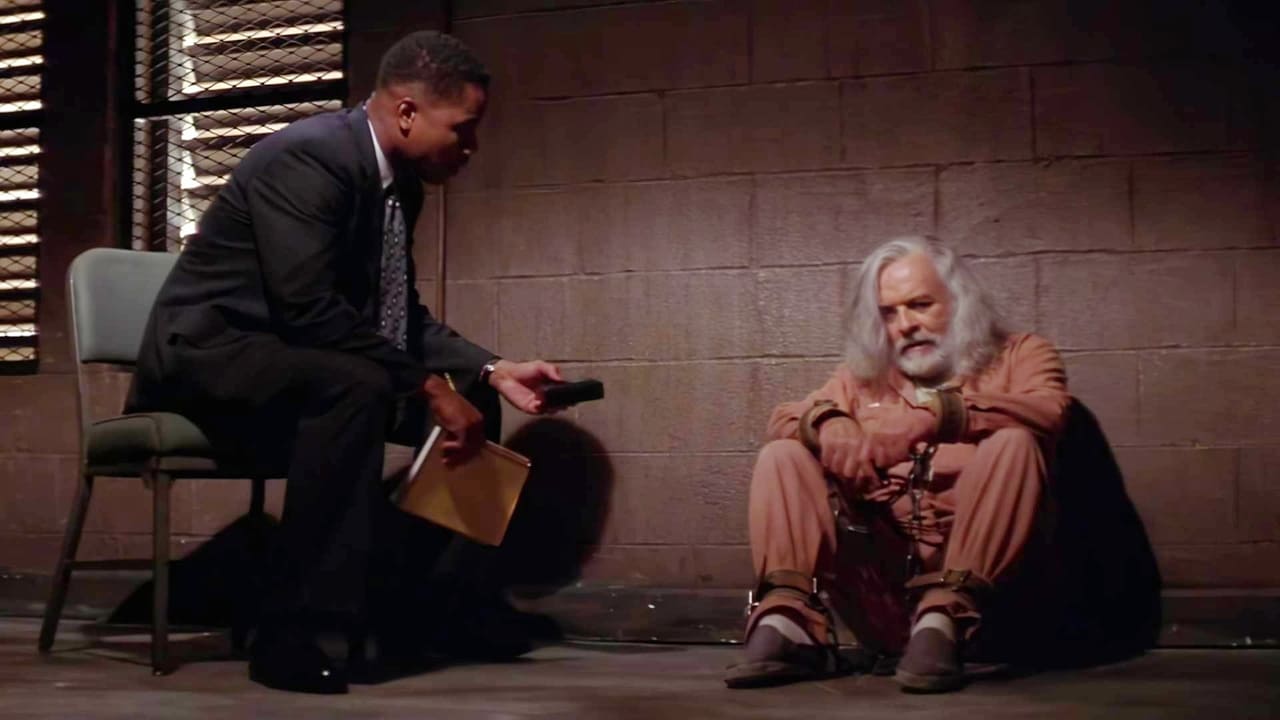
The film drops us into the stark confines of Harmony Bay, a brutalist fortress of a maximum-security prison housing the disturbed. Here resides Dr. Ethan Powell (Anthony Hopkins), a primatologist who vanished into the Rwandan jungles years ago, only to resurface charged with the murder of several park rangers. He’s largely silent, seemingly lost to the world, observing his human captors with the detached intensity of, well, an ape studying a curious new species. Enter Dr. Theo Caulder (Cuba Gooding Jr.), ambitious, maybe a little arrogant, seeing Powell not just as a patient but as a career-making case study. His goal: break through Powell’s silence, understand why he killed, and perhaps, write the book that will make his name.
What Caulder discovers, and what the film slowly reveals through fragmented, often beautiful flashbacks to Powell's time living amongst gorillas, is a man profoundly changed by his immersion in the natural world. He hasn't just studied gorillas; he's become part of their family, finding a belonging and truth he felt missing from human society. The central tension isn't just about solving a crime; it's about the collision of two worldviews – the structured, often soul-crushing 'control' of civilization versus the raw, immediate 'freedom' of the wild.
### Hopkins Unleashed, Gooding Jr. Tested
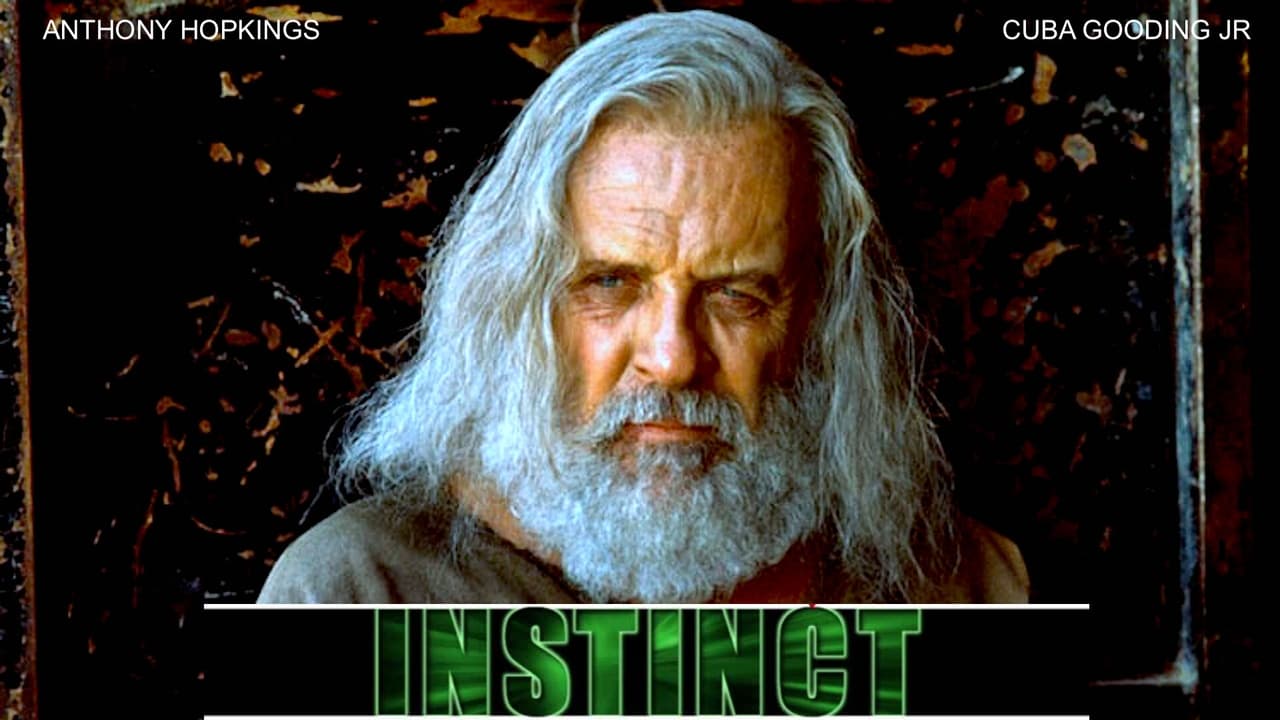
Let's be frank: Anthony Hopkins is the gravitational center of Instinct. It’s fascinating to see him tackle another role involving intense intellect confined by prison bars, yet Powell is worlds away from Lecter. Where Lecter was coiled predatory menace, Powell possesses a wounded, almost spiritual gravity. Hopkins conveys volumes with a glance, a subtle shift in posture. He embodies a man who has shed the artifice of modern life, and his quiet pronouncements about humanity’s self-imposed cages carry genuine weight. There's a quiet power in his stillness that contrasts sharply with the more overt methods of his infamous alter ego. It's said Hopkins spent time studying gorilla behavior, and that observational quality permeates his performance, making Powell feel unnervingly authentic in his disconnect from human norms.
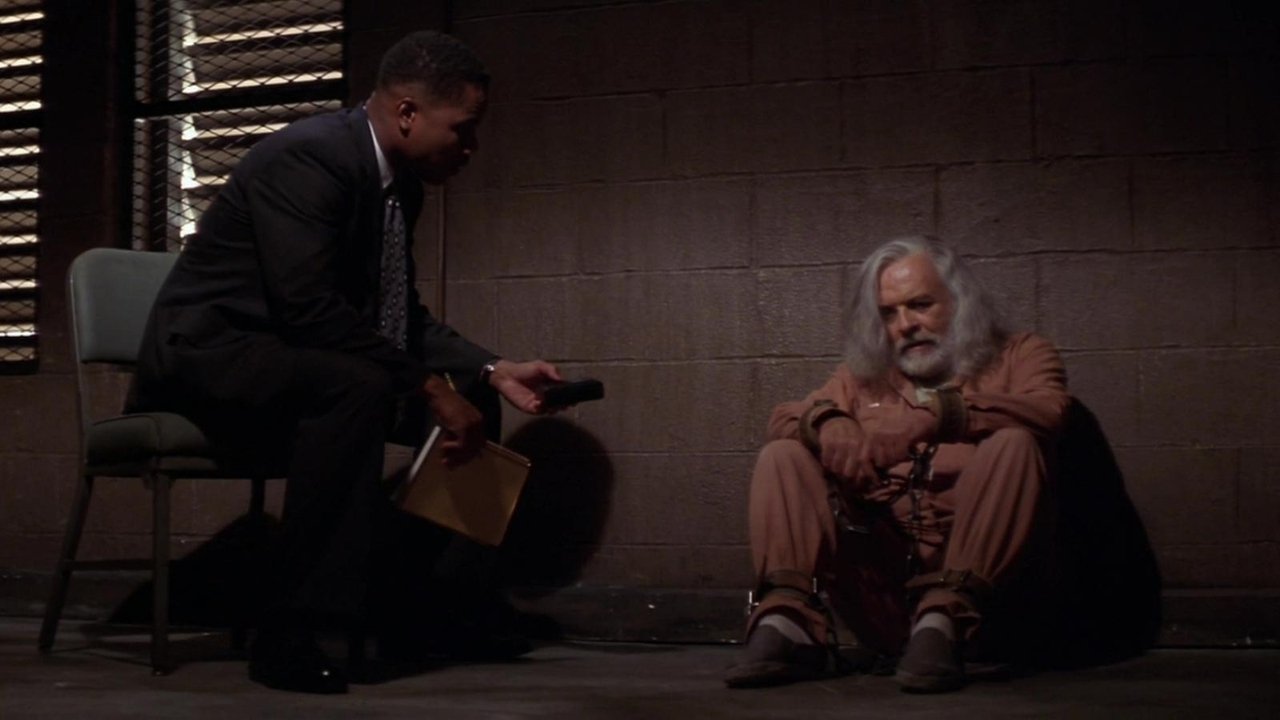
Cuba Gooding Jr. faces the challenging task of being the audience's surrogate, the 'civilized' man confronting Powell's unsettling philosophy. Caulder starts as perhaps overly confident, driven by ego, but Gooding Jr. effectively portrays his gradual humbling. As Powell dismantles Caulder's assumptions about control, freedom, and family, we see the psychiatrist's carefully constructed world begin to crack. Their dialogues are the heart of the film, a Socratic back-and-forth where the supposed 'madman' often speaks more profound truths than the doctor. While Gooding Jr. sometimes struggles against the script's more on-the-nose moments, his emotional journey feels earned.
### Echoes of Ishmael, Shadows of Production
It’s impossible to discuss Instinct without acknowledging its source material, Daniel Quinn’s philosophical novel Ishmael. The book is a dense, allegorical dialogue exploring humanity's relationship with the planet. The film, directed by Jon Turteltaub – a filmmaker more readily associated with lighter fare like Cool Runnings (1993) and While You Were Sleeping (1995), and later the National Treasure series – inevitably streamlines Quinn's complex ideas into a more conventional Hollywood narrative structure. Some might argue, perhaps fairly, that it simplifies the novel's message into easily digestible themes about 'takers' (civilized humans) and 'leavers' (those living in harmony with nature).
This simplification might also explain the film's somewhat muted reception. Made on a fairly hefty budget for the time (around $80 million), Instinct struggled to find its audience, grossing only about $34 million domestically. Perhaps audiences lured by Hopkins expected another thriller, not a philosophical drama wrapped in prison walls and jungle flashbacks (parts of which were reportedly filmed in Jamaica). The marketing, leaning on taglines like "What happened out there was not murder. It was instinct," hinted at something more primal and action-oriented than the contemplative film delivered. It landed with critics with a bit of a thud, often criticized for being heavy-handed or predictable.
Yet, watching it now, removed from the immediate box office pressures, there's a certain sincerity that shines through. Turteltaub handles the dramatic scenes with a steady hand, and the visuals contrasting the cold blues and grays of the prison with the lush greens of the jungle flashbacks are effective. Small roles are filled effectively too, with Donald Sutherland bringing his customary gravitas as Caulder’s mentor, and Maura Tierney lending poignant support as Powell's estranged daughter, representing the human connections he abandoned and must potentially reclaim.
### Does It Hold Up?
Instinct isn't a perfect film. Its message can feel overtly stated at times, and the plot mechanics required to move the story forward occasionally strain credulity. The ending, in particular, leans towards conventional resolution perhaps more than the challenging themes might warrant. But what lingers is the core philosophical conflict and, crucially, Hopkins' magnetic performance. He makes you believe in Powell's transformation, forcing you to question our own societal structures and what we sacrifice in the name of 'order'.
Does the film truly capture the depth of Ishmael? Likely not. Does it offer a compelling character study anchored by a masterful actor? Absolutely. For those of us who remember grabbing this off the shelf at Blockbuster, perhaps intrigued by the cover art showing Hopkins peering intensely through bars, it offered something different – a studio drama daring to ask uncomfortable questions about humanity's place in the world. It wasn't the pulse-pounding thriller some expected, but its quiet intensity and central performance leave a mark.
Rating: 6/10
The score reflects a film with noble intentions and a powerhouse central performance, hampered somewhat by a script that occasionally opts for easier answers over deeper exploration and struggles to fully translate its complex source material. It’s a solid, thought-provoking drama from the late 90s, anchored by Hopkins doing what he does best – commanding the screen.
Final Thought: Instinct leaves you chewing on its central question: Is true freedom found in the 'wild' heart, or have we built cages around ourselves we no longer even see? A question perhaps even more relevant today than it was on its release.