Okay, let's dim the lights, settle into that familiar armchair feeling, and talk about a film that arrived just as the VHS era was truly fading, yet feels like the kind of strange, singular discovery you might have unearthed from the dusty back shelves of a particularly adventurous video store. I'm talking about Roy Andersson's Songs from the Second Floor (2000), a film that doesn't just invite viewing, but demands contemplation. It arrived like a cryptic postcard from a deeply unsettling, yet somehow recognizable, parallel world.
### The Stillness Before the Absurdity
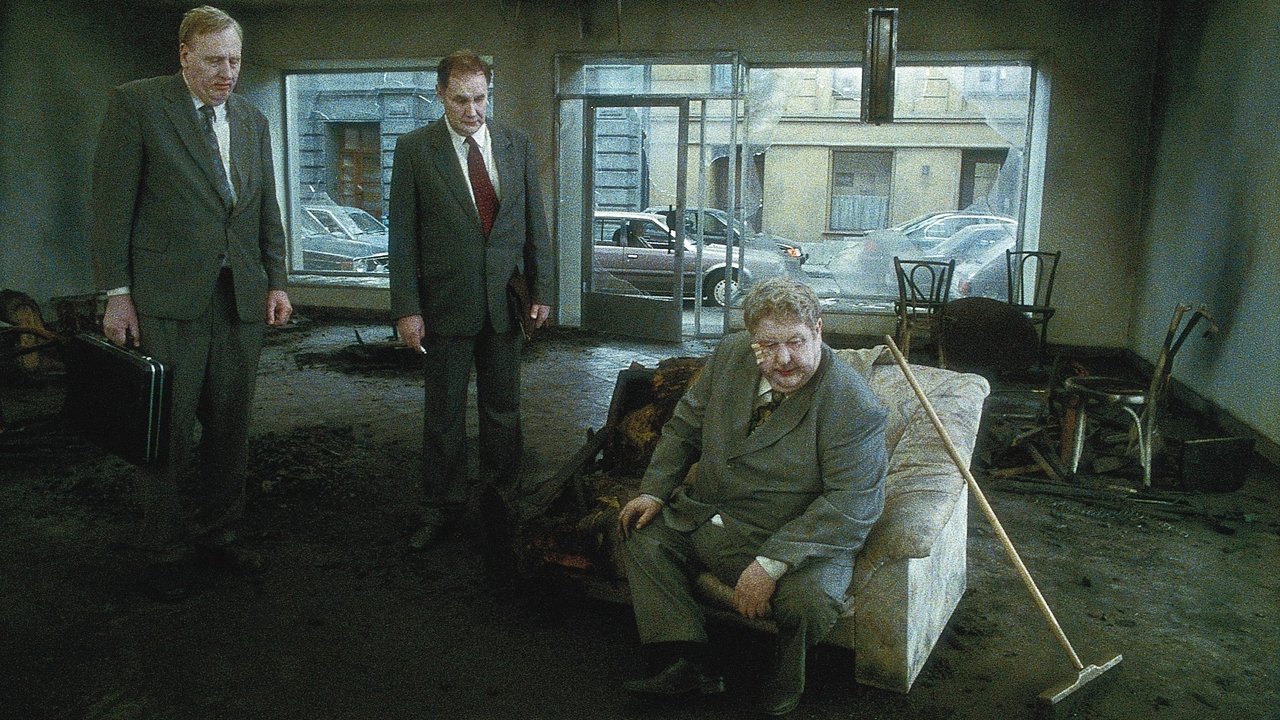
What first strikes you about Songs from the Second Floor isn't a propulsive plot or charismatic hero, but its almost unnerving stillness. Andersson, who also penned the script, crafts a series of meticulously composed vignettes, each a long take presented with a static camera, like paintings brought to life – or perhaps, more accurately, paintings capturing life grinding to a halt. We drift through a city gripped by an unnamed paralysis: traffic jams stretch to infinity, businesses are failing spectacularly, and despair hangs heavier than the perpetual grey skies. It’s less a narrative and more a mosaic of modern anxieties, rendered with a visual precision that's both beautiful and deeply chilling. Remember how some films just felt different, even on a fuzzy CRT? This film achieves that through sheer force of its unique vision.
### Faces in the Crowd, Lost in the Fog
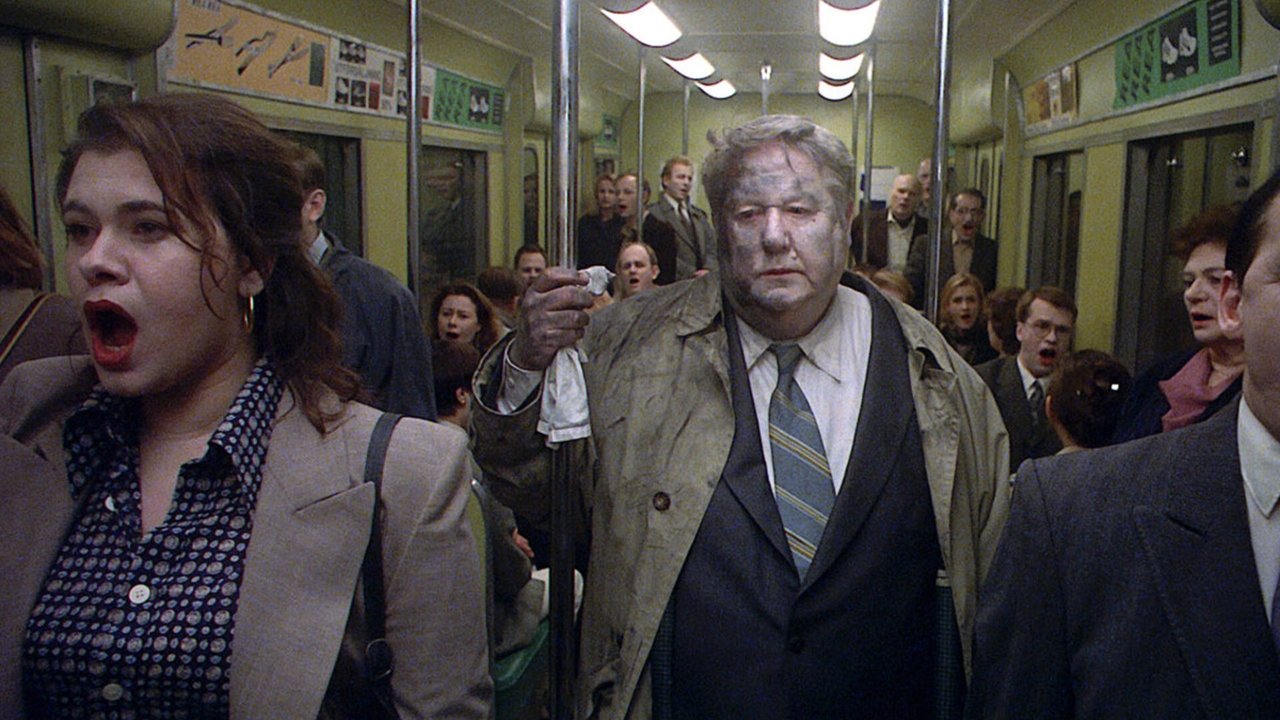
The characters – if you can call these spectral figures characters in the traditional sense – drift through these scenes like ghosts haunting their own lives. We follow Kalle (Lars Nordh), a man who has just torched his own furniture business for the insurance money, his face a mask of weary desperation. We encounter bureaucrats clinging to meaningless rituals, magicians whose tricks go horribly wrong, and ordinary people seemingly crushed by the sheer weight of existence. The performances are key here; Andersson often uses non-professional actors, directing them towards a kind of muted, almost deadpan delivery. It’s a choice that could feel alienating, but instead, it amplifies the film's central theme: the profound disconnect and quiet desperation simmering beneath the surface of contemporary life. There's an unsettling truthfulness in their vacant stares and hesitant movements – don’t we sometimes see that same numbness in the world around us, or even fleetingly in the mirror?
### The Architecture of Anxiety
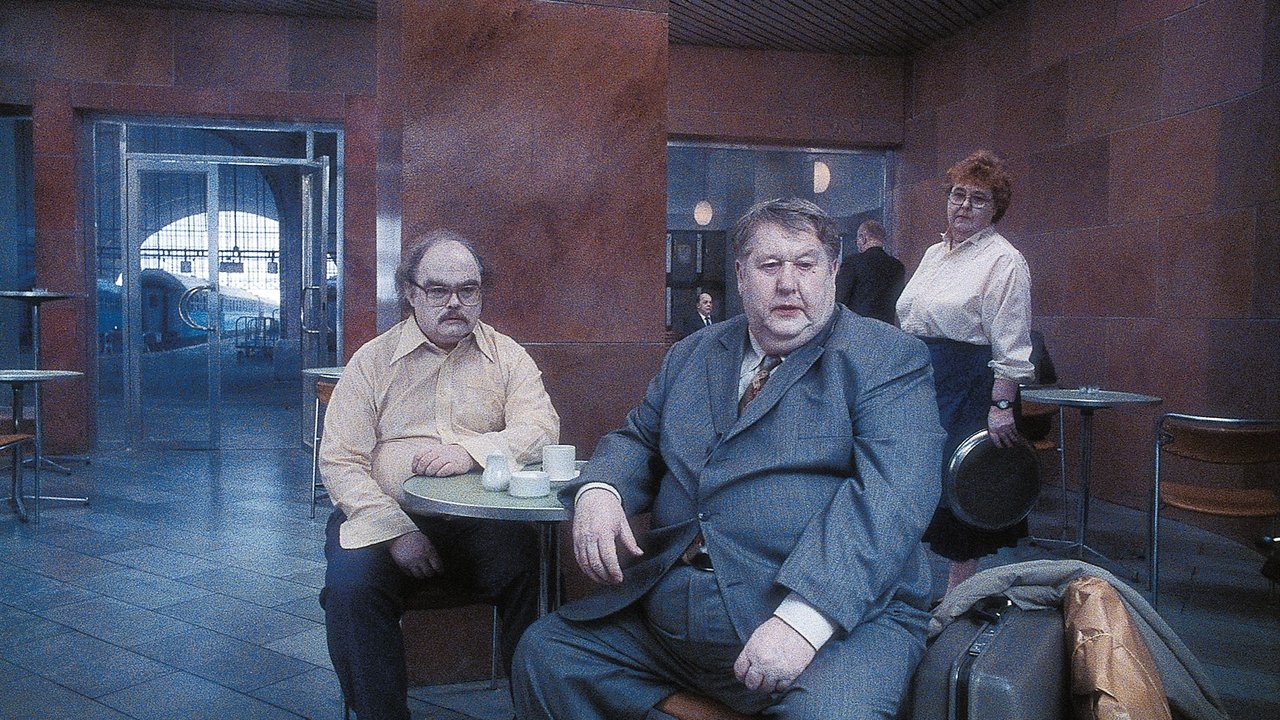
The meticulous production design is inseparable from the film's impact. Each scene unfolds in carefully constructed sets, often employing forced perspective to create a sense of distorted reality. Andersson reportedly spent years crafting these visuals, and it shows. The color palette is deliberately washed out – dominated by greys, beiges, and sickly greens – contributing to the overwhelming atmosphere of stagnation and decay. It's a world meticulously drained of vibrancy, reflecting the spiritual malaise of its inhabitants. This wasn't CGI trickery; this was painstaking, almost obsessive, physical craft, reminiscent of the kind of practical ingenuity we often celebrate from the 80s, but pushed towards a different, more unsettling aesthetic goal. It’s said that Andersson took nearly four years to complete the film, shooting only a few minutes of usable footage per week due to his exacting standards for these tableaus. This dedication permeates every frame.

### Echoes of Meaning (and Maybe a Flagellant)
Is there humor here? Yes, but it’s the driest, darkest kind imaginable – absurdity born from despair. A scene involving a board meeting where executives consult a crystal ball, or the sudden appearance of historical figures like flagellants marching through modern streets, offers moments of surreal levity that only highlight the surrounding gloom. The film doesn't offer easy answers or clear resolutions. Instead, it poses questions – about faith, capitalism, human connection (or lack thereof), and our collective complicity in the absurdities we create. It asks us to look closely at the rituals and routines that define our lives and question what meaning, if any, they truly hold. What lingers after the credits roll isn't a catchy tune, but the echo of these questions, the haunting quality of those static, perfectly composed images of human fragility.
Songs from the Second Floor was the first part of Andersson's "Living Trilogy," followed by You, the Living (2007) and A Pigeon Sat on a Branch Reflecting on Existence (2014), further exploring these themes with his signature style. It won the Jury Prize at the 2000 Cannes Film Festival, signaling its arrival as a significant, albeit challenging, piece of cinema.
### Final Reflection
This isn't a comfort watch. It’s not the film you put on for a lighthearted Friday night. Songs from the Second Floor is demanding, bleak, and deliberately paced. Yet, its unique artistic vision, its strangely resonant portrait of societal anxiety, and its sheer cinematic craft make it unforgettable. It feels like a dispatch from the edge, a film that captures a very specific, turn-of-the-millennium dread that still feels relevant today. It might not have been a blockbuster VHS rental, but finding it felt like uncovering a rare, potent piece of art cinema – the kind that sticks with you long after the screen goes dark.
Rating: 8/10 - This score reflects the film's undeniable artistic achievement, its unique and powerful vision, and its haunting resonance. It’s a challenging, unconventional masterpiece, meticulously crafted and deeply thought-provoking. The deduction acknowledges its deliberately alienating style and bleakness, which make it a difficult, though rewarding, experience not suited for all tastes or moods.
It leaves you wondering: In our own lives, how often are we merely performing songs from the second floor, unaware or unwilling to see the bigger picture unfolding around us?