Alright, fellow tapeheads, gather 'round the flickering glow of the CRT. Tonight, we're digging deep into the legendary stacks of VHS oddities, past the worn copies of Terminator and Ghostbusters, to pull out a truly baffling, glitter-drenched artifact from the dawn of the 80s: Menahem Golan's infamous musical sci-fi rock opera, The Apple (1980). If you ever stumbled across this gem at the rental store, perhaps lured by its vaguely futuristic cover art, you know you're in for something... unforgettable.

Future Shock Disco
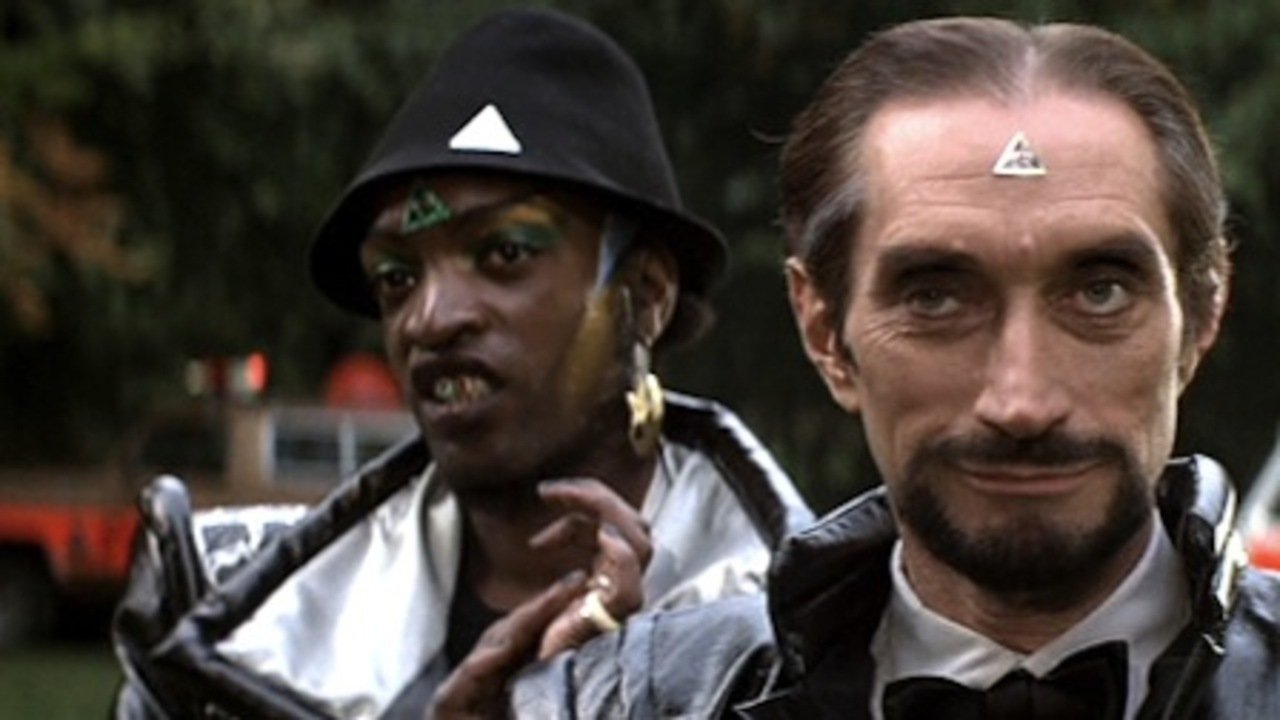
Forget gritty cyberpunk; The Apple presents a vision of 1994 filtered through late-70s disco fever, Plato's Republic, and maybe a few too many quaaludes. The premise itself is wonderfully bonkers: in a totalitarian future ruled by the monopolistic music corporation BIM (Boogalow International Music), presided over by the devilishly smooth Mr. Boogalow (Vladek Sheybal, radiating pure Euro-villain charm), conformity is enforced through catchy, vapid pop songs. Our heroes are Alphie (George Gilmour) and Bibi (Catherine Mary Stewart, in one of her earliest roles before becoming a genre queen in Night of the Comet and The Last Starfighter), two genuinely talented folk singers from Moose Jaw, Canada (yes, really!), who arrive wide-eyed at the Worldvision Song Festival.
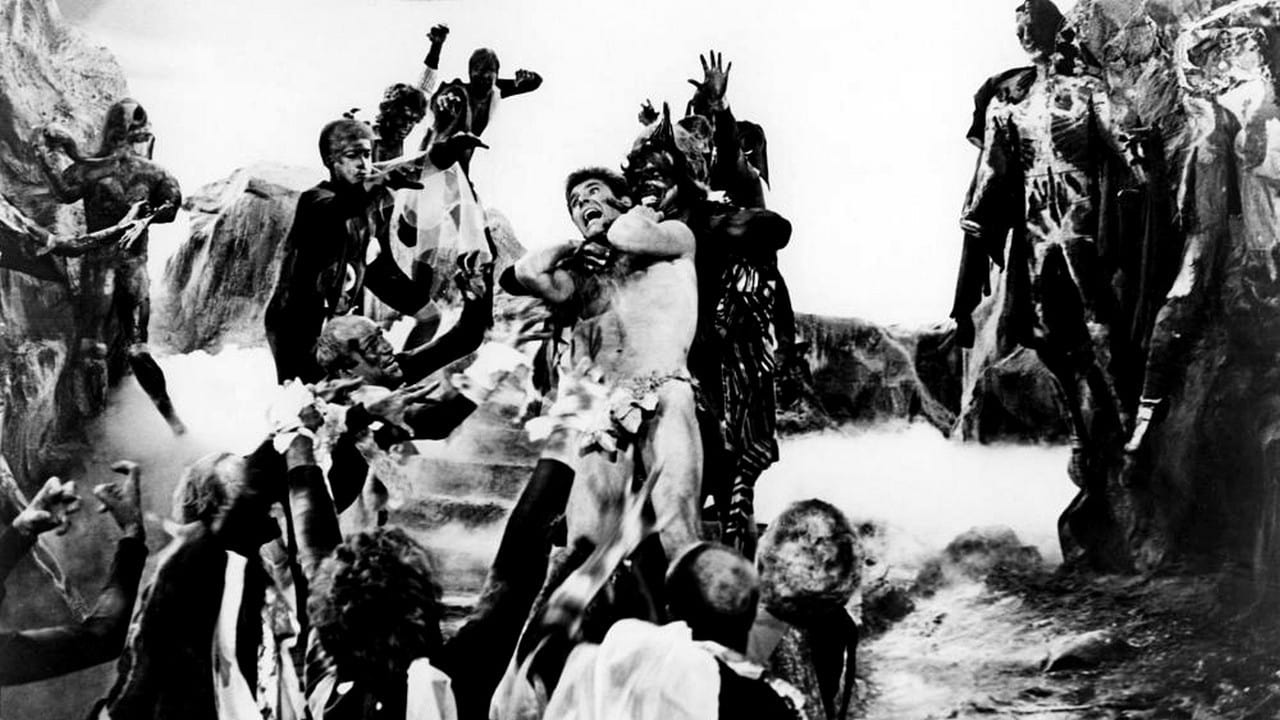
Their heartfelt ballad is promptly crushed by the BIM machine and its flamboyant star, Dandi (Allan Love), performing the brain-numbing earworm "BIM." Seduced by fame and the allure of Mr. Boogalow's world, Bibi signs a contract, leaving Alphie to navigate this oppressive musical dystopia alone. What follows is a truly unique cinematic experience, a blend of biblical allegory (Alphie and Bibi are Adam and Eve, Boogalow is the Serpent, the BIM logo sticker is the titular "Apple"), high-camp musical numbers, and production design that screams "we spent some money, but maybe not wisely."
Glitter, Spandex, and Sheer Audacity
Let's be honest: the reason The Apple endures in cult circles isn't its narrative coherence or sophisticated themes. It's the sheer, unadulterated weirdness delivered with baffling sincerity. Directed by Menahem Golan, one half of the legendary Cannon Group (known more for churning out action flicks like Death Wish sequels and Missing in Action than lavish musicals), the film feels like a passion project that went spectacularly off the rails. Retro Fun Fact: The film was famously booed and jeered at its 1980 Cannes Film Festival premiere, with audience members reportedly throwing the free promotional vinyl LPs of the soundtrack back at the screen! That alone tells you something about its initial reception.
The musical numbers are a trip. From the aforementioned "BIM" (a genuinely catchy slice of sinister disco-pop) to the vampiric "Coming For You" led by the formidable Pandi (Grace Kennedy) and the utterly bizarre "Speed" sequence that feels like a fever dream workout video, the film commits fully to its musical vision. The choreography is energetic, if often nonsensical, and the costumes... oh, the costumes. Think silver Lurex, skin-tight spandex, metallic codpieces, and enough glitter to supply a small nation's craft stores. It's a visual assault, perfectly encapsulating that awkward transition period between late disco and early 80s aesthetics.


Finding the Charm in the Chaos
Watching The Apple today is an exercise in appreciating cinematic ambition colliding head-on with questionable execution. Catherine Mary Stewart brings a genuine sweetness and vulnerability to Bibi, making her journey somewhat relatable amidst the absurdity. Vladek Sheybal clearly relishes his role as the satanic record producer, delivering lines with a silky menace. The film was largely shot in West Berlin, and some sequences make interesting use of the modernist architecture, trying to conjure a future out of concrete and glass.
Yet, the film’s earnestness is perhaps its most endearing quality. Golan and his co-writers (Coby Recht and Iris Recht) clearly believed in this story, this message about artistic integrity versus corporate control, even if the delivery system was a glitter bomb of questionable taste. Another Retro Fun Fact: Golan reportedly saw the film as a serious piece of art, a cautionary tale wrapped in music, genuinely shocked by the hostile critical reaction. It’s this lack of irony, this full-throated commitment to its own peculiar vision, that elevates The Apple from merely "bad" to something fascinatingly unique. It didn't find its audience in 1980 (it was a notorious box office bomb), but decades later, on fuzzy VHS tapes passed among cult film aficionados, it found its tribe.
Final Verdict
The Apple is not a "good" movie in the conventional sense. The plot is thin, the dialogue often clunky, and the overall effect is frequently baffling. But is it entertaining? Absolutely. It’s a glorious, magnificent, baffling train wreck you simply cannot look away from. It’s a time capsule of a very specific, strange moment in pop culture, executed with a level of misguided passion that is almost admirable.
Rating: 4/10 (Objectively, it's a mess... but as a cult artifact and a source of pure, unadulterated "What did I just watch?!" entertainment, it’s closer to an 8/10 experience. Let's split the difference.)
Final Take: Pop this tape in late at night, maybe after a few drinks, and surrender to the madness. The Apple is a testament to a time when studios would occasionally throw money at utterly bizarre ideas – a gloriously strange slice of VHS heaven (or perhaps hell?) that reminds us sometimes the most memorable films are the ones that dared to be spectacularly weird. They definitely don't make 'em like this anymore.