It wasn’t born in the flickering shadows of a grindhouse theater or the sticky-floored grandeur of a multiplex opening night. No, this particular chill crept into suburban living rooms, often under the seemingly benign banner of daytime television. Yet, the dread it instilled felt anything but benign. We’re talking about The Wave, the 1981 TV movie that proved sometimes the most unsettling horrors aren't supernatural, but terrifyingly human, blooming in the sterile light of a high school classroom. And the most chilling part? It wasn’t just fiction.
### The Ripple Effect
The film plunges us into Gordon High School, where history teacher Ben Ross, portrayed with unnerving charisma by Bruce Davison (an actor equally adept at playing sensitive souls and, as here, figures whose good intentions pave a dark path – think Willard), struggles to explain the rise of Nazism to his disengaged students. How could ordinary people allow such atrocities? His answer is deceptively simple: an experiment. He introduces "The Wave," a movement built on discipline, community, and action, complete with slogans ("Strength Through Discipline, Strength Through Community, Strength Through Action") and a distinctive salute. What begins as an educational exercise rapidly escalates, the allure of belonging and shared purpose quickly curdling into rigid conformity, exclusion, and intimidation. The speed at which the students embrace it, shedding individuality for the comfort of the collective, is where the film’s true horror lies. It feels disturbingly plausible, tapping into that primal fear of losing oneself to the mob.
### An Experiment Gone Right (On Screen)

Based on the real-life "Third Wave" experiment conducted by teacher Ron Jones at Cubberley High School in Palo Alto, California, back in 1967, the film carries the weight of authenticity. Jones himself consulted on the script, ensuring the adaptation captured the core, terrifying truth of his five-day ordeal. Knowing this wasn't just a writer's dark fantasy elevates the tension exponentially. You watch the students – figures like the initially enthusiastic David (John Putch) and the increasingly alarmed Laurie (Lori Lethin) – and see not just characters, but reflections of real teenagers caught in something far bigger and more dangerous than they understood. Lethin, in particular, effectively embodies the story's conscience, her mounting unease mirroring our own.
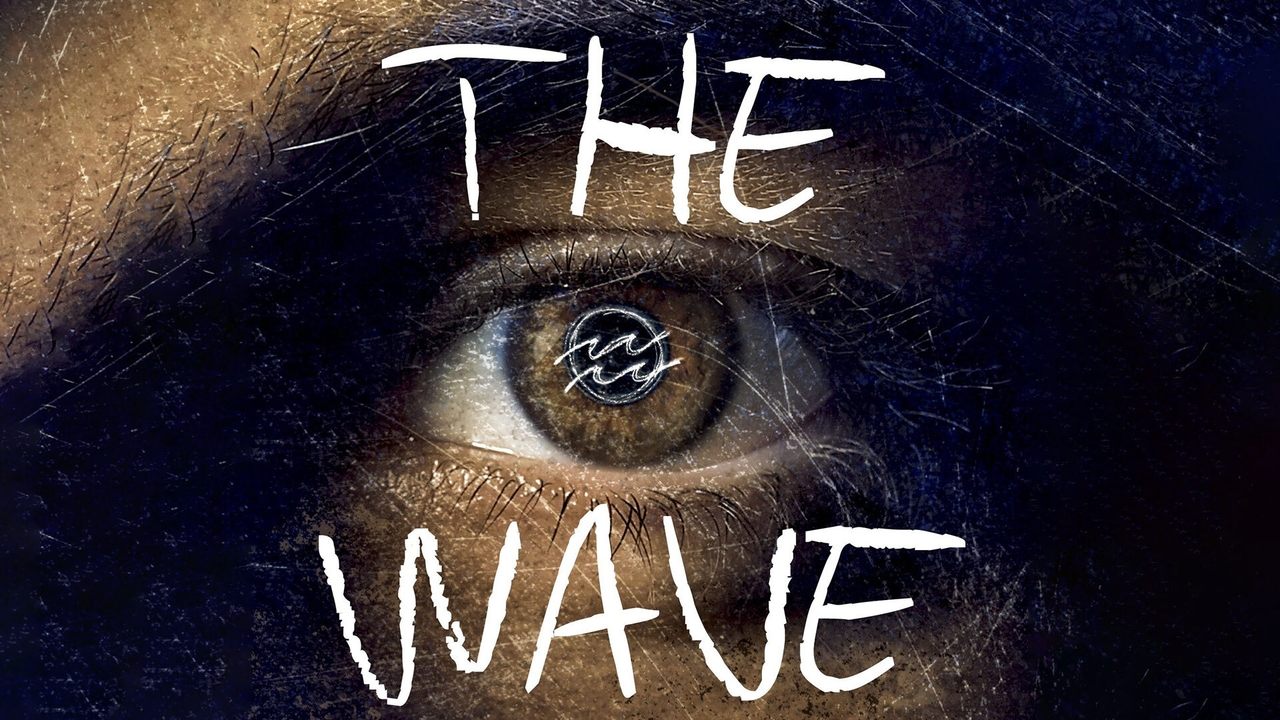
The production itself has that unmistakable early 80s TV movie feel – straightforward cinematography, practical locations, a distinct lack of cinematic flourish. Yet, this works entirely to its advantage. The very mundanity of the setting makes the encroaching ideological rot feel more insidious, more real. It isn’t happening in some stylized dystopia; it’s happening in our world, in classrooms that look just like the ones many of us sat in. Helmed by director Alexander Grasshoff, the film focuses squarely on the escalating psychological tension, letting the concept and Davison's compelling performance carry the narrative weight. There's a chilling simplicity to the visuals – the stark logo, the unified movements – that becomes incredibly menacing as the story unfolds.
### The Undertow of Conformity

One fascinating aspect is how The Wave was originally broadcast – as an ABC Afterschool Special. Imagine, sandwiched between programs often dealing with lighter teen issues, comes this stark, potent warning about the seductive nature of fascism. It’s a testament to the era’s willingness to tackle complex themes for younger audiences, something often missing today. Its impact was immediate and significant, snagging both a Peabody Award and an Emmy for Outstanding Children's Program. This wasn’t just another disposable TV movie; it was a cultural moment, sparking discussions in classrooms for years to come. My own well-worn VHS copy, taped off television, became a perennial rewatch, each viewing reinforcing its disturbing message. Doesn't the ease with which order descends into oppression still feel unnervingly relevant?
The narrative builds relentlessly towards its climax, a confrontation where Ross must reveal the true nature of the movement he created. Spoiler Alert: The reveal, involving footage of Nazi Germany and Adolf Hitler presented as The Wave's 'national leader', is a gut punch. It forces the students – and the audience – to confront the ugly reality of where their conformity was leading. It’s a powerful, unforgettable sequence that doesn't offer easy answers, leaving a lingering sense of unease.
### Lasting Ripples
The Wave is a prime example of how potent storytelling can transcend budgetary limitations. Its power doesn't come from elaborate effects or shocking gore, but from its terrifyingly simple premise grounded in reality, Bruce Davison's perfectly pitched performance that balances idealism with dangerous fervor, and its unflinching look at the dark side of human nature’s desire to belong. It explores how easily principles can be compromised for acceptance and how quickly 'us vs. them' dynamics can take root.
Rating: 9/10
This score reflects the film's undeniable impact and enduring relevance. Despite its TV movie origins and modest production values, The Wave delivers a profoundly chilling and important message with remarkable effectiveness. Davison is exceptional, the pacing is taut, and the core concept, drawn directly from Ron Jones's startling real-life experiment, remains deeply unsettling. It’s a masterclass in using a simple narrative framework to explore complex and frightening truths about society and the individual. Decades later, its warning about the seductive appeal of simplistic ideologies and the dangers of unquestioning conformity feels more urgent than ever. It’s a vital piece of 80s television, a cautionary tale that truly earned its place in our collective memory.