It’s a strange thing, the weight of expectation. Sometimes a film arrives carrying not just the hopes of its studio or the pedigree of its stars, but the heavy mantle of classic literature. When Roland Joffé’s adaptation of The Scarlet Letter hit video store shelves in 1995, adorned with the star power of Demi Moore, then arguably one of the biggest female stars on the planet, it felt like an event. Yet, watching it again now, separated from the initial buzz and subsequent critical fallout, what lingers isn't the faithful echo of Hawthorne's prose, but the distinct, sometimes jarring, sound of 90s Hollywood wrestling with 17th-century Puritanism.
Beneath the Bonnet
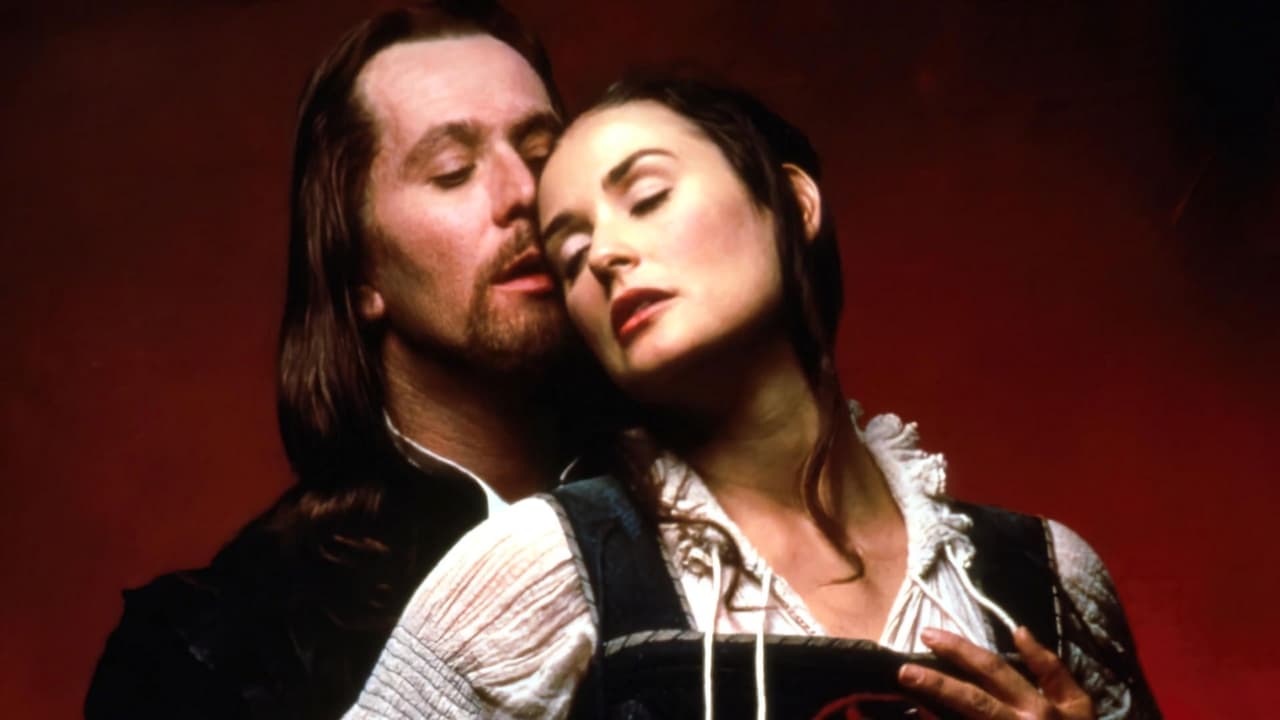
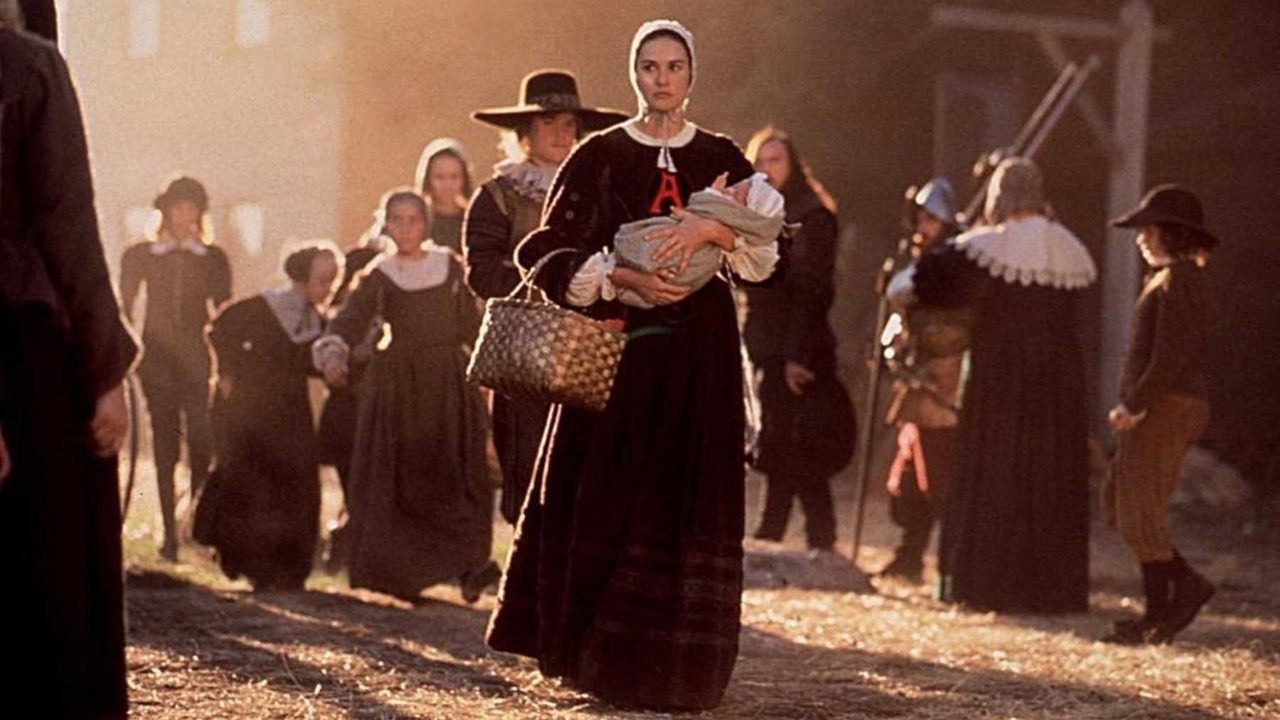
The core remains familiar, at least initially. In the rigid, unforgiving Massachusetts Bay Colony, Hester Prynne (Demi Moore) bears a child out of wedlock and is forced to wear a scarlet "A" for Adulteress. She steadfastly refuses to name the father, the tormented Reverend Arthur Dimmesdale (Gary Oldman), while her long-lost, vengeful husband, assuming the name Roger Chillingworth (Robert Duvall), arrives bent on discovering the secret. Hawthorne’s novel is a dense, psychological exploration of sin, guilt, hypocrisy, and societal judgment. Joffé's film, working from a script by Douglas Day Stewart (who penned An Officer and a Gentleman), attempts to translate this interiority into grand, cinematic gestures – sweeping landscapes, impassioned embraces, and a tone that often feels more akin to a historical romance than a somber allegory.
Star Power and Period Piece
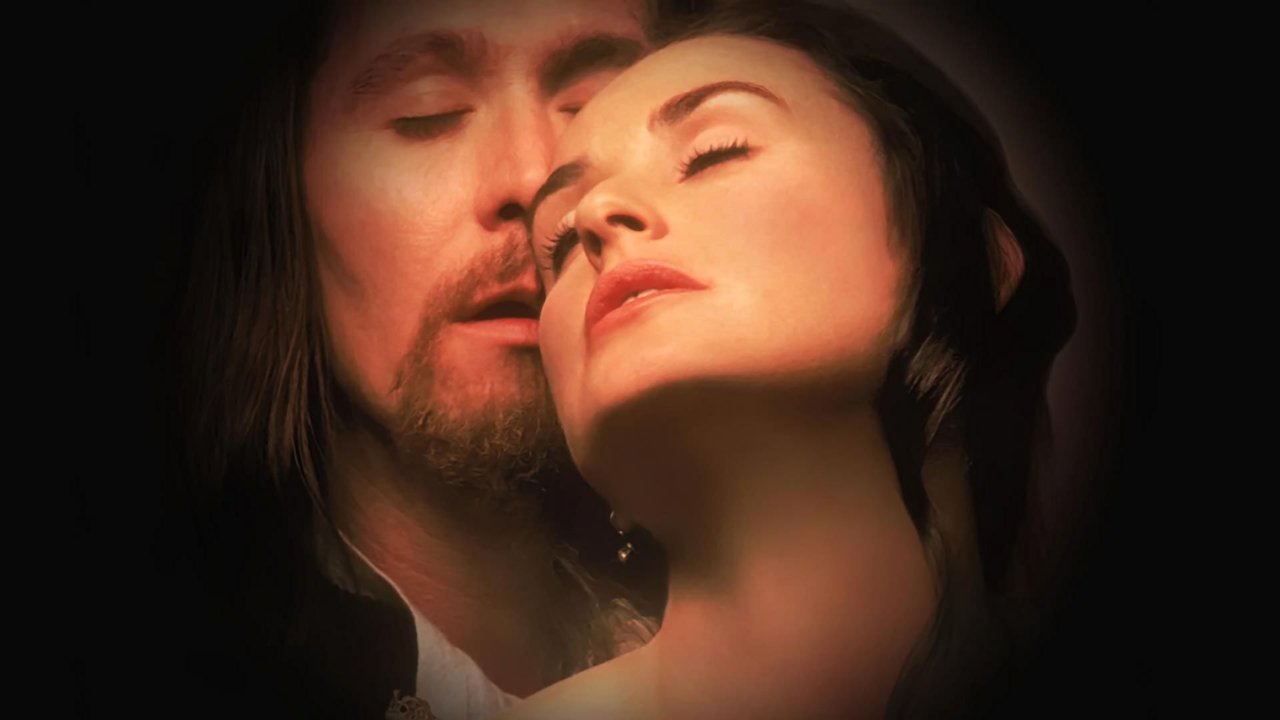
The casting itself speaks volumes about the mid-90s blockbuster approach. Demi Moore, fresh off massive hits like Ghost (1990) and A Few Good Men (1992), brought undeniable box office clout. Her Hester is depicted as more openly defiant, possessing a modern sensibility that sometimes feels at odds with the period constraints. While Moore certainly commits, there's an inescapable sense of her 90s persona straining against the confines of the Puritan dress and societal role. Does she capture Hester's quiet resilience and complex inner turmoil? Perhaps not entirely, often overshadowed by the film's need to make her a more conventionally romantic heroine. It’s a performance that sparked considerable debate back in the day, and revisiting it, one sees less a failure of acting and more a mismatch between star persona, character, and the film's altered vision.
Opposite her, Gary Oldman dives into Dimmesdale’s anguish with his trademark intensity. He conveys the character's internal torture effectively, the conflict warring behind his eyes. Yet, even his considerable talent feels occasionally adrift in a script that externalizes so much of what Hawthorne kept hidden. And then there’s Robert Duvall, a figure of immense gravitas. His Chillingworth is less the chillingly subtle manipulator of the novel and more overtly menacing, but Duvall brings a grounding presence, a reminder of the acting calibre involved in this ambitious project.
A Different Letter Entirely (Retro Fun Facts)
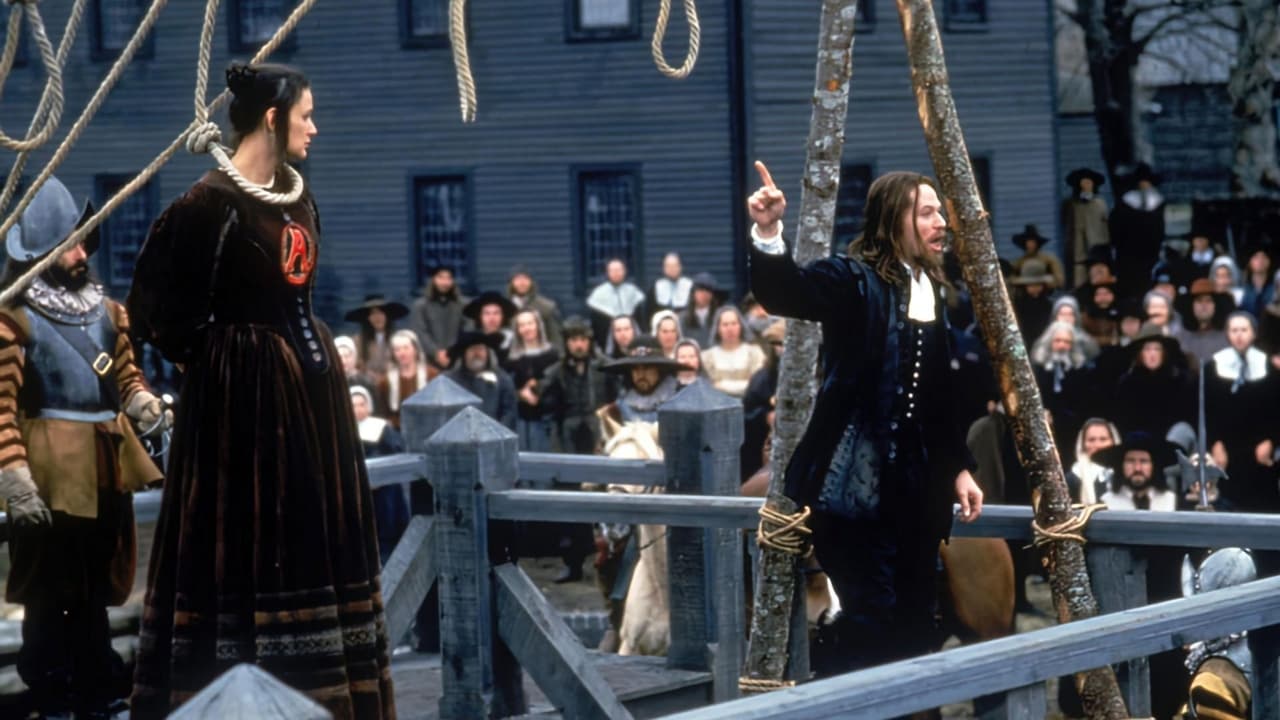
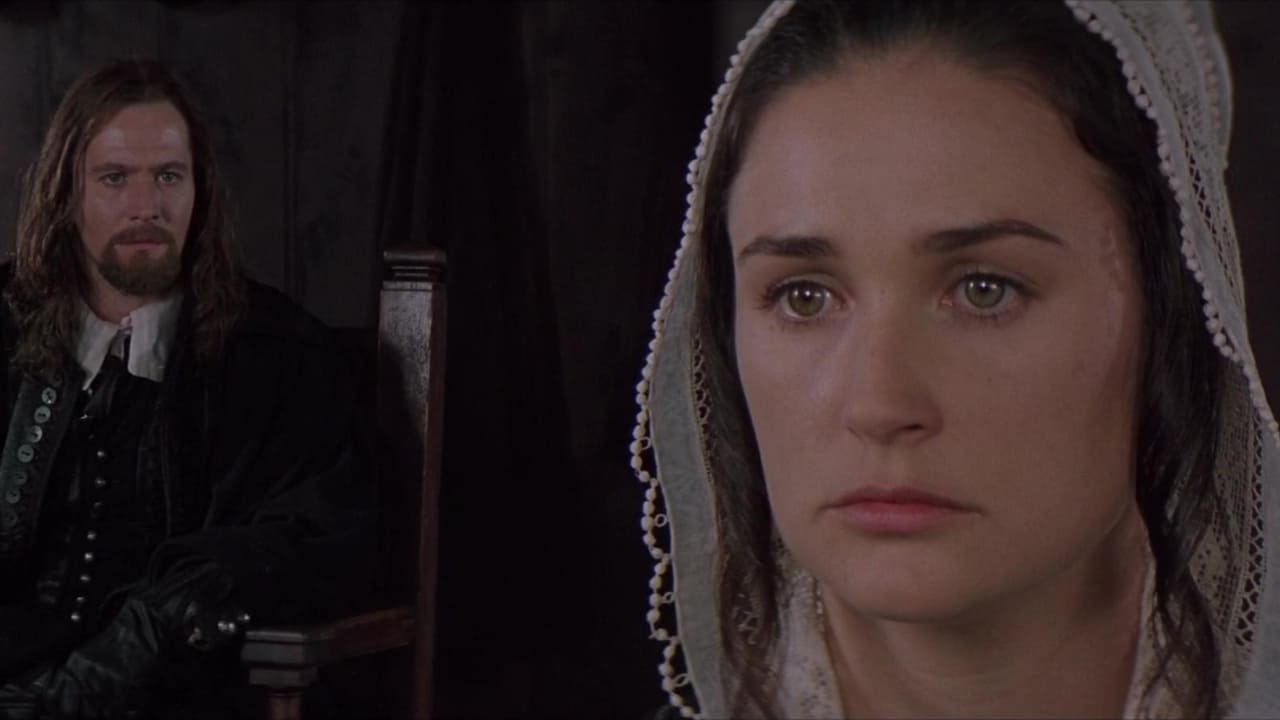
Where the film truly deviates, and courted the most controversy, is in its narrative choices, particularly its third act. Hawthorne’s ending is tragic and ambiguous, steeped in the consequences of sin and societal judgment. The 1995 film, however, opts for something far more… Hollywood. Spoiler Alert! We get heightened action, a dramatic confrontation involving Native American allies (depicted with questionable historical accuracy), and an ending that offers Hester and Dimmesdale a potential escape route denied by the novel. This rewriting of Hawthorne understandably rankled purists and critics alike.
Why the changes? It’s hard not to suspect the pressures of crafting a marketable star vehicle from challenging source material. Douglas Day Stewart’s script aimed for accessibility, perhaps, but sacrificed the novel’s thematic core in the process. This wasn't a low-budget affair; it carried a hefty price tag, reportedly around $46 million – a significant sum in 1995. Demi Moore herself commanded a massive $10 million salary. The studio, Cinergi Pictures (distributed by Hollywood Pictures/Disney), likely hoped for a prestige picture with mainstream appeal, a difficult tightrope to walk. The prominent featuring of a somewhat anachronistic bathtub scene in the marketing certainly suggested a desire to lean into Moore’s sex symbol status. The result, however, was a critical drubbing and a commercial disappointment, grossing only about $10.4 million domestically and famously "winning" the Razzie Award for Worst Remake or Sequel. Filmed largely on location in the scenic, but perhaps not entirely Massachusetts-like, landscapes of Nova Scotia and British Columbia, Canada, the production values are evident, but they often serve to prettify a story fundamentally about ugliness – the ugliness of judgment, hypocrisy, and hidden sin.
The Lingering Impression
Watching The Scarlet Letter today is a curious experience. It’s undeniably a product of its time – the era of the big-budget, star-driven period piece that sometimes prioritized spectacle over substance. Roland Joffé, who had previously directed harrowing, acclaimed dramas like The Killing Fields (1984) and The Mission (1986), seems somewhat lost here, his visual flair unable to fully compensate for the script's fundamental alterations to the source. The beautiful cinematography captures the wilderness, but struggles to penetrate the inner lives of the characters as Hawthorne did.
Is it a complete failure? Perhaps not entirely. The central performances, particularly from Oldman and Duvall, have moments of power. The film looks impressive, a reminder of a time when studios invested heavily in historical settings. But does it succeed as an adaptation of one of American literature's cornerstones? No, not really. It serves more as a fascinating case study in the challenges of translation – from page to screen, from introspective literature to star-powered cinema, from the 17th century to the sensibilities (and commercial demands) of the mid-1990s. I remember renting the VHS, drawn in by the names and the promise of a sweeping drama. The tape itself felt substantial, heavy with expectation, much like the film. The viewing experience, however, left a feeling less of profound insight and more of puzzled questioning about the choices made.
Rating: 3/10
This score reflects the film's significant departure from and simplification of its source material, the tonal inconsistencies, and its failure to capture the psychological depth of Hawthorne's novel, despite boasting high production values and a talented cast. It’s visually striking at times, but ultimately feels like a misguided attempt to fit a complex literary work into a conventional Hollywood mold.
It remains a notable artifact of the 90s VHS era – a high-profile misfire, perhaps rented out of curiosity or for its star power, destined to be remembered more for its deviations and critical reception than for being a faithful or moving adaptation. What endures isn't the story it tells, but the questions it raises about the very nature of adaptation itself.