It’s a curious thing, how certain films lodge themselves in your memory, not necessarily for bombastic action or dazzling effects, but for the quiet intensity of their human drama. Watching The Scarlet and the Black again after all these years, perhaps on a slightly fuzzy, well-loved VHS tape, feels less like revisiting a movie and more like reflecting on a stark moment in history, brought vividly to life by actors operating at the peak of their powers. This wasn't your typical explosive 80s fare; it was something different, something substantial broadcast directly into our living rooms, demanding attention.
### Rome Under Shadow
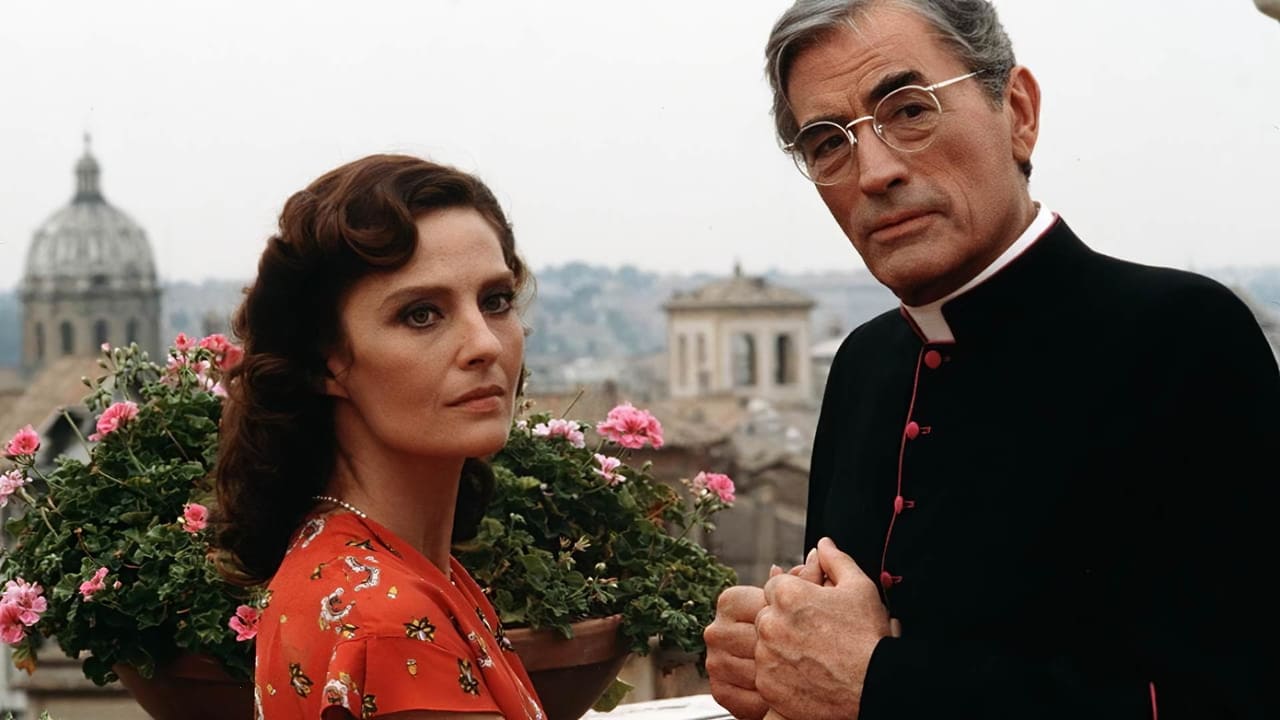
The premise itself is instantly gripping: Rome, 1943. The city groans under the brutal Nazi occupation. Within the neutral Vatican City, an unassuming Irish priest, Monsignor Hugh O'Flaherty, wages a secret war. He's not armed with guns, but with wits, courage, and an underground network dedicated to hiding Allied POWs and refugees right under the nose of the Gestapo chief, Colonel Herbert Kappler. What unfolds is less a traditional war film and more a taut, psychological chess match played out against the backdrop of immense human suffering and moral compromise. Based on J. P. Gallagher's book The Scarlet Pimpernel of the Vatican, the film immediately grounds itself in the chilling reality that these events, these risks, were horrifyingly real.
### The Pillar of Conscience
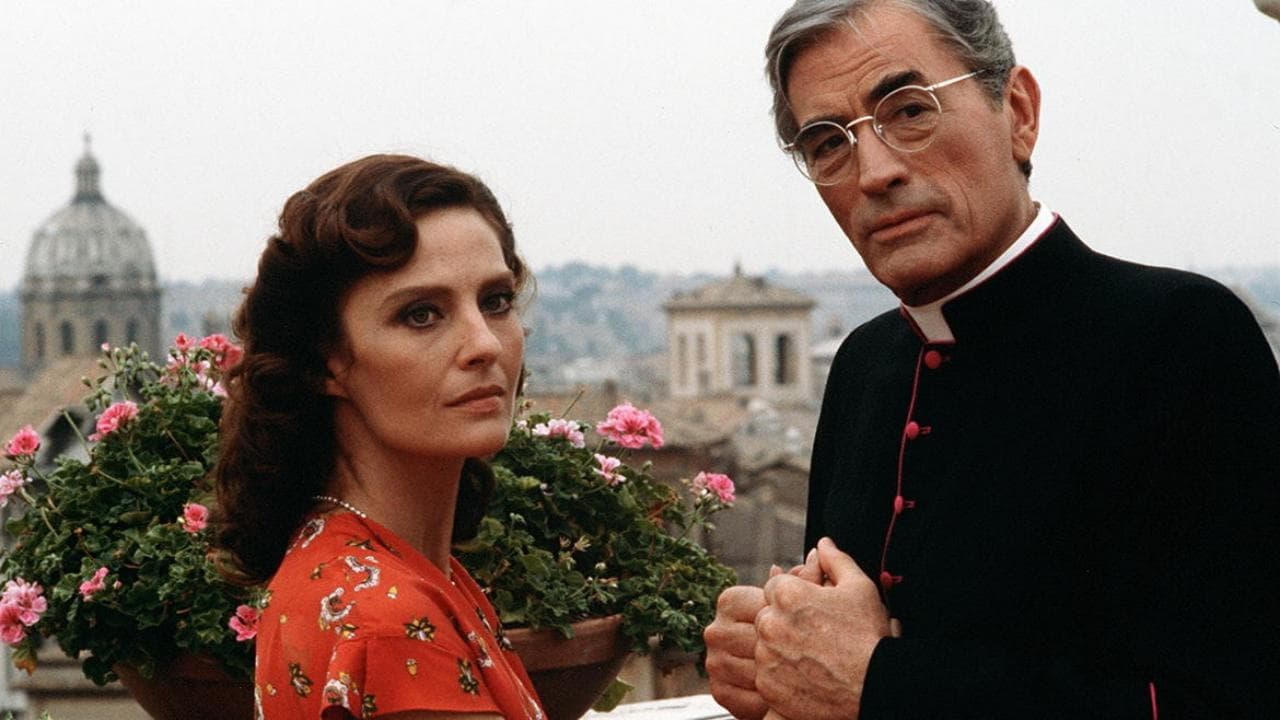
At the heart of the film stands Gregory Peck as Monsignor O'Flaherty. Peck, an actor whose very presence often signified integrity – think Atticus Finch in To Kill a Mockingbird – embodies O'Flaherty not as a swashbuckling hero, but as a man driven by profound moral conviction. There's a quiet determination in his eyes, a steely resolve beneath the clerical collar. He portrays the Monsignor's bravery not as recklessness, but as a necessary response to inhumanity. Peck reportedly felt a deep connection to O'Flaherty's story, seeing him as a true hero who used his position for immense good. It's a performance of subtle strength; we see the weight of his responsibility, the constant fear of discovery, but also the unwavering faith that fuels his dangerous work. He makes O'Flaherty's ingenuity – using Vatican neutrality, secret passages, and coded messages – utterly believable.
### The Face of Calculated Cruelty
Opposite Peck is Christopher Plummer delivering a masterful performance as SS Colonel Herbert Kappler. Plummer avoids caricature, presenting Kappler not as a ranting monster, but as something perhaps more chilling: the epitome of cold, bureaucratic evil. He is intelligent, cultured, and utterly ruthless in his duty. The tension in their scenes together is palpable – a clash of ideologies, of worldviews, played out in clipped, polite exchanges that barely conceal the life-and-death stakes. Plummer allows glimpses of the man beneath the uniform – perhaps weary, perhaps pragmatic, but ultimately committed to his horrific task. It's a portrayal that forces us to contemplate the nature of evil when it wears a refined mask. Director Jerry London, primarily known for television work including the epic Shōgun miniseries, handles these confrontations with admirable restraint, letting the power dynamics and the actors' skills carry the scenes.

### Navigating Neutrality
Adding another layer of complexity is the venerable John Gielgud as Pope Pius XII. Gielgud, who could convey immense authority with just a glance (remember his Oscar-winning turn in Arthur?), portrays the Pope caught in an impossible position. The film touches upon the Vatican's controversial neutrality during the war, showing Pius XII as deeply troubled but constrained by the political realities and the potential repercussions of direct confrontation with the Nazis. Gielgud’s performance lends weight and solemnity to these difficult historical questions, even if the film ultimately focuses more on O'Flaherty's individual actions.
### A Story That Lingers
The Scarlet and the Black was a made-for-TV movie, premiering on CBS in 1983, and its production reflects that – it lacks the sweeping cinematic grandeur of a theatrical release. Yet, it transcends its origins through the sheer power of its story and performances. Filmed partially on location in Rome, it effectively captures the atmosphere of fear and suspicion that permeated the city. What truly elevates the film, and makes it stick with you, is the knowledge of the true story behind it.
Retro Fun Fact: The real-life post-war story is almost unbelievable. After the war, Colonel Kappler was sentenced to life imprisonment in Italy for his role in the Ardeatine Caves massacre (an event depicted starkly in the film). The only person who regularly visited him in prison? Monsignor Hugh O'Flaherty. Years later, Kappler converted to Catholicism and was baptised, reportedly with O'Flaherty potentially involved or at least aware. It’s a coda almost too incredible for fiction, adding profound layers to the on-screen dynamic Peck and Plummer created. The film itself garnered several Emmy nominations, including nods for Peck and Plummer, testament to its quality within the television landscape of the time. I remember catching this on its original broadcast, or perhaps renting the hefty double VHS cassette later – it felt significant, a serious drama tackling weighty themes amidst the lighter fare often found on TV.
### The Verdict
Does The Scarlet and the Black hold up? Absolutely. It’s a compelling, character-driven historical drama anchored by two legendary actors giving subtly powerful performances. It reminds us that heroism often wears quiet guises and that moral courage can flourish even in the darkest of times. While its TV movie roots are occasionally apparent in its pacing or scope (the original cut ran over three hours with commercials), the core narrative remains incredibly potent. It doesn't just recount history; it probes the moral complexities and the sheer, quiet bravery required to stand against tyranny.
Rating: 8.5/10
The film earns this score through its superb central performances, its faithful adherence to a remarkable true story, and its thoughtful exploration of courage and conviction under unimaginable pressure. It’s a potent reminder, delivered without fanfare but with lasting impact, of the difference one individual can make. What stays with you long after the credits roll is the quiet intensity of that struggle, and the astonishing real-life postscript that speaks volumes about forgiveness and the complexities of the human spirit.