Some films fade with time, their edges softened by the haze of nostalgia. Others remain sharp, unsettling, burrowing under your skin and refusing to leave. Dance with a Stranger (1985) firmly belongs in the latter category. It doesn't arrive with the comforting glow often associated with our beloved VHS discoveries; instead, it presents a chill, an unflinching look at a tragedy born from obsession and the stark realities of class and gender in post-war Britain. What strikes you immediately isn't spectacle, but atmosphere – thick, smoky, and laced with the scent of cheap gin and desperation.
A World of Dimly Lit Clubs and Doomed Romance
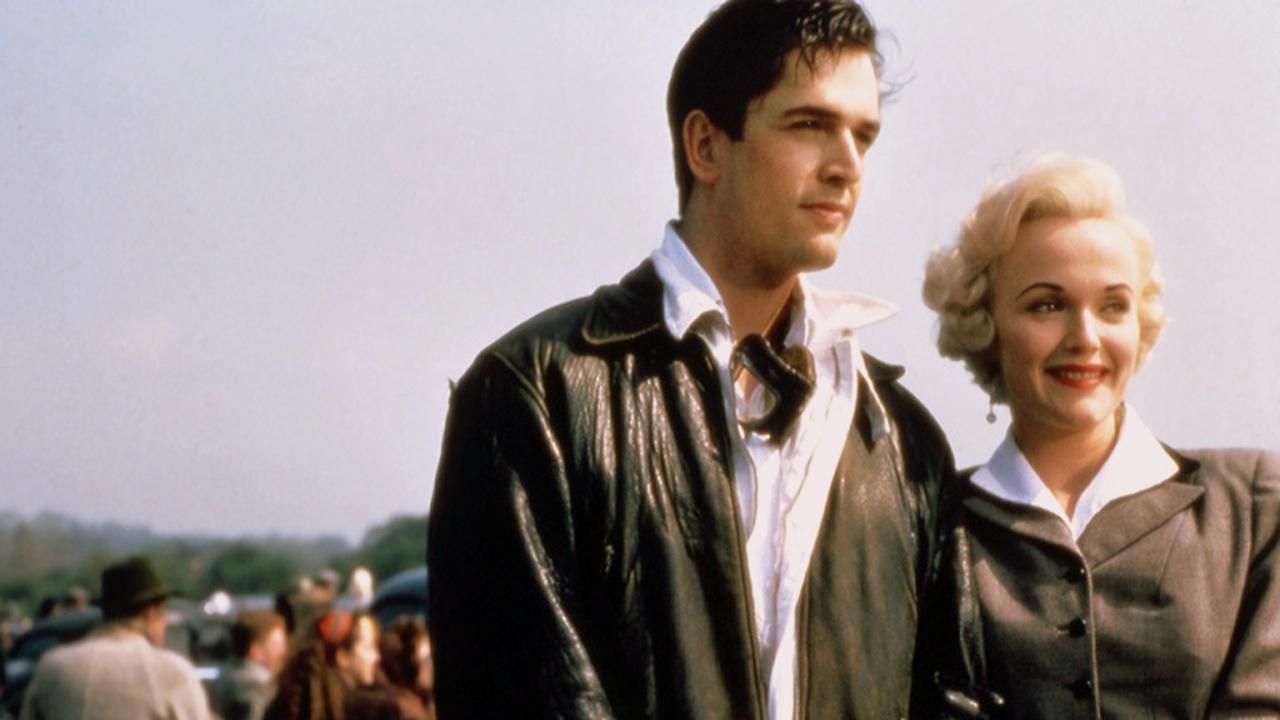
Set in the London of the mid-1950s, the film plunges us into the world of Ruth Ellis (Miranda Richardson), a peroxide blonde hostess working in the sort of members-only club where loneliness and liquor flow freely. It's here she encounters David Blakely (Rupert Everett), a handsome, upper-class racing driver with an easy charm and a cruel streak. Their ensuing affair is less a romance and more a collision – a volatile mix of fierce passion, jealousy, and profound insecurity, exacerbated by the rigid social strata that separate them. We also meet Desmond Cussen (Ian Holm), the older, devoted admirer who provides Ruth with a semblance of stability, yet remains tragically unable to save her from her self-destructive path. The narrative, penned by the celebrated playwright Shelagh Delaney (whose ear for working-class authenticity was already proven with A Taste of Honey), doesn't shy away from the grim trajectory of this relationship, charting its course towards the inevitable act of violence that sealed Ruth Ellis's fate as the last woman to be hanged in Great Britain.
Newell's Unsentimental Eye
Director Mike Newell, years before he’d tackle lighter fare like Four Weddings and a Funeral (1994) or blockbuster fantasy with Harry Potter and the Goblet of Fire (2005), crafts a film steeped in a palpable sense of realism and claustrophobia. There's no glamour here, despite Ruth's attempts to project it. The locations – smoky bars, cramped flats, rain-slicked streets – feel authentic, lived-in, and slightly oppressive. Newell avoids sensationalism, choosing instead to observe the slow, agonizing disintegration of Ruth's world. His camera often holds steady, forcing us to confront the raw emotion on display, refusing easy judgments or neat resolutions. The film's visual style mirrors its thematic concerns: muted colours, shadows clinging to corners, a world where escape seems increasingly impossible. It’s a stark reminder that Newell began his career with grittier, character-driven pieces like this.
The Arrival of Miranda Richardson
While the direction and writing are superb, Dance with a Stranger rests almost entirely on the astonishing central performance. This was Miranda Richardson's feature film debut, and it remains one of the most electrifying entrances in modern British cinema. She is Ruth Ellis – not just embodying her look, but capturing the maelstrom within. Richardson masterfully conveys Ruth's complex contradictions: the brittle façade of toughness, the desperate yearning for affection and security, the flashes of vulnerability beneath the bravado, and the terrifying intensity of her obsession. It’s a performance devoid of vanity, raw and utterly convincing. You see the hope drain from her eyes, replaced by a chilling fixation. What makes it so powerful? Perhaps it’s the lack of overt pleading for sympathy; Richardson presents Ruth, flaws and all, allowing us to grapple with the human being behind the tabloid headlines. It's no surprise this performance instantly marked her as a major talent, earning critical acclaim, including notice at the Cannes Film Festival where the film won the Award of the Youth in 1985.
Opposite her, Rupert Everett perfectly captures David's blend of boyish charm and casual cruelty. He’s magnetic but weak, his upper-class entitlement masking a lack of substance. He represents the allure and the danger that Ruth finds irresistible. And Ian Holm, ever the master of quiet devastation, is heartbreaking as Desmond. His silent suffering and unwavering loyalty provide a poignant counterpoint to the central explosive relationship, hinting at a different, perhaps sadder, life Ruth might have chosen.
More Than Just a True Crime Story
It's easy to label Dance with a Stranger simply as a true crime film, but it digs much deeper. Shelagh Delaney's script uses the tragic case of Ruth Ellis (executed in 1955, a fact that still resonated deeply thirty years later when the film was released) to explore potent themes. The suffocating constraints placed on women, particularly working-class women, in the 1950s are laid bare. Ruth’s options are starkly limited, her attempts to navigate a man's world often leading to exploitation or judgment. The film also dissects the destructive nature of obsessive love – how it can consume reason, obliterate self-worth, and spiral into violence. There’s a profound sadness woven through the narrative, a sense of inevitable doom. Does the film excuse Ruth's actions? Not necessarily. But it demands we understand the context, the pressures, the emotional vortex she was caught in. It forces us to ask uncomfortable questions about culpability, societal judgment, and the desperation that can drive ordinary people to extraordinary acts.
Finding This Tape on the Shelf
I distinctly remember the cover art for Dance with a Stranger on the rental store shelf back in the day. It stood out amongst the action heroes and garish horror covers – quieter, more somber, hinting at something adult and serious. Renting it felt like choosing something different, perhaps more challenging. Watched on a CRT TV, the film’s smoky, slightly grainy aesthetic felt perfectly suited to the format, enhancing its period feel and noir-ish undertones. It wasn't a 'fun' watch, not in the way Beverly Hills Cop or Ghostbusters were, but it was undeniably powerful, the kind of film that sparked quiet contemplation long after the VCR clicked off. It’s a testament to the breadth of cinema available during the VHS boom – nestled between genres, you could find these challenging, character-driven dramas.
Rating and Final Reflection
9/10
This rating is earned primarily through Miranda Richardson’s staggering, career-making performance and Mike Newell’s sensitive, atmospheric direction. The film achieves a rare feat: it dramatizes a real-life tragedy with intelligence and empathy, avoiding exploitation while exploring complex psychological and social themes. Its unflinching gaze, authentic period detail, and the haunting portrayal of destructive passion make it a standout British film of the 80s.
Dance with a Stranger isn't a comfortable film, but it's a vital one. It lingers not because of shocking violence, but because of the profound sadness at its core – the tragedy of a woman trapped by circumstance, consumed by obsession, and ultimately destroyed. It leaves you contemplating the thin line between love and destruction, and the echoes of Ruth Ellis's story that still resonate today.