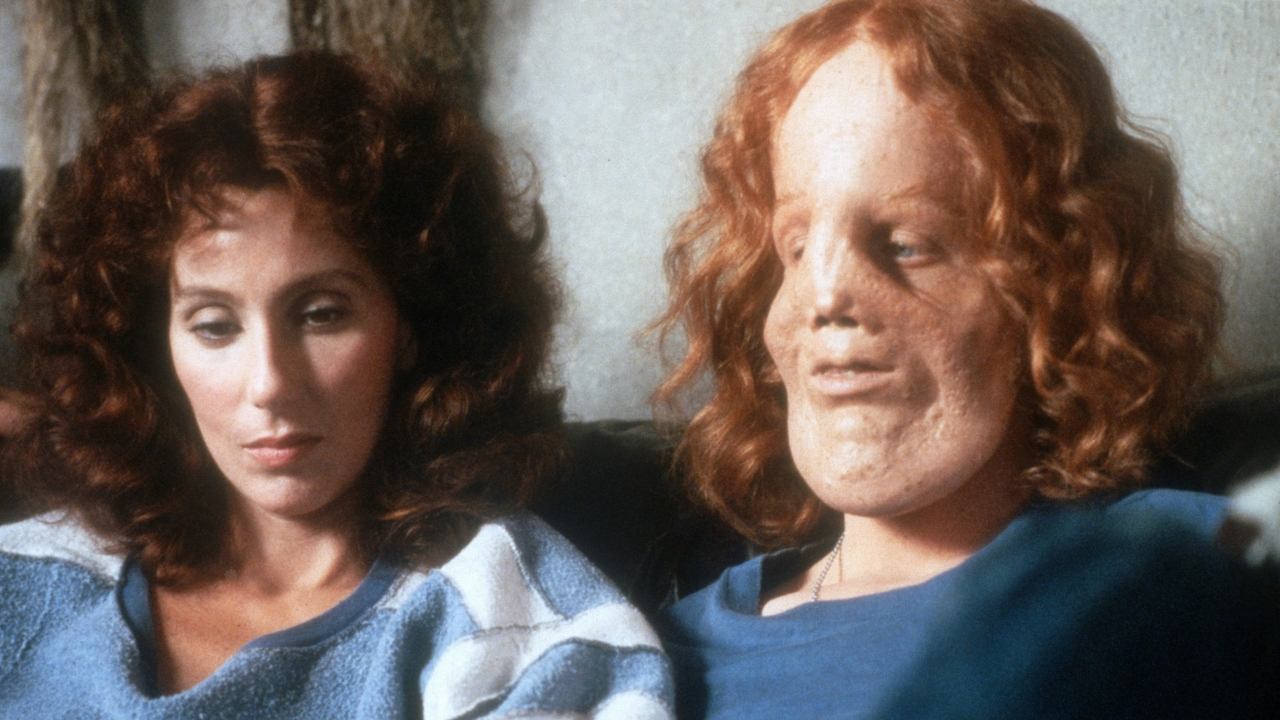
It's a face that, once seen, is rarely forgotten. Yet, the true power of Peter Bogdanovich’s 1985 film Mask lies not in the shocking visual of Rocky Dennis’s severe craniodiaphyseal dysplasia, but in the vibrant, intelligent, and remarkably well-adjusted young man living behind it. Watching it again transports me right back to the hushed reverence of the local video store's drama section, where certain VHS covers promised something deeper than the usual blockbuster fare. Mask delivered on that promise, offering a story that resonates with uncommon tenderness and honesty, even decades later.
Beyond the Surface
Based on the true story of Roy L. "Rocky" Dennis, the film introduces us to a teenager navigating the usual trials of high school – grades, friendships, first love – while contending with a rare condition that drastically alters his facial features and brings constant pain. Living in Azusa, California, with his fiercely protective, unconventional mother, Florence "Rusty" Dennis (Cher), and her extended family of bikers, Rocky possesses an inner light that seems almost defiant against the darkness of his prognosis and the prejudice he often encounters. The film sidesteps easy sentimentality, presenting Rocky not as a pitiable figure, but as a witty, optimistic, and deeply perceptive individual who forces everyone around him, including the audience, to look beyond the surface.
A Triumph of Performance
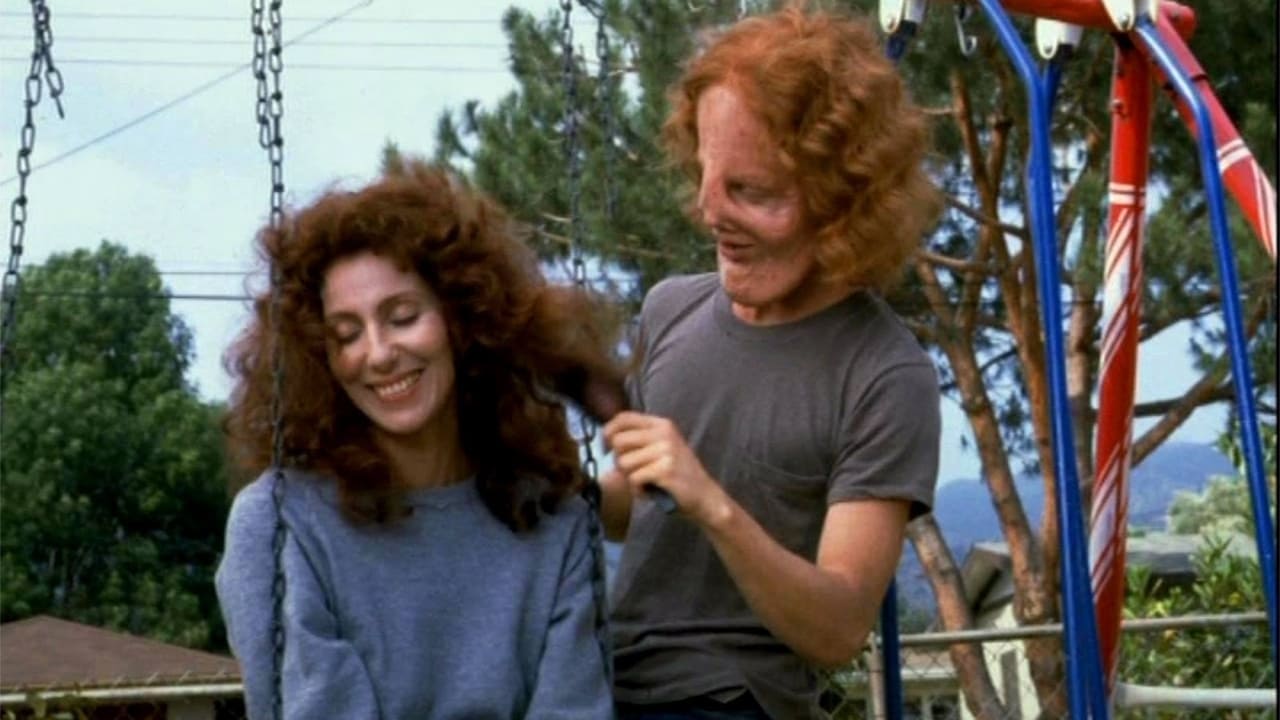
The success of Mask hinges significantly on its central performances, particularly that of Eric Stoltz as Rocky. Buried under layers of prosthetic makeup – a stunning achievement by Michael Westmore and Zoltan Elek that rightly earned them an Academy Award – Stoltz faced the immense challenge of conveying a full spectrum of emotion primarily through his eyes, voice, and body language. And he succeeds brilliantly. His Rocky is charming, vulnerable, resilient, and achingly real. You feel his frustrations, share his joys, and admire his unwavering spirit. It's a performance of incredible subtlety and control, ensuring that we connect with the person, not the condition. I remember hearing stories about how Stoltz would often stay in the heavy makeup even between takes, helping him remain immersed in the character – a dedication clearly visible on screen.
Equally compelling is Cher as Rusty. This role marked a significant dramatic turn for her, earning her the Best Actress award at the Cannes Film Festival and silencing many critics. Her Rusty is a force of nature – flawed, battling her own demons (including drug addiction), but utterly devoted to her son. She’s his fiercest advocate, confronting judgmental school principals and doctors with unwavering tenacity. Cher brings a raw, unvarnished authenticity to the role, capturing Rusty's biker-mama toughness alongside moments of profound maternal tenderness and fear. There’s no Hollywood gloss here; it feels lived-in and true.
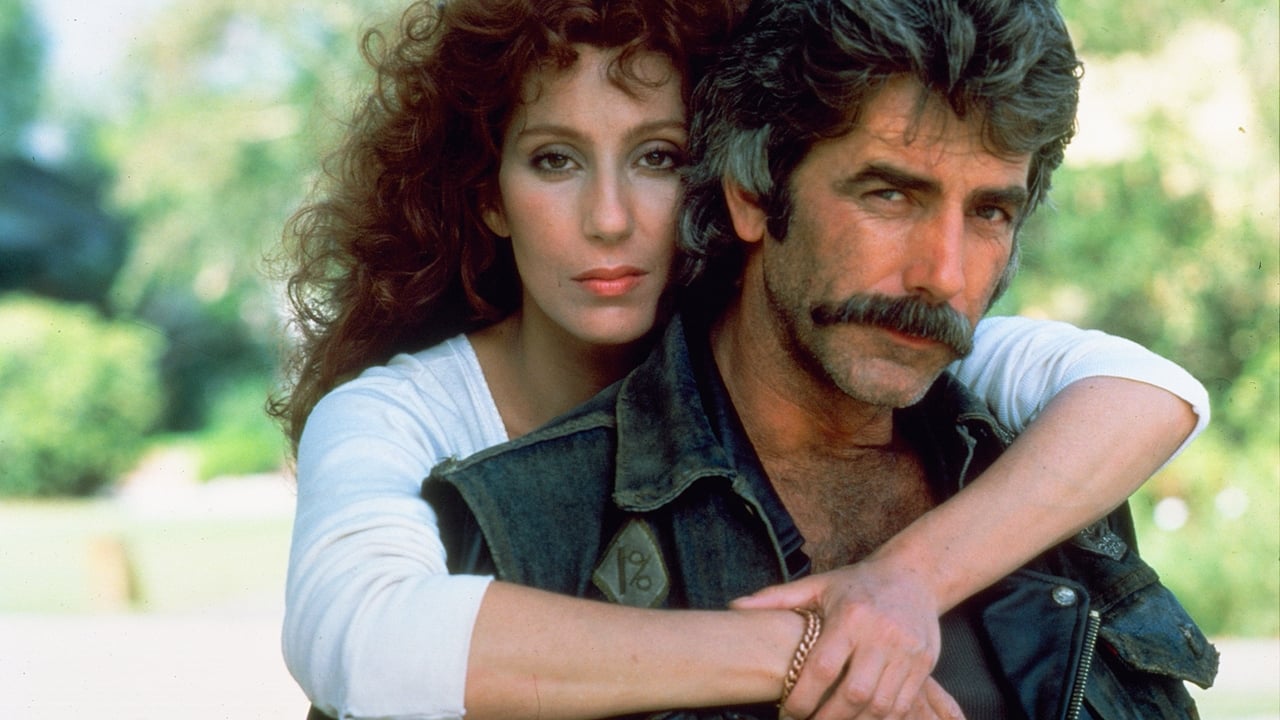
Rounding out the core trio is Sam Elliott as Gar, Rusty's sometimes-lover and a father figure to Rocky. With his signature calm demeanor, resonant voice, and understated warmth, Elliott embodies the quiet strength and acceptance that defines the best aspects of the film's biker community. His scenes with both Cher and Stoltz provide a grounding presence, offering moments of gentle wisdom and unwavering loyalty. The easy chemistry between Elliott and Cher feels palpable, hinting at a deep, albeit complicated, history.

Finding Family in Unexpected Places
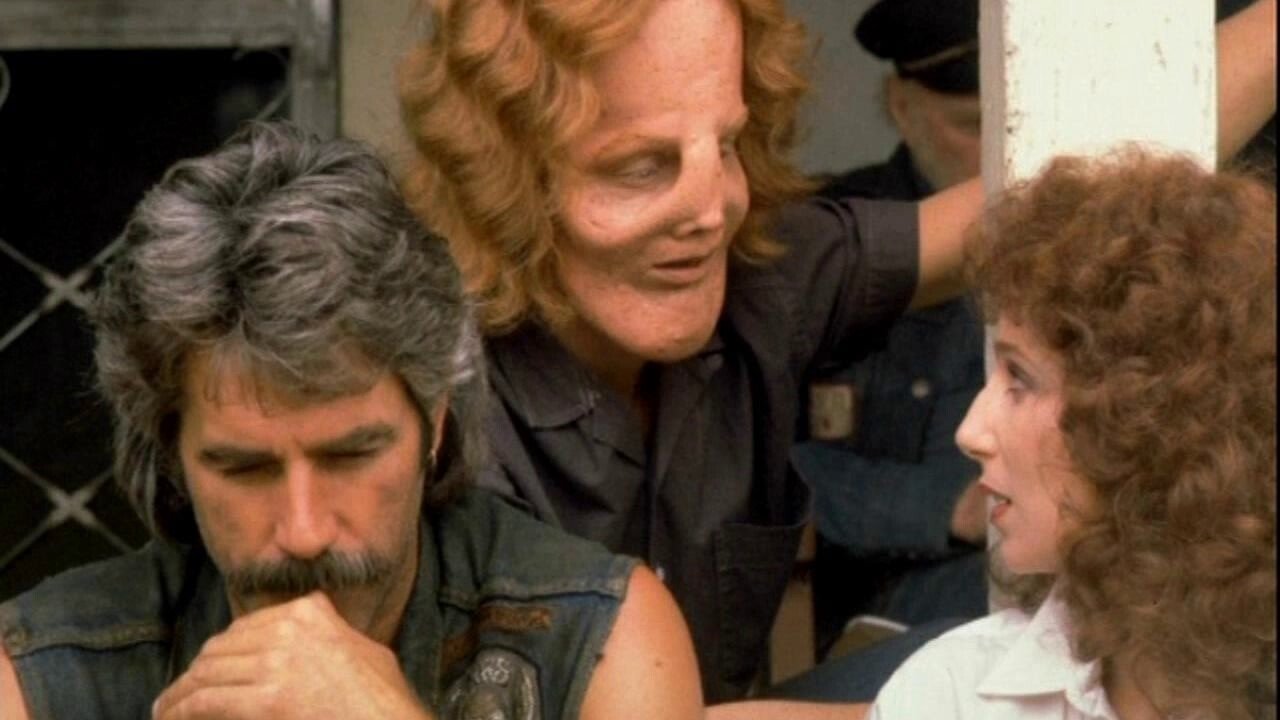
Peter Bogdanovich, known for earlier classics like The Last Picture Show (1971) and Paper Moon (1973), directs with a sensitive, observational style. He allows the emotional weight of the story to unfold naturally, avoiding manipulative clichés. He captures the specific atmosphere of the late 70s/early 80s Southern California setting and portrays the biker gang, "The Turks," not as stereotypes, but as a surrogate family that embraces Rocky unconditionally. This contrast between society's judgment and the bikers' acceptance is one of the film's most powerful statements. It forces us to ask: where does true community lie? What defines a family?
Screenwriter Anna Hamilton Phelan, who spent considerable time with the real Rusty Dennis to capture the story's authenticity, crafted a script that balances heartbreak with humor and resilience. It doesn't shy away from the medical realities or the emotional toll of Rocky's condition, but it always foregrounds his humanity.
Echoes of the Era and Beyond
Thinking back to seeing Mask on VHS, perhaps after rewinding it past the slightly worn tracking lines, you might recall the distinct feel of the film. It was a mainstream drama that felt refreshingly different. One interesting footnote often discussed among fans is the initial soundtrack controversy. Bogdanovich originally scored key scenes with Bruce Springsteen songs, which perfectly complemented the film's working-class, underdog spirit. However, due to exorbitant licensing fees at the time, Universal Studios replaced them with Bob Seger tracks for the theatrical and initial home video release. While Seger's music works fine, the later Director's Cut, available on DVD and Blu-ray, restored Springsteen's music, fulfilling Bogdanovich's original vision and adding another layer of emotional resonance. It's a classic example of the kind of studio wrangling that often shaped the films we rented back then.
The film itself, budgeted at around $8.5 million, went on to gross over $48 million domestically, proving audiences were ready for its challenging, heartfelt story. It remains a poignant reminder that courage and kindness can bloom in the most unlikely circumstances.
***
Rating: 9/10
This near-perfect score is earned through the sheer power and authenticity of the performances, particularly Eric Stoltz's unforgettable portrayal under challenging physical constraints and Cher's career-defining turn. Combined with Peter Bogdanovich's sensitive direction, Anna Hamilton Phelan's heartfelt script based on lived experience, and its enduring message of acceptance and inner beauty, Mask stands as a deeply moving and remarkably unsentimental piece of 80s filmmaking.
It’s a film that stays with you, prompting reflection on how we perceive others and the quiet strength it takes to simply be oneself in a world quick to judge. What truly defines a life well-lived? Mask suggests it has far more to do with the heart within than the face we present to the world.