It often starts with a familiar face, doesn't it? Seeing Peter Ustinov’s Hercule Poirot, that comforting blend of shrewd intellect and grandfatherly charm, materialize on the screen feels like settling into a well-worn armchair. Yet, sometimes, the armchair is inexplicably placed somewhere unexpected. Such is the feeling watching Murder in Three Acts, a 1986 television adaptation of Agatha Christie's Three Act Tragedy, which transplants the quintessential English mystery to the sun-drenched, poolside environs of Acapulco. The immediate question isn't just 'whodunit?', but 'why here?'
Poirot on Holiday?
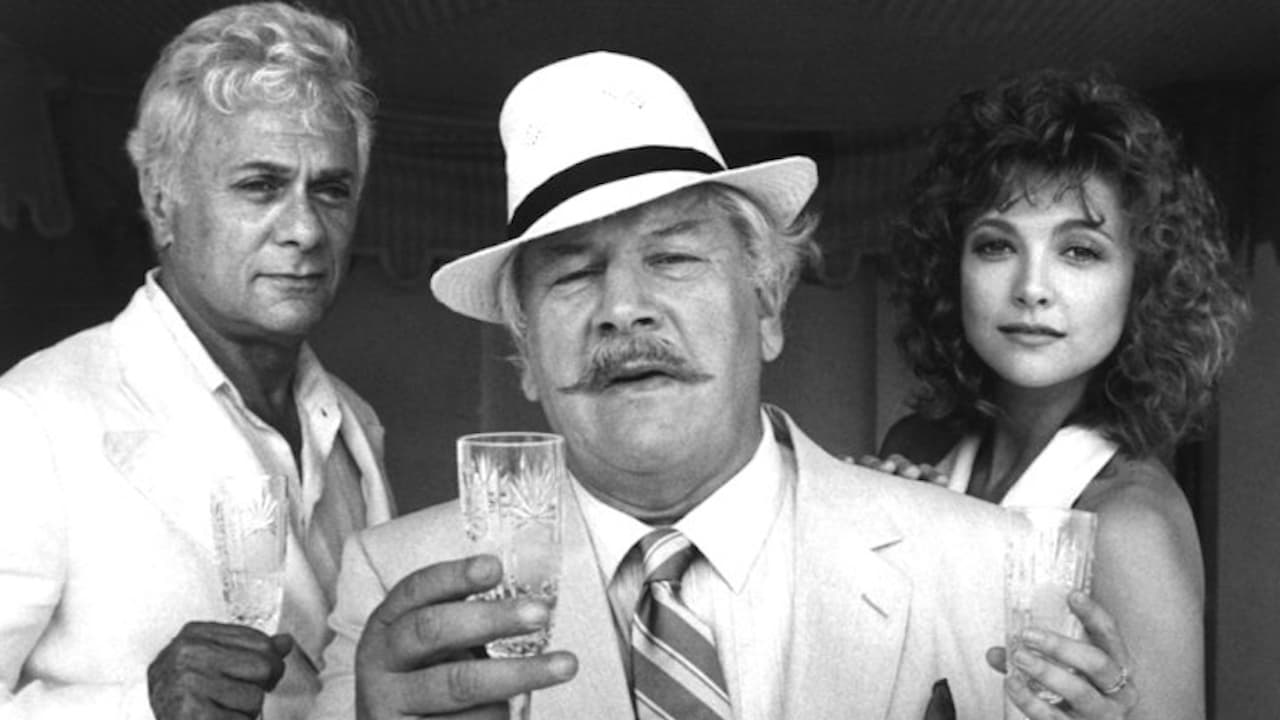
This particular Poirot outing, one of six featuring the inimitable Ustinov, leans heavily into its contemporary setting. Produced for CBS television, the decision to shift the action from Cornwall and Yorkshire to Mexico feels like a conscious effort to inject some 80s glamour and appeal to an American audience perhaps less enamored with drafty English manors. We join Poirot not investigating, initially, but vacationing, attending a swanky cocktail party hosted by the famous American movie actor Charles Cartwright, played with a certain faded bravado by Hollywood legend Tony Curtis. It’s a role that feels somewhat meta – Curtis, the star of classics like Some Like It Hot (1959) and Spartacus (1960), playing an aging actor surrounded by adoring fans and personal anxieties.
The setup is classic Christie: a gathering of disparate personalities, cocktails flowing, witty banter... and then, sudden death. A local clergyman collapses, seemingly from natural causes. But when a similar death occurs at another party involving many of the same guests, Poirot’s little grey cells, perhaps initially lulled by the Mexican heat, spring into action. He's aided, after a fashion, by Cartwright and the young, charming "Egg" Lytton Gore, portrayed by Emma Samms, then a familiar face from soaps like General Hospital and Dynasty, bringing a requisite touch of 80s television appeal.
Sunshine and Shadows
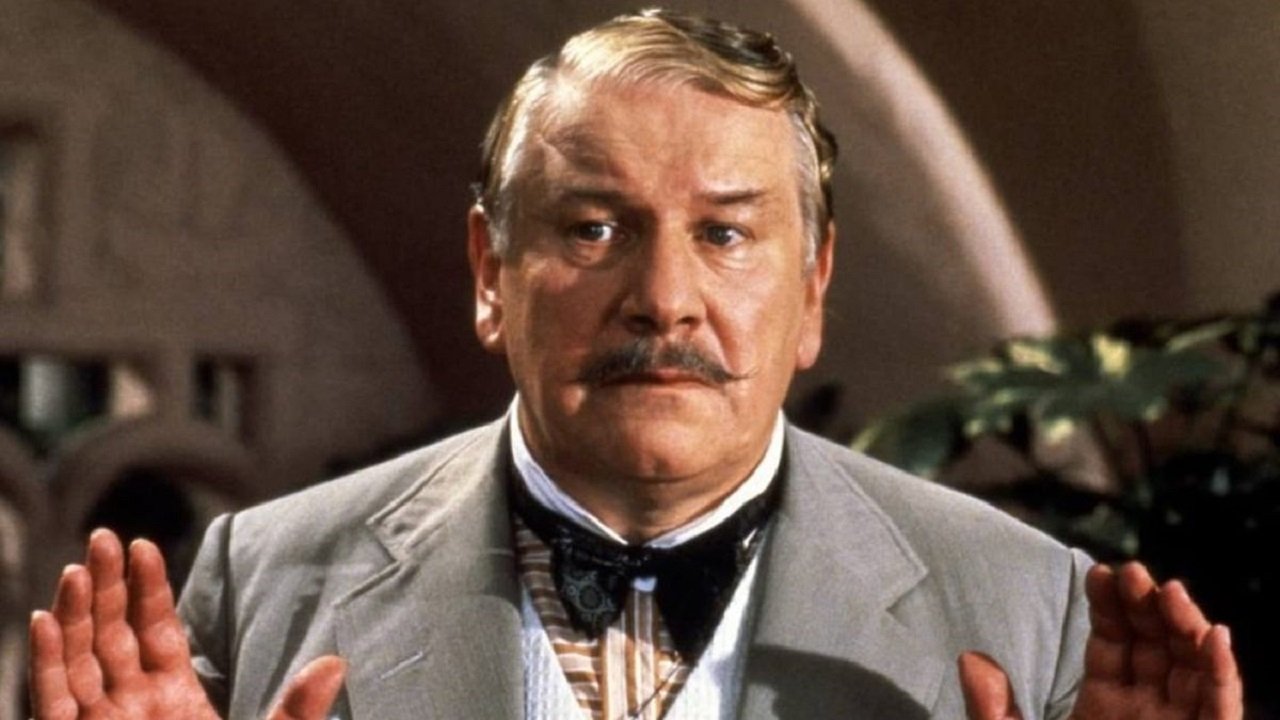
Director Gary Nelson, who had helmed Disney fare like Freaky Friday (1976) and the ambitious sci-fi effort The Black Hole (1979), navigates this sun-bleached mystery. The production, partially filmed on location in Acapulco and Ixtapa, certainly looks the part for an 80s TV movie aiming for an exotic feel. The villas are luxurious, the pools inviting, the outfits often brightly coloured. Yet, one can't help but feel something essential to Christie's carefully constructed social dynamics gets lost in translation. The rigid class structures and subtle social cues of interwar England, often crucial to motive and character in her novels, don't map neatly onto this looser, more modern setting. It feels less like a necessary update and more like a cosmetic overlay. Interestingly, the original novel Three Act Tragedy is notable for keeping Poirot off-stage for the first third; this adaptation naturally brings Ustinov front-and-center much earlier, restructuring the narrative focus significantly around his star power.
Ustinov himself remains a delight, even if this isn't his strongest turn as the Belgian detective. He reportedly enjoyed these later, modernized TV movie adaptations, finding them less stuffy. His Poirot here is perhaps a touch more relaxed, his interactions with Curtis carrying a weary sort of camaraderie. Curtis, for his part, does capture the slightly insecure vanity of Cartwright, though the performance occasionally feels broad, perhaps tailored for the television medium of the time. Samms is perfectly fine as Egg, embodying the somewhat naive but observant young woman caught up in events.
Cracks in the Plaster
Where Murder in Three Acts often falters is in maintaining the tension and intricate plotting Christie is renowned for. The pacing can feel somewhat languid, more interested in showcasing the scenery or the interactions between Ustinov and Curtis than tightening the screws of the mystery. The constraints of a television movie budget and schedule are occasionally apparent, lacking the richer texture and deeper character work found in Ustinov's earlier big-screen Poirot adventures like Death on the Nile (1978) or Evil Under the Sun (1982). While those films also featured exotic locales, they felt more organically integrated into the Christie framework. Here, Acapulco sometimes seems like just a backdrop, a stage rather than an intrinsic part of the story's soul.
One fun tidbit for VHS hunters: This film was part of a trio of Ustinov Poirot TV movies produced around the same time, the others being Thirteen at Dinner (1985) and Dead Man's Folly (1986). Watching them back-to-back offers a curious snapshot of how Christie was being adapted for the small screen in the mid-80s – star-studded, slightly glossier, and often willing to tinker significantly with the source material. Do these changes always work? That remains a point of debate among purists.
The Verdict
Watching Murder in Three Acts today feels like uncovering a specific kind of time capsule – not just of the 80s, but of 80s television. It has that particular sheen, that specific pacing, that reliance on familiar TV faces alongside legendary screen actors. It’s an oddity, placing Poirot so firmly outside his usual element. Is it essential Christie? Probably not. Is it prime Ustinov as Poirot? Not quite. But there's a certain nostalgic charm to it, like catching a movie on a lazy Sunday afternoon back in the day. Seeing Ustinov and Curtis spar, even in a slightly diluted mystery, has its moments.
Rating: 5/10
The rating reflects the film's status as a somewhat lukewarm adaptation that struggles to blend Christie's intricate plotting with its jarringly modern (for the time) setting and TV movie sensibilities. Ustinov and Curtis offer some enjoyable star power, but the core mystery feels less compelling than it should, making this more of a curiosity for Poirot completists or fans of 80s television aesthetics than a standout detective film. It’s a reminder that sometimes, even with Poirot on the case, changing the scenery can fundamentally alter the picture. What lingers isn't necessarily the puzzle, but the peculiar image of Poirot pondering murder under the Mexican sun.