Here we go, another trip down the video store memory lane, pulling a tape off the shelf that feels heavy not just with plastic and magnetic ribbon, but with history. We're talking about Mobile Suit Gundam: Char's Counterattack (1988), a film that arrived on our shores often through traded tapes or specialty shops, feeling like a transmission from a grander, ongoing space opera. For many Western fans discovering anime in the late 80s and early 90s, this wasn't just a Gundam movie; it felt like the conclusion, the final, explosive confrontation between two figures who had cast long shadows across the Universal Century timeline: Amuro Ray and Char Aznable.

### The Weight of a Rivalry
What immediately strikes you, revisiting Char's Counterattack today, is the palpable sense of weariness and finality. This isn't the wide-eyed introduction to mobile suits and Newtypes from the original 1979 series. This is the culmination of years of conflict, loss, and ideological divergence. Director Yoshiyuki Tomino, the creator of Gundam often known (perhaps affectionately, perhaps grimly) as "Kill 'em all Tomino" for his willingness to dispatch characters, returns to his most iconic creations not just for another battle, but for an ending. You can feel his intention saturating the film – this chapter needed closure.
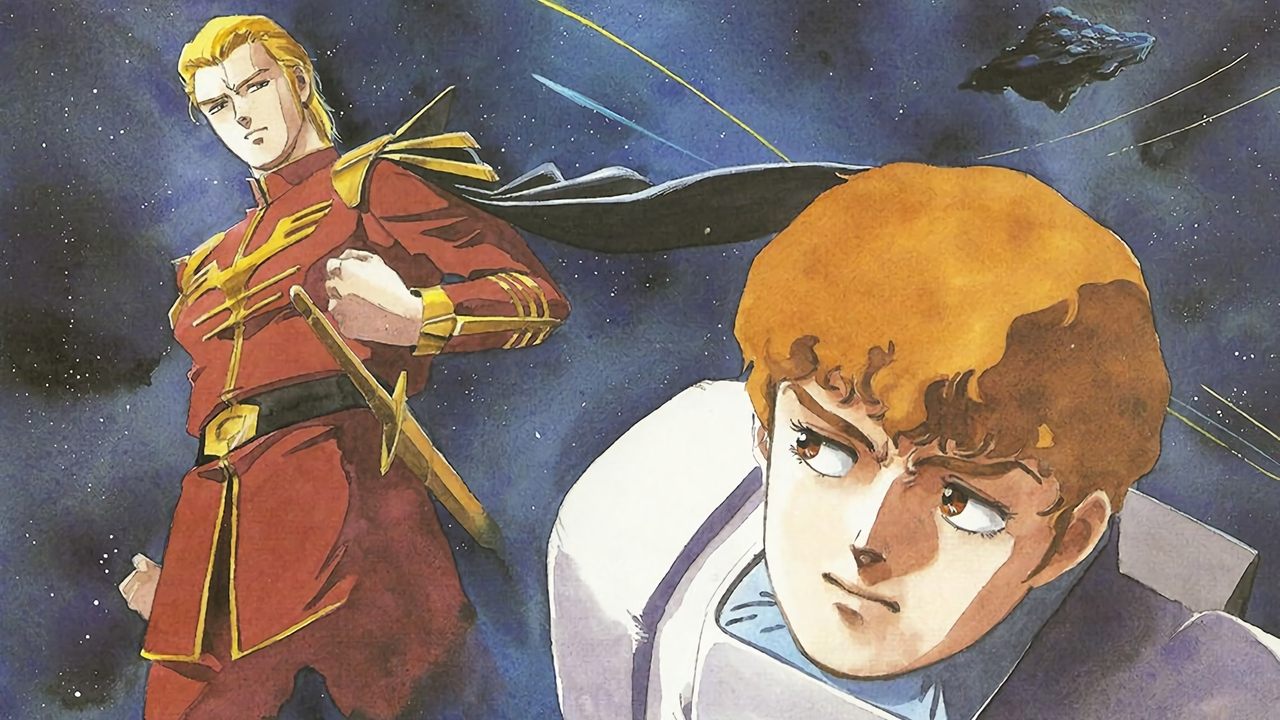
The plot revolves around Char Aznable, now leader of Neo Zeon, initiating his most audacious plan yet: dropping the massive asteroid base Axis onto Earth, forcing humanity to emigrate entirely into space, ostensibly to heal the planet but driven by a profound disillusionment with Earth-bound humanity. Standing against him, inevitably, is Amuro Ray, the Federation's ace pilot, now older, more seasoned, and burdened by the ghosts of conflicts past. Their personal battle becomes the focal point around which the fate of the Earth revolves.
### Voices Carrying History
The power of this clash hinges significantly on the performances. Tōru Furuya as Amuro and Shūichi Ikeda as Char deliver work that resonates with nearly a decade of character history. Furuya portrays Amuro not as the reluctant teen but as a weary, determined soldier who understands the cost of war all too well. There’s a quiet gravity in his voice. Ikeda’s Char is magnetic – charismatic, chillingly certain in his convictions, yet tinged with a sorrow that makes his extremism feel tragically inevitable rather than purely villainous. Their dialogue exchanges crackle with the weight of their shared past, a complex mix of respect, animosity, and perhaps a twisted form of understanding. We also get the stalwart Hirotaka Suzuoki returning as Bright Noa, the ever-reliable captain trying to navigate impossible situations, grounding the high-stakes drama.
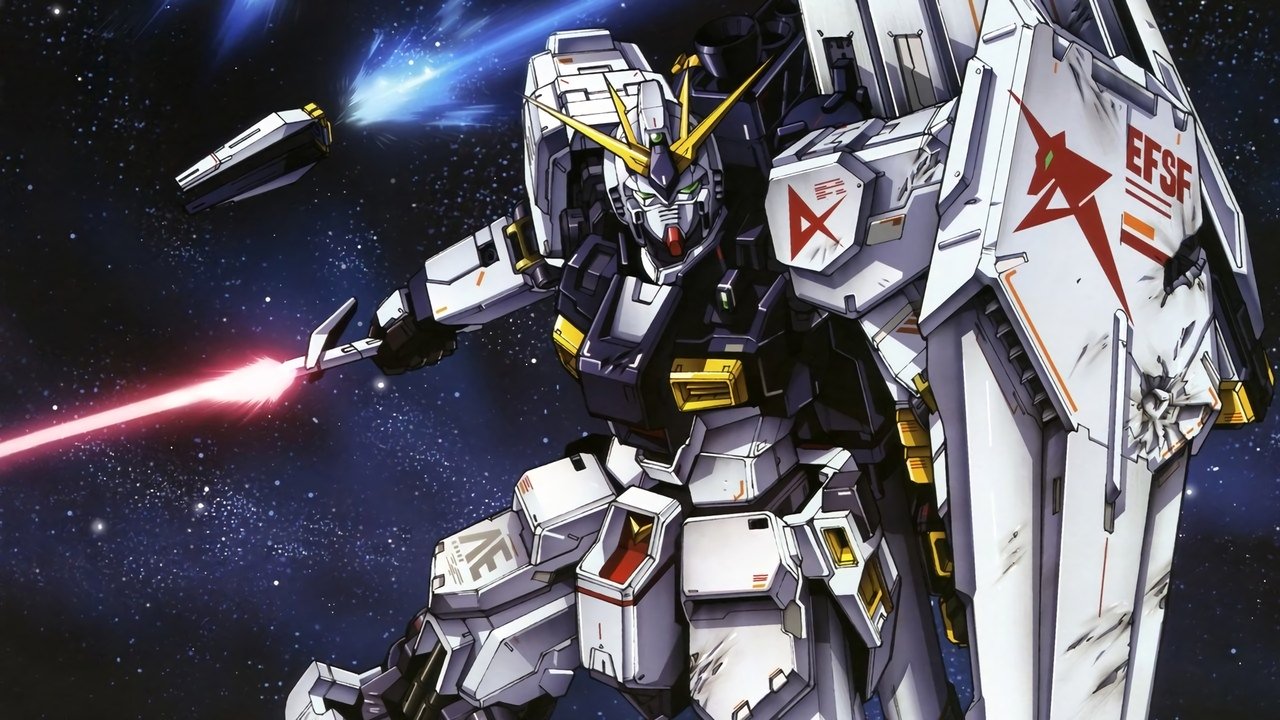
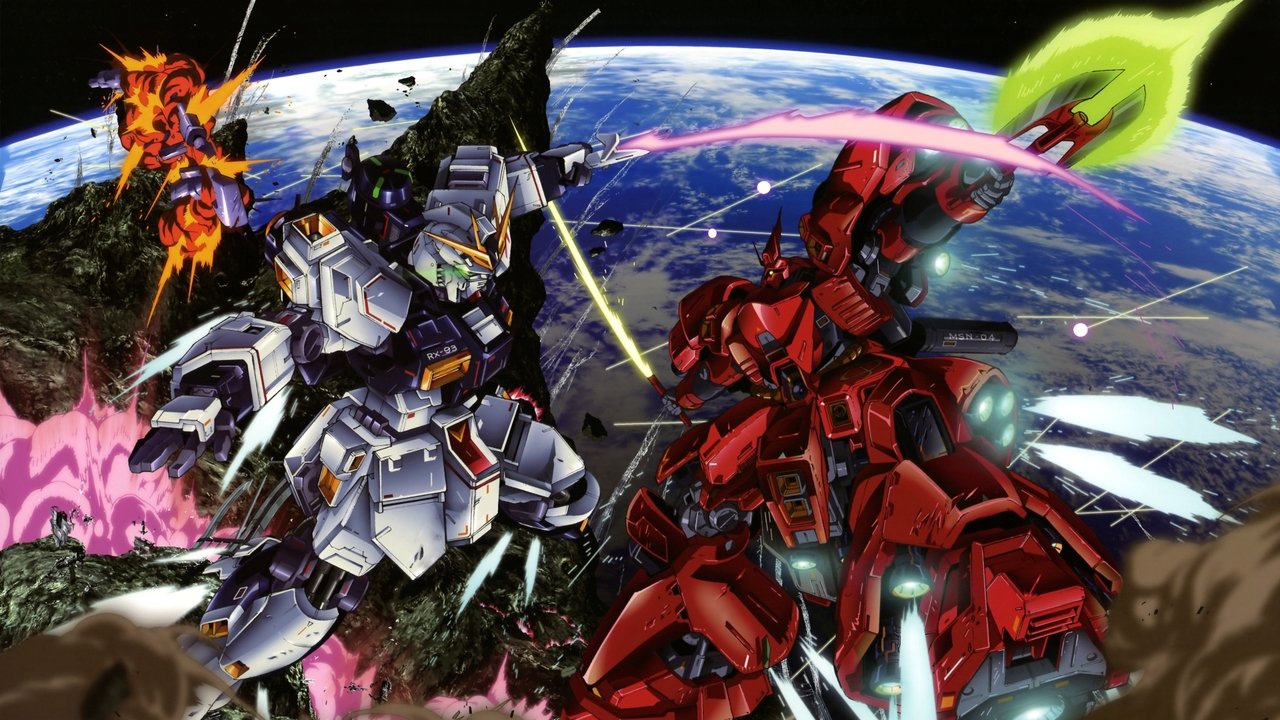
It's fascinating to remember this was the first original, feature-length Gundam film, not a compilation movie stitched together from the TV series. Produced with a reported budget allowing for higher animation quality, it certainly looked impressive on our CRT screens back in the day. The cel animation boasts a richness and detail, particularly in the mechanical designs, that felt like a significant step up. The Nu Gundam, personally designed in-universe by Amuro and equipped with its signature Fin Funnels, and Char’s imposing, crimson Sazabi remain iconic designs in the mecha genre, their battles rendered with a kinetic energy that still holds up remarkably well. Seeing these advanced mobile suits duel amidst the chaos of fleet battles and asteroid debris felt like witnessing the peak of Universal Century technology and warfare.
### Beyond the Laser Fire
Tomino, however, rarely lets the spectacle overshadow the substance. The film delves into familiar Gundam themes: the cyclical nature of violence, the burden of the past influencing the present, and the potential – often tragically squandered – of Newtypes. The environmentalist angle of Char's plan, though extreme, poses uncomfortable questions about humanity's relationship with its home planet that feel even more relevant today. Doesn't the sheer destructive capability wielded by both sides force us to question the cost of ideological purity?
The film isn't without its pacing issues, particularly concerning some of the newer characters like the volatile young Newtype Quess Paraya, whose allegiances shift rapidly and whose motivations can feel underdeveloped within the film's runtime. Some fans point to Tomino's original novelization, Beltorchika's Children, which presents an alternate (and some say more coherent, if darker) version of events, suggesting the constraints of a feature film necessitated some narrative compression. It's a tidbit often shared among devoted fans, highlighting how Tomino was wrestling with fully realizing this complex finale. Another fun fact often traded on grainy VHS copies was the film's Japanese box office success – pulling in over a billion yen, a hefty sum for an anime feature in 1988, proving the enduring appeal of the Amuro/Char saga.
### The Axis Shock
Spoiler Alert! The climax, involving Londo Bell forces attempting to physically push Axis away from its collision course with Earth, is audacious and unforgettable. The sight of mobile suits, friend and foe alike, desperately trying to divert catastrophe, culminating in the ambiguous, blinding light surrounding Amuro and Char, leaves a powerful, haunting impression. What exactly happened in those final moments? The film leaves it open, a choice that sparked countless debates among fans huddled around VCRs. It’s a testament to the film's emotional impact that this unresolved ending feels less like a cop-out and more like a poignant reflection on the immense, almost supernatural forces unleashed by human conflict and potential.
Char's Counterattack served as a cornerstone for the Universal Century timeline for years, the definitive end for its original protagonists. While the Gundam universe continued to expand, with later works like Gundam Unicorn (2010-2014) and Hathaway (2021-) exploring the aftermath of this conflict, this film remains a pivotal, emotionally charged event. It solidified the mature, often tragic tone that distinguishes the UC timeline within the broader Gundam multiverse.
Rating: 8.5/10
This score reflects the film's immense significance as the culmination of a legendary rivalry, its impressive (for the era) production values, powerful voice acting, and thematic depth. It's docked slightly for the sometimes-rushed handling of newer characters and plot points, a consequence perhaps of its ambitious scope within a feature film format. Yet, its strengths far outweigh its weaknesses.
Mobile Suit Gundam: Char's Counterattack isn't just a great mecha anime film; it's a vital piece of the Gundam mythos, a poignant, often brutal meditation on war, ideals, and the enduring, destructive power of human conviction. Watching it again feels like revisiting old soldiers bearing the scars of a long campaign – a fitting, if somber, farewell that still resonates decades later. What future did that final, blinding light promise, or prevent? That question lingers long after the tape rewinds.