Okay, settle in. Let's talk about that familiar blue and white logo flickering across the screen, the one that promised something… different. Something unnerving. Forget the glossy blockbusters for a moment. Think grimy alleys, cheap sunglasses, and the chilling suspicion that the world you know is just a meticulously crafted lie. We're diving into John Carpenter's 1988 barbed-wire Molotov cocktail of sci-fi horror and social commentary: They Live.

### The Glitch in the System
There's a texture to They Live that feels distinctly late-80s Los Angeles – sun-baked concrete, the palpable desperation of unemployment lines, the weary faces of people just trying to get by. Carpenter, who also composed the film’s signature bluesy, synth-driven score, grounds the extraordinary in the painfully ordinary. Our entry point isn't a square-jawed action hero, but Nada ("Nothing" in Spanish), played with surprising B-movie charisma by the late WWF wrestling legend "Rowdy" Roddy Piper. Nada drifts into L.A. looking for work, a blue-collar Everyman whose quiet stoicism masks a simmering frustration. He finds a construction job and temporary refuge in a shantytown, a community simmering with whispers of something bigger, something hidden. It's this grounded, almost documentary-style opening that makes the later revelations hit so hard. It doesn't feel like escapism; it feels like looking out your own window, just before the curtain is ripped away.
### Seeing is Believing (and Terrifying)
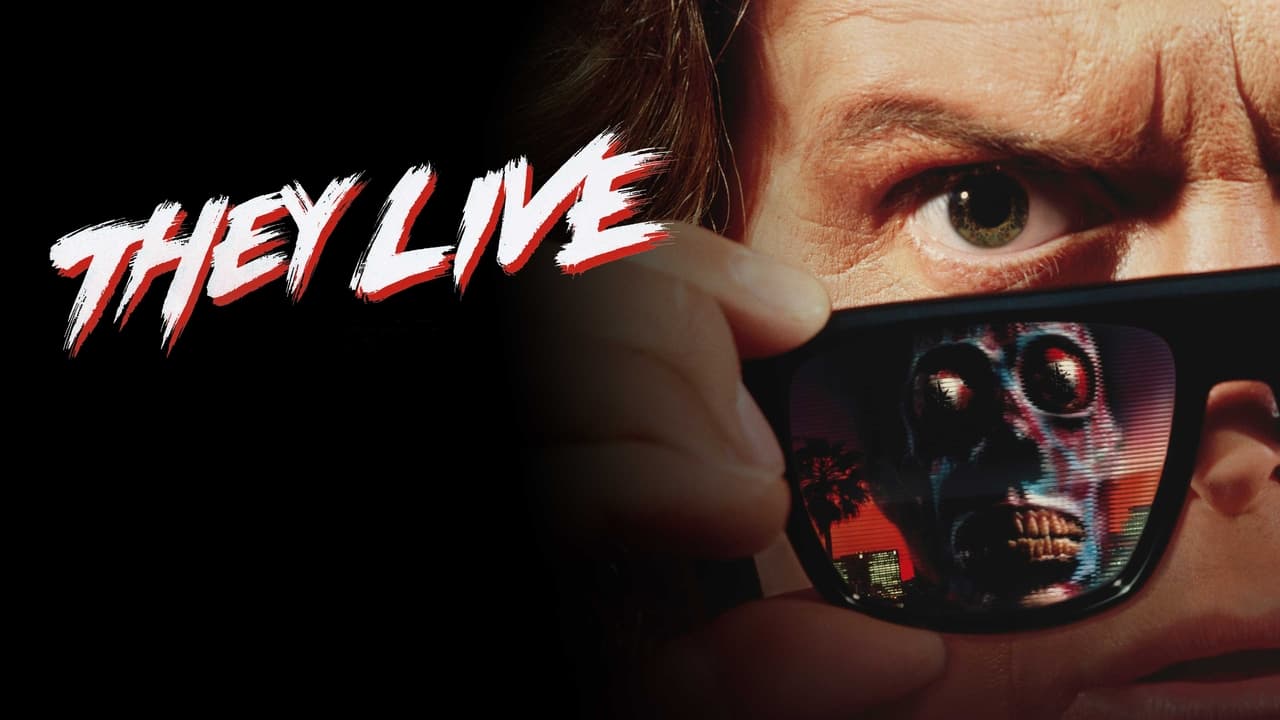
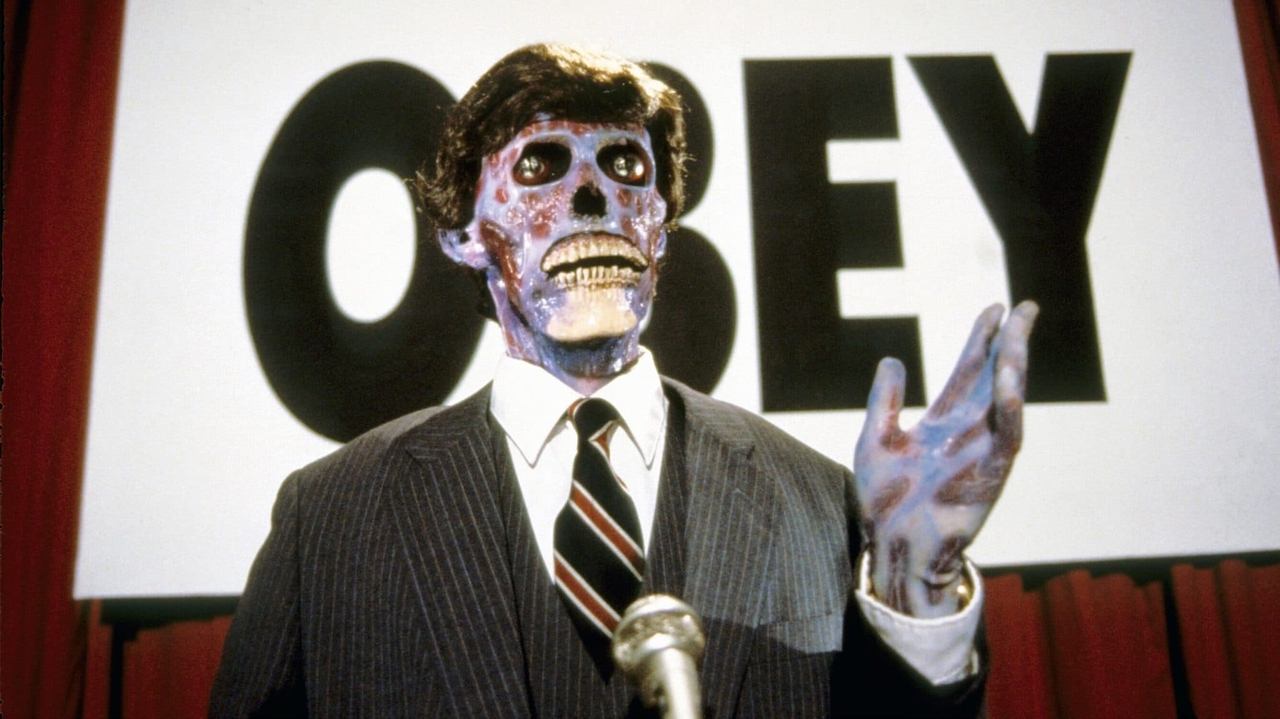
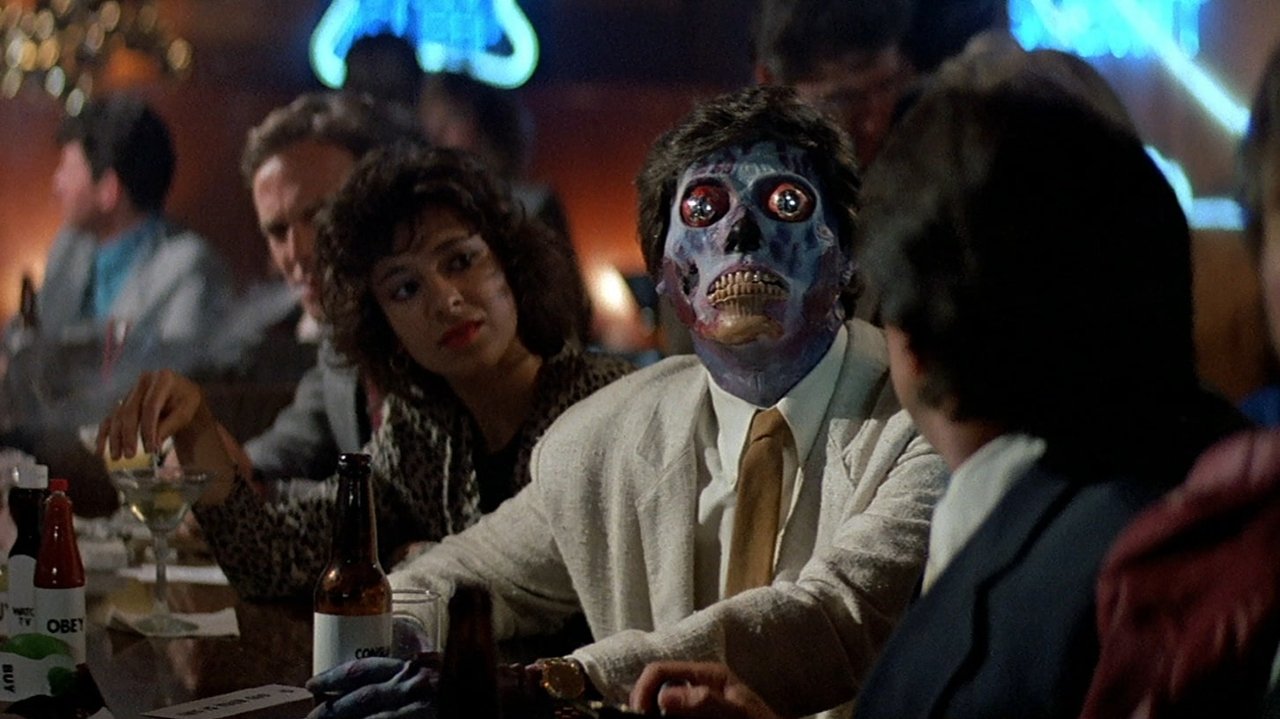
The genius stroke of They Live lies in its central MacGuffin: the Hoffman lenses, smuggled out by an underground resistance and disguised as cheap sunglasses. Put them on, and the world snaps into a stark, monochrome reality. Billboards scream "OBEY," "CONSUME," "MARRY AND REPRODUCE." Magazines reveal subliminal commands beneath the glossy photos. Money simply reads: "THIS IS YOUR GOD." And perhaps most disturbingly, certain people – the affluent, the authoritative – are revealed to be gaunt, skeletal aliens with bulging eyes, walking among us, controlling everything. The effect is simple, achieved through clever optical printing and makeup, but profoundly unsettling. Remember seeing those black and white messages for the first time? It wasn't just a plot device; it felt like a genuine crack in the façade, a glimpse of the puppet strings. The low budget (around $3 million) forced Carpenter into creative solutions, and the stark visual contrast became one of the film's most iconic and chilling elements.
### Bubblegum, Ass-Kicking, and THAT Fight
Of course, you can't discuss They Live without mentioning that line. Nada, finally armed and aware, strides into a bank, shotgun levelled:
"I have come here to chew bubblegum and kick ass... and I'm all out of bubblegum."

It’s pure pulp poetry, delivered deadpan by Piper, and instantly cemented its place in action movie history. Piper, initially a risky casting choice given his wrestling background, brings a physical presence and surprising vulnerability to Nada. He’s not a superhero; he’s just a guy pushed too far. His chemistry with co-star Keith David (a Carpenter regular, unforgettable in The Thing (1982)) as the initially skeptical Frank is electric. Their relationship culminates in perhaps the longest, most brutal, and oddly compelling back-alley fistfight ever committed to film. Seriously, that fight goes on for nearly six minutes! Reportedly, Piper and David choreographed much of it themselves, aiming for realism over flashy Hollywood stunts, and they genuinely connected with some of those blows during the three weeks it took to rehearse and film. It's less a fight scene and more a grueling argument settled with fists, symbolizing the difficulty of waking someone up to an uncomfortable truth. Meg Foster, with her strikingly pale eyes, adds another layer of icy unease as Holly Thompson, a woman caught between worlds.
### Beneath the Surface: Carpenter's Fury
They Live isn't subtle. Carpenter, writing under the pseudonym "Frank Armitage" (a nod to H.P. Lovecraft), channelled his frustration with the Reagan-era culture of greed, consumerism, and media manipulation into a direct cinematic assault. The film, adapted from Ray Nelson's 1963 short story "Eight O'Clock in the Morning," felt fiercely political then, a raw scream against conformity and the widening gap between the haves and have-nots. What’s truly unsettling is how relevant its themes remain. Swap out the 80s brands for today's tech giants and influencers, and the core message about subliminal control and manufactured consent feels disturbingly current. The aliens aren't just invaders; they're collaborators with human elites, selling out the planet for profit. It’s a cynical, angry film, but its rage feels earned. Carpenter, coming off the box office disappointment of the brilliant Big Trouble in Little China (1986), seemed determined to make something lean, mean, and impossible to ignore. He shot on location in downtown L.A., adding to the film’s gritty authenticity, even finding the perfect church for the resistance hideout right across from his production office.
### Lasting Signal
They Live wasn't a massive blockbuster upon release, but its signal grew stronger over time, finding its devoted audience on VHS and cable. Its imagery, particularly the "OBEY" graphics, famously inspired artist Shepard Fairey's "Obey Giant" street art campaign, cementing its place in counter-culture iconography. It remains a potent blend of sci-fi paranoia, action thrills, and biting satire – a quintessential slice of John Carpenter at his most politically charged and inventive. Does it have rough edges? Sure. Some dialogue clunks, and the B-movie seams occasionally show. But its core concept is so strong, its execution so distinctive, and its message so enduringly sharp that it transcends its limitations.
Rating: 8.5/10
Why the score? They Live delivers a high-concept sci-fi premise with punk rock energy and unforgettable visuals. Piper and David are iconic, the action hits hard (especially that fight!), and its satirical bite remains remarkably sharp decades later. It's pure Carpenter – stylish, cynical, and deeply entertaining, overcoming its budget constraints with sheer attitude and a killer central idea. A few rough edges keep it from perfection, but its impact and enduring relevance make it a standout cult classic of the VHS era.
It’s one of those films that burrows under your skin. Long after the credits roll and the VCR clicks off, you might just find yourself glancing twice at that billboard down the street, wondering what message lies hidden beneath the surface. And maybe, just maybe, reaching for a pair of cheap sunglasses. Just in case.