The air hangs thick and humid over Absolom, not just with jungle damp, but with the suffocating weight of despair. 1994's No Escape dumps you onto this island prison without ceremony, a place where the discarded refuse of a futuristic penal system fight, bleed, and die under an indifferent sky. It’s a film that doesn't just depict a brutal world; it feels like one, clinging to you long after the tracking lines fade from the screen. There’s a grime to it, a tangible sense of hopelessness baked into the very celluloid, that feels uniquely potent from that mid-90s action-thriller era.
Welcome to the Jungle
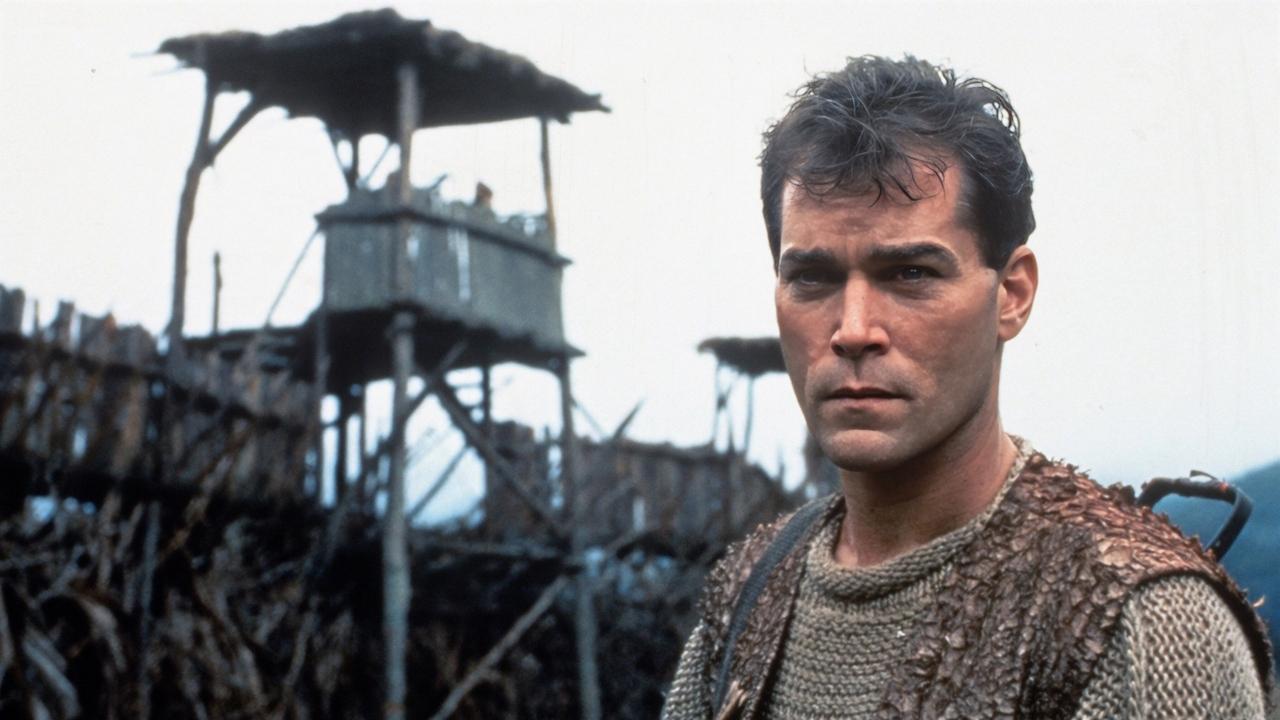
Our unwilling tourist is John Robbins (Ray Liotta), a decorated Marine convicted of assassinating his commanding officer. After proving too much trouble for conventional high-security prisons (in a particularly memorable opening sequence involving a warden and a lethal injection device), he’s flown to the ultimate dumping ground: Absolom. This is no ordinary prison; it’s a privately-run island where the worst of the worst are abandoned, tracked by satellite, and left to their own devices. Escape is, as the title bluntly states, not an option. What Robbins finds is a fractured society mirroring humanity's basest instincts and its desperate grasp for order.
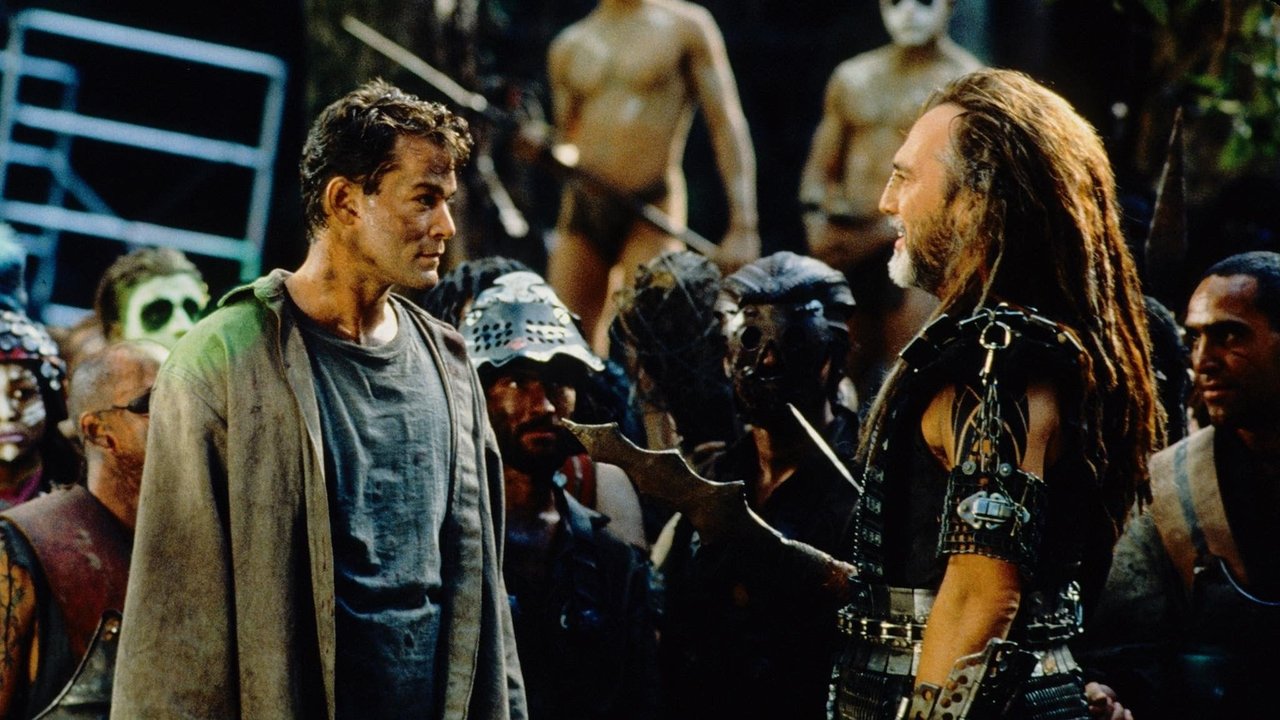
The island is dominated by two factions. First, the Outsiders – a teeming mass of painted, cannibalistic savages led by the chillingly charismatic Marek (Stuart Wilson, absolutely relishing the role). They represent pure chaos, living moment-to-moment in a frenzy of violence and primal urges. Wilson’s performance is a standout; he’s both terrifying and oddly compelling, a vision of unrestrained id ruling a Mad Max-esque tribe. Remember his chilling pronouncements, delivered with that theatrical flair? They perfectly captured the horrifying appeal of absolute power in a lawless land.
A Glimmer of Fragile Order
Contrasting the Outsiders is the makeshift village of the Insiders. Led by the enigmatic figure known only as 'The Father' (Lance Henriksen, bringing his usual gravitas and world-weariness), they’ve carved out a semblance of civilization amidst the horror. They farm, build, trade, and enforce their own laws – a fragile bulwark against the surrounding anarchy. Henriksen, a genre stalwart beloved from films like Aliens (1986) and Near Dark (1987), anchors this community with a quiet authority that feels hard-won and constantly precarious. It’s into this dynamic that Robbins, a cynical loner seeking only his own survival (and potential escape), is thrown.

Ray Liotta, fresh off his iconic turn in Goodfellas (1990), embodies Robbins with a coiled intensity that radiates off the screen. He’s not a clear-cut hero; he's taciturn, damaged, and initially motivated solely by self-preservation. Yet, Liotta makes you feel the flicker of conscience beneath the hardened exterior. His journey from detached outsider to reluctant participant in the Insiders' struggle forms the core of the film. Reportedly, Liotta trained intensely for the role, wanting to embody the physicality of a desperate soldier, and it shows in every tightly wound movement and explosive burst of action.
Grit, Grime, and Practical Gore
What truly elevates No Escape beyond standard action fare is its atmosphere and commitment to practical effects. Director Martin Campbell, who would later inject similar gritty realism into the Bond franchise with GoldenEye (1995) and Casino Royale (2006), crafts a visceral experience. Filmed on location in the dense rainforests of Queensland, Australia, the environment itself becomes a character – oppressive, dangerous, inescapable. The production design leans into the makeshift, salvaged aesthetic perfectly. The Insiders’ village feels authentically constructed from scrap, while the Outsiders' territory is a nightmarish landscape of decay.
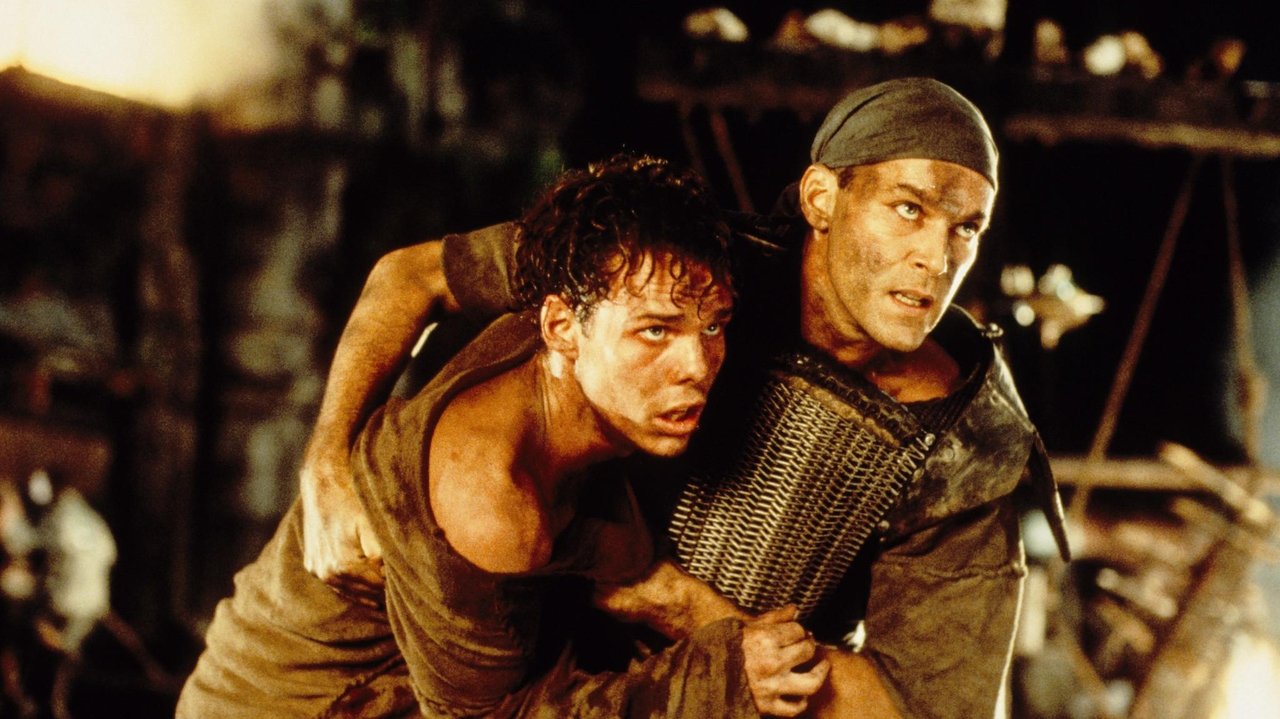
The action sequences are brutal and grounded. Forget slick CGI; this is the era of squibs, stunt work, and tangible impact. The fights feel desperate, the deaths have weight, and the stakes feel incredibly high. There’s a rawness here that many modern action films lack. You feel the mud, the sweat, the blood. Remember those brutal spiked clubs and elaborate traps? They felt disturbingly real, crafted with a grim ingenuity born of limited resources both within the film's world and, perhaps, reflecting its solid but not blockbuster $20 million budget. The film, adapted from Richard Herley's novel "The Penal Colony," underwent a title change from its working title, likely seeking broader action appeal, but it never shed its dark, survivalist core.
Legacy of the Lost
No Escape wasn't a runaway smash hit, pulling in roughly $15.3 million domestically, but it struck a chord with genre fans and found a strong second life on VHS. It sits comfortably alongside other tough, dystopian 90s actioners like Waterworld (1995) or Demolition Man (1993), though perhaps with a darker, more nihilistic edge. It explores familiar themes – the thin veneer of civilization, the potential for redemption in hell, the definition of society – but does so with a grim conviction and a satisfyingly bleak aesthetic. It’s a film that earns its R-rating not just through violence, but through its pervasive sense of dread. Doesn't that final shot, the uncertain future hanging in the balance, still leave a knot in your stomach?
It’s a testament to solid direction, committed performances (especially from the central trio), and a genuinely oppressive atmosphere. It takes its brutal premise seriously and delivers a gripping survival thriller that holds up surprisingly well, even if the specific 'futuristic' tech feels charmingly dated now.

VHS Heaven Rating: 8/10
Justification: No Escape earns a strong 8 for its intense atmosphere, compelling performances from Liotta, Henriksen, and Wilson, brutal and well-staged practical action, and effective world-building. It fully commits to its grim premise, creating a memorable and genuinely tense survival thriller. While perhaps predictable in some plot beats common to the genre, its execution and unwavering tone make it a standout 90s action artifact.
Final Thought: It might not have reinvented the wheel, but No Escape spun it through mud, blood, and jungle rot, leaving behind a gritty, gripping tale of survival that still feels satisfyingly bleak – a perfect late-night watch from the back shelves of the video store.