Alright, fellow tapeheads, let's rewind to 1993. Picture this: you've just popped a fresh VHS into the VCR, the tracking is mostly adjusted, and the opening scene explodes onto your CRT screen. Los Angeles, 1996 – a fiery, bullet-riddled warzone that feels ripped straight from the headlines of the era, albeit dialed up to eleven. This is the brutal introduction to Demolition Man, a film that kicks off like a gritty urban actioner before gleefully vaulting into a surprisingly funny, satirical sci-fi future. It’s a whiplash-inducing combo that, even today, feels uniquely… well, 90s.

### Welcome to the Future, You're Fined
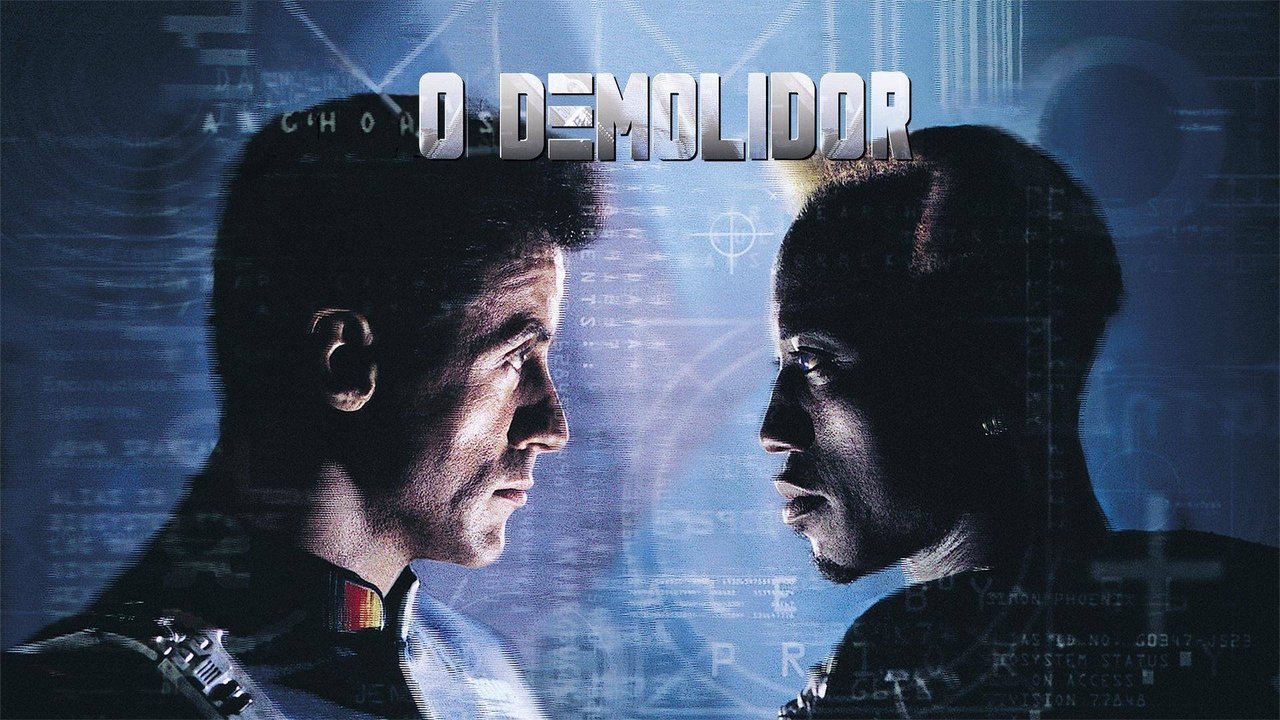
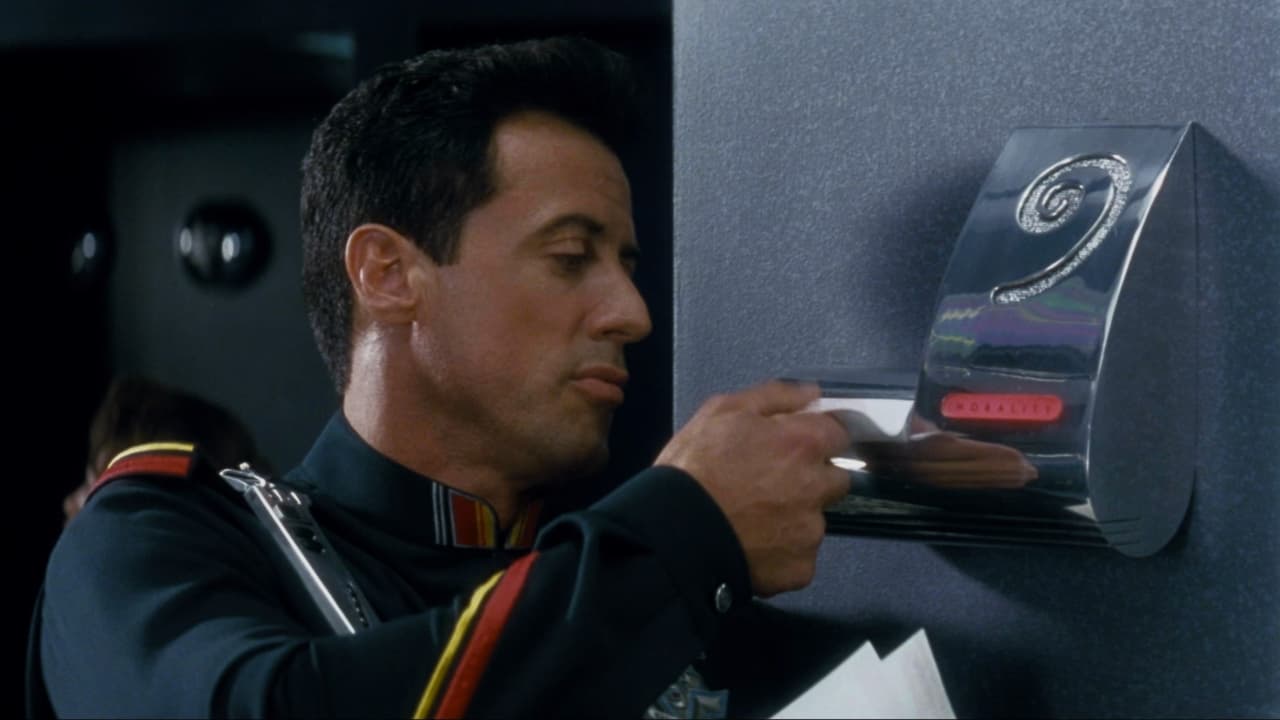
The setup is pure high-concept gold: Sgt. John Spartan (Sylvester Stallone), a take-no-prisoners cop dubbed the "Demolition Man" for his collateral-damage-heavy methods, finally captures his psychotic arch-nemesis, Simon Phoenix (Wesley Snipes). But when hostages die in the process (framed by Phoenix, naturally), both men are sentenced to cryo-prison. Flash forward to 2032: San Angeles is a placid, sanitized utopia where crime is virtually non-existent, physical contact is frowned upon, and even swearing earns you a citation via automated public morality monitors. It's all very beige and peaceful... until Phoenix escapes during a parole hearing, bringing his brand of 1990s chaos crashing down on this squeaky-clean world. The baffled police, accustomed only to handing out verbal warning tickets, are utterly outmatched. Their only solution? Thaw out the one man who knew how to stop Phoenix: John Spartan.
Retro Fun Fact: The contrast between the gritty 1996 opening and the sterile 2032 was intentional. Director Marco Brambilla, making his feature debut after a successful career in commercials and music videos, brought a distinct visual flair. He reportedly wanted the future to look sleek but almost oppressively bland, making Phoenix’s arrival feel even more disruptive.

### Stallone vs. Snipes: A Clash of Titans (and Styles)
Sylvester Stallone plays Spartan as the ultimate blunt instrument, a man utterly perplexed by a future where Arnold Schwarzenegger was president (a throwaway gag that feels eerily prescient now) and the only restaurant is Taco Bell. Okay, maybe you saw the version where it was Pizza Hut – a fascinating bit of product placement adjustment for international markets! Stallone leans into the fish-out-of-water comedy surprisingly well, his bewildered reactions to things like the infamous "three seashells" providing some of the film's biggest laughs. He reportedly wasn't thrilled with the script initially, needing a solid hit after a couple of less successful outings, but his blend of stoic action hero and bewildered time-traveler works perfectly.
But let's be honest, Wesley Snipes steals every scene he's in. As Simon Phoenix, he’s an absolute force of nature – gleefully chaotic, dangerously charismatic, and sporting that iconic peroxide-blonde flat-top. Snipes, already showcasing the martial arts skills he'd hone further in films like Blade (1998), brings a physical menace that feels genuinely threatening, but it’s his infectious, maniacal energy that makes Phoenix such a memorable villain. Apparently, both Steven Seagal and Jean-Claude Van Damme were considered for the lead roles, but both action titans wanted to play the villain, paving the way for the Stallone/Snipes matchup we got. Thank goodness for that – Snipes's performance is pure cinematic joy.

Rounding out the main trio is Sandra Bullock in a star-making turn as Lieutenant Lenina Huxley, a 2032 cop obsessed with 20th-century culture and thrilled by Spartan's "primitive" ways. Bullock brings an essential sweetness and naivete that grounds the film's absurdity, creating genuinely charming chemistry with Stallone. It's hard to imagine the movie working nearly as well without her wide-eyed enthusiasm acting as the audience's guide to this strange new world. Don't forget strong support from Nigel Hawthorne as the seemingly benevolent Dr. Cocteau and a perfectly cast Denis Leary as Edgar Friendly, the leader of the underground Scraps who just wants the freedom to eat greasy burgers and swear.
### Action the Old-Fashioned Way
While the satire bites sharp, Demolition Man never forgets it's an action movie. And folks, this is 90s action. Remember those massive, fiery explosions in the opening? Pure practical effects, baby! You can almost feel the heat coming off the screen. The stunt work is visceral – real people doing dangerous things, car chases with actual metal crunching, gunfights that felt impactful before digital blood spray became the norm. The museum fight sequence, where Spartan and Phoenix smash through exhibits, feels genuinely destructive in a way that modern CGI-heavy scenes often struggle to replicate. There's a weight, a tangible reality to the mayhem. Did it look slicker later? Maybe. But did it feel more real back then, watching it on that fuzzy VHS tape? Absolutely.
Retro Fun Fact: The film's budget was around $57 million (roughly $120 million today), a hefty sum for the time, allowing for those impressive practical set pieces. It paid off, grossing nearly $160 million worldwide, proving audiences were hungry for this blend of high-octane action and clever sci-fi comedy.
### More Than Just Muscle and Mayhem
Beyond the explosions and one-liners, Demolition Man smuggles in some surprisingly sharp commentary on conformity, censorship, and the potential pitfalls of striving for a "perfect" society at the expense of personal freedom. The sterile future of San Angeles, while peaceful, is also stiflingly dull and controlling. Edgar Friendly's rebels, living underground and clinging to the "vices" of the past, represent a messy but vital human spirit. It’s this satirical edge, penned largely by Daniel Waters (of Heathers fame, known for his biting wit), that elevates the film beyond a simple shoot-'em-up. The film's initial critical reception was mixed, but its blend of action, comedy, and surprisingly relevant themes helped it achieve enduring cult classic status among Demolition Man VHS memories seekers.
### The Verdict
Demolition Man is a blast, plain and simple. It’s a near-perfect capsule of 90s blockbuster filmmaking: big stars, bigger explosions, a high-concept premise, quotable lines ("Mellow greetings," anyone?), and just enough self-aware humor to keep things fun. Stallone is the dependable anchor, Bullock is utterly charming, but Snipes ignites the screen with one of the era's most entertaining villain performances. The practical action still hits hard, and the satire remains surprisingly relevant. It’s a film that knew exactly what it wanted to be and delivered with gusto.
Rating: 8.5 / 10
Justification: The score reflects the film's successful blend of thrilling practical action, genuinely funny fish-out-of-water comedy, career-highlight performances (especially Snipes), and surprisingly sharp satire. It’s incredibly rewatchable and captures a specific, energetic 90s blockbuster vibe perfectly. Minor deductions for some dated elements, but its strengths far outweigh any weaknesses.
Final Thought: In an age of polished digital perfection, Demolition Man remains a glorious monument to the days when action felt tangible, villains had infectious fun, and the future looked suspiciously like a giant Taco Bell. Be well!