"Some nightmares don't end when you wake up. Some follow you across centuries." That’s the chilling hook whispering beneath the surface of Steve Miner’s 1989 dark fantasy romp, Warlock. Forget gentle magic; this film plunges you headfirst into a clash fueled by ancient malevolence and righteous fury, catapulting its conflict from the grim piety of 17th-century Boston straight into the neon-streaked cynicism of late-80s California. It’s a film that arrived slightly out of time, filmed in '88 but famously shelved for years due to distributor New World Pictures' financial implosion, finally hitting US screens via Trimark in '91. That delay somehow adds to its strange, displaced aura – a dark fairy tale unmoored, much like its titular antagonist.
### A Shadow Out of Time
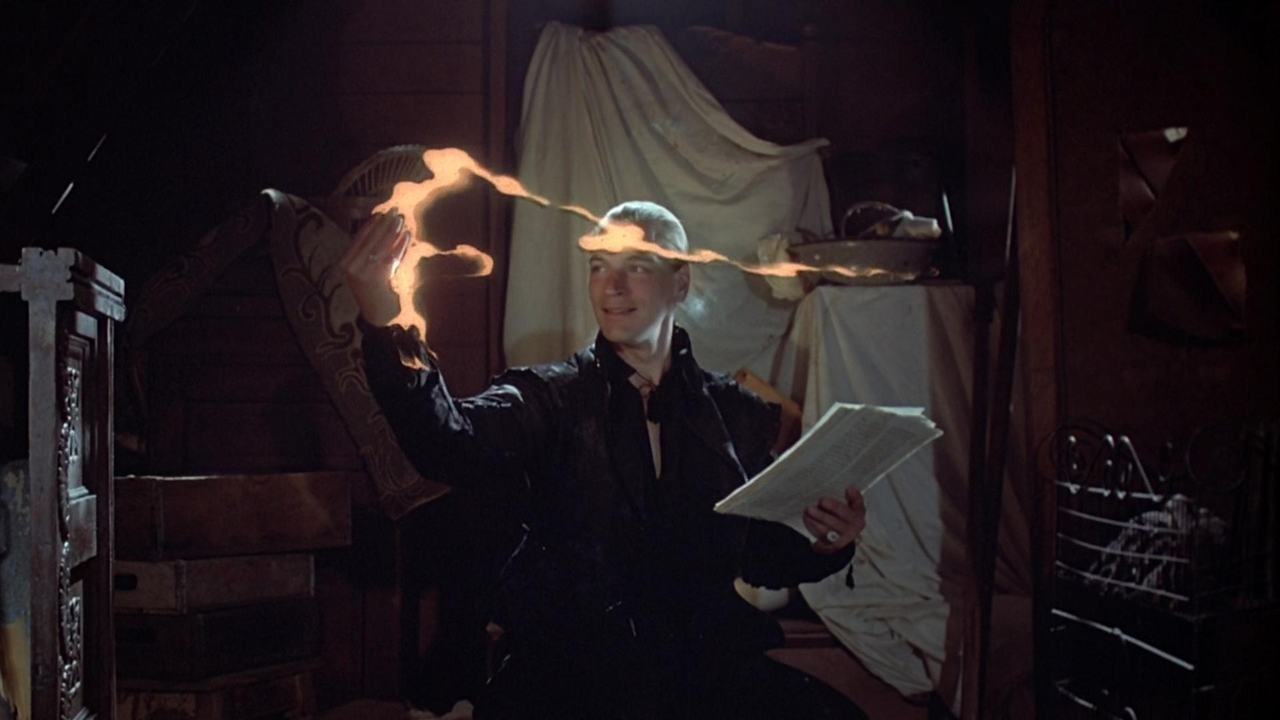
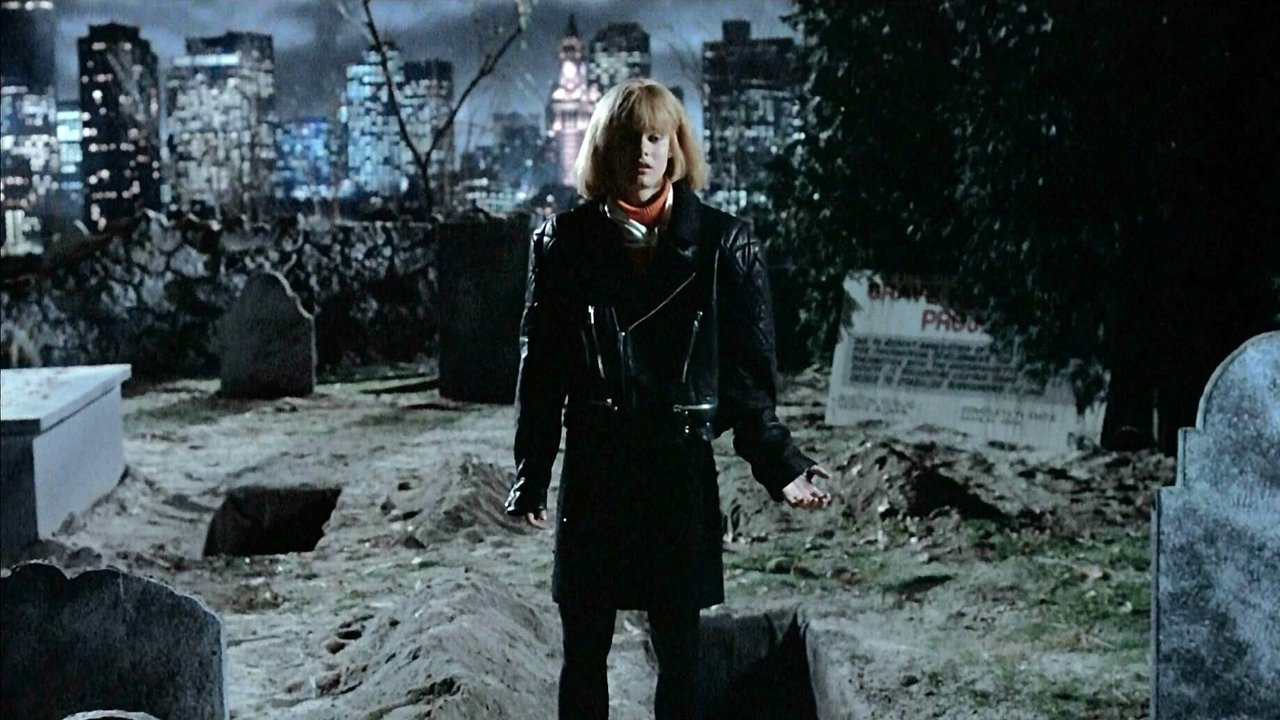
The premise, penned by David Twohy (who would later give us the stark sci-fi dread of Pitch Black), is beautifully simple yet potent. In 1691, a malevolent Warlock (Julian Sands) is captured and sentenced to death by the determined witch-hunter Giles Redferne (Richard E. Grant). But just before the axe falls, Satan intervenes, flinging the Warlock forward through time to Los Angeles, circa 1988. Redferne, driven by an unwavering sense of duty (and perhaps a touch of fanaticism), dives through the portal after him. Their centuries-spanning vendetta crash-lands in the life of Kassandra (Lori Singer), a waitress who unwittingly provides shelter to the charming yet utterly diabolical Warlock, only to find herself cursed and embroiled in a desperate race against time.
What follows is less a traditional horror movie and more a supernatural road trip fused with action beats and moments of genuine creepiness. The Warlock seeks the scattered pages of the Grand Grimoire, a book containing the true name of God, which, if spoken backwards, will unmake creation itself. Redferne and Kassandra must stop him, leading to a cross-country chase punctuated by displays of sinister magic and increasingly desperate countermeasures.
### The Devil You Know
Let's be honest: Julian Sands is this movie. Fresh off roles like A Room with a View (1985), his casting here was inspired. He plays the Warlock not as a cackling fiend, but with an unnerving, aristocratic calm. There's a chilling politeness to his evil, a detached curiosity about the modern world that makes his sudden acts of violence all the more shocking. Whether he's casually tasting cocaine, frying a man with a hex, or acquiring the fat of an unbaptized boy for a flying potion (a sequence that still makes you squirm), Sands embodies a primordial wrongness draped in effortless charm. It's a performance that absolutely anchors the film, making the Warlock a truly memorable 80s villain. Rumor has it Sands, ever the professional, performed a significant number of his own wirework stunts for the flying scenes, adding a physical commitment to his already magnetic presence.
Opposite him, Richard E. Grant, then best known for the cult classic Withnail & I (1987), is a force of nature as Redferne. He's the perfect counterpoint: intense, driven, utterly baffled by the 20th century ("Surely you have stables?"), yet relentlessly focused on his quarry. His interactions with the modern world provide moments of levity, but Grant never lets you forget the grim seriousness of his mission. Lori Singer (Footloose), meanwhile, has the tricky task of grounding the film. Her character, Kassandra, suffers a particularly nasty aging curse, adding a ticking clock and a personal stake to the quest. The practical makeup effects used to depict her rapid aging were genuinely unsettling for the time, a constant visual reminder of the Warlock's power and cruelty. Doesn't that gradual decay still feel effectively disturbing?

### Miner’s Dark Magic
Director Steve Miner, already seasoned in the horror genre with Friday the 13th Part 2 (1981) and Part III (1982), brings a workmanlike efficiency to Warlock. He knows how to stage a decent scare and keep the plot moving. The film balances its darker moments – like the infamous tongue removal scene – with a sense of pulpy adventure. The practical effects, while obviously dated by today's standards, possess that tangible, gruesome quality that defined so much 80s horror. The Warlock reconstituting himself from ectoplasmic goo, the aforementioned aging, the bursts of magical energy – they all have that handcrafted feel that CGI often lacks. For its relatively modest reported budget (around $7 million), the film delivers surprisingly effective spectacle.
David Twohy's script cleverly blends folklore (witch-finders, grimoires, sabbats) with modern action tropes. The use of mundane objects imbued with counter-magic (like weathervanes and salt) adds a neat touch, forcing our heroes to be resourceful. It creates a world where ancient evil feels dangerously plausible amidst the everyday clutter of late-20th-century America.
### Echoes in the VHS Static
Warlock wasn't a massive blockbuster upon its delayed release, but it found a solid audience on home video, becoming something of a cult favorite among genre fans. Its blend of historical fantasy, horror, and road movie elements felt distinctive. It tapped into that late-80s vibe where dark fantasy was finding its feet alongside slasher sequels and sci-fi action. The film even managed to overcome its distribution woes to earn a respectable $20.9 million at the US box office, paving the way for two direct-to-video sequels: Warlock: The Armageddon (1993) and Warlock III: The End of Innocence (1999), neither of which captured the original's peculiar charm, though Armageddon has its own campy defenders.
My own well-worn tape of Warlock got plenty of play back in the day. There was just something undeniably cool about Sands' portrayal and the film's confidently weird mix of tones. Seeing it again definitely brings back memories of discovering these kinds of darker fantasy films tucked away on the rental store shelves, promising something a little more unusual than the standard fare.
***

VHS Heaven Rating: 7/10
Justification: Warlock earns its score primarily through the iconic and chilling performance of Julian Sands, a genuinely inventive premise that blends historical witchcraft with modern horror-action, and some memorably gruesome practical effects characteristic of the era. While some elements feel dated and the plot occasionally leans into B-movie territory, Steve Miner's direction keeps things moving effectively. Richard E. Grant provides strong support, and the film delivers a unique dark fantasy experience that stands out from its contemporaries. Its troubled release history only adds to its cult mystique.
Final Thought: Warlock remains a potent slice of late-80s dark fantasy, a film that successfully bottled a specific kind of eerie charm thanks largely to its unforgettable villain. It's a perfect example of how a strong concept and a magnetic lead performance could elevate genre material into something memorable, a flickering gem in the vast archives of VHS Heaven.