### Adrift in the Deep End: Remembering Palombella Rossa
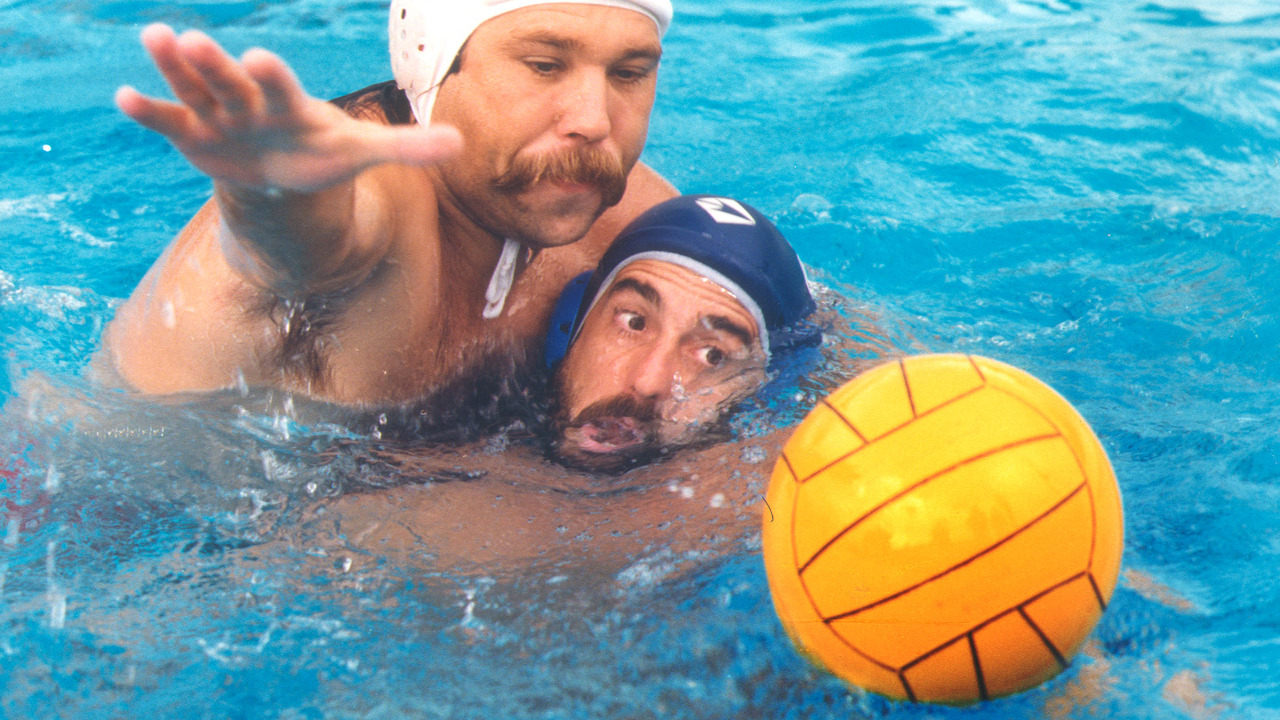
There are films that gently guide you into their world, and then there are those, like Nanni Moretti's Palombella Rossa (1989), that feel like being shoved unexpectedly into the deep end of a swimming pool – disorienting, fragmented, yet strangely invigorating. Watching it again after all these years, pulling out what feels like a spectral copy from the dusty shelves of memory (because let's be honest, finding this gem in a Blockbuster back in the day was a minor miracle, usually nestled deep in the 'World Cinema' section), the film's peculiar blend of personal crisis, political commentary, and… water polo… feels just as potent, just as bewilderingly Moretti, as it did then. It’s less a straightforward narrative and more like eavesdropping on a soul in flux.
A Mind Like Troubled Water
The setup itself is beautifully simple, yet opens onto vast complexities. Michele Apicella (Nanni Moretti, playing his recurring cinematic alter-ego), a Communist politician and water polo player, suffers amnesia following a car accident. He finds himself thrust back into a crucial away game for his team, unable to remember who he is, what he believes, or even the rules of the sport he’s meant to be playing. The pool becomes a microcosm of his fractured psyche, the game clock ticking down not just on the match, but perhaps on his entire sense of self.
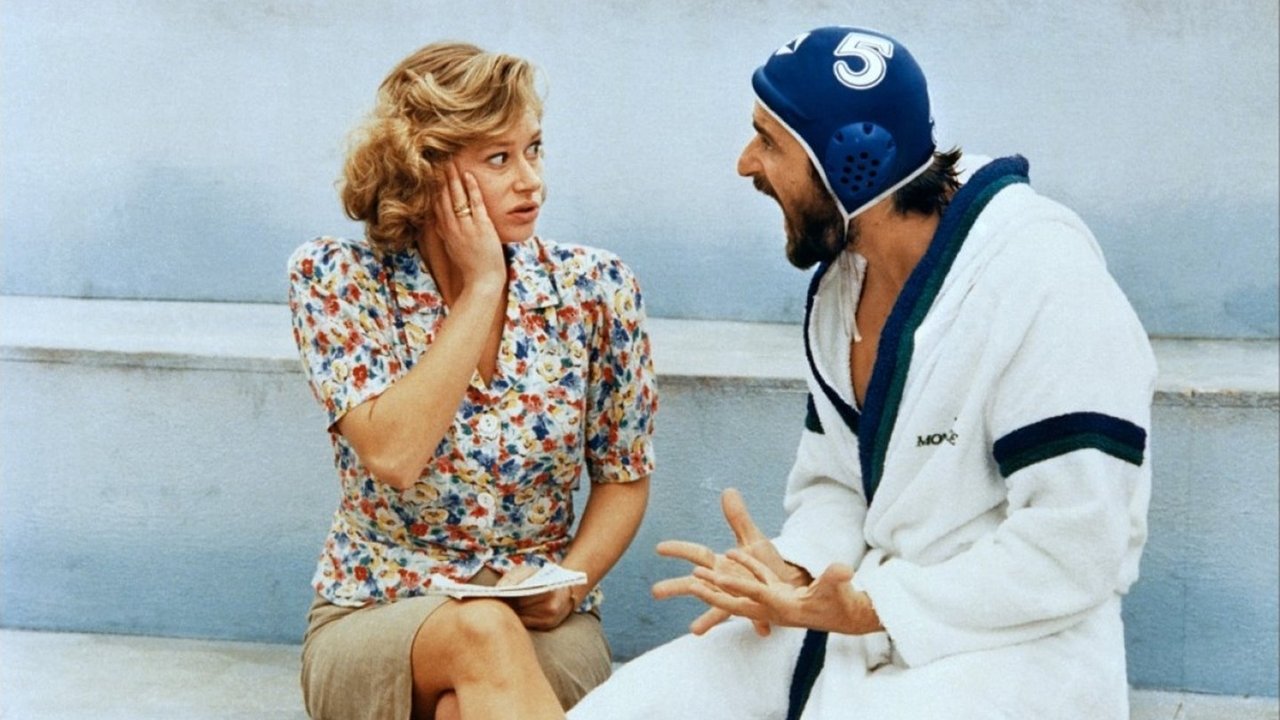
Moretti, who also wrote and directed (a triple threat common in his intensely personal filmography, reminiscent of his work in films like Caro Diario / Dear Diary from 1993), uses this premise not for cheap laughs or thriller mechanics, but as a springboard for exploring profound questions. How much of our identity is tied to memory? What remains when our political convictions, the bedrock of our public lives, suddenly feel like borrowed phrases from forgotten books? The film drifts between the chaotic present of the match, hazy flashbacks, surreal encounters (like watching clips of Doctor Zhivago on a nearby TV), and Michele’s desperate attempts to grasp onto fragments of his past and purpose.
Moretti Being Moretti
If you've seen other Moretti films, you'll recognise the DNA immediately. His performance as Michele is the film's anchor. It's a masterclass in controlled anxiety, intellectual searching, and wry exasperation – often directed at the jargon and clichés spouted by teammates, journalists (Mariella Valentini plays a persistent interviewer probing his confused state), and even his younger self in flashbacks. There's a raw honesty here; you feel Moretti isn't just playing a character, he's wrestling with his own anxieties about political identity and the state of the Left. Supporting players like Silvio Orlando as the exasperated coach provide effective counterpoints, reacting to Michele's existential drift with a grounded concern for the game.
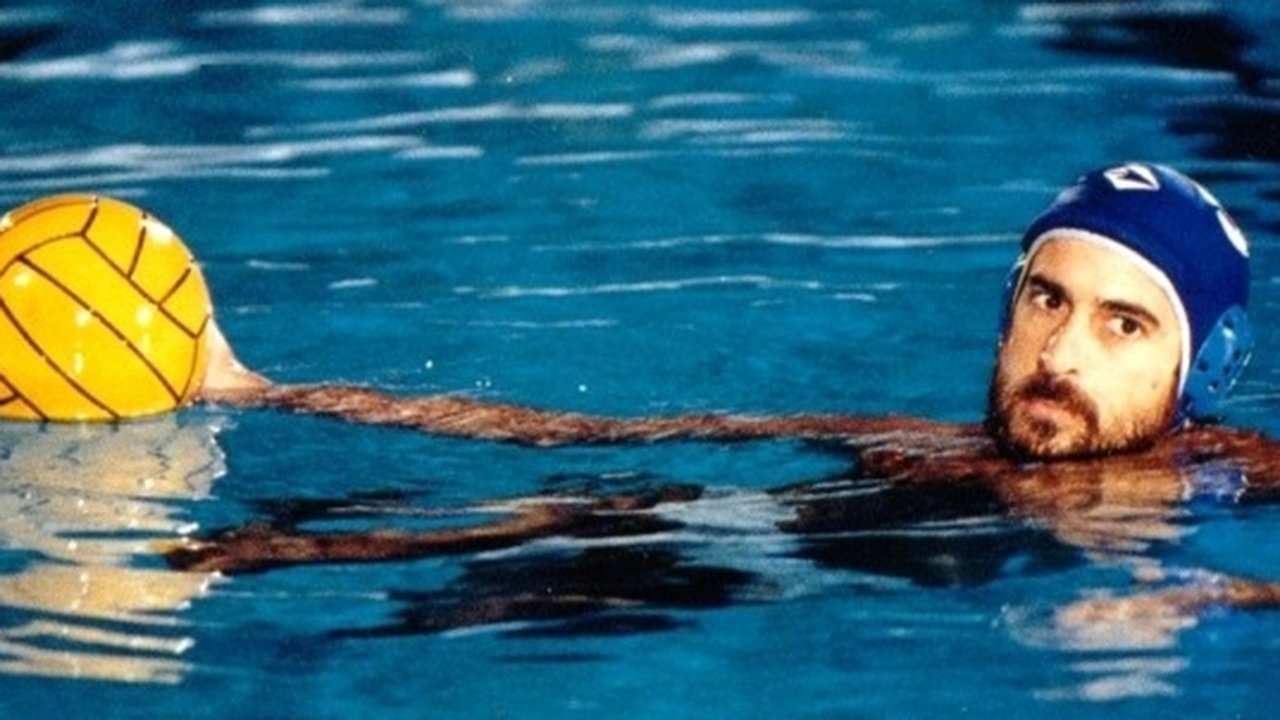
Moretti’s passion for water polo is palpable (he’s an avid player himself), lending the sports scenes an authentic energy, even as they serve a largely symbolic function. The confined space of the pool, the intense physical struggle, the reliance on teamwork contrasted with Michele’s isolation – it all mirrors his internal state. The titular "Palombella Rossa" (Red Lob), a specific type of water polo shot, becomes a loaded symbol, hinting at both a potential winning move in the game and the fading trajectory of Italian Communism.
Echoes of '89: Politics and Personal Trivia
Released in 1989, Palombella Rossa arrived at a seismic moment in history. The Berlin Wall was about to fall, and the Italian Communist Party (PCI), which Moretti was affiliated with, was undergoing a profound identity crisis, soon leading to its dissolution. The film is steeped in this specific political context. Michele’s amnesia becomes a potent metaphor for the Left's own memory loss, its struggle to define itself in a rapidly changing world. His frustration with political platitudes and his yearning for genuine meaning resonate deeply with that historical moment.
It’s this very specificity, woven into the film’s fabric, that makes it such a fascinating time capsule. Moretti, known for fiercely guarding his creative independence (often self-financing his projects, including this one, ensuring his unique vision remained undiluted), wasn’t aiming for broad international appeal. He was making a film deeply rooted in the Italian socio-political landscape. Perhaps that’s why finding it on VHS outside Italy felt like uncovering a secret message, a dispatch from a very particular time and place. There's a rumour that Moretti would meticulously plan shots but encourage improvisation within that frame, capturing a blend of control and spontaneity that feels characteristic of the film itself.
The Lingering Question
Palombella Rossa isn't a film that offers easy answers. It doesn't neatly resolve Michele’s amnesia or provide a clear path forward, politically or personally. Instead, it leaves you immersed in his struggle, pondering the relationship between memory, belief, and action. What happens when the words we use to define ourselves lose their meaning? How do we navigate the present when the past is a blur? The film’s fragmented, dreamlike structure perfectly captures this state of limbo. The editing cuts abruptly, scenes bleed into one another, and the overall effect is one of perpetual searching. It demands patience, asking the viewer to piece together meaning alongside Michele.
Does it still resonate today? Absolutely. While the specific political context has shifted, the core questions about identity, disillusionment, and the search for authenticity in a confusing world remain profoundly relevant. It’s a film that makes you think, long after the final whistle blows.
Rating: 8/10
This score reflects the film's unique artistic vision, Nanni Moretti's compelling central performance, and its brave, unconventional exploration of complex themes. It's undeniably niche, and its fragmented structure and specific political references might not connect with everyone – it’s certainly not a casual watch. However, for those willing to dive in, Palombella Rossa offers a rich, rewarding, and intellectually stimulating experience. It's a quintessential piece of late 80s European art cinema, captured on magnetic tape – a challenging, sometimes baffling, but ultimately unforgettable swim.
What lingers most isn't just the water polo or the politics, but the feeling of watching someone desperately trying to remember not just who they were, but why it mattered.